5 Metrics to Help You Assess Employee Brand Engagement

Your employees are your brand’s most powerful ambassadors, but are they truly connected to its mission? Measuring Employee Brand Engagement is the key to unlocking their potential and turning your team into a formidable competitive advantage.
This guide reveals five critical metrics to assess your team’s Employee Brand Engagement. We will explore the Employee Net Promoter Score (eNPS), social media advocacy, internal referral rates, brand knowledge assessments, and benefits utilization. Mastering these will help you cultivate a workforce that lives and breathes your brand.
The Hidden Powerhouse: Understanding Employee Brand Engagement
Before you can measure it, you must understand it. Employee Brand Engagement is not just about employee happiness or satisfaction. It is the deep, emotional connection an employee feels toward your company’s brand, mission, and values. It is the extent to which they internalize your Brand Personality and feel a sense of ownership over its success.
A team with high Employee Brand Engagement doesn’t just work for a paycheck; they believe in the brand story. They are motivated by a common sense of purpose and are more likely to deliver exceptional customer experiences. This concept is the cornerstone of Internal Branding, which focuses on turning employees into your most powerful brand ambassadors.
Why does this matter? Because without strong Employee Brand Engagement, even the most brilliant external marketing campaigns will fall flat. If your own team doesn’t believe in the brand promise, how can you expect customers to? A disconnect between your internal culture and external messaging creates a credibility gap that can erode customer trust and damage your Brand Perception.
This is why fostering strong Employee Brand Engagement is a core component of a holistic Brand Strategy. It moves beyond simple team-building exercises and delves into aligning every employee’s role with the company’s overarching purpose. When you get this right, you create a resilient, motivated workforce that champions your brand at every touchpoint.
The Link Between Internal Branding and External Success
The strength of your internal culture directly impacts your external market performance. High Employee Brand Engagement is a leading indicator of several critical business outcomes:
- Improved Customer Experience: Engaged employees are more likely to go the extra mile for customers, translating their brand passion into superior service.
- Enhanced Brand Authenticity: When employees genuinely advocate for the brand, their testimonials are more credible than any paid advertisement.
- Reduced Employee Turnover: Employees who feel connected to a brand’s purpose are less likely to leave, saving the company significant recruitment and training costs.
- Stronger Brand Resilience: During a crisis, a team with high Employee Brand Engagement will work together to protect the brand’s reputation, acting as a crucial line of defense.
Measuring Employee Brand Engagement isn’t just an HR exercise; it’s a strategic imperative that provides actionable insights into the health of your brand from the inside out. Now, let’s explore the five key metrics you can use to assess it.
1. The Employee Net Promoter Score (eNPS)
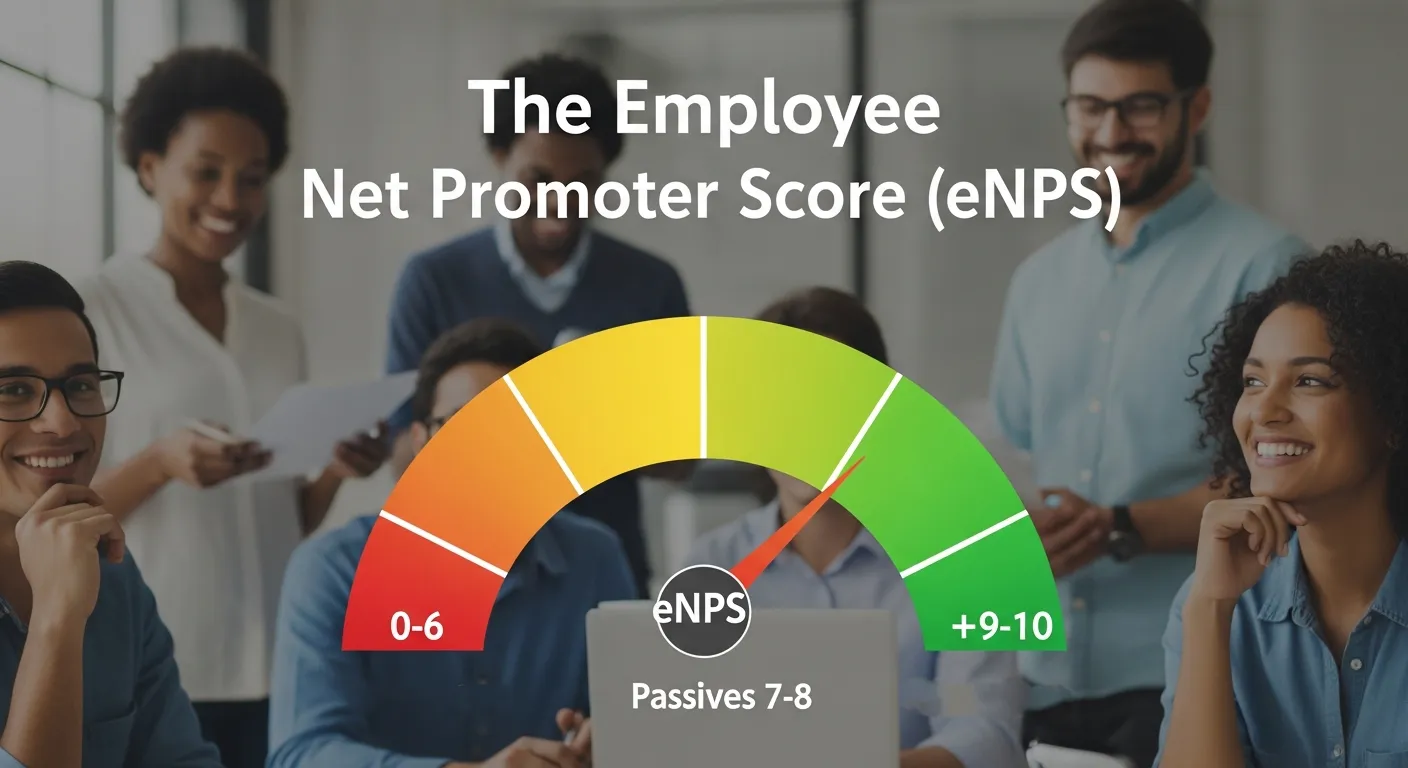
The Employee Net Promoter Score (eNPS) is one of the most direct and widely used metrics for gauging Employee Brand Engagement. It is a simple yet powerful tool that measures the likelihood of an employee recommending your company as a place to work.
How to Measure eNPS
The eNPS is calculated by asking one fundamental question, typically through an anonymous survey:
“On a scale of 0-10, how likely are you to recommend [Your Company] as a great place to work?”
Based on their responses, employees are categorized into three groups:
- Promoters (Score 9-10): These are your most enthusiastic and loyal employees. They are deeply connected to the brand and are your natural brand ambassadors. High Employee Brand Engagement is concentrated in this group.
- Passives (Score 7-8): These employees are satisfied but not emotionally invested. They do their jobs but are not actively promoting the brand. They might be swayed by a better offer from a competitor.
- Detractors (Score 0-6): These are unhappy employees who may be actively disengaged. They pose a risk to your brand’s reputation, as they might share negative opinions internally or externally.
The eNPS score is calculated with a simple formula:
eNPS = % of Promoters – % of Detractors
The score can range from -100 to +100. According to sources like Qualtrics, a score above 10 is considered good, and a score above 30 is excellent.
Why eNPS is a Strong Indicator of Employee Brand Engagement
A high eNPS score suggests more than just job satisfaction. It indicates that employees are proud to be associated with your brand. They believe in the company’s mission and culture so strongly that they are willing to put their own reputation on the line by recommending it to friends and family. This level of advocacy is a hallmark of true Employee Brand Engagement.
To make this metric even more powerful, follow up the primary question with an open-ended one, such as:
- “What is the primary reason for your score?”
- “What could we do to improve your experience?”
The qualitative feedback from these questions provides invaluable context. You might discover that Promoters frequently mention the company’s commitment to Sustainable Branding Strategies or its Inclusive Brand Strategies, reinforcing the importance of these initiatives. Conversely, Detractors might point to a disconnect between the company’s advertised values and their daily experience. This feedback allows you to pinpoint exactly where your Internal Branding efforts are succeeding or failing.
2. Social Media Advocacy and Digital Footprint

In the digital age, your employees’ online activity is a powerful, and very public, indicator of their Employee Brand Engagement. This metric moves beyond internal surveys and measures how your team represents the brand in the public sphere. It’s where Internal Branding meets Digital Marketing.
How to Measure Social Media Advocacy
Tracking this metric involves monitoring how, and how often, employees engage with your brand’s content on platforms like LinkedIn, X (formerly Twitter), and Instagram.
Key indicators to track include:
- Content Sharing: What percentage of your employees voluntarily share company blog posts, news, or campaign announcements? Do they add their own positive commentary?
- LinkedIn Profile Alignment: Do employees proudly list your company in their profiles? Do they use official company banners or engage with your company’s LinkedIn page?
- Positive Mentions: Using social listening tools, you can track unsolicited positive mentions of your brand or workplace culture from employees.
- Participation in Digital Campaigns: When you launch a new product or a Seasonal Hashtag Strategy, do employees join in? High participation is a sign of strong Employee Brand Engagement.
You can quantify this by creating an Employee Advocacy Rate. For a specific campaign, this could be:
(Number of Employees Who Shared the Campaign / Total Number of Employees) x 100
Why It Matters for Employee Brand Engagement
Social media advocacy is a voluntary act. When employees share company content, they are publicly endorsing your brand. This action signals a deep level of pride and alignment. They are not just employees; they are active participants in your Brand Storytelling.
This metric is particularly powerful because it has a dual benefit:
- It Measures Engagement: A high advocacy rate is a clear sign that your Employee Brand Engagement is strong. Your team feels connected enough to the brand to become part of its marketing engine.
- It Amplifies Reach: Employee advocacy significantly boosts your brand’s organic reach. According to marketing authorities, messages shared by employees can reach a much larger audience and are often perceived as more trustworthy than messages from official corporate accounts. It is a powerful form of Influencer Marketing using your internal talent.
To encourage this behavior, it’s crucial to make it easy for employees. Provide them with pre-approved content, clear guidelines, and a culture that celebrates their advocacy. A strong Internal Communication strategy is the lifeline that fuels this external engagement.
3. Internal Referral Rates
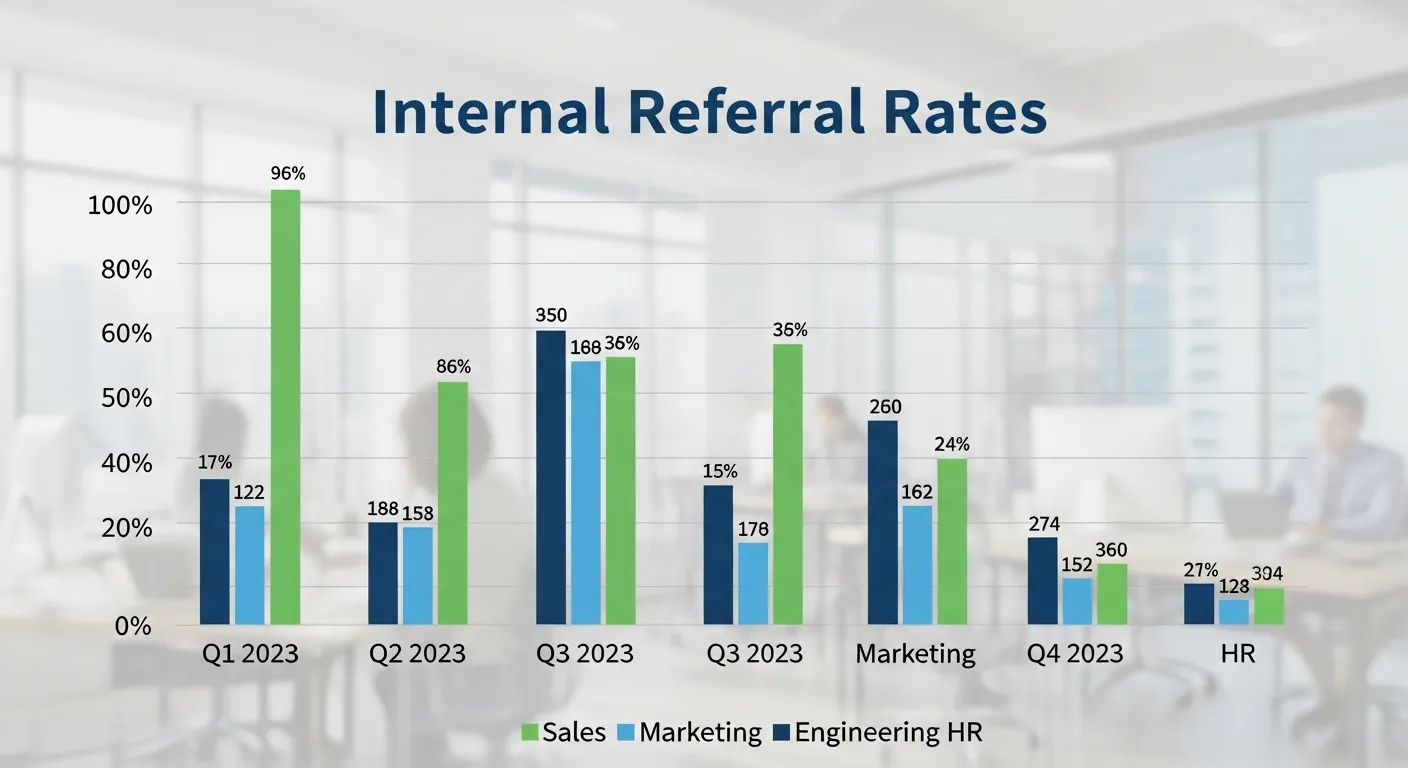
One of the most telling metrics for Employee Brand Engagement is the rate at which current employees refer their own contacts for open positions. When an employee refers someone from their personal network, they are not just helping with recruitment; they are vouching for the brand as a great employer.
How to Measure Internal Referral Rates
This metric is straightforward to calculate and can be tracked through your applicant tracking system (ATS) or HR software.
The key KPIs are:
- Referral Hire Rate: The percentage of new hires that come from employee referrals.
(% of Hires from Referrals = (Number of Hired Referrals / Total Number of Hires) x 100) - Referral Program Participation Rate: The percentage of employees who have submitted at least one referral within a given period.
- Quality of Referrals: Do referrals progress through the hiring process at a higher rate than other candidates? High-quality referrals indicate that employees have a strong understanding of both the company culture and the specific job requirements.
Why Referrals Signal High Employee Brand Engagement
Referring a friend or former colleague is a significant act of trust. It implies that the employee believes so strongly in the company’s culture, mission, and work environment that they are willing to stake their personal relationship on it.
Here’s why this is a critical measure of Employee Brand Engagement:
- Belief in the Brand Promise: Employees with high Employee Brand Engagement want to work with other talented people who share their values. They actively seek to bring people into the fold because they believe in the brand’s mission.
- Pride in the Workplace: High referral rates suggest that employees are proud of where they work. They see the company not just as a job, but as a community they want to help build.
- Reduced Recruitment Costs: While not a direct measure of engagement, a high referral rate often leads to a lower cost-per-hire and a shorter time-to-fill. This ROI is a powerful way to demonstrate the business value of investing in Employee Brand Engagement.
If your referral rates are low, it could be a red flag. It might indicate that employees are hesitant to endorse the company, suggesting a disconnect between their experience and the brand’s external image. Analyzing this metric can help you identify underlying issues with morale or culture that are hindering your team’s willingness to act as brand ambassadors.
4. Brand Knowledge and Message Alignment

True Employee Brand Engagement goes beyond feelings of happiness; it involves a cognitive understanding of the brand’s strategy, positioning, and messaging. An employee cannot be a true brand ambassador if they don’t understand what the brand stands for.
How to Measure Brand Knowledge
This metric can be assessed through a combination of quantitative and qualitative methods:
- Brand Quizzes and Assessments: Periodically conduct short, simple quizzes to test employees’ knowledge of the brand’s mission, vision, values, key messaging points, and Brand Positioning Statement.
- Internal Communications Audits: Analyze internal chat channels (like Slack or Teams) and emails to see how employees talk about the company and its products. Are they using the correct Brand Voice and terminology?
- Role-Playing Scenarios: For customer-facing teams, use role-playing exercises to see if they can effectively communicate the brand’s value proposition in different situations.
- Content Analysis: If your company encourages internal blogging or content creation, analyze that content for alignment with the brand’s core messages.
You can create a Brand Alignment Score based on quiz results or audit findings to track improvement over time.
Why Brand Knowledge Is Crucial for Engagement
An employee who can articulate the brand’s story and values is an engaged employee. Here’s why this metric is so important:
- It Empowers Employees: When employees understand the “why” behind their work, they feel more empowered to make decisions that align with the brand’s goals. This fosters a sense of autonomy and purpose, key drivers of Employee Brand Engagement.
- It Ensures Consistency: High brand knowledge ensures a consistent Brand Experience for customers across all touchpoints. Whether a customer interacts with a salesperson, a support agent, or a social media post, the message should be the same. Building Brand Consistency is impossible without knowledgeable employees.
- It Identifies Gaps in Communication: If brand knowledge scores are low, it is a clear sign that your Internal Communication strategy is failing. It tells you that you need to invest more in training and resources to ensure the brand’s mission is clearly understood by everyone, not just the marketing team.
High Employee Brand Engagement requires that every team member, from engineering to finance, understands their role in protecting and growing the brand. Measuring their knowledge is the first step toward achieving that alignment.
5. Benefits and Program Utilization Rate
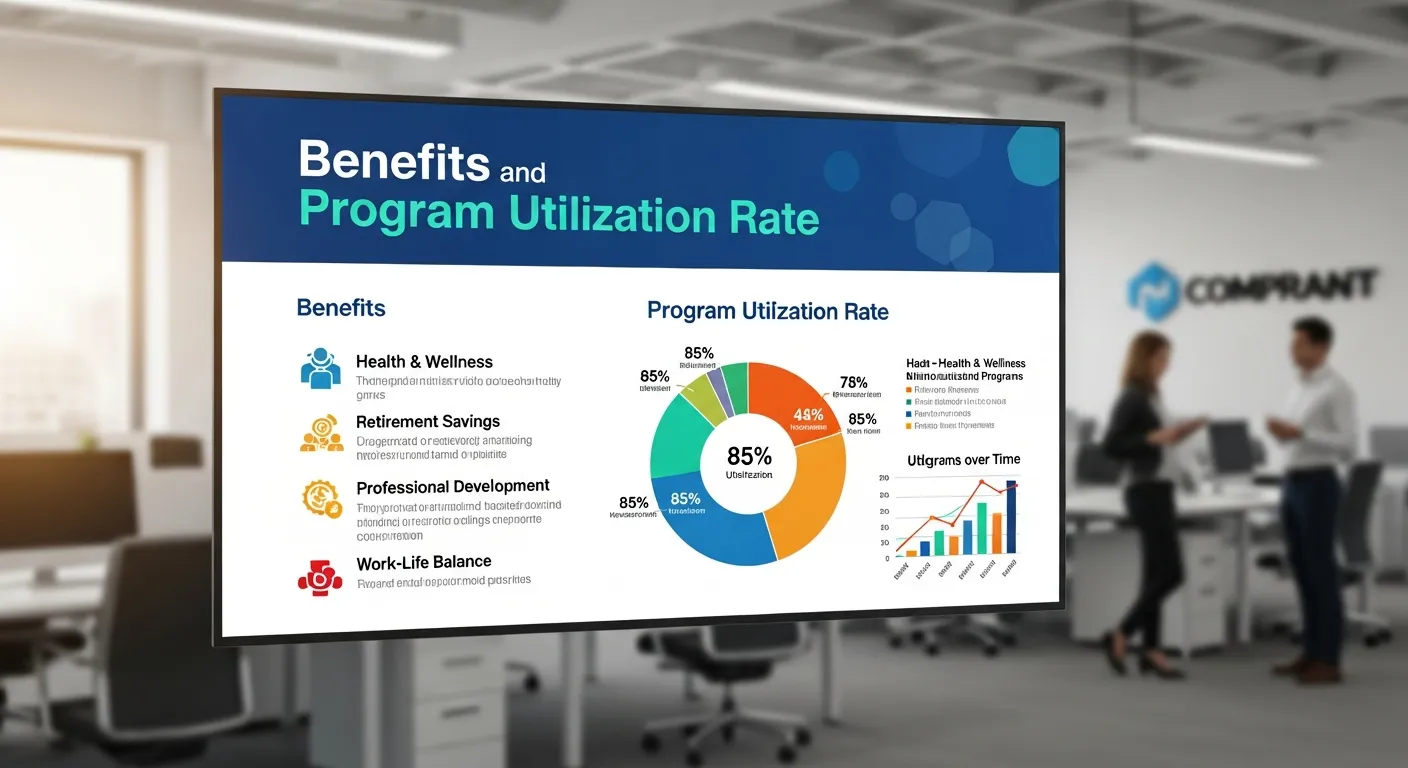
How employees interact with the company’s voluntary programs and benefits is a subtle but powerful indicator of their overall Employee Brand Engagement. When a company invests in programs designed to support employee well-being, growth, and work-life balance, high utilization rates suggest that employees trust the brand and feel it genuinely cares for them.
How to Measure Utilization Rates
This metric requires tracking participation in various non-mandatory programs. This data is often available through your HR or benefits administration platform.
Key areas to monitor include:
- Wellness Programs: What percentage of employees participate in wellness challenges, mental health workshops, or gym subsidy programs?
- Learning and Development: How many employees are voluntarily enrolling in training courses, attending webinars, or using tuition reimbursement benefits?
- Company-Sponsored Events: Track attendance at optional events like company picnics, volunteer days, or social gatherings.
- Flexible Spending Accounts (FSAs) and Lifestyle Spending Accounts (LSAs): High engagement with these benefits, like the 98% engagement rate seen at YorkHoist with their Benepass LSA, shows that employees value the flexibility and support offered.
Why Utilization Is an Engagement Metric
At first glance, benefits utilization might seem purely transactional. However, it reflects a deeper level of trust and connection with the company.
- Trust in the Company’s Intentions: When employees actively use the benefits provided, it signals that they believe the company is genuinely invested in their well-being. This builds an emotional connection, a core component of Emotional Branding applied internally.
- Alignment with Company Culture: If your brand promotes a culture of continuous learning, high utilization of development programs shows that employees have bought into that value. This is a clear sign of strong Employee Brand Engagement.
- Indication of a Positive Work Environment: Low participation in optional events or programs could indicate that employees are overworked, stressed, or simply do not feel a sense of community. It suggests they are disengaged and prefer to keep their distance from the company outside of their core job duties.
By offering benefits that are flexible and meaningful, and then measuring their usage, you can gain powerful insights into how connected your employees feel to the brand. A team that actively engages with the resources you provide is a team that is invested in its partnership with the company, demonstrating a high level of Employee Brand Engagement.
Conclusion
Measuring Employee Brand Engagement is not a one-time task but an ongoing strategic process. By consistently tracking these five metrics—eNPS, social advocacy, referral rates, brand knowledge, and benefits utilization—you move from guessing to knowing. You gain a 360-degree view of how deeply your brand’s mission resonates with your most important asset: your people.
High Employee Brand Engagement is the engine of a resilient and authentic brand. It transforms your workforce from passive spectators into active ambassadors who amplify your message, enrich your culture, and drive sustainable growth. Start measuring today to unlock this hidden potential and build a brand that is as strong on the inside as it is on the outside.
FAQs
1. What is Employee Brand Engagement?
Employee Brand Engagement is the emotional and intellectual commitment an employee has to your company’s brand, values, and mission. It is about how well they understand, believe in, and embody the brand in their day-to-day work.
2. Why is Employee Brand Engagement different from general employee engagement?
General employee engagement focuses on an employee’s satisfaction with their job, manager, and work environment. Employee Brand Engagement is more specific; it measures their connection to the brand itself and their willingness to act as a brand ambassador.
3. What is a good eNPS score for a company?
An Employee Net Promoter Score (eNPS) can range from -100 to +100. A score above 10 is generally considered good, a score above 30 is great, and a score above 50 is excellent. It signifies a strong level of Employee Brand Engagement.
4. How can I encourage employees to become brand advocates on social media?
Start by ensuring you have a strong internal culture and high Employee Brand Engagement. Then, create an employee advocacy program. Provide shareable content, offer clear guidelines, and recognize and reward employees who actively promote the brand.
5. What if our internal referral rates are low?
Low referral rates can be a red flag for poor Employee Brand Engagement. It may indicate that employees are not confident in the company as a great place to work. Investigate the root causes through anonymous surveys and one-on-one conversations.
6. How do we improve our Brand Knowledge scores?
Improve Internal Communication. Conduct regular brand training sessions, make brand guidelines easily accessible, and consistently communicate the brand’s mission and successes. Ensure that leadership models the brand’s values in all their actions.
7. Why is benefits utilization a metric for Employee Brand Engagement?
High utilization of voluntary benefits (like wellness or learning programs) indicates that employees trust the company and feel it is invested in their personal and professional growth. This sense of being cared for is a key driver of emotional connection to the brand.
8. How often should we measure these metrics?
eNPS and brand knowledge quizzes should be conducted quarterly or semi-annually. Social advocacy and referral rates should be monitored continuously, with reports generated monthly or quarterly. Benefits utilization should be reviewed annually or semi-annually.
9. Can a small business measure Employee Brand Engagement?
Absolutely. While they may not have sophisticated software, small businesses can use free tools like Google Forms for eNPS surveys, manually track social media shares, and closely monitor referrals. The principles of Employee Brand Engagement are universal.
10. What is the single most important metric for Employee Brand Engagement?
There isn’t one single “best” metric. A holistic view is most effective. However, the eNPS is an excellent starting point because it is simple to implement and provides a clear, high-level benchmark of employee loyalty and advocacy.