Voice Search Optimization: Preparing Your Brand for the Rise of Voice-Activated Marketing

The way people search online is evolving rapidly as voice-enabled technology becomes part of everyday life. With the widespread adoption of voice assistants such as Google Assistant, Amazon Alexa, and Apple Siri, users are increasingly using spoken queries instead of typing keywords. This shift has made voice search optimization an essential strategy for brands that want to stay visible in a growing voice-activated marketing ecosystem.
Unlike traditional search engine optimization, voice search SEO focuses on natural language processing (NLP), conversational search queries, and contextual relevance. Users tend to ask complete, intent-driven questions like “Where is the nearest coffee shop?” or “Which smartphone is best for photography?” These spoken search queries require content that reflects real human speech rather than keyword-heavy text, pushing brands to adopt a more conversational content strategy.
By implementing effective voice search strategies, strengthening mobile-first SEO and local search optimization, and leveraging AI-powered search technologies such as machine learning algorithms and semantic search, brands can improve digital visibility, boost customer engagement, and build brand trust and credibility. As search behavior continues to shift toward a voice-first experience, businesses that optimize for voice search will be better positioned to compete, connect with users, and adapt to the future of search.
Understanding Voice Search and Voice-Activated Marketing
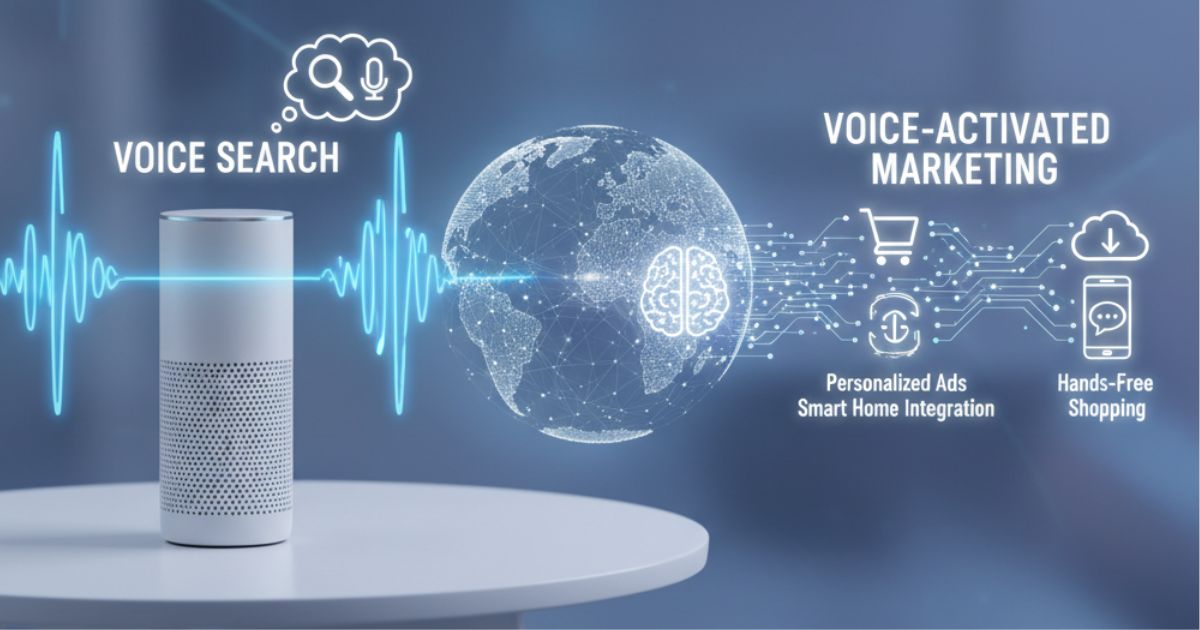
Voice search is the process of searching online by speaking into a device instead of typing. Users ask questions using their natural voice through smartphones, smart speakers, or other voice-enabled devices. Voice search SEO focuses on optimizing content so it can be easily understood and selected by voice assistants.
Voice-activated marketing goes a step further. It includes all brand interactions that happen through voice commands, not just search. This may include personalized product recommendations from smart speakers, voice-based customer support, audio-guided shopping experiences, or in-app voice navigation. Both voice search and voice-activated marketing rely on artificial intelligence, natural language processing (NLP), and machine learning to understand user intent and deliver relevant responses in real time.
The Rise of Voice Assistants
Voice assistants have played a major role in the growth of voice-based search and marketing. Platforms like Google Assistant, Amazon Alexa, Apple Siri, and Microsoft Cortana have made voice technology accessible to everyday users. These tools are now built into smartphones, smart speakers, cars, TVs, and even home appliances.
As voice-enabled devices become more common, users are growing comfortable with hands-free searches and voice commands. Smart speaker adoption continues to rise, especially in households where users rely on voice assistants for daily tasks like searching for information, setting reminders, shopping, and controlling smart home devices. This rapid adoption makes voice search optimization essential for brands that want to stay visible across modern digital touchpoints.
Changing Consumer Search Behavior
Voice search behavior is very different from traditional text-based searches. When people speak, they use longer and more conversational phrases. Instead of typing “vegan cafe Dhaka,” a user may ask, “What’s the best vegan cafe near me?” These spoken queries show clear intent and often require immediate answers.
Voice search users also expect fast, accurate, and concise responses. They are less likely to browse multiple results and more likely to trust the single answer provided by a voice assistant. Because of this, brands must rethink their keyword strategy, content structure, and overall user experience. Optimizing for conversational keywords, question-based searches, and voice-friendly content formats helps brands align with voice-driven intent and meet modern user expectations.
Why Voice Search Optimization Matters for Brands

Voice search optimization is no longer a future trend—it is a present-day necessity for brands that want to stay visible in an increasingly voice-driven digital world. As consumers rely more on voice assistants like Google Assistant, Alexa, and Siri, brands that are not optimized for voice search risk losing visibility, traffic, and customer trust.
One of the biggest reasons voice search SEO matters is changing search behavior. People speak differently than they type. Voice queries are longer, more conversational, and often intent-driven. Brands that optimize for conversational search queries and natural language keywords are more likely to appear in voice search results and featured snippets.
Voice search optimization also improves overall search engine performance. The same factors that help with voice search—fast page speed, mobile-friendly design, structured data, and clear content—also strengthen traditional SEO. This means brands gain better rankings, higher engagement, and improved user experience across all devices.
Another key advantage is local search visibility. Many voice searches include location-based intent, such as “near me” or “open now.” Brands that invest in local SEO for voice search, optimize their Google Business Profile, and use location-specific keywords are more likely to attract nearby customers who are ready to take action.
Voice-activated marketing also plays a role in brand trust and credibility. When a voice assistant selects your brand as the answer, users see it as a reliable source. This authority can lead to higher click-through rates, stronger brand recognition, and increased customer loyalty.
Finally, voice search optimization supports the growth of AI-driven and voice commerce experiences. As voice technology continues to evolve, brands that adapt early will be better positioned to deliver personalized interactions, seamless customer journeys, and future-ready digital experiences.
In short, optimizing for voice search helps brands stay discoverable, competitive, and relevant in a world where customers increasingly search, interact, and make decisions using their voice.
Key Strategies to Optimize for Voice Search
Leverage Long-Tail, Conversational Keywords
Voice search SEO depends heavily on how people actually speak. Unlike traditional search engine optimization, voice search queries are longer, more natural, and often framed as questions. Users are more likely to say, “How does voice search optimization work?” instead of typing short keywords.
To rank for these conversational search queries, focus on long-tail keywords that reflect spoken language. Use tools like AnswerThePublic, Google autocomplete, and SEMrush to find common voice assistant queries in your industry. When creating content, answer questions directly using natural language and clear sentences. This helps search engines understand user intent and improves your chances of appearing in voice search results.
Create FAQ Pages and Structured Content
FAQ pages are one of the most effective ways to create voice-friendly content. Voice assistants prefer content that is well structured, easy to scan, and clearly answers a specific question. By organizing your content in a question-and-answer format, you make it easier for search engines to extract information for featured snippets and voice responses.
Use proper heading tags to separate each question and keep answers short, clear, and focused. Well-structured SEO content not only improves voice search visibility but also enhances user experience and engagement across devices.
Optimize for Local SEO and “Near Me” Voice Searches
Local voice search is growing rapidly, especially for service-based businesses. Queries like “best marketing agency near me” or “coffee shop open now” are common voice searches with strong local intent. To capture this traffic, local SEO for voice search is essential.
Make sure your Google Business Profile is fully optimized with accurate business information, updated hours, photos, and customer reviews. On your website, include location-based keywords naturally, such as city names, service areas, and nearby landmarks. This helps search engines connect your business with local voice search queries and improves your chances of ranking for “near me” searches.
Improve Page Speed and Mobile Optimization
Most voice search queries come from mobile devices, which means mobile SEO and page speed optimization play a critical role. Voice assistants prioritize fast-loading websites that provide instant answers. If your site is slow or not mobile-friendly, it may be ignored in voice search results.
Improve performance by compressing images, minimizing scripts, and following Core Web Vitals best practices. Use a responsive design so your website adapts smoothly to different screen sizes. A fast, mobile-optimized site supports voice search optimization while also boosting overall search engine rankings.
Leverage Schema Markup and Structured Data
Schema markup helps search engines understand your content more clearly. By using structured data, you tell search engines which parts of your content are FAQs, business details, products, or reviews. This is especially important for voice search, as voice assistants rely on structured content to deliver accurate spoken answers.
Implement FAQ schema, local business schema, and other relevant structured data formats. This increases the likelihood of your content appearing as rich snippets, answer cards, or voice search responses, improving both visibility and click-through rates.
Integrating Conversational AI into Your Marketing Funnel

Beyond search optimization, conversational AI can enhance engagement at every stage of the funnel. Chatbots—text or voice—offer personalized recommendations, troubleshoot support issues, collect customer feedback, and facilitate seamless transactions without requiring human intervention.
Chatbots and Voice Bots
Deploy AI chatbots on your website and in messaging apps to capture and qualify leads 24/7. Complement these with voice bots on smart speakers and IVR systems, providing a unified omnichannel experience. Ensure your conversational flows are tightly scripted, using natural language prompts and fallback options to handle unexpected user queries gracefully.
Personalization and Data Collection
Conversational AI platforms can integrate with your CRM to deliver hyper-personalized experiences. Use customer data—purchase history, location, preferences—to tailor voice promotions and product suggestions. Respect privacy regulations by informing users when data is collected and offering opt-out choices.
Common Challenges and How to Overcome Them
Voice search optimization comes with several challenges that brands must address strategically. One of the biggest issues is ambiguous user intent. Spoken search queries are often short, conversational, and context-dependent, which makes it harder for search engines to interpret exact intent. To overcome this, brands should analyze conversational search queries using tools like Google Search Console, especially question-based and long-tail queries related to voice search SEO.
Another challenge is limited voice search analytics. Unlike traditional SEO, voice search data is not always clearly separated in analytics platforms. Brands can solve this by tracking performance of featured snippets, FAQ pages, and mobile search behavior. A/B testing different answer formats, sentence lengths, and conversational tones can help determine which content performs best in voice-driven search results.
Voice search algorithms also evolve rapidly as platforms like Google Assistant, Amazon Alexa, and Apple Siri update their AI and NLP systems. Staying informed about major updates, improving structured data implementation, and regularly refreshing voice-friendly content helps brands remain competitive in changing voice ecosystems.
Measuring Success: KPIs for Voice-Activated Marketing
Measuring voice-activated marketing performance requires a combination of SEO, engagement, and conversion metrics. One key indicator is voice search visibility, including impression share and ranking for featured snippets and answer boxes. These positions are often used by voice assistants to deliver spoken responses.
Brands should also track click-through rates (CTR) from voice-optimized content, conversational engagement time, and interactions with AI-powered chatbots or voice bots. For businesses using voice commerce, monitoring voice-enabled transactions, product inquiries, and lead conversions is essential. These KPIs help refine content strategy, conversational flows, and promotional messaging over time.
Future Trends in Voice-Activated Marketing
The future of voice-activated marketing will be shaped by advances in artificial intelligence, machine learning, and natural language processing. Voice interactions will become more natural, personalized, and context-aware, allowing brands to deliver smarter responses across multiple touchpoints.
Brands will increasingly adopt multimodal experiences, combining voice commands with visual elements on smart displays, smartphones, and connected TVs. Deeper integration with Internet of Things (IoT) devices, such as smart homes and wearable technology, will further expand voice-based brand interactions. To stay ahead, businesses must remain agile, data-driven, and focused on creating seamless, voice-first customer experiences.
Conclusion and Next Steps
Voice search optimization and voice-activated marketing are no longer optional—they are critical elements of a modern digital strategy. Start by auditing your existing content for conversational search intent, implementing structured data markup, and testing AI-powered chatbots on high-traffic pages. Combining these tactics with effective branding strategies ensures your business not only reaches customers but also strengthens brand credibility, customer engagement, and digital presence. Continuously monitor performance, refine content based on voice search analytics, and empower your brand to connect directly with audiences in the language they use every day—their own voice.
FAQs
1. What is voice search optimization and why is it important?
Voice search optimization is the process of tailoring digital content to appear in voice-based search results. It is important because users now rely on voice assistants for quick, conversational queries, and brands optimized for voice gain better visibility, higher engagement, and improved trust in voice-first search experiences.
2. How is voice search different from traditional SEO?
Voice search differs from traditional SEO because it focuses on natural language, full questions, and conversational intent rather than short keywords. Users speak longer queries and expect immediate answers, making structured content, featured snippets, and mobile optimization more important than ever.
3. How can brands optimize content for voice assistants like Alexa or Google Assistant?
Brands can optimize for voice assistants by using conversational keywords, creating FAQ-style content, improving page speed, implementing schema markup, and optimizing for local SEO. Clear, concise answers increase the chances of being selected as a voice response.
4. Does voice search optimization help with local SEO?
Yes, voice search optimization strongly supports local SEO. Many voice queries include location intent, such as “near me” searches. Optimizing Google Business Profiles, maintaining accurate business information, and using location-based keywords helps brands appear in local voice results.
5. What role does AI play in voice-activated marketing?
AI powers voice-activated marketing by understanding user intent through natural language processing and machine learning. It enables personalized responses, smart recommendations, voice bots, and conversational experiences that improve customer engagement and streamline the buyer journey.
6. How can businesses measure the success of voice-activated marketing?
Businesses can measure success through KPIs such as featured snippet visibility, voice search impressions, engagement time, chatbot conversions, and voice-commerce transactions. Tracking these metrics helps refine content, improve conversational flows, and maximize voice search performance.