Automated Branding: Unlock the Future of Marketing
Branding is the heartbeat of business success. It tells your story, distinguishes you from competitors, and connects you with your audience. Yet, building a brand manually is resource-intensive. Automated branding changes everything, using technology to bring ease, efficiency, and scalability to your strategy.
This comprehensive guide explores automated branding—the integration of technology like AI marketing and automation tools to streamline brand building. You will learn its definition, critical importance, and practical applications in content marketing, design, and social media management. We also cover actionable steps to implement these strategies, overcome obstacles, and leverage future trends to future-proof your business.
What Is Automated Branding?
At its most basic level, automated branding involves utilizing the latest technology—like artificial intelligence (AI), machine learning, and automation tools—to monitor, execute, and improve branding efforts. This is not just about scheduling a few social posts; it covers a vast spectrum of activities, from logo design to maintaining a consistent design aesthetic and even regulating your brand’s tone of voice across omnichannel strategies.
Think of automated branding as a method to forge your brand identity while saving time, reducing manual labor, and eliminating human errors. It serves as a digital guardian, ensuring your messaging, visuals, and overall brand presence align perfectly with your business goals. By integrating branding strategies with automation, businesses can maintain a “always-on” presence that resonates with their target audience without the burnout associated with manual management.
Why Automated Branding Is Important
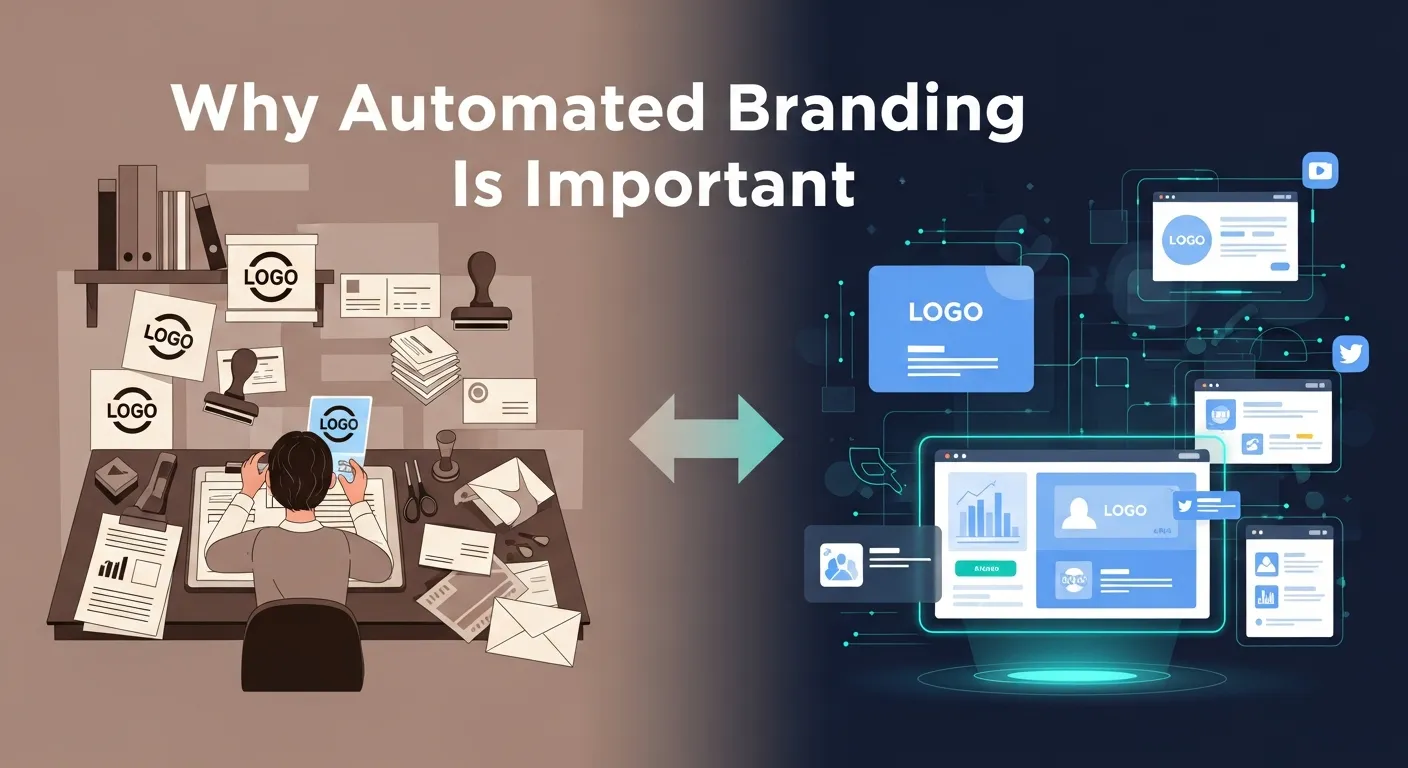
In the fast-paced world of digital marketing, speed and consistency are currency. Here is why automating your brand is no longer a luxury but a necessity.
1. Consistency Across Channels
One of the biggest challenges in brand awareness is maintaining a consistent look and feel across different platforms. Your Instagram feed shouldn’t look like a different company runs it compared to your LinkedIn page. Automated branding ensures every piece of content fits your brand standards, whether it’s a social post, email, or landing page. Tools can automatically apply your specific color palette, fonts, and logo placement, ensuring brand alignment remains intact regardless of who creates the content.
2. Time Efficiency
Branding tasks like graphic design, copywriting, and asset organization are notoriously time-consuming. Automated branding simplifies these workflows, allowing you to focus on high-level strategy and innovation rather than pixel-pushing. By automating routine tasks—like resizing images for different social platforms or generating variations of ad copy—teams can reclaim hours every week.
3. Scalability
Growing a business often means growing pains. As you expand into new markets or launch new products, maintaining your brand integrity becomes harder. Automated branding helps scale campaigns without compromising quality. It allows a small team to output the volume of content typically associated with a large enterprise. As Neale-Potter says, “It’s not as much growth as scaling for a company that’s growing.” Automation provides the infrastructure for that scale.
4. Cost Savings
Hiring full branding teams, agencies, and designers is expensive. Automated branding tools offer high-quality production at a fraction of the cost, making professional branding accessible for startups and growing brands. Instead of a massive retainer for a design agency, a subscription to an AI design tool can handle 80% of your day-to-day visual needs.
The Most Potent Uses of Automated Branding
To fully leverage automated branding, you need to understand where it fits into your ecosystem. Here are the most impactful areas.
Logo and Visual Design
Visual identity is the first thing customers notice. AI tools like Looka, Canva, and Adobe Express generate visual assets aligned with your brand identity. They can create multiple logo options in seconds, analyzing your industry and preferences to suggest relevant icons and fonts. Beyond logos, these tools can automatically generate brand assets like business cards, social media headers, and presentation slides that are instantly on-brand.
Social Media Management
Consistency is key in social media management. Tools like Buffer and Hootsuite help automate posting, create visuals, and analyze performance—ensuring consistent branding across channels. But it goes deeper than scheduling. Modern tools use AI marketing to determine the optimal time to post for your specific audience, suggest hashtags based on social media trends, and even auto-generate captions that match your brand’s tone—whether it’s professional, witty, or empathetic.
Content Creation
Content is king, but creating it is a royal pain. AI writing tools such as Jasper and Writesonic produce on-brand blog content, ad copy, and captions using customizable templates that reflect your tone. These tools can be trained on your brand guidelines to ensure that every blog post and email subject line sounds like you. This is critical for content marketing at scale, allowing you to maintain a steady stream of SEO optimization-friendly articles without burning out your writing team.
Email Marketing
Personalization is the heart of effective email marketing. Platforms like Mailchimp and Klaviyo allow you to send branded, personalized email campaigns using templates that mirror your identity. Automated branding here means dynamic content blocks that change based on the user’s behavior. If a customer browses shoes, your automated email will feature shoe imagery that matches your visual style, creating a seamless customer journey mapping experience.
Brand Asset Management
As your library of assets grows, finding the right file becomes a nightmare. You need a single source of truth. Brand Asset Management tools like Frontify and Bynder organize logos, templates, and design guidelines, keeping assets centralized for cross-team efficiency. This ensures that your sales team isn’t using a logo from 2015 and that your marketing team has instant access to approved stock photography.
Directions To Start Up With Automation Branding

Implementing automated branding doesn’t happen overnight. It requires a strategic approach. Follow these steps to build your automated foundation.
Step 1: Establish Your Brand Guidelines
You cannot automate what you haven’t defined. Before choosing tools, document your brand’s core essentials. This “Brand Bible” serves as the rulebook for your automation tools.
- Brand values and mission: What do you stand for?
- Logo, font, and color palette: Hex codes and typography rules must be precise.
- Voice and tone: Are you authoritative or conversational? Use examples to define this.
Step 2: Choose the Best Tools
The market is flooded with software. Select tools for each branding function based on your specific needs and budget.
- Design: Canva or Adobe Express for creating visuals.
- Social: CoSchedule or Buffer for scheduling and social media management.
- Content: Jasper or ChatGPT for content automation.
- Management: Frontify or a simple Google Drive structure for asset storage.
Step 3: Integrate Your Platforms
Silos kill efficiency. Unify tools with CRM, email, and analytics platforms to streamline execution across all customer touchpoints. For example, your CRM (like Salesforce or HubSpot) should talk to your email platform, ensuring that when a lead status changes, the branding in the automated follow-up emails changes appropriately. This integration is crucial for account-based marketing and lead generation.
Step 4: Monitor and Optimize
Automated branding is not “set it and forget it.” Automation still requires human oversight. Monitor campaign results using data analytics and continuously refine your automated branding strategy. If an AI-generated caption isn’t resonating, tweak the prompt. If a design template looks stale, refresh it. Continuous improvement is key to brand resilience.
Advantages of Automated Branding for Your Business
Why should you invest in this transformation? The benefits are tangible and affect the bottom line.
Boost Productivity
By automating time-consuming tasks like resizing images or scheduling posts, you free up your creative teams to do what they do best: create. This leads to higher job satisfaction and more innovative branding strategies.
Maintain Brand Identity
Automation is the enemy of inconsistency. It ensures brand cohesion across all platforms, which is essential for building brand equity. When a customer sees your ad on Facebook, visits your website, and receives an email, the visual and tonal experience is seamless.
Level the Playing Field
Historically, only big corporations could afford to have a perfect brand presence everywhere. Automated branding democratizes this. Small businesses can now compete with big brands using affordable tools, leveraging digital marketing tactics that were once out of reach.
Automated Branding IRL (In Real Life)
To see the power of automation, look at the industry leaders.
Coca-Cola
Coca-Cola uses AI marketing to deliver hyper-personalized global campaigns while maintaining strict brand identity. Their use of “generative AI” allows them to create thousands of unique ad variations that all distinctly feel like Coke, adapting to local cultures without losing the core brand voice.
HubSpot
HubSpot ensures strong brand association across all content. Their extensive use of automation in inbound marketing ensures that every ebook, blog post, and email nurtures the lead while reinforcing their helpful, orange-hued brand identity. They are masters of content marketing automation.
H&M
H&M leverages AI for personal shopping experiences. Their automated systems analyze trends and customer data to suggest outfits, keeping their online image as trendy as their physical stores. This use of data-driven insights enhances the customer experience and drives e-commerce growth.
Obstacles for Automated Branding (And How to Solve Them)
While powerful, automated branding comes with challenges. Being aware of them allows you to mitigate risks.
Learning Curve
Challenge: These tools can be complex. Staff may resist adopting new workflows.
Solution: Invest in training. Use built-in tutorials and vendor training resources. designate an “automation champion” within your team to help others.
Overreliance
Challenge: Automation is best with human creativity. Relying too heavily on AI can make your brand feel robotic or generic.
Solution: Use automation as an assistant, not a replacement. Always have a human review AI-generated content. Inject personal stories and unique insights that AI cannot replicate. This preserves emotional branding.
Loss of Personal Touch
Challenge: In the quest for efficiency, you might lose the human connection that drives loyalty.
Solution: Balance automation with genuine interaction. Automate the post, but reply to comments manually. Use conversational marketing principles to keep engagement high.
The Future of Automated Branding
Automation is evolving rapidly. We are moving beyond simple scheduling and template generation into a new era of intelligent branding.
Smarter AI and Hyper-Personalization
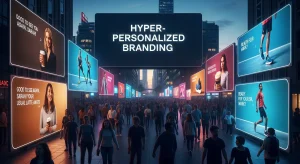
Smarter AI tools are enabling deeper personalization. We will see hyper-personalized branding where websites adjust their entire color scheme and layout based on the visitor’s preferences. Conversational AI will handle customer service inquiries with a tone that perfectly matches the brand persona, indistinguishable from a human agent.
Real-Time Brand Adjustments
Future tools will allow for faster testing and real-time brand adjustments. Imagine an ad campaign that automatically changes its font and imagery in real-time based on which version is getting more clicks. This level of conversion optimization will become standard.
Integration with Emerging Tech
Automated branding will extend into new frontiers like the metaverse marketing and augmented reality. Brands will use automation to manage their presence in virtual worlds, ensuring their digital avatars and virtual stores remain on-brand.
Businesses that adopt automation today are future-proofing their brand and staying ahead in the fast-paced marketing world.
Elevate Your Brand to the Next Level
Automated branding is no longer just for enterprise companies—it’s essential for every modern business. Whether you want to save time, increase content quality, or scale effortlessly, the tools are ready for you to begin.
Don’t let the fear of technology hold you back. Start small. Automate one aspect of your branding—like your social media scheduling or email templates—and expand from there. The goal is not to replace the human element but to amplify it. By removing the drudgery of manual tasks, you unlock the creative potential of your team.
Discover the newest automation tools and transform your brand today. The future of marketing is automated, consistent, and undeniably powerful.
Frequently Asked Questions (FAQs)
1. Can automated branding replace my marketing team?
No. Automated branding is designed to assist your team, not replace them. While it handles repetitive tasks like data entry, scheduling, and basic design, it lacks the emotional intelligence, strategic thinking, and creativity of humans. Your team is still needed to set the strategy, review the output, and engage with customers on a personal level.
2. Is automated branding expensive?
It can be very affordable. Many tools operate on a freemium or low-cost subscription model (SaaS). For example, tools like Canva and Buffer have free versions that are powerful enough for small businesses. Compared to the cost of hiring a full-time designer or social media manager, automation tools offer significant cost savings.
3. Will my brand lose its “human” touch?
Only if you let it. The risk of sounding robotic exists if you rely 100% on AI generation without human editing. The key is to use automation for the delivery and structure of your message, but inject human personality, stories, and empathy into the content itself. Use brand storytelling to keep the human element alive.
4. Which industries benefit most from automated branding?
Almost every industry benefits, but those with high content demands see the biggest impact. E-commerce, SaaS, real estate, and digital marketing agencies benefit immensely because they need to produce a high volume of visual and written content consistently across multiple channels.
5. How does automated branding help with SEO?
Consistency is a ranking factor. Search engines favor brands that have a consistent presence across the web. Automation ensures you are publishing content regularly on your blog and social media. Furthermore, AI writing tools can help with SEO optimization by suggesting relevant keywords and structuring content for readability.
6. What is the difference between marketing automation and automated branding?
Marketing automation focuses on workflows and lead nurturing (e.g., sending an email when a user clicks a link). Automated branding focuses on the identity and presentation of the brand (e.g., ensuring the email looks like your brand, the tone is correct, and the visuals are consistent). They often work hand-in-hand.
7. How do I choose the right automation tools?
Start by identifying your bottlenecks. If design takes too long, look at Canva. If social posting is a chore, look at Buffer. Read reviews on platforms like G2 or Capterra. Look for tools that integrate with your existing tech stack (like your CRM or website platform) to ensure a smooth workflow.
8. Can I use automated branding for personal branding?
Absolutely. Personal branding relies heavily on consistency. Influencers and thought leaders use automation to schedule tweets, create Instagram graphics, and manage newsletters. It allows individuals to maintain a “larger than life” presence without spending 24 hours a day online.
9. Is AI-generated art copyright safe for my brand?
This is a developing legal area. Generally, you can use AI-generated assets, but trademarking them can be difficult because they aren’t human-made. It is often safer to use AI tools that modify or generate layouts using your owned assets (like your specific logo and photos) rather than relying purely on generative AI for core brand elements.
10. How do I measure the success of my automated branding efforts?
Track metrics related to efficiency and consistency. Are you producing more content in less time? Has your brand awareness (measured by social mentions and traffic) increased? Are your engagement rates stable or growing? Also, look at customer retention—consistent branding builds trust, which keeps customers coming back.