Brand Purpose Development: A Guide to Authentic Value
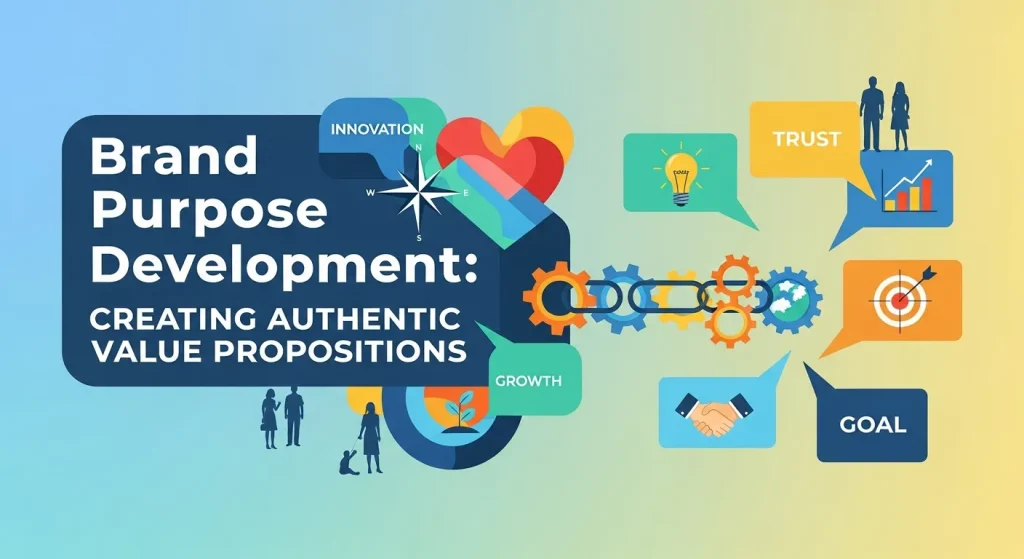
In an era where consumers vote with their wallets, a brand’s “why” matters more than its “what.” This guide reveals how to build a purpose-driven organization that thrives.
This comprehensive guide explores the strategic necessity of brand purpose development. We delve into the business case for purpose, the five essential elements of creating an authentic framework, and actionable strategies for activation. Learn how to align organizational values with customer impact to drive financial performance and deepen brand equity.
The Evolution of Brand Purpose Development
To understand effective brand purpose development, we must first recognize how dramatically the concept has evolved. In the mid-20th century, corporate mission statements were typically dry, functional declarations focusing narrowly on business outcomes: market leadership, shareholder returns, and aggressive growth targets. These statements answered what companies aimed to achieve but rarely addressed why these achievements mattered beyond financial metrics.
As markets evolved and competition intensified, companies recognized the limitations of this purely transactional approach. Mission statements expanded to include how organizations operated—their distinctive approaches and values. While this represented progress, it still left the fundamental human question unanswered.
True purpose addresses this deepest level: why does the organization exist beyond profit generation? It articulates the meaningful difference the company makes in people’s lives and the broader contribution it makes to society. When authentically developed and consistently activated, this purpose creates connections that transcend transactional relationships. It moves a company from being a vendor of goods to a partner in the consumer’s life.
The Shift from Profit to Purpose
This shift isn’t just philosophical; it’s a response to a fundamental change in customer perception. Modern consumers, particularly Millennials and Gen Z, demand trust establishment before loyalty. They look for social proof not just in product reviews, but in the company’s behavior towards its employees, the environment, and society at large.
Beyond Marketing: The Business Case for Authentic Purpose

Purpose-led brands outperform their counterparts across virtually every meaningful business metric. Research consistently demonstrates that companies with clearly articulated and activated purpose achieve stronger financial performance, greater employee engagement, enhanced customer loyalty, and more resilient stakeholder relationships.
However, these benefits materialize only when brand purpose development transcends superficial marketing exercises. The marketplace has developed a refined radar for “purpose-washing”—cosmetic attempts to appear values-driven without substantive commitment. This explains why many purpose initiatives fail to deliver expected returns: they lack the authenticity and organizational integration required for meaningful impact.
Key Performance Indicators (KPIs) of Purpose
According to research from Harvard Business Review and other leading institutions, purpose-driven companies often witness:
- Higher Market Share Gains: Purpose acts as a differentiator in crowded markets.
- Faster Growth Rates: Brands with high purpose grow three times faster on average than their competitors.
- Enhanced Workforce Satisfaction: Employees who find meaning in their work are more productive and stay longer, reducing turnover costs.
- Customer Advocacy: Customers are four times more likely to purchase from and champion brands with a strong purpose.
For deeper insights into how market trends influence business growth, resources like Google Analytics can help organizations track the correlation between purpose-driven content and user engagement metrics.
The Five Elements of Authentic Brand Purpose Development
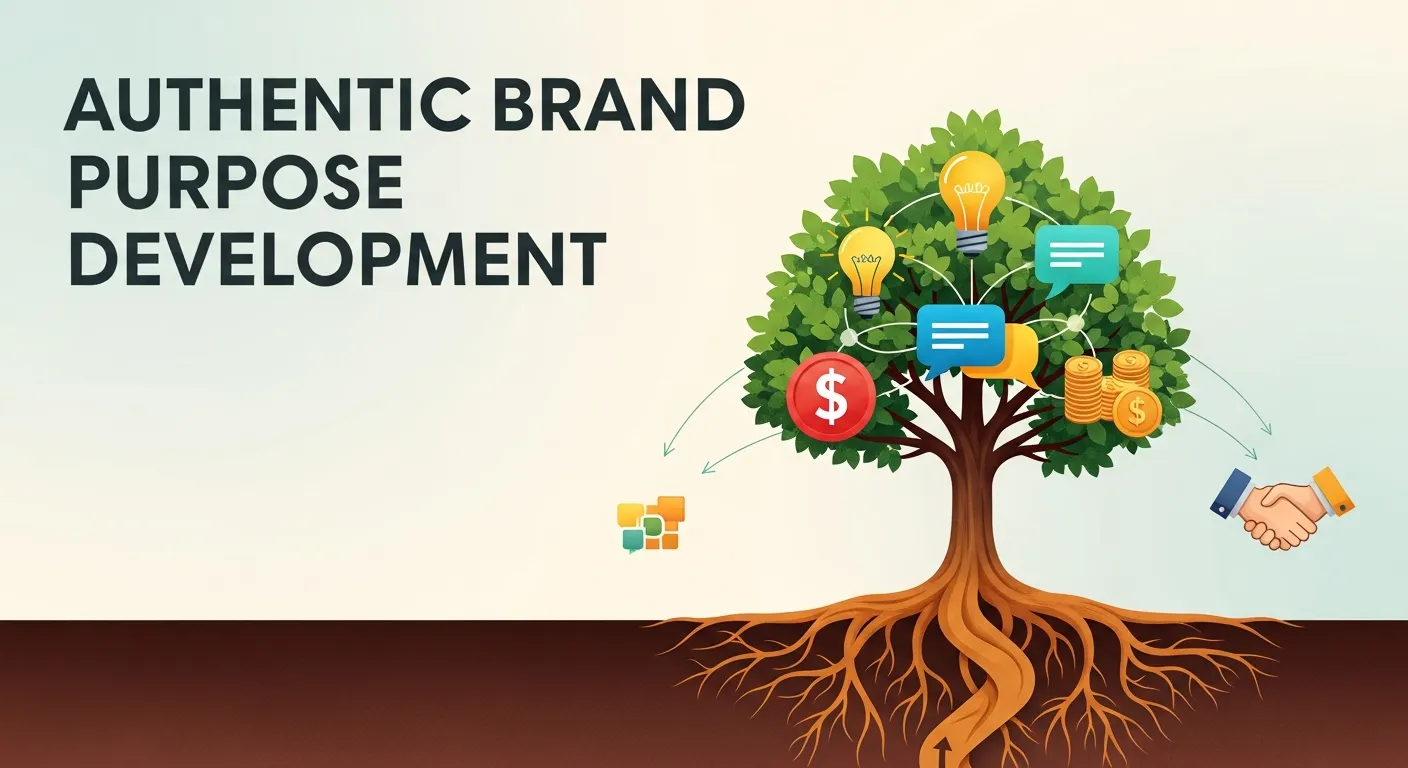
Developing an authentic Brand Purpose Development is not a creative writing exercise; it is a strategic excavation. It involves navigating five interconnected territories that together reveal meaningful organizational direction.
1. Heritage Exploration: Mining the Past
Purpose rarely emerges from blank-slate ideation. The most compelling brand purposes connect to organizational heritage—founding stories, pivotal moments, and evolutionary journeys that reveal authentic values. This archaeological approach uncovers the DNA already present within the organization rather than imposing aspirational concepts from outside.
When Patagonia founder Yvon Chouinard articulated the company’s purpose—”We’re in business to save our home planet”—he wasn’t inventing a new direction. He was crystallizing values evident since the company’s founding decades earlier. This heritage-based approach explains why Patagonia’s purpose feels authentic rather than opportunistic.
Actionable Tip: Conduct “heritage workshops.” Gather long-standing employees and founders to discuss the early days. What problems were they trying to solve? What principles did they refuse to compromise on, even when it cost money? These stories are the bedrock of brand storytelling.
2. Capability Reality Assessment: The Truth Test
Authentic purpose aligns with organizational capabilities rather than aspirational fantasies. Companies frequently make the mistake of developing purpose statements around societal needs they lack the capability to meaningfully address. This mismatch creates cynicism rather than connection.
Effective brand purpose development includes a rigorous assessment of organizational strengths, resources, and realistic impact potential. This doesn’t mean purpose should be limited to current capabilities—it often points toward evolution—but it must maintain a credible connection to what the organization can genuinely deliver.
Using Data for Assessment:
Use tools like SEMrush to analyze your current market position and authority. If your purpose is to “educate the world on financial literacy,” but your content authority in finance is zero, you have a capability gap to close before that purpose becomes credible.
3. Stakeholder Value Interrogation: Deep Empathy
Purpose creates meaning by connecting organizational activities to stakeholder values. This requires a deep understanding of what truly matters to employees, customers, communities, and other key stakeholders—not just their functional needs but their deeper aspirations and concerns.
According to a global study by Zeno Group, consumers are looking for brands that align with their personal values. However, this connection happens only when purpose authentically addresses values stakeholders actually hold rather than values companies wish they held.
Methodology:
- Ethnographic Research: Observe customers in their natural environment.
- Cultural Analysis: Understand the subcultures your stakeholders belong to.
- Meaning Studies: Move beyond “satisfaction” surveys to understand the emotional role your brand plays in their lives.
4. Competitive Context Consideration: Finding White Space
Purpose exists within a competitive context. Effective development examines not just societal needs but also how competitors position their own purpose narratives. This competitive brand analysis reveals both overcrowded purpose territories to avoid and unoccupied spaces where distinctive meaning can be established.
Many healthcare organizations, for instance, cluster around similar purpose territories involving patient care and healing. Companies that examine this context might identify unoccupied territories around prevention, education, or systemic transformation that offer more distinctive positioning while remaining authentic to their capabilities.
Tool for Analysis:
Use Ahrefs to analyze the content themes and keywords your competitors are ranking for. Are they all talking about “sustainability”? Perhaps your unique angle is “social equity” or “transparent sourcing.” Find the gap in the conversation.
5. Cultural Relevance Mapping: Staying Current
Purpose exists within broader cultural currents that determine its resonance and relevance. Development processes that ignore cultural context risk creating purpose statements that feel tone-deaf or misaligned with societal evolution.
Effective brand purpose development includes cultural analysis that examines changing value systems, evolving definitions of progress, and emerging societal narratives. These insights ensure purpose connects not just with current expectations but also with where culture is moving.
From Development to Activation
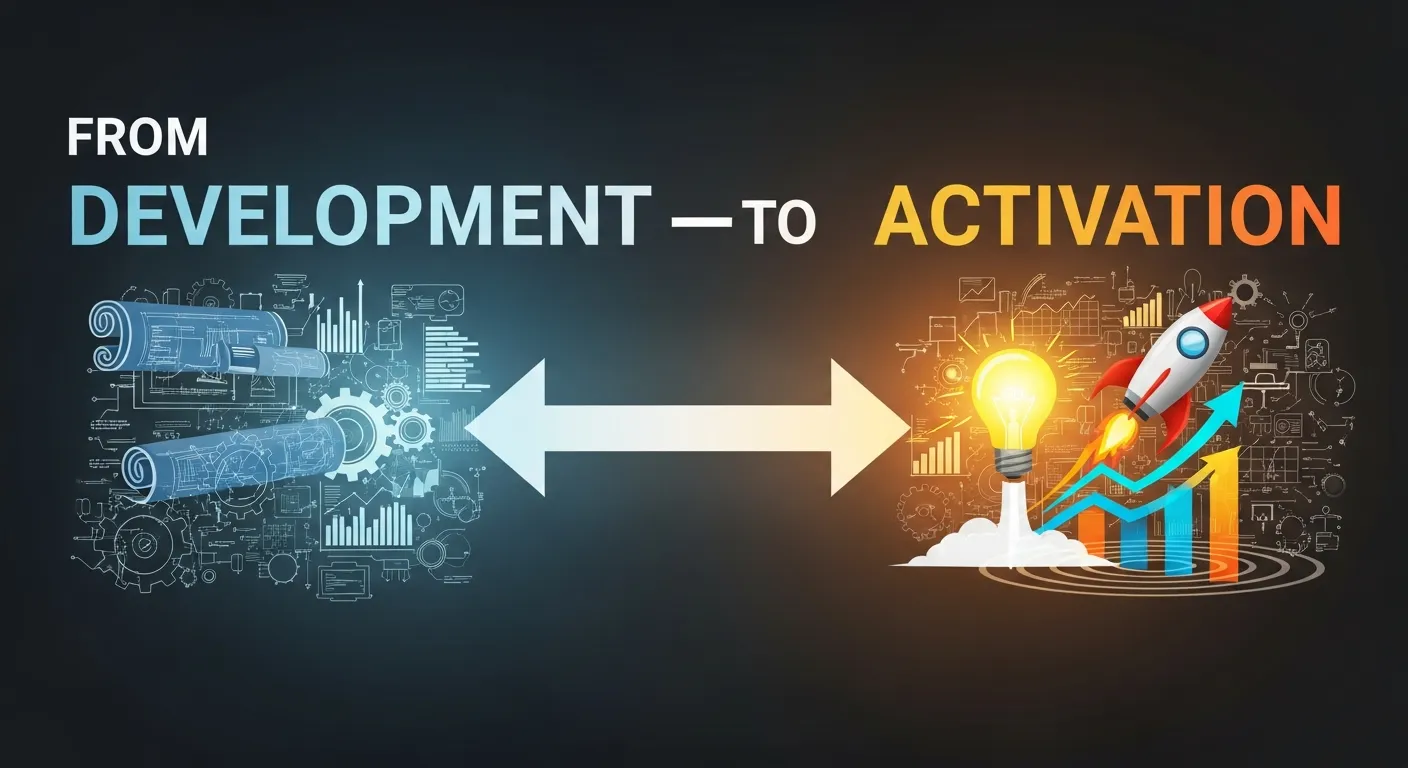
Even the most authentically developed purpose creates impact only through consistent activation. Organizations frequently invest significantly in brand purpose development only to struggle with meaningful implementation. Effective activation requires several interconnected elements.
Leadership Embodiment
Purpose activation begins with leadership behavior. When executives make decisions that prioritize short-term financial outcomes over stated purpose, they undermine credibility throughout the organization. Conversely, leaders who demonstrate purpose-aligned decision-making, even when financially challenging, build organizational belief in the authenticity of the purpose commitment.
IKEA’s leadership repeatedly demonstrates this alignment through major investments in sustainability marketing initiatives that create short-term cost increases but align with their purpose of “creating a better everyday life for the many people.” This consistent demonstration transforms purpose from aspiration to operational reality.
Systems Alignment
Purpose remains abstract until embedded in organizational systems and processes. This includes performance metrics, reward structures, hiring practices, and resource allocation frameworks. When these systems contradict stated purpose—as when companies proclaim customer-centricity while measuring only financial metrics—purpose becomes hollow rhetoric rather than an organizational driver.
Implementation Checklist:
- Hiring: Do job descriptions reflect the purpose?
- Rewards: Are bonuses tied to purpose metrics, not just sales?
- Operations: Does the supply chain reflect the values?
Narrative Development
Purpose requires narrative scaffolding that helps stakeholders understand its meaning and relevance. This involves developing stories that illustrate purpose in action, creating communication frameworks that connect day-to-day activities to purpose fulfillment, and establishing language systems that reinforce purpose understanding.
Organizations with effective purpose activation invest in brand storytelling that moves beyond sloganeering to create meaningful understanding throughout the stakeholder ecosystem. These narratives help employees connect daily tasks to larger meaning and help customers understand how their purchasing decisions align with their own values.
Measurement Evolution
Traditional business metrics often fail to capture purpose fulfillment. Organizations serious about purpose activation develop new measurement approaches that track progress toward purpose-related outcomes, not just financial performance. These measurement systems create accountability for purpose fulfillment while demonstrating organizational commitment beyond rhetoric.
Metrics to Track:
- Brand Equity: Using tracking studies to measure perception.
- Employee Advocacy: Net Promoter Score (eNPS).
- Social Impact: Quantifiable data on the societal change achieved.
For tracking digital engagement with purpose-driven content, Google Search Console provides insights into how users are finding your brand and which purpose-related queries are driving traffic.
Avoiding the “Purpose-Washing” Trap

As purpose has gained prominence as a business driver, purpose-washing has proliferated across industries. Organizations make grand purpose proclamations without substantive commitment, creating campaigns around societal issues without addressing their own contributions to these problems.
This cynical approach damages both individual brand credibility and broader trust in corporate purpose. Consumers and employees have developed sophisticated radars for detecting the difference between authentic purpose and marketing exploitation of social concerns.
To avoid this trap:
- Walk Before You Talk: Implement changes internally before marketing them externally.
- Be Transparent: Admit where you are falling short and what you are doing to fix it.
- Commit Long-Term: Purpose is not a quarterly campaign; it is a permanent filter for decision-making.
Case Studies in Authentic Purpose
Patagonia: The Gold Standard
Patagonia’s purpose—”We’re in business to save our home planet”—is not just a tagline; it dictates their supply chain, their repair policies (Worn Wear), and even their tax structure (transferring ownership to a trust). This radical alignment has resulted in unparalleled customer retention and brand loyalty.
Dove: Redefining Beauty
Unilever’s Dove brand shifted from selling soap to a purpose of “making a positive experience of beauty accessible to every woman.” Their Campaign for Real Beauty challenged industry norms and leveraged emotional branding to create a massive cultural impact, driving sales growth for decades.
Ben & Jerry’s: Activism as Identity
Ben & Jerry’s has integrated social justice into its core identity. From flavor names to supply chain sourcing and public policy advocacy, they prove that a brand can take a stand and still achieve massive commercial success. Their brand advocacy creates a distinct tribe of loyalists.
The Path Forward
For organizations beginning brand purpose development, several principles increase the likelihood of creating authentic, activatable purpose:
- Start with Truth: Honest assessment of current reality rather than aspirational fantasy. Authentic purpose builds from organizational truth rather than wishful thinking.
- Involve the Many: Involve diverse stakeholders in the development process, not just executive leadership or the marketing department. Purpose that reflects multiple perspectives creates broader resonance.
- The Sacrifice Test: Test purpose directions against real organizational decisions and trade-offs. Would the organization actually sacrifice short-term gains to fulfill this purpose? If not, the purpose lacks authenticity.
- Plan for Activation: Develop activation plans simultaneously with purpose articulation. Purpose without implementation planning remains abstract and theoretical.
- Evolve: View purpose as evolutionary rather than fixed. While core purpose should remain relatively stable, its expression and activation evolve as organizational capabilities and societal needs change.
By approaching brand purpose development as a fundamental strategic process rather than a communications exercise, organizations discover authentic direction that creates meaningful differentiation and lasting connection. In markets increasingly defined by values alignment and meaning, this authentic brand purpose development becomes not just a moral imperative but a business essential.
Conclusion
Developing an authentic brand purpose is the bridge between a company’s capabilities and society’s needs. It transforms organizations from profit-seeking entities into value-creating partners. By rigorously exploring heritage, assessing capabilities, and listening to stakeholders, leaders can craft a purpose that drives brand resilience and long-term growth. The future belongs to brands that stand for something meaningful—ensure yours is one of them.
Frequently Asked Questions (FAQs)
1. What is the difference between brand mission and brand purpose?
A brand mission typically defines what the organization does and how it plans to get there (e.g., “To provide the best customer service”). Brand purpose defines why the organization exists beyond making money (e.g., “To inspire humanity”). Purpose is the philosophical heartbeat; mission is the strategic roadmap.
2. Can a small business have a brand purpose?
Absolutely. In fact, small businesses often have an easier time with brand purpose development because the founder’s vision is still fresh and the organization is agile. A local coffee shop’s purpose might be “to foster community connection,” influencing how they design their space and treat customers.
3. Does brand purpose always have to be about social causes?
No. While sustainability marketing and social justice are common themes, purpose can also be about craftsmanship, joy, efficiency, or innovation. For example, Disney’s purpose is essentially about creating happiness, which is a human-centric purpose, not necessarily a political cause.
4. How do we measure the ROI of brand purpose?
ROI on purpose is measured through a mix of brand equity KPIs (awareness, sentiment), employee retention rates, customer lifetime value (CLV), and market share growth. It is a long-term play, so short-term quarterly sales might not immediately reflect the impact, but longitudinal data will.
5. What is the biggest mistake in brand purpose development?
The biggest mistake is distinct disconnect: saying one thing and doing another. This is often called “purpose-washing.” If a company claims to care about the environment but uses excessive non-recyclable packaging, the hypocrisy will damage the brand more than having no purpose at all.
6. How long does the development process take?
Developing a genuine purpose is not a one-day workshop. It typically involves months of research, stakeholder interviews, workshops, and testing. It is a foundational business strategy project, not a quick marketing task.
7. Can a legacy brand change its purpose?
Yes, but it must be an evolution, not a revolution. It requires finding the thread of truth in the brand’s history and reinterpreting it for the modern context. A radical shift that contradicts the brand’s history will feel inauthentic.
8. Who should lead the purpose development process?
While the CMO often facilitates it, the CEO must own it. Purpose is a business strategy, not just a marketing strategy. Without CEO buy-in and leadership, the purpose will never penetrate operations, HR, and finance.
9. How do we communicate our purpose to customers?
Don’t just state it; live it. Use brand storytelling to share examples of the purpose in action. Content marketing, video advertising, and social media are excellent channels to demonstrate your “why” through real-world impact stories rather than manifesto videos.
10. Is purpose relevant for B2B companies?
Yes. B2B buyers are still humans who want to work with partners they trust and respect. A strong purpose can differentiate a B2B service provider in a commoditized market, aiding in account-based marketing and talent acquisition.