Cultural Branding: Authentically Connect with Social Movements
In today’s market, consumers expect brands to stand for something beyond profit. Cultural branding is the strategy for building that deeper, value-driven connection.
This guide explores the principles of cultural branding and how to align your brand with social movements authentically. We cover finding your cultural relevance, avoiding common missteps, and provide actionable frameworks and case studies to help you build a brand that resonates on a deeper level.
The Essence of Cultural Branding in a Conscious Marketplace
Cultural branding is a strategic approach where a brand aligns itself with a specific cultural ideology, social movement, or value system. It moves beyond traditional marketing, which focuses on product features and benefits, to participate in and shape cultural conversations. It’s about identifying the tension points in society—the contradictions between how the world is and how people wish it could be—and positioning your brand as a resource to help bridge that gap.
The modern consumer, armed with information and a platform, can easily distinguish between genuine commitment and opportunistic marketing. According to an Edelman Trust Barometer study, a significant majority of consumers now make purchasing decisions based on a company’s social and political stance. This shift represents both a massive opportunity and a significant challenge for brands. When executed authentically, cultural branding transforms customers into a passionate brand community and builds immense, lasting brand equity. When done poorly, it can lead to accusations of “woke-washing” and cause irreparable damage to a brand’s reputation.
This is not about jumping on the latest trending hashtag. It is about embedding a brand purpose so deeply into your organization’s DNA that your cultural position feels natural, inevitable, and authentic.
Finding Your Cultural Relevance: The Foundation of Authenticity
For cultural branding to succeed, a brand must first understand where it can authentically participate in the cultural conversation. This requires a deep, honest assessment of your brand’s core values, its history, its products, and its authentic voice. A brand that has never shown interest in environmental issues cannot suddenly become a credible champion for climate change without doing the internal work first. Authenticity is the non-negotiable price of entry.
The Brand Purpose Development Framework
Before aligning with any external movement, you must look inward. A brand purpose development process is essential. Ask these fundamental questions:
- Why do we exist beyond making money? This is the core of your purpose. It should be an aspirational statement that guides your company’s actions.
- What unique expertise or resources do we possess? How can your company’s specific skills or assets be applied to a social issue? A tech company might focus on digital accessibility, while a food company might focus on food insecurity.
- What cultural tensions exist within our industry or among our customers? Where are the frictions and debates happening? A fashion brand might explore tensions around body positivity or sustainability marketing.
- What values do our employees and leadership genuinely hold? A cultural stance cannot be dictated from the marketing department alone. It must reflect the genuine beliefs of the people who make up the company.
Consider Patagonia’s long-standing environmental activism or Ben & Jerry’s decades of work on social justice issues. These brands have woven their values so deeply into their identities that their cultural positions feel like a natural extension of who they are. Their stances aren’t without risk—they have faced boycotts and backlash—but their core audiences have only grown more loyal because these positions stem from genuine, long-term organizational values.
The Litmus Test for Authenticity
Before committing to a cultural stance, run it through this litmus test:
- Is it aligned with our core business? Does the cause connect logically to what you do or sell?
- Have we “earned the right” to speak on this issue? Have you done the internal work, such as changing your supply chain, hiring practices, or corporate policies, to give you credibility?
- Are we prepared for a long-term commitment? Cultural branding is not a one-off campaign. It’s a fundamental shift in how your business operates.
- Are we willing to accept potential backlash? Taking a stand on a meaningful issue will inevitably alienate some people. Your brand must have the brand resilience to weather criticism.
Cultural Branding in Action: A Strategic Framework
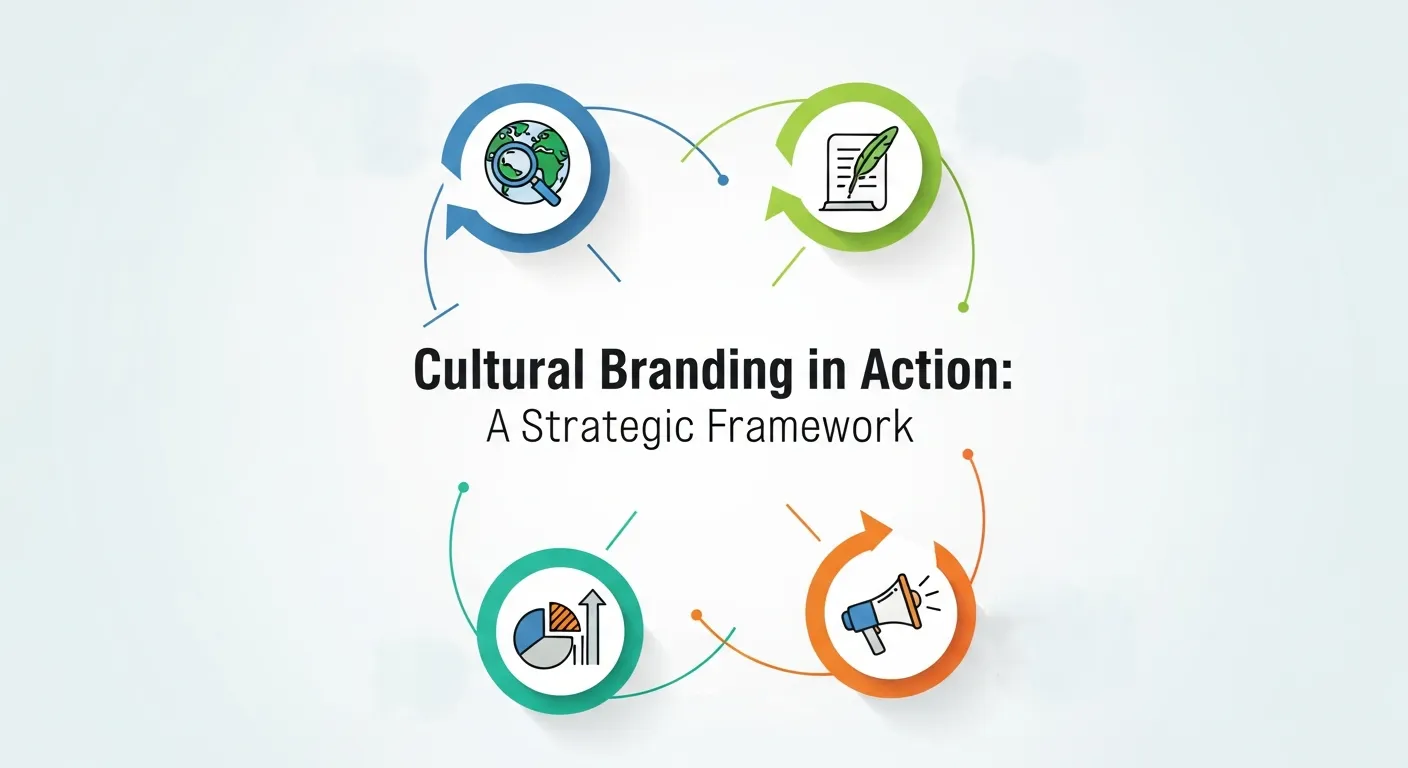
Effective cultural branding is not random; it follows a clear strategic process. By breaking it down into actionable steps, brands can move from vague intentions to impactful execution.
Step 1: Identify Relevant Cultural Tensions
The first step is to map the cultural landscape. What are the significant conversations, debates, and tensions happening in society that are relevant to your brand? Use social listening tools, market research, and customer interviews to understand:
- Industry-Specific Tensions: What contradictions exist in your field? For example, the beauty industry has tensions around unrealistic beauty standards and ingredient transparency. The tech industry has tensions around data privacy and digital well-being.
- Customer-Centric Tensions: What challenges do your customers face in living their values? A parent might struggle with finding sustainable products for their children. A young professional might feel pressure to conform to corporate norms that clash with their personal identity.
- Emerging Cultural Shifts: What new movements or ideologies are gaining traction? This could include shifts towards green marketing, mental health awareness, or localism (hyperlocal marketing).
Step 2: Develop a Clear Brand Narrative
Once you’ve identified a relevant cultural tension, your brand must develop a clear narrative that addresses it. Your brand should offer not just a product, but a point of view and a meaningful solution that helps consumers navigate the issue. This is where brand storytelling becomes critical.
Your narrative should:
- Acknowledge the Problem: Clearly state the cultural tension you are addressing.
- Establish Your Point of View: Articulate your brand’s belief or stance on the issue.
- Offer a Path Forward: Show how your brand, through its products, actions, or community, helps consumers resolve this tension in their own lives.
Nike’s “Dream Crazier” campaign is a masterclass in this. It identified the cultural tension of female athletes being labeled “dramatic” or “crazy” for showing emotion. The narrative celebrated these emotions as signs of passion and strength, positioning Nike as a champion for female empowerment in sports.
Step 3: Commit for the Long Haul (Walk the Walk)
This is the most critical step. A cultural stance is worthless if it isn’t backed by consistent, tangible action. Cultural branding isn’t a campaign—it’s a fundamental aspect of your business operations. This commitment must be visible across your organization.
|
Area of Commitment |
Example Action |
Brand Example |
|---|---|---|
|
Product & Supply Chain |
Transitioning to 100% recycled materials and transparently reporting on supply chain ethics. |
Patagonia’s investment in regenerative organic agriculture and its “Worn Wear” program for repairing and reselling used gear. |
|
Corporate Philanthropy |
Donating a significant percentage of profits to non-profits aligned with your cultural stance. |
TOMS Shoes’ original “One for One” model, which, while it has evolved, established the brand’s commitment to giving. |
|
Internal Policies & HR |
Implementing inclusive hiring practices, offering paid time off for volunteering, or providing robust mental health benefits. |
Microsoft’s commitment to accessibility, which includes hiring people with disabilities and designing products for their needs. |
|
Advocacy & Activism |
Using your corporate platform to lobby for policy changes or taking public stances on legislation related to your cause. |
Ben & Jerry’s long history of advocating for criminal justice reform and voting rights, often through direct calls to action. |
Step 4: Build Communities Around Shared Values
The ultimate goal of cultural branding is to create a tribe. When consumers feel they are part of something larger than themselves, their connection to your brand deepens from a transactional relationship to one of shared identity.
- Foster a Brand Community: Create spaces, both online and offline, where like-minded individuals can connect. This could be a Facebook Group, a series of local meetups, or a dedicated online forum.
- Leverage User-Generated Content (UGC): Encourage your community to share stories and content that reflect your shared values. This turns your customers into your most powerful marketers and provides powerful social proof.
- Create Brand Rituals: Develop experiences or traditions that reinforce the community’s identity. This could be an annual event, a recurring content series, or a shared pledge.
Avoiding Cultural Missteps: The Perils of Performative Allyship
The landscape of cultural branding is littered with brands that attempted to be relevant but stumbled due to perceived inauthenticity. These failures offer crucial lessons.
The Pepsi & Kendall Jenner Ad (2017)
Perhaps the most infamous example of a cultural branding misstep, Pepsi’s 2017 ad featuring Kendall Jenner defusing a protest by handing a police officer a can of soda was met with widespread derision.
- Why It Failed: It trivialized serious social justice movements, particularly Black Lives Matter, reducing complex issues of protest and police brutality to a simplistic, tone-deaf marketing moment. It was a textbook case of a brand trying to co-opt a cultural movement it had no authentic connection to.
The “Pink-Washing” Problem
During Breast Cancer Awareness Month, many brands change their packaging to pink and pledge a small, often opaque, donation to a related charity. When these same brands sell products containing ingredients linked to cancer risk, they are accused of “pink-washing.”
- Why It Fails: It highlights a glaring contradiction between a brand’s external messaging and its core business practices. This hypocrisy is easily spotted by savvy consumers and damages trust.
How to Avoid These Missteps
- Ensure Internal-External Alignment: Before you launch a campaign championing a cause, conduct a thorough brand audit. Make sure your internal practices, from your supply chain to your hiring policies, align with your external messaging.
- Deeply Understand the Culture: Do not engage with a cultural movement from a surface level. Involve and listen to people from within that movement. Hire consultants, partner with authentic community leaders, and ensure your marketing team is diverse and culturally competent.
- Be Prepared for a Real Conversation: Taking a stand means you are entering a debate. Be prepared for both positive and negative reactions. Have a crisis management plan in place, and train your social media and customer service teams to handle difficult conversations with empathy and consistency. Do not delete negative comments; engage with them respectfully.
- Amplify, Don’t Co-opt: Often, the most powerful role a brand can play is not to be the hero of the story, but to use its platform and resources to amplify the voices of those already doing the work. This can mean partnering with grassroots organizations or featuring community activists in your influencer strategy.
The Future of Cultural Branding: From Trend to Necessity
As Gen Z and younger generations gain more purchasing power, the importance of cultural branding will only grow. These consumers have grown up in a socially conscious, digitally connected world, and they expect brands to reflect their values.
The future of branding lies in moving beyond the traditional 4Ps of marketing (Product, Price, Place, Promotion) to embrace what some are calling the 4Cs:
- Conscience: Does the brand operate ethically?
- Culture: Does the brand participate meaningfully in society?
- Community: Does the brand foster connection?
- Convenience: Is the brand easy to engage with?
Brands that successfully navigate this new landscape will be those that see cultural branding not as a marketing tactic, but as a core business philosophy. They will be the brands that build deep, resilient relationships with consumers that transcend traditional notions of brand loyalty.
Conclusion
Cultural branding requires courage, consistency, and a deep, authentic commitment. But for brands willing to move beyond simply selling products to participating in the creation of a better culture, the rewards can be transformative. By authentically engaging with the issues that matter to your audience, you don’t just build a successful brand; you build a brand that matters in the world.
Frequently Asked Questions (FAQs)
1. What is cultural branding?
Cultural branding is a strategy where a brand moves beyond its product benefits to align itself with a cultural ideology, social movement, or value system. Its goal is to create a deeper, more meaningful connection with consumers by participating in and shaping cultural conversations.
2. How is cultural branding different from traditional branding?
Traditional branding often focuses on the features, benefits, and quality of a product (the “what”). Cultural branding focuses on the brand’s purpose, values, and role in society (the “why”). It aims to build a sense of shared identity with consumers, not just a preference for a product.
3. What is an example of a successful cultural branding campaign?
Nike’s campaign with Colin Kaepernick is a prime example. By backing an athlete at the center of a major cultural and political debate, Nike took a clear stance on social justice. While it was risky, the move deeply resonated with its target audience, strengthened its brand equity, and ultimately led to increased sales.
4. What are the biggest risks of cultural branding?
The biggest risks are being perceived as inauthentic or “woke-washing,” and alienating customers who disagree with your stance. A misstep can lead to public backlash, boycotts, and long-term damage to the brand’s reputation. This is why authenticity and long-term commitment are crucial.
5. How can a small business practice cultural branding?
A small business can be very effective at cultural branding, often more so than a large corporation. They can start by focusing on local issues (hyperlocal marketing), partnering with community organizations, ensuring their business practices are ethical and sustainable, and being transparent with their customers about their values.
6. What is “brand purpose” and how does it relate to cultural branding?
Brand purpose is the reason a company exists beyond making a profit. It is the “why” at the core of the organization. Cultural branding is the external expression of that purpose. A brand must first define its purpose internally before it can authentically engage in cultural conversations externally.
7. How do I choose the right social movement to align with?
The right movement must be authentically connected to your brand’s core business, values, and customer base. Conduct a brand audit to understand your company’s strengths and values. The cause should be one your leadership and employees genuinely believe in and one where your brand can make a tangible, positive impact.
8. Can a brand be politically neutral today?
It is increasingly difficult. In a highly polarized world, even silence on a major social issue can be interpreted as a political stance. Consumers often expect brands to weigh in on issues that matter to them. Choosing neutrality is a strategic choice that can also carry risks.
9. What is “woke-washing”?
“Woke-washing” is a term used to describe the practice of a brand using progressive social values in its marketing to appear conscious and ethical, while its internal business practices are contradictory or harmful. It is a form of performative allyship that consumers are quick to identify and criticize.
10. How do you measure the ROI of cultural branding?
Measuring the ROI of cultural branding can be complex. Metrics include:
- Brand Health: Tracking shifts in brand awareness, sentiment, and perception using social listening tools and surveys.
- Audience Engagement: Measuring growth in social media followers, engagement rates, and the size and activity of your brand community.
- Business Impact: While harder to directly attribute, you can look for correlations with sales, customer loyalty (customer retention), and the ability to attract top talent.