Customer Perception: Meaning, Importance & Strategies to Improve How Customers See Your Brand

Customer Perception is one of the most powerful forces shaping how people view your brand, trust your products, and decide whether they want to buy from you. In today’s crowded marketplace, customers rely on more than just price or features. They judge brands based on brand image, user experience, customer expectations, emotional connection, perceived value, and how well a business aligns with their needs. Because customers have endless alternatives, perception becomes a key driver of consumer behavior and overall brand success.
Every interaction contributes to customer perception. Your website experience, social media presence, packaging quality, customer service, online reviews, marketing messages, and overall brand reputation influence how customers feel about your business. When perception is positive, customers show brand loyalty, recommend your business to others, and make repeat purchases. But when perception is weak or negative, customers quickly switch to competitors—no matter how good your actual product may be.
This blog will help you understand what customer perception really means, why it is essential for strong customer satisfaction, how it influences buyer psychology, and how you can shape better perceptions using smart branding strategies. You will also learn real examples, practical steps, and a detailed FAQ section to strengthen your market perception and improve the customer journey from start to finish.
Let’s explore how customer perception works—and how you can use it to build a trusted, memorable, and meaningful brand in today’s competitive world.
What Is Customer Perception?
Customer perception refers to how customers see, understand, and interpret your brand based on their personal experiences, expectations, and interactions with your business. It represents the overall impression customers form in their minds, and this perception directly influences their buying decisions, brand trust, and customer satisfaction.
Customer perception is shaped by multiple touchpoints, including product quality, service experience, online reviews, brand reputation, marketing messages, pricing, customer feedback, social media activity, and even word-of-mouth. These factors create a mental picture of your brand, also known as brand perception or consumer perception, which determines how customers feel when they think about your business.
Most importantly, customer perception is not just about what your business says—it is about what customers feel. Their emotions, beliefs, and lived experiences shape your brand image, influence brand loyalty, and define your place in the market.
Positive customer perception = higher trust, stronger loyalty, better customer experience, and increased sales.
Negative customer perception = loss of customers, weak market image, poor engagement, and lower revenue.
Why Is Customer Perception So Important?

Customer perception is extremely important because it shapes how people view your brand, whether they trust your business, and how they behave during the buying process. In today’s competitive market, customers have endless choices, so the way they interpret your brand image, experience your service, and evaluate your quality becomes the deciding factor. A strong and positive perception improves brand reputation, builds trust, and increases long-term customer loyalty, while a negative perception pushes people toward your competitors.
This makes customer perception a core part of brand success, customer satisfaction, competitive positioning, and overall business growth. Brands that understand how customers think, feel, and react can create more meaningful experiences and improve brand visibility, engagement, and retention.
1. Shapes Brand Reputation
Customer perception builds the foundation of your brand reputation. When people consistently experience high-quality service, helpful support, and reliable products, they start to see your brand as trustworthy and professional.
A strong reputation increases brand credibility, boosts customer trust, and makes your business more memorable. On the other hand, one bad experience can affect customer opinions and damage your brand image.
2. Influences Buying Decisions
Customers often make decisions based on perception, not just reality. Even if your product has great features, a weak perception can reduce conversion rates. Strong customer perception reduces doubt, builds confidence, and increases the chances of a purchase.
This is why companies invest heavily in improving the customer experience, positioning, and communication — because perception drives consumer behavior.
3. Affects Customer Loyalty & Retention
When customers have a positive perception of your brand, they stay longer, buy more often, and trust your future products.
A strong perception helps build customer loyalty, increases retention rate, and encourages repeat purchases. Loyal customers also generate positive word-of-mouth, which improves your overall brand visibility.
4. Impacts Competitive Advantage
In crowded markets, perception becomes your true competitive advantage.
Two companies may sell similar products, but the one with a stronger perception will win the customer. Strong perception improves brand positioning, helps you stand out, and strengthens your overall market identity.
5. Drives Business Growth
Brands like Apple, Nike, Tesla, and Starbucks have mastered the art of shaping perception. They build strong emotional connections, offer consistent brand experiences, and maintain a premium image.
Positive customer perception increases brand equity, improves customer lifetime value, and creates long-term revenue growth.
Example of Customer Perception
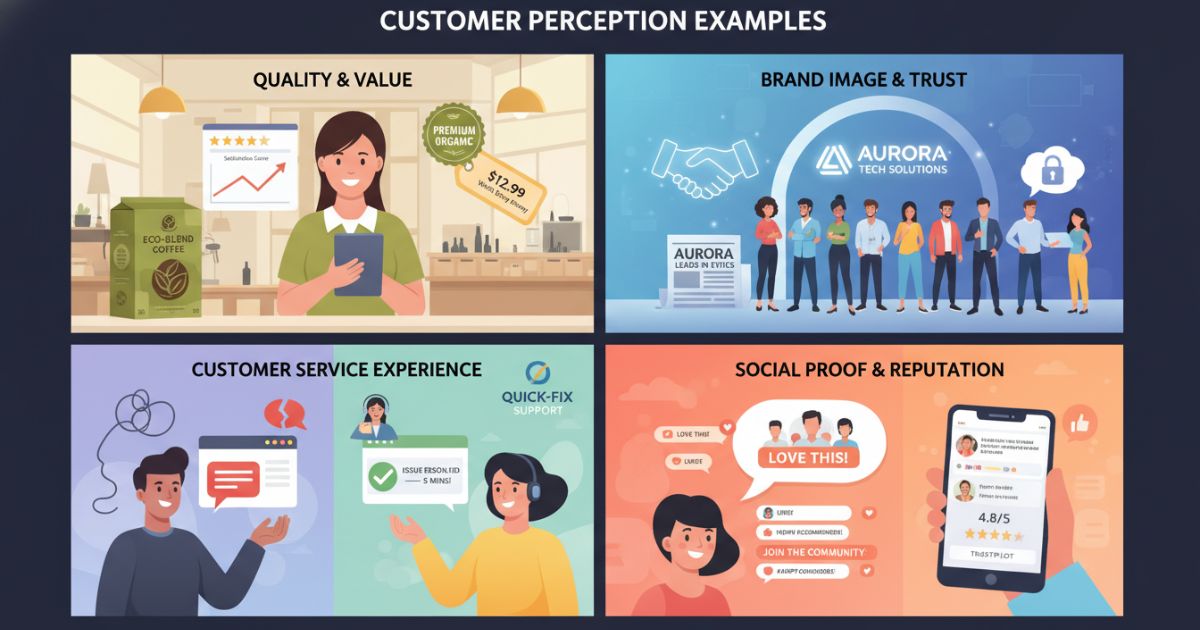
Customer perception becomes clear when we look at how real people react to a brand based on their customer experience, brand image, and user expectations. Every touchpoint shapes how customers feel about your business. Below are a few practical examples that show how consumer psychology, service quality, communication, and perceived value influence customer perception in the real world.
1. Positive Customer Perception: Starbucks & Consistent Experience
A customer walks into Starbucks and receives friendly service, a fast response, and a cozy environment. Even if another café sells cheaper coffee, the customer still chooses Starbucks because they perceive the brand as premium, consistent, and emotionally comforting. Their positive perception grows through repeated interactions.
This perception is shaped by:
-
a high-quality customer experience
-
consistent service quality
-
a strong brand identity
-
emotional connection through environment and messaging
-
trust built over time
When all these factors work together, customers form a positive mental image and remain loyal. This shows how brand trust, perceived value, and emotional branding directly influence customer behavior.
2. Negative Customer Perception: Late Delivery From an Online Store
A customer orders from an online shop expecting delivery within two days. Instead, the package arrives a week late, and customer support gives no clear updates. Even if the product itself is good, the customer forms a negative perception because the experience does not meet their expectations.
This perception is shaped by:
-
unmet user expectations
-
poor communication
-
lack of transparency
-
weak after-sales support
-
negative online reviews from others
This example shows how one poor touchpoint can impact customer satisfaction, weaken brand trust, and cause customers to switch to competitors.
3. Neutral-to-Positive Perception: Zara’s Trend-Focused Value
A customer visits Zara and sees stylish clothes at reasonable prices. They know the quality is not luxury-level, but they still feel Zara offers good perceived value. Their perception becomes:
“Zara is modern, trendy, and affordable.”
This perception is shaped by:
-
trend-driven designs
-
clear brand positioning
-
strong brand image
-
competitive pricing
Here, consumer psychology plays a role: customers accept the quality because the brand meets their style needs and price expectations.
4. Strong Perception of Quality: Apple & Premium Positioning
People often believe Apple devices are superior—sometimes without comparing specs. That’s because Apple has built a powerful perception of quality, innovation, and premium design. Customers trust the brand because of its reputation for reliability and smooth user experience.
This perception is shaped by:
-
premium brand image
-
consistent device quality
-
emotional branding
-
strong customer support
-
innovative marketing
Because of this positive perception, customers willingly pay more due to higher perceived value.
5. Word-of-Mouth Perception: Local Restaurant Example
A customer visits a new restaurant because a friend recommended it. Before even trying the food, they already have a positive expectation based on social proof. Word-of-mouth influences their perception, creating trust before the first interaction.
This perception is shaped by:
-
recommendations
-
customer testimonials
-
community influence
-
previous customer satisfaction
This example shows how consumer perception can be shaped by others’ experiences, even before the customer interacts with the brand themselves.
What Is the Customer Perception of Quality?

Customer perception of quality refers to how customers feel and judge the overall quality of your product or service based on their experiences, expectations, and brand interactions. It reflects the customer mindset—how they evaluate your product quality, service quality, and the brand image you create.
This perception is influenced by several key factors, including:
-
Durability (How long the product lasts)
-
Performance (How smoothly it functions)
-
Packaging (First impression and perceived value)
-
User experience (UX) (Ease of use and satisfaction)
-
Customer service (How well you support your buyers)
-
Price-to-value ratio (Whether the quality matches the price)
In many cases, perceived quality is different from actual quality.
For example, a product with premium packaging and a strong brand reputation may feel more valuable—even if its actual performance is similar to a cheaper alternative. This is known as perceived value, and it strongly influences customer decisions.
When customers experience high perceived quality, it leads to:
-
Greater brand trust
-
Stronger customer loyalty
-
Higher customer satisfaction
-
Better brand credibility
-
Improved market positioning
In short, the customer perception of quality shapes how customers rank your brand in their minds—making it a powerful driver of long-term success and competitive advantage.
How to Influence Consumer Perception?
Shaping consumer perception requires a strategic mix of consistent communication, high-quality experiences, and trust-building interactions. Since customers form opinions based on every touchpoint, brands must use smart perception management techniques to influence how people think, feel, and talk about them.
Here are the most effective ways to build a strong, positive brand image and influence customer sentiment:
1. Improve Customer Experience
A great customer experience is the strongest driver of positive perception. Every interaction—from your website speed to your support team—shapes customer expectations and buyer psychology.
Smooth, helpful, and memorable experiences create emotional satisfaction, which directly influences customer loyalty and brand trust.
2. Build a Strong Brand Identity
A clear and consistent brand identity helps customers instantly recognize your values.
Elements like:
-
visual branding
-
brand voice
-
messaging tone
-
storytelling
…all contribute to how customers interpret your brand personality and overall reputation.
A strong identity improves consumer perception and builds long-term brand credibility.
3. Maintain Quality Consistently
Customers judge your business based on what they receive.
When product and service quality remain consistently high, it strengthens:
-
perceived value
-
customer trust
-
repeat purchases
-
loyalty
Consistency builds reliability, which is the foundation of positive customer perception.
4. Leverage Social Proof
People trust people—not ads.
Using social proof marketing such as:
-
customer reviews
-
ratings
-
testimonials
-
influencer mentions
-
user-generated content (UGC)
…can significantly increase customer confidence.
Social proof helps potential buyers form a favorable perception even before interacting with your brand.
5. Communicate Clearly
Transparent brand communication reduces confusion and builds authenticity.
Customers appreciate brands that clearly explain:
-
product benefits
-
service terms
-
pricing
-
company values
Clear communication improves customer sentiment and strengthens trust.
6. Respond to Feedback
Listening to your audience is key to shaping perception.
Responding to feedback—whether positive or negative—shows that your brand values customer opinions. This not only improves customer engagement but also demonstrates your commitment to improvement.
A brand that listens earns long-term loyalty.
4 Ways to Improve Customer Perception in Marketing

Improving customer perception in marketing requires a customer-first approach, strong brand communication, and emotional connection. These strategies help shape how people interpret your brand, evaluate your value, and decide whether to trust you. Below are four highly effective ways to enhance brand perception, build loyalty, and influence consumer psychology in a positive way.
1. Personalize Customer Interactions
Personalization is one of the strongest tools for shaping customer experience and building trust. When brands tailor messages, offers, and product recommendations based on customer behavior, buying history, or preferences, it creates a deeper emotional connection.
Personalization improves:
-
customer engagement
-
customer satisfaction
-
perceived value
-
loyalty
By understanding customer expectations and delivering relevant interactions, your brand feels more human, relatable, and trustworthy. Personalized marketing signals that you care about individual needs—not just general audiences.
2. Use Storytelling to Build Emotional Impact
Brand storytelling helps customers connect emotionally with your mission, values, and identity. Stories are easier to remember than traditional advertisements and leave a lasting impact on consumer perception.
Whether it’s:
-
your brand journey
-
customer success stories
-
behind-the-scenes content
-
founder stories
…each narrative strengthens emotional branding and enhances the way customers see your business. Storytelling shapes brand meaning, builds authenticity, and helps customers feel part of your brand’s journey.
3. Build a Strong Online Presence
A strong digital presence is essential for shaping how customers perceive your brand online. Since most people research brands digitally before purchasing, your online reputation plays a major role in decision-making.
Focus on improving:
-
website quality and user experience
-
social media activity
-
educational content (blogs, videos, FAQs)
-
customer reviews and testimonials
-
search visibility
-
brand consistency across platforms
A clean, professional digital presence creates positive brand perception, increases trust, and helps customers understand your value quickly.
4. Offer Exceptional After-Sales Support
Exceptional after-sales service can turn a one-time buyer into a loyal advocate. Support is a major influence on customer satisfaction, and often shapes long-term customer perception more than marketing campaigns.
Great after-sales support includes:
-
fast responses
-
friendly service
-
hassle-free returns
-
follow-up communication
-
solving customer problems proactively
When customers feel supported even after purchasing, it builds strong customer loyalty, enhances trust, and improves overall brand reputation.
How to Measure Customer Perception?

Measuring customer perception is essential for understanding how people truly feel about your brand, what influences their decisions, and how well you meet customer expectations. By analyzing customer sentiment, feedback, and behavioral patterns, businesses gain valuable insights that help improve brand reputation, customer experience, and long-term loyalty.
Here are the most reliable ways to measure customer perception:
1. Surveys & Feedback Forms
Surveys allow you to gather direct voice of customer (VoC) insights. You can ask about satisfaction levels, brand trust, product quality, and overall experience.
These tools help you understand customer expectations and identify areas of improvement.
Common types include:
-
post-purchase surveys
-
website feedback forms
-
UX surveys
-
product experience questionnaires
2. Customer Satisfaction Score (CSAT)
CSAT measures how happy customers are with a specific interaction, product, or service.
It gives immediate insight into customer experience and helps brands track short-term satisfaction.
Higher CSAT = stronger positive perception.
3. Net Promoter Score (NPS)
NPS shows how likely customers are to recommend your brand to others.
It’s one of the most powerful customer loyalty indicators and reflects overall brand perception.
Promoters = strong trust
Detractors = poor perception
Passives = neutral perception
Reviewing NPS trends helps you understand customer sentiment over time.
4. Social Media Monitoring
Social media is where real, unfiltered customer opinions appear. Tracking comments, mentions, tags, and DMs helps businesses analyze public sentiment, brand conversations, and emotional reactions.
Use sentiment analysis tools to understand:
-
positive mentions
-
negative feedback
-
customer concerns
-
viral conversations
-
brand trust signals
This shows how your brand is perceived in real-time.
5. Online Reviews & Ratings
Reviews on Google, Yelp, Amazon, Facebook, TripAdvisor, and eCommerce stores strongly influence consumer perception. Customers trust peer feedback more than brand messaging, making reviews a powerful perception metric.
Analyzing reviews helps you:
-
measure brand credibility
-
identify product issues
-
evaluate service quality
-
track satisfaction trends
High ratings = positive perception
Low ratings = perception problems
6. Customer Behavior Analytics
Behavioral data reveals what customers actually do—not just what they say.
By observing consumer behavior patterns, brands can identify how perception influences real actions.
Analyze:
-
repeat purchase rates
-
average order value
-
browsing behavior
-
customer journey flow
-
engagement rate
-
churn patterns
When customer behavior improves, it’s a sign of stronger perception and deeper trust.
Final Thoughts
Customer perception is one of the most powerful forces shaping modern business success. It influences how customers view your brand, whether they trust your products, how often they purchase, and if they recommend you to others. A strong, positive perception improves brand reputation, customer sentiment, and long-term loyalty, giving your brand an edge in a competitive market.
To shape perception effectively, start by understanding your audience—their needs, expectations, emotions, and behavior. Then focus on improving every step of the customer journey, from product quality to communication to after-sales support. When you deliver real value and maintain clear, consistent messaging, you strengthen brand trust and credibility.
Building positive customer perception does not happen overnight. It requires continuous effort, smart perception management, and a commitment to delivering excellent customer experiences. But once achieved, it becomes your strongest competitive advantage, helping your brand grow, retain loyal customers, and secure a strong market position for years to come.
FAQs
1. What are the factors influencing customer perception?
Customer perception is influenced by product quality, brand image, price, customer experience, advertising, packaging, past experiences, and word-of-mouth.
2. What are the 5 types of perception?
The main types include:
-
visual perception
-
auditory perception
-
tactile perception
-
gustatory perception
-
olfactory perception
These shape how customers interpret information and form impressions.
3. How does branding affect customer perception?
Branding shapes customer perception by influencing how customers feel about your brand’s identity, values, quality, and message.
4. What is the difference between customer perception and customer expectation?
- Customer expectation is what customers hope to experience.
- Customer perception is what they actually experience and believe.
5. How can businesses improve negative customer perception?
By improving service quality, fixing pain points, offering compensation, responding to feedback, and delivering consistent value.
6. How does customer service impact perception?
Positive customer service builds trust and satisfaction; negative interactions can quickly damage a brand’s reputation.