How to Develop a Brand Strategy Framework

Creating a remarkable brand requires more than an appealing logo or catchy tagline. Successful brands stand on solid strategic foundations that guide every decision and interaction.
This guide explores how to build a robust brand strategy framework that drives tangible business results. We cover essential components like purpose, audience insights, and competitive positioning, offering actionable steps to create a strategy that connects meaningfully with customers and ensures long-term brand resilience.
Understanding Brand Strategy Fundamentals
A brand strategy framework serves as the architectural blueprint for your brand’s development and growth. It connects business objectives with customer perception, ensuring every brand element works cohesively toward defined goals. Effective frameworks balance analytical thinking with creative expression, incorporating data-driven insights alongside emotional intelligence to create brands that both perform commercially and resonate culturally.
Many organizations undermine their potential by mistaking brand tactics for strategy. A refreshed visual identity, updated website, or social media campaign might address immediate needs but fail to solve fundamental brand challenges. True strategy precedes these tactical decisions, providing the contextual foundation that makes execution meaningful and effective.
According to brand consultant Marty Neumeier, “A brand isn’t what you say it is—it’s what they say it is.” This perspective emphasizes that strategy must bridge internal aspirations with external perceptions. The most sophisticated framework proves worthless if disconnected from market realities and customer values. Successful strategies reconcile how a company sees itself with how its audience experiences the brand.
Essential Components of Effective Brand Frameworks

Every effective brand strategy framework addresses several critical dimensions, though the specific approach varies based on organizational needs and market context. These core components create the structural integrity supporting enduring brand equity.
1. Purpose and Vision Definition
Articulating why your organization exists beyond profit generation provides the gravitational center for your brand strategy. This brand purpose development defines the meaningful difference you make in customers’ lives or society at large. Boston Consulting Group research demonstrates that purpose-driven brands achieve higher customer loyalty and financial performance, particularly when this purpose authentically connects to the business model.
Vision statements project this purpose into future aspirations, describing the world your organization works to create. Together, purpose and vision inspire stakeholders while establishing decision-making boundaries. Every subsequent brand choice should advance these foundational commitments, creating natural brand alignment across initiatives.
2. Audience Identification and Understanding
Comprehensive audience insights form another critical framework component. This requires moving beyond demographic profiles to develop a nuanced understanding of customer motivations, pain points, and decision journeys. Effective branding strategies segment audiences based on behavioral patterns and psychographic characteristics rather than superficial categories.
The most valuable audience insights reveal unarticulated needs and emotional drivers that competitors have overlooked. These discoveries create strategic differentiation opportunities where brands can deliver unique value. Primary research combining qualitative methods (in-depth interviews, ethnographic observation) with quantitative analysis often yields the richest understanding.
3. Competitive Positioning Strategy
Strategic positioning establishes how your brand occupies a distinctive place in customers’ minds relative to alternatives. This requires a honest competitive brand analysis and assessment of market perceptions, identifying areas where your organization can credibly claim superior capabilities or approaches. Effective positioning balances aspiration with authenticity, staking claims your organization can consistently deliver.
Sustainable positioning typically connects to fundamental organizational strengths rather than transient market trends. As explored by marketing experts, positioning should create natural barriers against competitive imitation by leveraging capabilities, cultural elements, or relationships difficult for others to replicate. This strategic moat protects brand value through changing market conditions.
4. Brand Character Development
Brand character—sometimes called personality or voice—humanizes your organization through consistent expression patterns. This framework component defines how your brand communicates and behaves across touchpoints, creating emotional connections with audiences. Character choices should reflect audience preferences while remaining authentic to organizational culture, sometimes utilizing brand archetype models to define these traits clearly.
Well-defined brand characters establish recognition and familiarity that transcend individual campaigns or initiatives. They create intuitive guidelines for communication decisions, helping diverse teams maintain consistency without sacrificing creativity. Character attributes should balance aspirational qualities with realistic organizational capabilities to ensure sustainable expression.
5. Value Proposition Articulation
Compelling value propositions crystallize what makes your offering meaningfully different and superior for specific customer segments. This strategic component translates internal capabilities into external benefits, connecting what you do with why customers should care. Effective value propositions address functional, emotional, and social dimensions of customer needs.
Value propositions bridge positioning strategy with tactical execution, providing concrete messaging direction for marketing communications. They require ongoing refinement as market conditions and customer priorities evolve, ensuring continued relevance. The most compelling propositions focus on specific audience segments rather than attempting universal appeal.
Building Your Brand Strategy Framework
Creating an effective brand strategy framework requires methodical development rather than the formulaic application of generic templates. The following process guides this development while accommodating organizational particularities.
Step 1: Comprehensive Discovery
Begin with comprehensive discovery that gathers diverse perspectives and information sources. This phase should combine internal stakeholder interviews, customer research, competitive analysis, and market trend assessment. Examine historical performance data using tools like Google Analytics alongside qualitative insights about customer experience and perceptions. The discovery process often reveals disconnects between internal assumptions and market realities that become crucial improvement opportunities.
Step 2: Identify Strategic Tensions
From this discovery foundation, identify key strategic tensions that require resolution. Most brand challenges involve competing priorities that resist simple solutions—balancing heritage with innovation, accessibility with premium positioning, global consistency with local relevance. Acknowledging these tensions explicitly prevents superficial compromises that satisfy no one. Strong frameworks make clear strategic choices rather than attempting to be everything to everyone.
Step 3: Develop Hypotheses
Develop strategic hypotheses addressing these tensions, testing assumptions through additional research or small-scale experimentation before full commitment. This iterative approach reduces implementation risk while building organizational confidence in the strategic direction. Document emerging insights and decisions in frameworks that balance comprehensiveness with usability.
Step 4: Simplify for Application
A common development pitfall involves excessive complexity that hampers practical application. Frameworks overloaded with abstract terminology often gather dust rather than guide decisions. Effective strategies express sophisticated thinking through accessible language and visual structures that diverse stakeholders can understand and apply. The ideal framework provides clear direction while allowing appropriate flexibility in implementation.
Implementation That Delivers Results
Even brilliantly conceived branding strategies fail without effective implementation. This transition from strategy to action represents the most vulnerable point in brand development, requiring dedicated change management approaches alongside tactical execution.
Assess Capability Gaps
Begin implementation by assessing capability gaps between current operations and strategic requirements. This honest evaluation identifies areas needing investment, development, or partnership to deliver on brand promises. Address these gaps systematically before making public commitments that organizational capabilities cannot support.
Prioritize Initiatives
Prioritize implementation initiatives based on visibility, impact, and resource requirements. Early victories build momentum and stakeholder confidence while demonstrating strategy value. Creating detailed action plans with clear accountabilities ensures consistent progress, particularly when brand initiatives compete with operational priorities for resources and attention.
Research indicates that implementation effectiveness, not strategic sophistication, often determines brand performance differences. Studies show companies achieving only a fraction of potential brand value due to implementation shortcomings despite sound strategies. Address this implementation gap through integrated planning that connects strategic directions with specific tactics, behaviors, and measurement approaches.
Sustained Commitment
Effective brand building requires sustained commitment rather than periodic projects. Develop governance structures that maintain strategic consistency through leadership changes and market fluctuations. Regular brand performance assessment against defined metrics enables continuous improvement while demonstrating return on brand investments to organizational leadership.
Measurement Framework Development
Meaningful measurement provides the feedback mechanisms essential for strategy refinement. Develop balanced scorecards that track both perceptual outcomes (awareness, consideration, preference) and business results (customer acquisition, customer retention, pricing power). Effective measurement frameworks establish clear relationships between brand investments and organizational performance.
Balancing Metrics
Implement measurement approaches that balance short-term indicators with long-term brand health metrics. Tracking immediate campaign performance provides tactical guidance, while longitudinal brand strength measurements inform strategic adjustments. Include both quantitative metrics and qualitative assessments to capture the full spectrum of brand impacts.
|
Metric Type |
Examples |
Strategic Value |
|---|---|---|
|
Perceptual |
Brand Awareness, Consideration, Favorability |
Tracks mental market share and positioning effectiveness. |
|
Behavioral |
Website Visits, Repeat Purchases, Social Engagement |
measures actual customer actions driven by brand strength. |
|
Financial |
Price Premium, Customer Lifetime Value, Revenue |
Quantifies the economic impact of brand equity. |
|
Operational |
Employee Advocacy, Time-to-Hire, Retention |
Assesses internal brand health and culture alignment. |
Modern measurement approaches increasingly incorporate digital behavioral data alongside traditional survey methodologies. This combined approach provides a richer understanding of how brand perceptions influence customer actions across touchpoints. Digital analytics platforms enable more continuous measurement than periodic brand tracking studies, though both approaches deliver complementary insights.
Making Strategic Adjustments

Brand strategy frameworks require periodic refinement as markets evolve and organizational capabilities develop. Conduct formal strategy reviews at regular intervals, typically annually, while maintaining flexibility to address unexpected disruptions or opportunities. These reviews should examine both performance outcomes and implementation experiences to identify improvement areas.
Distinguish between tactical adjustments that optimize within the strategic framework and fundamental shifts requiring framework revision. Most organizations benefit from strategic consistency with tactical flexibility rather than frequent directional changes. When substantial framework revisions become necessary, manage these transitions carefully to maintain stakeholder alignment and operational continuity.
Integrating Digital and Traditional Channels
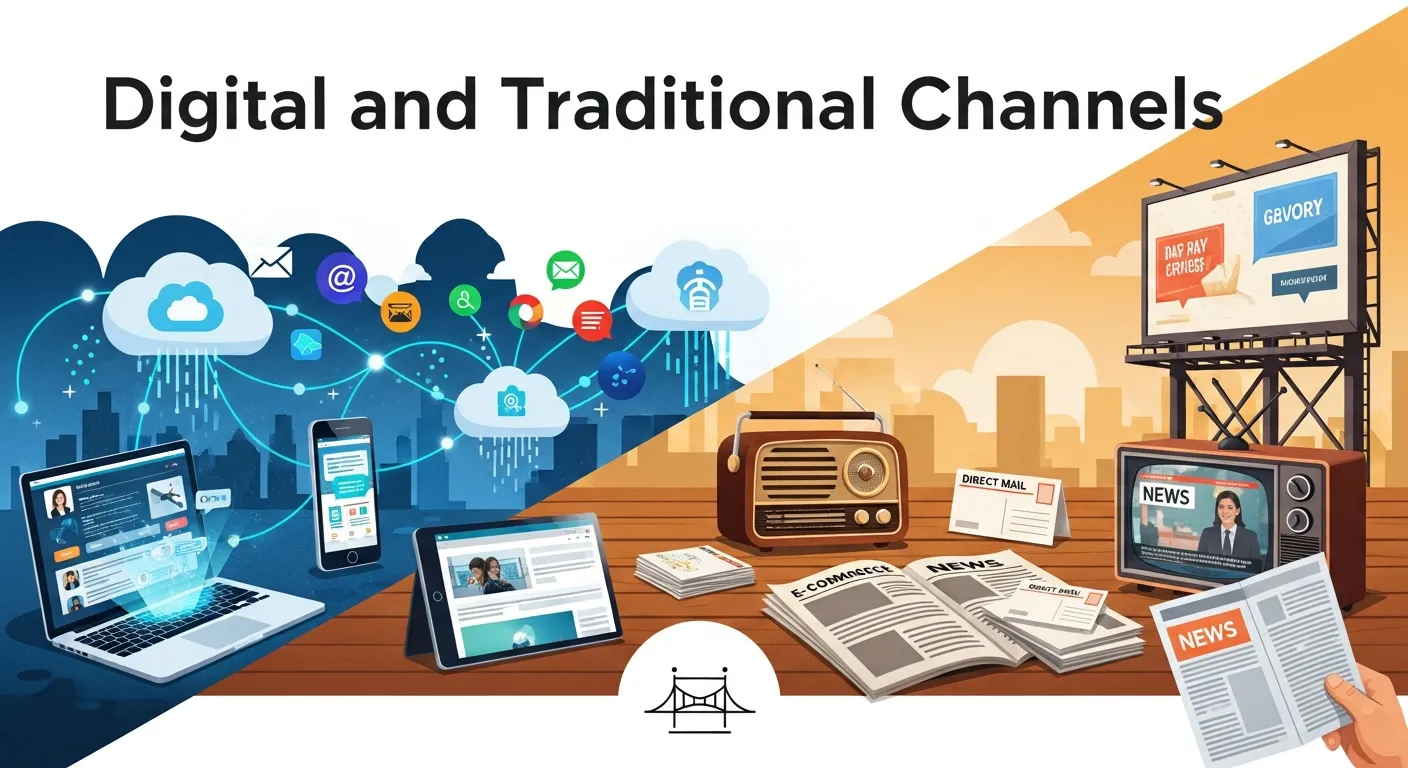
In today’s omnichannel environment, your brand strategy framework must seamlessly integrate digital and traditional touchpoints. The distinction between “digital marketing” and “traditional marketing” is increasingly blurring; the consumer sees only one brand.
Digital Ecosystem Alignment
Your digital presence—from your website’s UX to your social media voice—must reflect your core strategic positioning.
- SEO Optimization: Ensure your content strategy aligns with the keywords and topics relevant to your brand purpose. Use tools like SEMrush to find the intersection between user intent and your brand authority.
- Content Marketing: Develop content pillars that reinforce your value proposition. Every piece of content should serve a strategic role, whether it’s awareness building or driving lead generation.
- Social Proof: Leverage user-generated content and reviews to validate your brand promise. Authenticity is key in the digital space.
Consistent Customer Experience
Whether a customer interacts with a chatbot, reads an email campaign, or visits a physical store, the experience must be consistent. Customer journey mapping helps identify potential friction points where the brand promise might be broken. A unified view of the customer ensures that personalization tactics feel helpful rather than intrusive.
Conclusion
Building a brand strategy framework that truly works requires balancing analytical rigor with practical application. The most sophisticated strategies create little value without organizational adoption and consistent execution. Focus on developing frameworks that guide meaningful decisions rather than impressive documents that gather dust.
Remember that brand strategy development represents an ongoing journey rather than a destination. The most successful brands continuously refine their approaches based on performance feedback and changing conditions, maintaining strategic coherence while evolving tactical expressions. With methodical development, thoughtful implementation, and consistent measurement, your brand strategy framework can deliver sustainable competitive advantage and compelling customer experiences.
Frequently Asked Questions (FAQs)
1. What is the difference between brand strategy and marketing strategy?
Brand strategy defines who you are, why you exist, and what you stand for. It is long-term and foundational. Marketing strategy defines how you will communicate that brand to your target audience to achieve specific business goals (sales, leads). Marketing is the tactical expression of the brand strategy.
2. How long does it take to develop a brand strategy framework?
The timeline varies depending on the organization’s size and complexity. For small businesses, it might take 4-8 weeks. For large enterprises involving extensive research and stakeholder alignment, it can take 3-6 months or longer. It’s a process that shouldn’t be rushed.
3. Do I need a brand consultant to build a framework?
While not strictly necessary, a brand development consultant brings an objective, outside perspective that internal teams often lack. They can facilitate difficult conversations, challenge assumptions, and bring expertise in research and framework construction. However, a dedicated internal team can also do this work with the right discipline.
4. How often should we update our brand strategy?
Your core purpose and values should remain relatively stable (10+ years). However, elements like positioning, messaging, and visual identity should be reviewed every 3-5 years or when there are significant market shifts. Tactics should be reviewed quarterly.
5. What is the role of employees in brand strategy?
Employees are your most critical brand ambassadors. If they don’t understand or believe in the strategy, they can’t deliver it to customers. Internal branding—educating and engaging employees—is as important as external marketing. Brand advocacy starts from within.
6. Can a brand strategy help with recruitment?
Absolutely. A strong employer brand, derived from the overall brand strategy, attracts talent that aligns with your culture and values. Purpose-driven brands often find it easier to recruit high-quality candidates who are looking for meaning in their work.
7. How does brand strategy relate to customer experience (CX)?
Brand strategy makes a promise; CX delivers on it. If your strategy promises “simplicity,” but your customer service is complex and frustrating, you have a brand gap. Your framework should dictate the standards for CX design.
8. Is a logo part of the brand strategy framework?
A logo is a visual asset, a result of the strategy, not the strategy itself. It falls under “Brand Identity.” The framework defines why the logo looks the way it does and what it represents.
9. How do we measure brand equity?
Brand equity is measured through a combination of metrics: brand awareness (recall and recognition), perceived quality, brand associations, and brand loyalty. Financial methods also exist to value the brand as an intangible asset on the balance sheet.
10. What is “Brand Architecture”?
Brand architecture is the system that organizes brands, products, and services within an organization. It defines how they relate to each other (e.g., House of Brands like P&G vs. Branded House like Google). It is a sub-component of the broader strategy framework, vital for companies with multiple offerings.
Learn more: Why Modern Brand Strategy Needs ABM And Vice Versa