Sensory Branding: Engaging All Five Senses to Create Unforgettable Brand Experiences
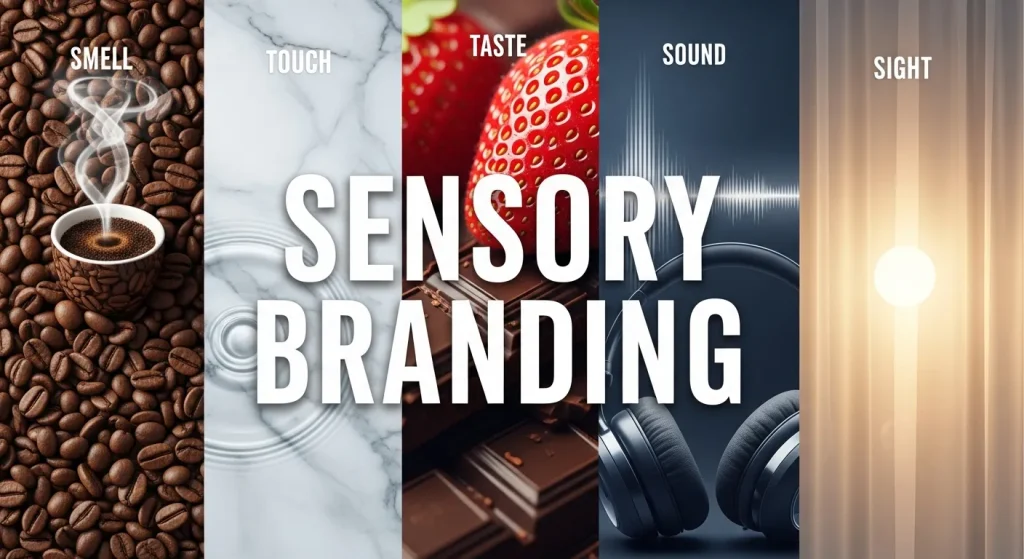
Why do some brands feel unforgettable while others fade away? The secret isn’t just in what you see—it’s in what you hear, smell, touch, and taste. Welcome to the world of sensory branding.
This comprehensive guide explores the power of sensory branding to transform customer experiences. We delve into the science behind multisensory marketing, provide actionable strategies for engaging all five senses, and show how emotional branding creates lasting memories. You will learn to move beyond visual identity and build a brand that truly resonates on a biological level.
What is Sensory Branding?
In a digital age dominated by screens, most marketing efforts focus heavily on visual and auditory stimuli. However, humans experience the world through five distinct channels. Sensory branding is a holistic marketing approach that engages the senses—sight, sound, smell, touch, and taste—to influence consumer perception and behavior.
Unlike traditional marketing, which often relies on rational persuasion or visual aesthetics alone, sensory branding targets the limbic system, the part of the brain responsible for emotion and memory. By stimulating multiple senses simultaneously, brands can create a “sensory signature” that fosters deeper emotional connections and drives brand loyalty.
Think about the distinct smell of a new car, the satisfying “snap” of a chocolate bar, or the iconic sound of a Mac starting up. These aren’t accidents; they are calculated moves in sensory branding designed to trigger specific emotional responses. This approach is a cornerstone of building resonant brand growth, moving customers from simple awareness to deep, subconscious preference.
The Science Behind the Senses
Why is sensory branding so effective? It comes down to biology. Our senses are our primary link to memory.
- Olfactory Bulb: The sense of smell is directly linked to the amygdala and hippocampus, which process emotion and memory. This is why a specific scent can instantly transport you back to childhood.
- Haptics: Touch communicates ownership and quality. Touching a product increases the “endowment effect,” making us feel like we already own it.
- Sonic Triggers: Sound can alter our mood and perception of time. Fast-tempo music in a retail store can make shoppers move quicker, while slow jazz encourages lingering.
By leveraging neuromarketing techniques, brands can hack these biological responses to create more impactful experiences.
The Five Pillars of Sensory Branding
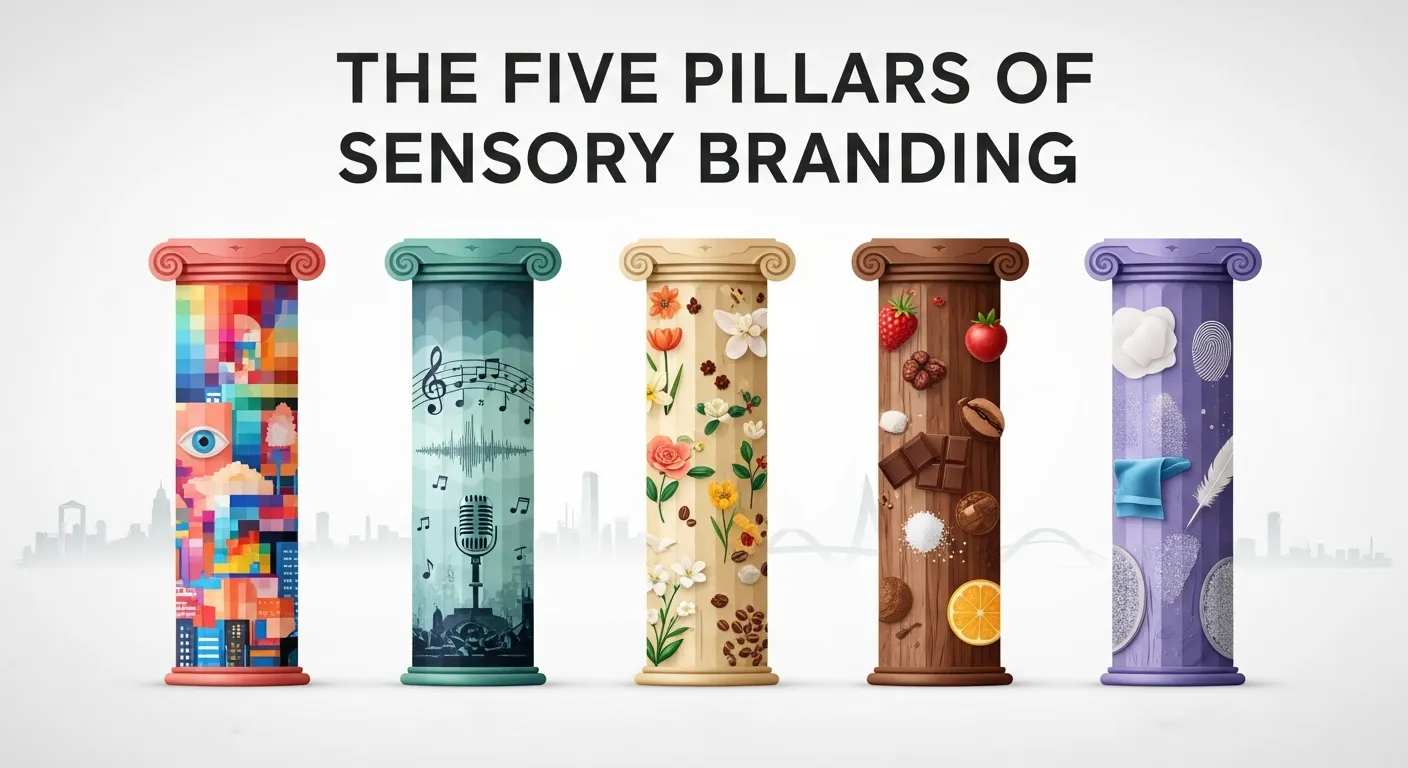
To implement a successful sensory branding strategy, you must audit and optimize how your brand shows up across all five sensory channels.
1. Visual Branding: Beyond the Logo
While sensory branding expands beyond sight, visual cues remain the most dominant. However, effective visual branding goes deeper than a logo. It encompasses the psychology of color in branding, lighting, and spatial design.
- Color Psychology: Red evokes urgency and appetite (McDonald’s), while blue signals trust and calm (Facebook, Chase). Understanding these triggers is essential for brand positioning in marketing.
- Imagery: In the era of inclusive brand strategies, the imagery you use matters. Authentic, diverse representation signals that your brand is for everyone.
- Lighting: The mood of a physical space is dictated by light. Cool, bright light suggests efficiency (hospitals, tech stores), while warm, dim light suggests intimacy and luxury (high-end restaurants).
2. Auditory Branding: The Power of Sound
The power of sonic branding cannot be overstated. Audio branding isn’t just about jingles; it’s about the entire soundscape of your brand.
- Audio Logos: Think of the Intel “bong” or the Netflix “ta-dum.” These short sound bites are instant identifiers.
- Functional Sounds: The sound a product makes when used—like the “pop” of a Pringles can or the roar of a Harley Davidson engine—confirms quality and performance.
- Voice Strategy: With the rise of voice branding via smart speakers and AI assistants, having a distinct brand voice—literally—is crucial. Does your brand sound authoritative, friendly, or robotic?
3. Olfactory Branding: The Scent of Loyalty
Smell is the most powerful trigger for memory. Olfactory branding involves using scent to enhance the customer environment.
- Ambient Scenting: Hotels like Westin and retailers like Abercrombie & Fitch pump signature scents into their lobbies and stores. This increases dwell time and creates a strong sense of place.
- Product Scent: The “new car smell” is a manufactured scent designed to signal luxury and unused pristine condition.
- Nostalgia: Brands can use nostalgia in digital branding by evoking scents associated with positive past memories, like baking cookies or fresh cut grass.
4. Tactile Branding: The Feel of Quality
Touch creates a sense of truth. We often don’t believe something is real until we hold it. Tactile branding focuses on texture, weight, and temperature.
- Packaging: Apple is a master of this. The friction of the box lifting off, the smooth texture of the device—it all screams premium. In luxury brand marketing, heavy paper stock and embossed lettering signal value before the product is even seen.
- Product Materials: Soft-touch coatings on electronics or the cool glass of a perfume bottle enhance user experience and branding.
- Digital Haptics: Even in digital spaces, haptic feedback (vibrations) on smartphones adds a tactile layer to the user interface.
5. Gustatory Branding: The Taste of the Brand
Taste is often the hardest sense to integrate for non-food brands, but it’s not impossible.
- Hospitality: A car dealership offering fresh-baked cookies or a salon serving cucumber water uses taste to create a positive association.
- Flavor Innovation: For CPG brands, consumer brand marketing relies heavily on flavor profiles. However, even non-food brands can collaborate. A fashion brand might launch a limited-edition cocktail with a partner, utilizing co-branding in marketing to reach the taste buds.
The Role of Emotion in Sensory Branding
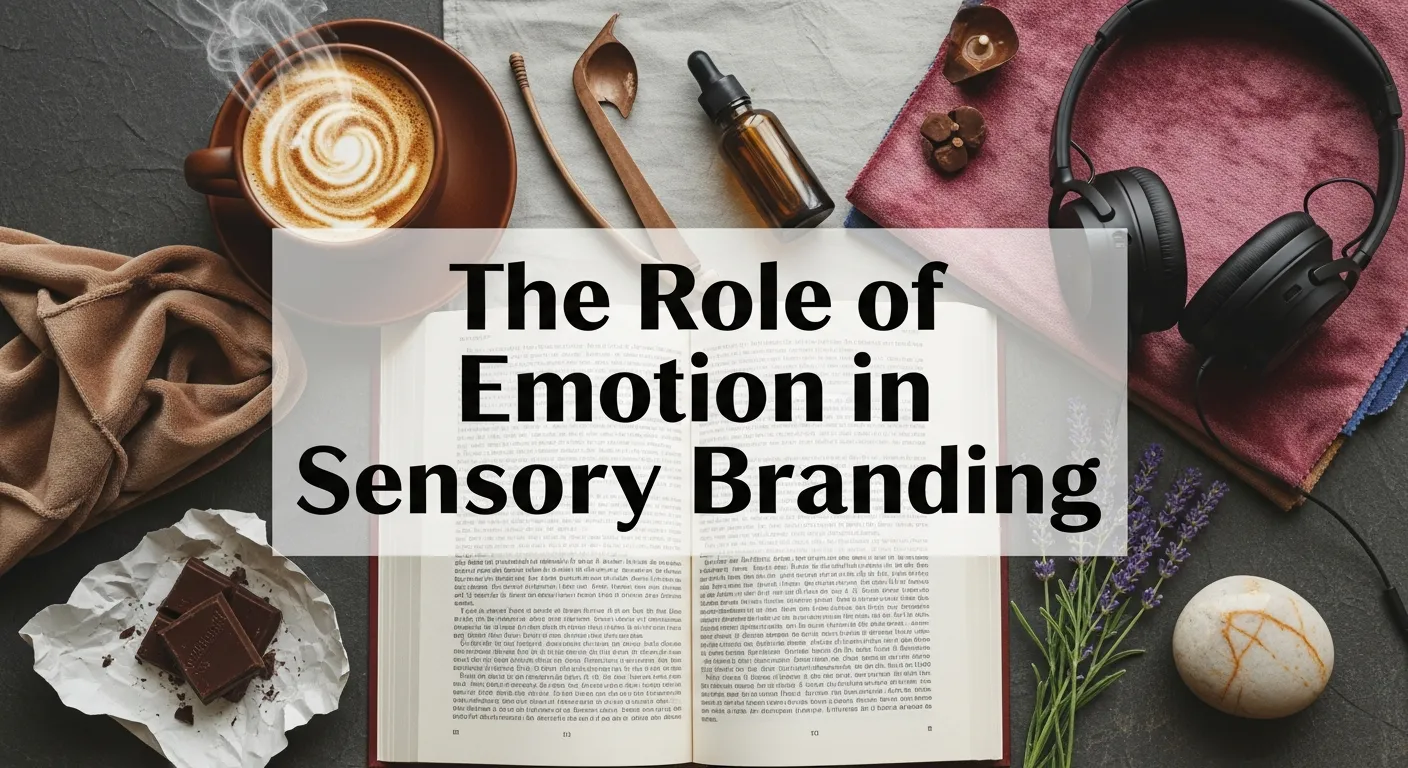
Sensory branding is the bridge to emotional branding. Emotions drive decisions; logic justifies them. By engaging the senses, you bypass the critical, logical brain and speak directly to the emotional brain.
Narrative Transportation
When sensory inputs align with brand storytelling, the effect is powerful. Imagine a travel brand.
- Visual: High-res videos of waves.
- Audio: The sound of the ocean.
- Scent: A direct mail piece infused with coconut and sea salt.
This multisensory approach transports the customer, making the story of “relaxation” feel real. This is interactive storytelling in branding at its finest.
Building Brand Trust
Consistency across senses builds trust. If a luxury car looks beautiful (visual) but the door sounds tinny when it shuts (audio) and the steering wheel feels cheap (tactile), the brain registers a disconnect. This “sensory dissonance” erodes brand trust. Conversely, sensory congruence mapping ensures all inputs tell the same story of quality, reinforcing brand equity.
Digital Sensory Branding: Engaging Senses Through Screens
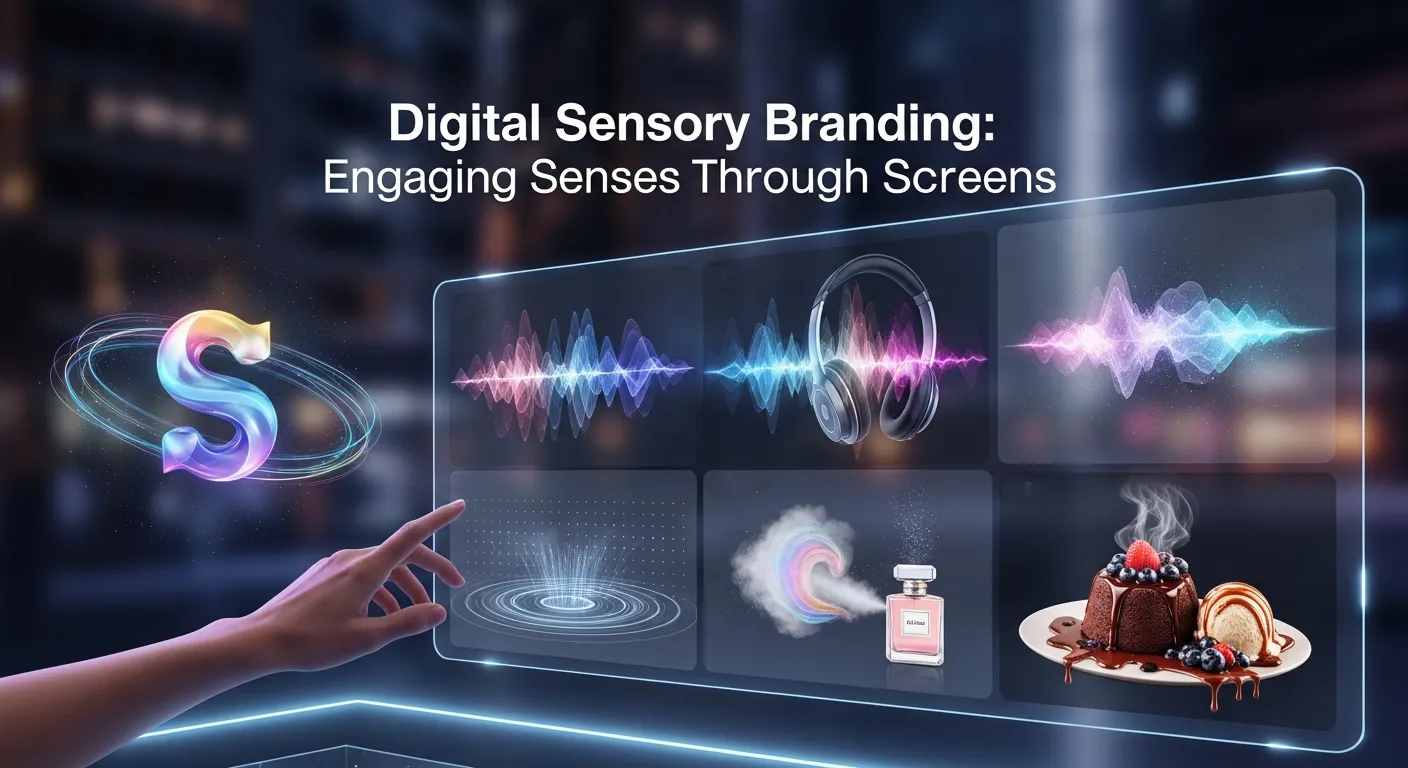
How do you apply sensory branding when your customer is behind a screen? This is the challenge of mastering digital marketing in the sensory age.
ASMR and Visual Tactility
Since we can’t touch objects on a screen, we rely on “visual tactility.” High-definition close-ups that show texture (the weave of fabric, the condensation on a glass) trigger “mirror neurons,” allowing us to imagine the feeling. The trend of ASMR (Autonomous Sensory Meridian Response) in video content leverages crisp audio triggers to create physical sensations of relaxation.
AI Sensory Branding and the Metaverse
As we look toward the future, AI sensory branding and mastering metaverse branding will open new frontiers.
- Virtual Reality (VR): VR headsets are already introducing spatial audio and visual immersion.
- Haptic Suits: Innovations in wearable tech will soon allow users to “feel” digital objects in the metaverse.
- AI Personalization: AI will analyze user data to deliver personalized sensory experiences—adjusting the color palette or background music of a website based on the user’s mood or past behavior.
Implementing a Sensory Branding Strategy
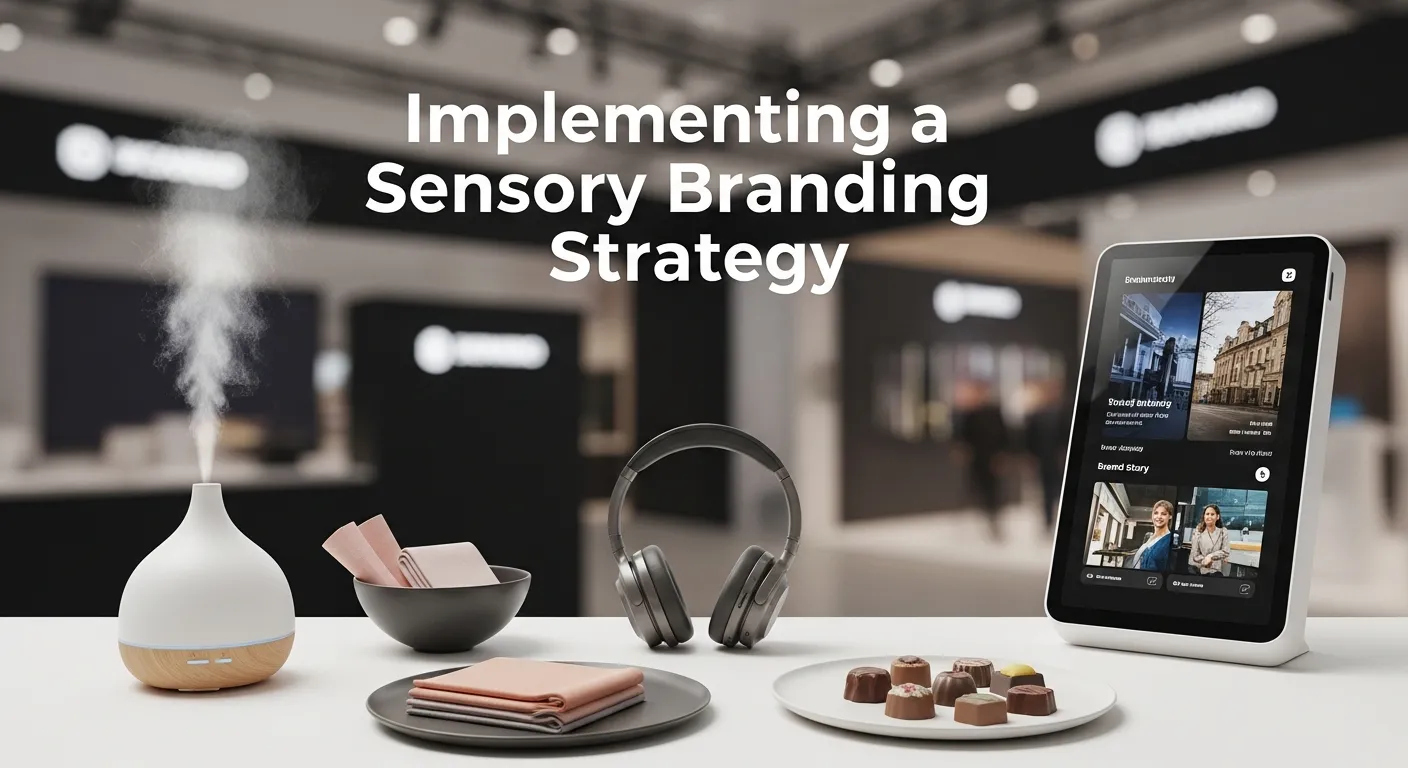
Ready to engage the senses? Follow this roadmap to build a multisensory brand.
Step 1: Sensory Audit
Analyze your current customer journey.
- What do customers see, hear, smell, touch, and taste when interacting with your brand?
- Are there sensory gaps? (e.g., a beautiful store that smells like cleaning chemicals).
- Are there conflicting signals?
Step 2: Define Your Sensory Signature
Align sensory cues with your brand archetypes.
- The Lover: Soft textures, warm lighting, rose scents, slow music.
- The Explorer: Earthy textures, natural light, wood/pine scents, energetic or ambient nature sounds.
- The Creator: Bright colors, innovative materials, crisp audio, unexpected flavors.
Step 3: Integrate Across Channels
Ensure your sensory strategy is omnichannel.
- Physical: Optimize store/office environments.
- Digital: Use high-quality audio and texture-rich visuals.
- Product: Refine packaging and materials.
- Content: Use descriptive language in your copy to evoke sensory imagination.
Step 4: Measure and Optimize
How do you measure feelings?
- Sentiment Analysis: Use social listening tools to see how people describe their feelings about your brand.
- Neuromarketing Research: For larger budgets, EEG and facial coding can track emotional responses to sensory stimuli.
- Engagement Metrics: Track dwell time, video completion rates, and conversion rates after implementing sensory changes.
Case Studies: Sensory Branding in Action
Singapore Airlines: The Scent of Branding
Singapore Airlines created a signature scent, Stefan Floridian Waters, which is worn by flight attendants, blended into hot towels, and diffused in the cabins. This consistent olfactory cue signals luxury and relaxation, becoming a subconscious trigger for the brand experience.
Apple: The Touch of Tech
Apple’s obsession with tactile branding is legendary. From the satin finish of the MacBook to the friction of the packaging, every touchpoint reinforces the concept of premium, seamless technology. Their retail stores, with their open space and light wood tables, offer a consistent visual and spatial experience.
MasterCard: The Sound of Transactions
MasterCard dropped its name from its logo and focused heavily on sonic branding. They developed a comprehensive sound architecture, including a transaction sound—a short melody that plays when a payment is accepted. This gives users immediate audio confirmation and reinforces brand awareness with every purchase.
Challenges and Ethical Considerations
Sensory branding is powerful, which means it must be used responsibly.
Sensory Overload
More isn’t always better. Too much noise, scent, or visual clutter can lead to sensory overload, causing anxiety and driving customers away. The goal is harmony, not chaos.
Cultural Sensitivity
Sensory triggers are often culturally specific. White symbolizes purity in the West but mourning in parts of Asia. A scent that implies “freshness” in one country might smell like “medicine” in another. Global brand localization requires adapting sensory cues to local norms.
Manipulation vs. Enhancement
Is piping the smell of chocolate into a store manipulation? Some argue yes. Brands must navigate the line between enhancing the customer experience and exploiting biological triggers. Brand authenticity is key; the sensory cue should reflect the true nature of the product, not mask a deficiency.
Sensory Branding Tactics by Industry
|
Industry |
Visual Tactic |
Auditory Tactic |
Olfactory Tactic |
Tactile Tactic |
Gustatory Tactic |
|---|---|---|---|---|---|
|
Retail (Fashion) |
Dynamic lighting, color blocking |
Tempo-adjusted playlists |
Signature ambient scent |
High-quality hangers, fabric swatches |
Complimentary water/champagne |
|
Hospitality |
Art curation, mood lighting |
Lobby soundscapes |
HVAC scent diffusion |
High thread-count linens |
Welcome chocolates/drinks |
|
Automotive |
Sleek showroom design |
Engine tuning, door “thud” sound |
“New car” scent |
Leather steering wheel, weighted keys |
Espresso bar in service center |
|
Tech/SaaS |
Clean UI/UX, whitespace |
Notification sounds, UI clicks |
Unboxing scent (packaging) |
Haptic feedback on mobile |
N/A (usually) |
|
Real Estate |
Virtual staging, drone video |
Ambient nature sounds in video |
Baked goods smell at open house |
Brochure paper quality |
Refreshments during tours |
The Future of Sensory Branding
As we move forward, sensory branding will become more personalized and immersive.
Generative Engine Optimization and AI
Future search engines might not just index text; they might index sensory experiences. Generative Engine Optimization will evolve to help brands rank for “moods” and sensory queries.
Sustainable Sensory Branding
With the rise of sustainable branding strategies, materials matter. Brands are moving away from plastics to tactile, eco-friendly materials like bamboo and mushroom leather. These materials offer a unique tactile experience that reinforces a commitment to the environment, addressing the truth behind branded sustainability and environmental harm.
Neuro-Inclusive Design
As inclusive brand strategies evolve, brands will design for neurodiversity. This means creating sensory-friendly environments for people with autism or sensory processing disorders (e.g., “quiet hours” in retail stores).
Conclusion
Sensory branding is the antidote to a flat, digital world. It brings humanity, emotion, and depth back to marketing. By engaging all five senses—sight, sound, smell, touch, and taste—you move your brand from a commodity to a memory. You create an ecosystem of feeling that customers want to return to again and again. In the battle for attention, the brands that feel the most real will win. Start listening, sniffing, and touching your brand today—because your customers certainly are.
Frequently Asked Questions (FAQs)
1. Is sensory branding expensive to implement?
Not necessarily. While developing a custom scent or a sonic identity can be costly, simple changes like curating a Spotify playlist for your store, improving lighting, or upgrading your business card paper stock are cost-effective sensory branding tactics.
2. Can digital-only brands use sensory branding?
Yes. Digital brands rely heavily on visual and auditory cues. Tactile branding can be implied through high-quality textures in imagery. Interactive content marketing engaging user interaction (clicks, swipes) also provides a form of digital tactile feedback.
3. How does scent marketing actually work?
Scent marketing works by diffusing oils through HVAC systems or standalone units. The scent molecules bind to olfactory receptors, triggering the limbic system to evoke memories and emotions associated with that scent, influencing brand perception.
4. What is the most important sense for branding?
Sight is typically the most dominant, accounting for about 80% of information processing. However, smell is the most emotional and memory-linked. A balanced multisensory branding approach is more effective than relying on just one.
5. How do I choose a “brand sound”?
Start with your brand personality. Is your brand energetic (fast tempo, pop), sophisticated (classical, jazz), or innovative (electronic, synth)? Your sound should mirror your visual identity and values.
6. Can sensory branding help with brand loyalty?
Absolutely. The neuroscience of brand loyalty shows that multisensory experiences create stronger neural pathways. When a brand is embedded in multiple senses, it becomes harder to forget and easier to recall, driving repeat business.
7. Is sensory branding the same as experiential marketing?
They are related but distinct. Experiential marketing is an event or activation (like a pop-up shop). Sensory branding is the ongoing strategy of how the brand is experienced through the senses across all touchpoints, permanent or temporary.
8. How does sensory branding relate to accessibility?
Good sensory branding improves accessibility. For example, using distinct audio cues helps visually impaired users navigate an app. Using clear visual contrasts helps those with hearing impairments. This aligns with ultimate guide to brand accessibility principles.
9. What if my brand smells “bad” due to the nature of the business (e.g., a gym)?
This is a prime opportunity for olfactory branding. Use odor-neutralizing scents like citrus or eucalyptus that signal cleanliness and energy, transforming a negative sensory input into a positive one.
10. Can I trademark a smell or sound?
Yes, in some jurisdictions. Sounds (like the MGM lion roar) and scents (like Play-Doh) have been trademarked. However, it is more difficult than trademarking a visual logo and requires proof that the scent/sound serves as a unique identifier for the brand.