The Future of Brand Communities: From Followers to Brand Advocates

The concept of community is evolving from a marketing buzzword into a core business strategy. The future of brand communities hinges on transforming passive audiences into active, passionate advocates.
This article explores the seismic shifts shaping the future of brand communities. We’ll provide a roadmap for building authentic connections, fostering loyalty, and turning your customers into your most powerful marketing force, ensuring your brand thrives in the years to come.
The Evolution of Connection: Understanding the New Era of Brand Communities
For decades, marketing operated on a broadcast model. Brands spoke, and customers listened. The relationship was largely transactional, built on a foundation of advertising, promotions, and one-way communication. A “brand community” might have been a fan club or a group of loyal purchasers, but their collective power was latent, their interactions limited. The digital revolution, particularly the rise of social media, cracked this model open. Suddenly, customers had a voice. They could talk back to brands and, more importantly, they could talk to each other.
This shift marked the first major evolution in brand communities. Platforms like Facebook, Instagram, and Twitter became the new town squares. However, the initial focus was on accumulating followers and likes—vanity metrics that often failed to translate into genuine loyalty or advocacy. Brands were still broadcasting, just on new channels. This approach led to oversaturated feeds and overstimulated consumers, creating a digital noise that drowned out meaningful connection.
Now, we are entering a new, more sophisticated phase. The future of brand communities is not about the size of an audience but the depth of its connection. It’s a strategic move away from simply acquiring followers and toward cultivating a dedicated group of brand advocates. This change is driven by a profound consumer need for belonging, authenticity, and purpose. In an age of digital fatigue and widespread loneliness, people are seeking genuine human connection, and they are finding it in groups centered around shared values and interests—including the brands they love.
This modern iteration of community is a two-way street. It’s about co-creation, shared experiences, and mutual value. Brands are no longer just sellers of products; they are facilitators of connection, hosts of conversations, and enablers of shared identity. The focus has shifted from brand-centric monologues to customer-centric dialogues. This transition is critical for long-term brand resilience and growth. Companies that fail to adapt risk becoming irrelevant, while those that embrace this new paradigm will build unshakable loyalty and a powerful competitive advantage. The future of brand communities is interactive, immersive, and deeply human.
Why Brand Communities are No Longer Optional
In a marketplace defined by endless choice and fleeting consumer attention, building a strong brand community has transitioned from a “nice-to-have” to a business imperative. The traditional levers of marketing—price, promotion, and placement—are losing their power to differentiate. A strong community, however, creates a durable moat around your brand that competitors find nearly impossible to replicate. It fundamentally alters the customer relationship, moving it from transactional to relational.
The statistical and psychological evidence supporting community-building is compelling. Consumers are actively seeking connection. A report highlighted that 70% of consumers want to belong to something bigger than themselves. This desire for belonging is a powerful motivator. When a brand successfully taps into this need, it forges an emotional branding connection that transcends the product itself. This bond translates directly into business value. Communities are proven to increase customer retention, boost lifetime value, and drive organic growth through word-of-mouth marketing. User-generated content (UGC), a natural byproduct of a healthy community, is often seen as more trustworthy and influential than traditional advertising.
Moreover, the future of brand communities is intrinsically linked to navigating the challenges of the modern digital landscape. As artificial intelligence increasingly influences purchasing decisions through recommendation algorithms, a community provides a human override. A recommendation from a trusted friend or fellow community member carries more weight than one from an algorithm. This makes community advocacy a powerful tool for driving conversions. Brands that invest in building and nurturing these relationships are future-proofing their business, creating a resilient ecosystem of supporters who will stand by them through market shifts and crises. This is why brand building and performance marketing are becoming two sides of the same coin; a strong community boosts both.
The Pillars of a Thriving Brand Community
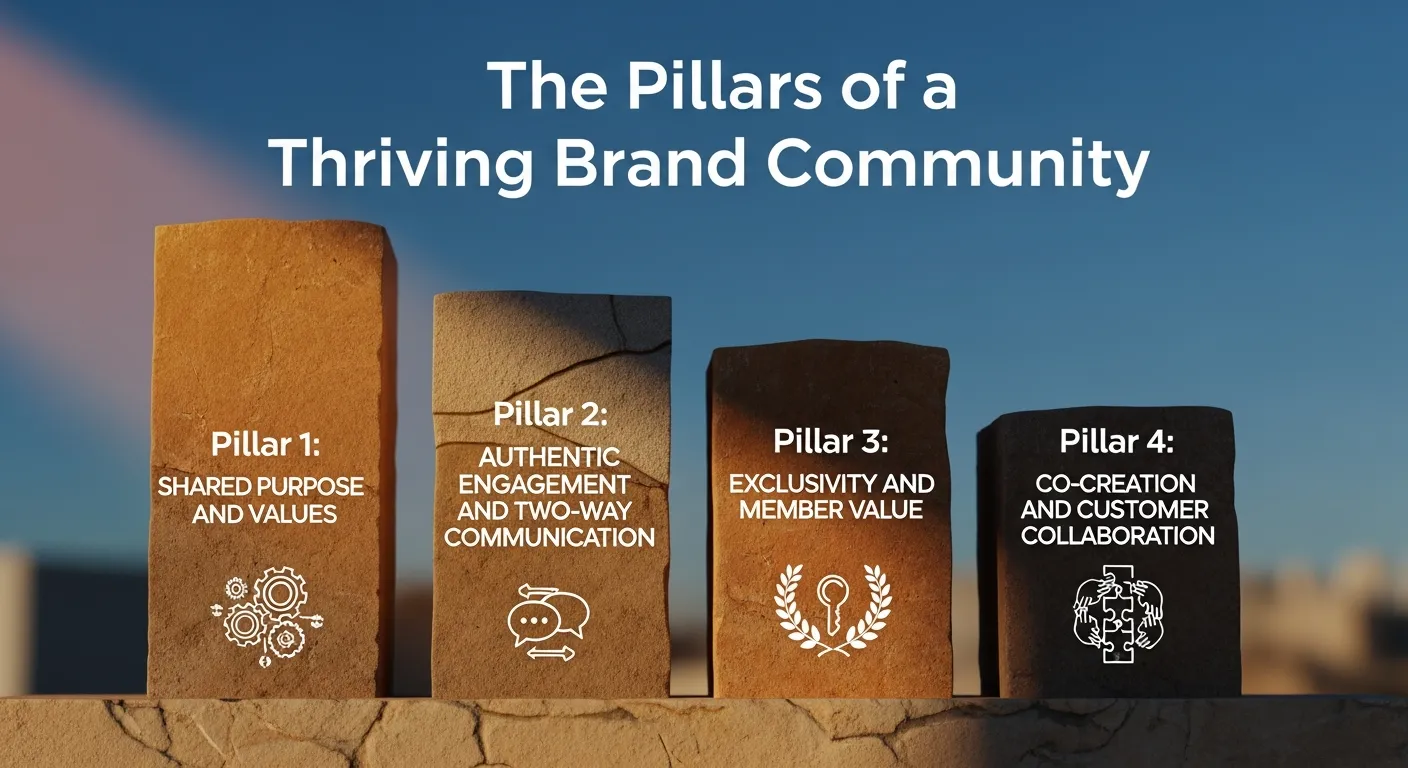
Building a successful community is not about flipping a switch. It requires a strategic framework built on foundational pillars that encourage participation, foster trust, and deliver tangible value to members. The future of brand communities rests on mastering these core elements.
Pillar 1: Shared Purpose and Values
A community needs a reason to exist beyond the products it’s centered around. The most powerful brand communities are united by a shared purpose, a common set of values, or a collective identity. This is the “why” that inspires people to join and, more importantly, to stay. Patagonia Action Works is a prime example. It connects environmentally-conscious customers with local activist groups, transforming a community of outdoor enthusiasts into a network for environmental change. Their shared value—protecting the planet—is a far more potent unifier than a shared love for fleece jackets.
To build this pillar, brands must first define their own brand purpose development. What do you stand for beyond profit? Your mission should be authentic and resonate with your target audience. This purpose becomes the north star for your community, guiding content, initiatives, and member interactions. An inclusive branding strategy is also critical here; your values must be communicated in a way that welcomes diverse perspectives and makes everyone feel they belong.
Pillar 2: Authentic Engagement and Two-Way Communication
A community is a conversation, not a broadcast. The era of brands talking at their customers is over. The future of brand communities demands that brands listen, respond, and participate as genuine members. This means moving out of the spotlight and creating spaces for member-to-member interaction. Your role shifts from being a director to a facilitator.
Authentic engagement can take many forms:
- Active Listening: Monitor conversations to understand member needs, pain points, and desires. Use social listening as a brand strategy tool to glean insights that inform product development and marketing.
- Responsiveness: When members ask questions or provide feedback, respond promptly and personally. This shows you value their input.
- Empowering Members: Encourage members to lead discussions, organize events, and share their expertise. The Adobe Community thrives because it empowers users to help each other solve complex software problems.
Conversational marketing, utilizing tools like chatbots and AI for real-time engagement, can supplement human interaction, but it cannot replace the need for genuine, empathetic human connection.
Pillar 3: Exclusivity and Member Value
People join communities to get something they can’t get elsewhere. This value can be tangible, like exclusive content, early access to products, or special discounts. It can also be intangible, such as access to a network of like-minded peers, a sense of status, or the opportunity to learn a new skill. The key is to provide relevant added value that reinforces the benefits of belonging.
LEGO Ideas is a masterclass in this. Members can submit their own designs for new LEGO sets. If a design gets enough votes from the community, LEGO reviews it for production. This offers immense value: the chance to become a LEGO designer. This co-creation model gives members a real stake in the brand’s success. Similarly, gamified branding elements, such as earning badges for participation or unlocking new levels of access, can enhance the sense of exclusivity and make engagement more compelling.
Pillar 4: Co-Creation and Customer Collaboration
The most advanced brand communities are not just for customers; they are built with customers. Co-creation is the process of involving your community in the creation of products, content, and brand experiences. This is the ultimate form of engagement because it transforms passive consumers into active partners. It fosters an unparalleled sense of ownership and loyalty.
Glossier, the beauty brand, was built on this principle. From its inception, it used its blog and social media channels to source ideas and feedback from its audience, directly shaping its product development. This approach ensures that the products are precisely what the market wants, and it creates a built-in army of advocates who feel a personal connection to the brand’s success.
Implementing co-creation requires a genuine commitment to acting on customer feedback. It’s not just about running surveys; it’s about creating visible feedback loops where the community can see its influence on the brand. This collaborative spirit is a defining characteristic of the future of brand communities.
Key Trends Shaping the Future of Brand Communities
The landscape of brand community is in constant motion, influenced by technological advancements, cultural shifts, and changing consumer behaviors. To build a future-proof strategy, marketers must stay ahead of these trends. Here are the pivotal movements defining what’s next.
1. The Rise of Phygital Experiences: Blending Online and Offline
The distinction between our digital and physical lives is blurring. The future of brand communities lies in creating a seamless “phygital” ecosystem where online and offline experiences enrich each other. While digital platforms offer scale and accessibility, in-person interactions create depth and forge stronger emotional bonds.
- Digital Hubs: Online forums, Discord servers, and private social media groups will continue to be the primary hubs for daily interaction, knowledge sharing, and scaling the community globally.
- IRL Activations: These digital interactions are increasingly being supplemented with real-world events. Think of Lululemon’s in-store yoga classes, Rapha’s cycling clubhouses, or Harley-Davidson’s owner group rallies. These events bring the brand’s values to life and create powerful, memorable moments that strengthen community ties.
The strategy is to use digital channels to build the community and offline events to solidify it. An Airbnb host meetup, for example, allows hosts to share tips and stories in a way that a forum cannot replicate, building deeper trust and camaraderie that they then take back to the online platform.
2. Hyper-Personalization and AI’s Evolving Role
Generic, one-size-fits-all communication is the fastest way to alienate a community. Consumers expect interactions to be relevant and tailored to their individual interests and behaviors. Artificial intelligence is a key enabler of this hyper-personalized branding.
- AI-Powered Insights: AI can analyze vast amounts of community data—from conversation topics to engagement patterns—to help brands understand member preferences at a granular level. This allows for more targeted content, product recommendations, and event invitations.
- AI for Curation, Not Conversation: While AI brand storytelling and AI sensory branding are emerging fields, the primary role of AI in community will be to enhance, not replace, human connection. An AI might suggest a relevant discussion group to a new member or personalize a newsletter, but the core emotional connection still comes from human-to-human interaction. A key challenge will be brand voice in the era of conversational AI and chatbots, ensuring that automated interactions still feel authentic and on-brand.
3. The Creator Economy and Decentralized Communities
The power dynamic is shifting from centralized brands to individual creators. Influencers are no longer just channels for brand messages; they are building their own powerful communities. The future of brand communities involves collaborating with these creators, not just hiring them for one-off campaigns.
- Integration with Influencer Brands: Smart brands are partnering with creators who have built loyal, engaged communities. This can range from co-branded products to sponsoring a creator’s community platform.
- Nurturing Micro-Influencers: The focus is shifting from mega-celebrities to micro- and nano-influencers who have smaller but highly dedicated followings. These creators often have deeper trust and credibility with their audience, making them powerful brand advocates. Brands like Sephora are actively “breeding” communities by creating accelerator programs to train and nurture emerging creators.
4. Gamification and Rewarding Participation
Gamification in marketing is about applying game-like mechanics to non-game contexts to drive engagement. In brand communities, this means creating systems that reward participation and make contributing fun and addictive.
- Points and Badges: Members can earn points or badges for posting content, answering questions, or attending events. These serve as status symbols within the community.
- Leaderboards: Publicly recognizing the most active and helpful members can spur friendly competition and encourage deeper involvement.
- Unlocking Levels: As members contribute more, they can unlock access to exclusive content, private forums, or special privileges. This creates a clear progression path and incentivizes long-term engagement.
A well-designed gamified branding strategy can significantly boost activity levels and make members feel more invested in the community’s success.
5. The Emphasis on Wellness and Digital Wellbeing
As awareness of digital fatigue and burnout grows, communities are becoming spaces for collective care and support. This is particularly true for Gen Z, which reports high levels of loneliness despite being digitally native. The future of brand communities will see more brands positioning their communities as a form of collective cure.
- Creating Safe Spaces: Brands will focus on creating psychologically safe environments where members can have open, supportive conversations. This requires strong moderation and clear community guidelines.
- Promoting Disconnection: Paradoxically, some brand communities will encourage members to disconnect. Brands in the wellness space might organize digital detox challenges or promote mindfulness practices. Nivea’s CONNECT program, which aims to help people build meaningful offline connections, is a forerunner of this trend.
6. The Rise of Niche and Affinity-Based Groups
Broad, monolithic communities are giving way to networks of smaller, more focused niche groups. Consumers are seeking spaces where they can connect with others who share their specific interests, identities, and life stages.
- Sub-Communities: A large brand community, like one for a major CPG brand, might be broken down into smaller sub-groups for “new parents,” “vegan cooking enthusiasts,” or “sustainability advocates.”
- Brand-Supported Affinity Groups: Brands like e.l.f. Cosmetics are pioneering a strategy of organizing communities around cultural moments rather than in a fixed “place.” They use branded hashtags on platforms like TikTok to rally people around a trend or challenge, then identify the most engaged participants and pull them into smaller, semi-closed spaces like Discord.
This approach allows for more relevant conversations and deeper connections than a one-size-fits-all community can provide.
Building Your Brand Community: A Strategic Roadmap
Transitioning from an audience-centric to a community-centric model requires a deliberate and strategic approach. It’s a long-term investment in relationship building. Here is a step-by-step roadmap to guide you in building and nurturing a thriving community that will define the future of brand communities for your organization.
Step 1: Define Your “Why” – The Community’s Purpose
Before you choose a platform or write a single welcome post, you must answer the most critical question: Why should this community exist? Your purpose is the foundation upon which everything else is built.
- Conduct a Comprehensive Brand Audit: Revisit your brand’s mission, vision, and values. How can a community help you achieve your business goals? Use a brand strategy framework to align your community’s purpose with your overall brand strategy.
- Identify Your Audience’s Needs: What are your customers’ pain points, aspirations, and passions? What kind of value or connection are they seeking? Use surveys, interviews, and social listening to gather these insights.
- Craft a Mission Statement: Your community’s purpose should be a clear, concise statement that articulates the value for both the members and the brand. For example: “To connect and empower creative photographers to master their craft using our tools.”
Step 2: Choose the Right Platform(s)
The platform is the “where” of your community. Your choice should be dictated by your audience’s habits and your community’s purpose. There is no single best platform; the right choice is the one where your members feel most comfortable.
|
Platform Type |
Examples |
Pros |
Cons |
Best For |
|---|---|---|---|---|
|
Social Media Groups |
Facebook Groups, LinkedIn Groups |
Easy to set up, large existing user base, familiar interface. |
No ownership of data, subject to algorithm changes, limited customization. |
Quick-start communities, B2B networking (LinkedIn). |
|
Messaging Apps |
Discord, Slack, Telegram |
Real-time chat, highly engaging, excellent for niche topics and sub-groups. |
Can be chaotic and overwhelming, not ideal for long-form content. |
Gaming, tech, creator communities, and highly engaged groups. |
|
Owned Platforms |
Circle, Tribe, Discourse |
Full control over data and branding, highly customizable, can be monetized. |
Higher cost and effort to set up, requires driving traffic to a new destination. |
Established brands seeking deep integration and long-term value. |
|
Forum Software |
vBulletin, XenForo |
Excellent for SEO, structured conversations, user-generated knowledge bases. |
Can feel dated, requires more technical management. |
Support communities, hobbyist groups, knowledge-sharing platforms. |
A hybrid model is often effective. For example, using a public Instagram account for broad outreach and a private Discord server for your most engaged “superfans.”
Step 3: Seed the Community and Ignite Initial Engagement
An empty community is a dead community. You need to “seed” it with initial members and content to create a spark of activity.
- Invite Your Founding Members: Hand-pick your first 50-100 members. These should be your most loyal customers, biggest fans, and most engaged social media followers. Personally invite them and make them feel like special VIPs.
- Create Initial Content: Don’t launch with an empty room. Pre-populate the community with discussion prompts, welcome threads, valuable resources, and introductory posts.
- Facilitate Early Conversations: In the beginning, the community manager must be highly active. Ask questions, tag members to draw them into conversations, and celebrate every contribution. Your goal is to model the behavior you want to see.
Step 4: Establish Clear Guidelines and Moderation
A safe and respectful environment is non-negotiable for the future of brand communities. Clear guidelines protect your members and your brand.
- Develop Community Guidelines: Your rules should be simple, positive, and clear. Focus on expected behaviors (e.g., “Be respectful,” “Share generously”) rather than just a list of “don’ts.”
- Implement a Moderation Strategy: Decide who will be responsible for moderation and how they will handle violations. This could be a dedicated community manager, a team of volunteers from the community, or a combination. A proactive brand crisis management in the social media era plan is essential.
- Promote a Positive Culture: Actively encourage and reward positive behavior. Publicly thank members who are helpful and welcoming to newcomers.
Step 5: Nurture and Scale the Community
Once the initial fire is lit, your focus shifts to nurturing growth and empowering members.
- Develop a Content and Programming Cadence: Create a regular schedule of content and events to keep the community engaging. This could include weekly Q&As, monthly expert interviews, member spotlights, or design challenges.
- Empower Brand Advocates: Identify your most passionate members and give them opportunities to take on leadership roles. This could be as moderators, event organizers, or content creators. This is how you turn customers into ambassadors.
- Measure What Matters: Track metrics that reflect community health. Don’t just focus on member count. Prioritize metrics like engagement rate, retention rate, and the volume of user-generated content. Use brand equity KPIs to measure the impact on brand perception and loyalty.
- Promote the Community: Once your community is healthy and active, start promoting it across your other marketing channels, such as your email newsletter, social media profiles, and website.
Building a community is a marathon, not a sprint. It requires patience, consistency, and a genuine commitment to serving your members. The brands that master this will be the ones that win the future of brand communities.
Measuring the ROI of Brand Communities
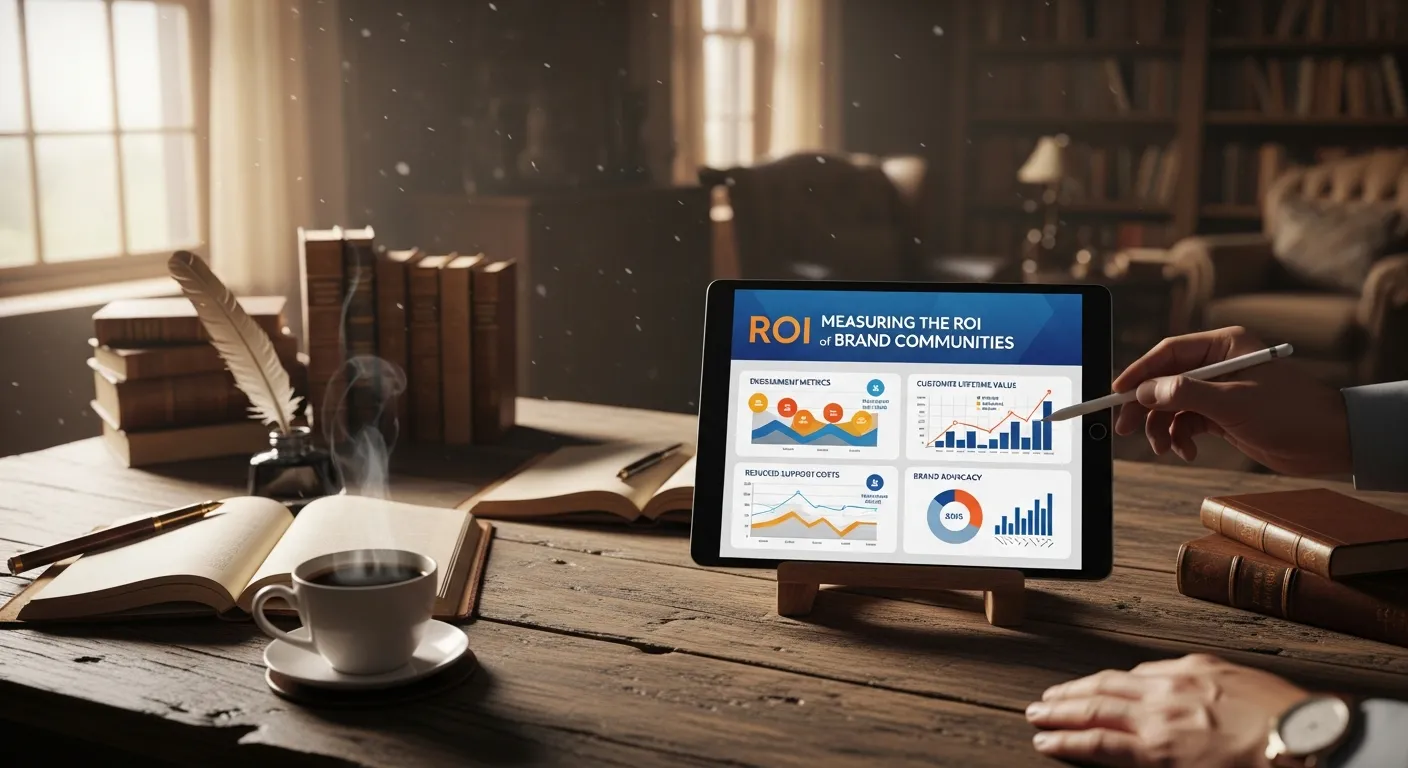
One of the biggest hurdles for marketers is proving the tangible value of community-building to leadership. While the intangible benefits like loyalty and brand love are powerful, executives speak the language of numbers. Measuring the return on investment (ROI) of your community is crucial for securing budget and demonstrating its strategic importance. The future of brand communities depends on our ability to connect them to bottom-line results.
Moving Beyond Vanity Metrics
First, it’s essential to move beyond vanity metrics like member count or “likes.” These numbers are easy to track but often fail to represent true community health or business impact. Instead, focus on a balanced scorecard of metrics that cover engagement, loyalty, and financial outcomes.
Key Metrics for Community ROI
1. Customer Acquisition Cost (CAC) Reduction:
A thriving community is a powerful engine for organic, word-of-mouth marketing.
- Track Referral Traffic: Use analytics to track how many new customers arrive at your website from links shared within the community.
- Monitor User-Generated Content (UGC): Measure how often community members create and share content featuring your products. This UGC acts as authentic social proof, reducing your reliance on paid advertising.
- New Leads from Community: If your community is on an owned platform, track how many new leads or sign-ups originate from community-driven activities.
2. Increased Customer Lifetime Value (LTV):
Community members are often your most loyal customers. They buy more, buy more often, and stay with you longer.
- Compare Cohorts: Analyze the purchasing behavior of community members versus non-members. Do members have a higher average order value (AOV)? Do they make more repeat purchases?
- Retention and Churn Rates: Measure the retention rate of community members. A lower churn rate among this group is a direct indicator of ROI. For SaaS businesses, this is a critical metric.
3. Reduced Support Costs:
A mature community often becomes a self-supporting ecosystem where members answer each other’s questions.
- Ticket Deflection: Track the number of support tickets that are resolved within the community forums before they reach your official support channels.
- Knowledge Base Contribution: Measure how many articles or solutions in your knowledge base are created or improved by community members. This reduces the content creation burden on your team.
4. Product Innovation and Feedback:
Your community is an invaluable, always-on focus group that can accelerate your product development cycle.
- Ideas Sourced: Quantify the number of new product features or improvements that originated from community discussions.
- Reduced R&D Costs: The feedback and validation you get from your community can save significant time and money in research and development by preventing you from building things nobody wants.
5. Enhanced Brand Equity and Perception:
While harder to quantify, the impact on your brand’s reputation is immense.
- Brand Sentiment Analysis: Use social listening tools to track the sentiment of conversations about your brand both inside and outside the community.
- Surveys: Periodically survey members and non-members to measure brand perception in marketing, trust, and likelihood to recommend. An increase in your Net Promoter Score (NPS) among members is a strong indicator of success.
By tracking these metrics, you can build a powerful business case that demonstrates how the future of brand communities is not just about creating warm feelings—it’s about driving sustainable, profitable growth.
Conclusion
The evolution from a passive audience of followers to an active tribe of brand advocates is the defining shift for marketing in the coming decade. The future of brand communities is not a fleeting trend; it is a fundamental realignment of the relationship between brands and consumers. It is about building spaces for connection, fostering a sense of belonging, and creating mutual value.
The journey requires a strategic commitment to authenticity, engagement, and collaboration. Brands that embrace this change—that listen to their customers, empower their advocates, and build with them—will forge unbreakable bonds and a lasting competitive advantage. The most successful brands of tomorrow will be the ones that build the strongest communities today.
Frequently Asked Questions (FAQs)
1. What is a brand community, and how is it different from a social media following?
A brand community is a group of customers and fans who are connected by a shared interest in a brand and its values. Unlike a social media following, which is often a passive audience receiving one-way communication, a brand community is characterized by active, two-way engagement. Members interact with the brand and, crucially, with each other, creating a network of relationships, shared identity, and user-generated content.
2. Why is building a brand community so important for the future?
Building a brand community is crucial because it creates a durable competitive advantage that is difficult to replicate. It fosters deep customer loyalty, reduces marketing costs through word-of-mouth advocacy, and provides invaluable feedback for product innovation. In an age of digital noise and consumer skepticism, a trusted community provides an authentic channel for connection and influence, making it essential for long-term brand resilience.
3. What are the first steps to building a brand community?
The first step is to define your community’s purpose or “why.” This involves identifying your brand’s core values and understanding the needs and passions of your target audience. Next, you must choose the right platform where your audience is most active. Finally, “seed” the community by personally inviting a small group of your most loyal customers to become founding members and kickstart engagement.
4. How do you measure the success and ROI of a brand community?
Success should be measured by more than just member count. Key metrics include engagement rate (active members), retention rate, and the amount of user-generated content. To measure ROI, track metrics like the reduction in customer acquisition costs (due to referrals), the increase in customer lifetime value (LTV) of members vs. non-members, and the decrease in customer support costs due to peer-to-peer assistance.
5. What is the role of a community manager?
A community manager is the vital human link between the brand and the community. Their role is multifaceted: they act as a facilitator to spark conversations, a moderator to ensure a safe environment, a content strategist to plan programming, and a listener to gather insights and feedback. They are the chief advocate for the community within the company and for the company within the community.
6. How can small businesses with limited resources build a community?
Small businesses are often better positioned to build authentic communities than large corporations because they can be more nimble and personal. Start small on a free platform like a Facebook Group or Discord server. Focus on providing immense value to a small group of initial members. Empower these “superfans” to help with moderation and content creation. Consistency and genuine care are more important than a large budget.
7. What are some of the biggest mistakes to avoid when building a brand community?
The biggest mistake is treating the community as just another sales channel. Over-selling and aggressive promotion will quickly kill engagement. Other common pitfalls include inconsistent engagement from the brand, failing to set and enforce clear guidelines, ignoring member feedback, and focusing on vanity metrics like member count instead of the quality of interaction.
8. How do co-creation and user-generated content (UGC) fit into the future of brand communities?
Co-creation and UGC are central to the future of brand communities. Co-creation involves actively collaborating with members on product development, marketing campaigns, and content, which gives them a powerful sense of ownership. UGC is the organic output of an engaged community—the photos, reviews, and stories that members create. It serves as powerful, authentic social proof that is far more influential than traditional advertising.
9. What role will AI and new technologies like the metaverse play in brand communities?
AI will primarily be used for personalization and data analysis—helping brands understand member behavior and tailor experiences at scale. Mastering metaverse branding and technologies like augmented reality will offer new, immersive ways for communities to interact, such as virtual showrooms, events, and brand experiences. However, these technologies will be tools to enhance connection, not replace the fundamental human need for it.
10. How do you turn a passive follower into an active brand advocate?
The transformation involves a journey of deepening engagement. Start by providing exceptional products and service. Recognize and reward their engagement, even small actions. Invite them into an exclusive space (your community) where they get access to special content or perks. Make them feel heard by acting on their feedback. Finally, empower them with tools and opportunities to share their passion, turning them into true brand advocates.