User Experience and Branding: Designing Customer Experiences That Build Loyalty
The synergy between user experience and branding is critical for success. This fusion transforms user interactions into memorable experiences, fostering deep customer loyalty and driving business growth.
This article explores the powerful relationship between user experience and branding. You will learn why this integration is essential for building trust, boosting recognition, and driving conversions. We provide actionable steps, real-world examples, and expert insights to help you design customer experiences that build lasting loyalty.
The Inseparable Bond: Why User Experience and Branding Go Hand in Hand
When people think of branding, they often picture logos, slogans, and color schemes. While these visual elements certainly matter, building a memorable brand goes far beyond aesthetics. In the digital landscape, the user experience has become a cornerstone of brand identity. The powerful combination of user experience and branding plays a key role in creating a seamless user journey that reflects your brand’s personality, values, and promise. Integrating UX design with branding ensures that every interaction—whether on your website, app, or any digital platform—creates a consistent customer experience, strengthens brand loyalty, and leaves a lasting impression. This alignment is no longer a “nice-to-have”; it’s a fundamental requirement for any business looking to thrive. The essence of user experience and branding is about making sure that how your product feels to use is in perfect harmony with what your brand stands for.
Think of user experience as the functional backbone of your digital presence, while branding is the personality that gives your business character. When user experience and branding are seamlessly integrated, the result is a smooth, engaging, and memorable customer experience that builds trust and strengthens brand loyalty. This is where the magic happens. A user doesn’t just complete a task; they engage with a personality, a story, and a promise. This holistic experience is what separates market leaders from the competition. The strategic fusion of user experience and branding is the bedrock of modern consumer brand marketing.
Here’s a deeper look at why user experience and branding are inseparable:
- Consistency Establishes Credibility: Customers are far more likely to trust brands that deliver a seamless, branded experience across all touchpoints. This includes websites, mobile apps, email marketing campaigns, and even offline interactions. When the design, messaging, and interaction patterns are consistent, it signals professionalism, reliability, and attention to detail. This consistency in user experience and branding reinforces the idea that your company is stable and trustworthy. According to a study, presenting a brand consistently across all platforms can increase revenue by up to 23%. This demonstrates the tangible financial benefit of a unified user experience and branding strategy.
- Personalization Boosts Loyalty: A user experience that reflects your brand values while prioritizing user needs creates profoundly meaningful interactions. When you invest in understanding your audience, you can create tailored experiences that make first-time visitors feel seen and valued. This emotional connection is a powerful driver of repeat business. Personalization within the framework of user experience and branding isn’t just about using a customer’s name; it’s about anticipating their needs and providing relevant content and functionality. A well-executed personalization strategy, rooted in solid user experience and branding principles, makes customers feel like the brand truly understands them, increasing the likelihood they will become loyal advocates.
- Differentiation Sets You Apart: In today’s crowded markets, a unified user experience and branding approach is your greatest tool for differentiation. Customers don’t just remember logos; they remember experiences. A brand that is both visually cohesive and incredibly easy to use will stand out. Your unique approach to user experience and branding can become your competitive advantage. It’s the reason users might choose your app over a competitor’s, even if the core features are similar. The experience itself becomes the unique selling proposition.
Research consistently shows the value of this integration. A well-known statistic highlights that 86% of buyers are willing to pay more for a better customer experience. Ignoring the immense potential of aligning user experience and branding means missing out on crucial opportunities to engage, retain, and delight your audience. It’s an investment that pays dividends in customer satisfaction, loyalty, and ultimately, your bottom line.
The Core Pillars of a Unified User Experience and Branding Strategy
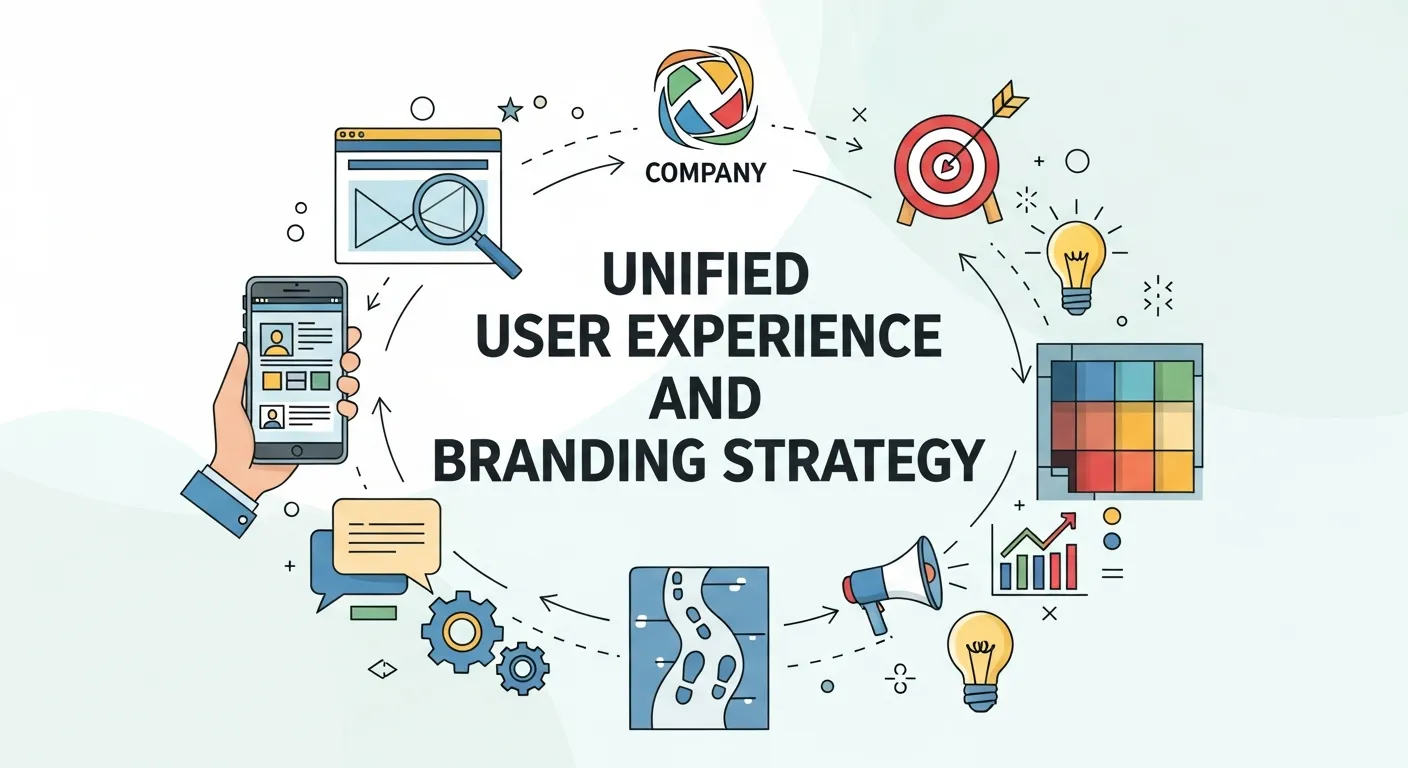
Integrating user experience and branding is a multifaceted process that requires a deep understanding of both disciplines. It’s about more than just slapping a logo on a well-designed interface. It’s about weaving the brand’s DNA into every pixel, every interaction, and every user flow. Let’s break down the five key pillars that form the foundation of a successful, unified strategy.
1. Building Deep Emotional Connections
A purely functional product is useful, but a product that resonates on an emotional level is unforgettable. When your website or app not only works smoothly but also tangibly reflects your brand’s core values, personality, and visual identity, it forges strong emotional bonds with your audience. This is where emotional marketing meets functional design. Customers feel understood and appreciated, which makes them far more likely to engage with your content, share your product, and remain loyal over the long term.
The connection is built when the user’s experience aligns with the brand’s promise. If a brand positions itself as innovative and forward-thinking, its app should feel sleek, intuitive, and filled with cutting-edge features. This congruence between the promise (branding) and the delivery (user experience) creates an authentic relationship. The principles of user experience and branding work together to tell a consistent story.
Example in Action: Airbnb
Airbnb is a masterclass in this principle. Their brand promise is centered on the idea of “belonging anywhere.” This isn’t just a tagline; it’s the guiding principle for their entire user experience. The platform’s design is clean, welcoming, and focused on people and places. From the moment you land on their site, high-quality imagery of unique homes and vibrant communities evokes a sense of wanderlust and connection. The booking process is seamless, but it’s the small details—like host profiles that share personal stories and guest reviews that build a sense of community—that truly reinforce the brand promise. This is a prime example of customer-centric design in action, where the user experience and branding are so intertwined that they become one.
2. Strengthening and Fortifying Trust
Trust is the currency of the digital age. In a world of data breaches and misinformation, users are more cautious than ever. Consistency in user experience and branding is one of the most effective ways to build and maintain that trust. When every interaction a user has with your brand—from the website to the app, from marketing emails to customer support—feels predictable, reliable, and cohesive, it builds immense confidence.
This consistency goes beyond visuals. It includes the tone of voice in your copy, the logic of your navigation, and the reliability of your features. A user who has a positive experience on your website should find that the mobile app follows the same interaction patterns and brand voice. This predictability reduces cognitive load and creates a sense of safety and reliability. A strong brand safety in digital marketing strategy begins with a trustworthy user experience. When user experience and branding are aligned, you are actively managing your digital reputation management with every click.
Example in Action: Apple
Apple has built an empire on trust, and its approach to user experience and branding is a huge part of that. The brand identity is built on principles of quality, innovation, simplicity, and meticulous attention to detail. This identity is flawlessly reflected in their user experience. The clean, minimalistic interface of iOS and macOS, the intuitive gestures, and the seamless ecosystem where all devices work together harmoniously—all these elements reassure users of the brand’s promise. The experience feels premium, just like the brand. This reliable and consistent user experience design reinforces trust at every single touchpoint, making customers feel secure in their investment.
3. Boosting Brand Recognition and Recall
In a sea of digital noise, being instantly recognizable is a massive advantage. Harmonizing user experience and branding ensures that your audience can identify your brand at a glance, no matter the platform. This is about more than just a logo. It’s about a consistent and memorable system of design elements working in concert. This is a core component of building brand awareness. This includes:
- Color Schemes: A distinct color palette can become synonymous with your brand.
- Fonts and Typography: Specific typefaces can convey personality—be it professional, playful, or elegant.
- Imagery Style: The type of photos or illustrations you use sets a clear tone.
- Tone of Voice: The language used in your interface copy should match your brand’s personality.
When these elements are used consistently, they strengthen brand recall and create a memorable digital presence. The goal is for a user to feel “at home” with your brand, regardless of the device they are using. This process is fundamental to a successful user experience and branding strategy.
Example in Action: Spotify
Spotify is a fantastic example of using user experience and branding to achieve instant recognition. The brand’s signature use of green, black, and white, combined with its distinctive typography, makes it immediately identifiable. But their branding goes deeper. The user experience is built around discovery and personalization. Features like “Discover Weekly” and “Release Radar” not only provide immense user value but also reinforce Spotify’s brand identity as a music expert and personal DJ. The intuitive navigation and seamless playback across devices further enhance this experience. This seamless combination of digital branding and UX design reinforces brand recognition every time a user opens the app.
4. Encouraging Repeat Use and Fostering Loyalty
A positive and intuitive experience is the single greatest motivator for users to return. When an interaction is not only easy but also enjoyable and reflective of the brand’s personality and values, customers feel comfortable and engaged. This feeling is what fosters long-term loyalty and significantly increases customer lifetime value (CLV). A strong brand positioning strategy is executed through the user experience.
Loyalty isn’t built on a single interaction. It’s the cumulative effect of many positive experiences over time. When user experience and branding are aligned, each interaction adds another layer of positive reinforcement. The user learns that they can rely on your brand for a consistently good experience, which removes the friction of considering alternatives. This is where user experience and branding directly impact business metrics.
Example in Action: E-commerce Giants
Think of successful e-commerce sites like Amazon or even smaller niche retailers that you love. They often combine a smooth, frictionless checkout process with highly recognizable branding. The user knows what to expect. They trust that their payment information is secure, that the shipping process will be reliable, and that they can easily track their order. This trust, built through a consistent and reliable user experience, is why customers return to make repeat purchases. The brand perception in marketing is shaped by this reliability. The branding (logo, colors) provides the familiarity, while the UX (one-click-buy, easy returns) delivers the convenience.
5. Driving Conversions and Business Growth
Ultimately, for most businesses, digital platforms need to drive specific actions, whether it’s making a purchase, signing up for a newsletter, or requesting a demo. Well-aligned user experience and branding simplify the user’s decision-making process and gently nudge them toward these desired actions. It’s about creating a clear path to conversion that feels natural and helpful, not pushy.
This is achieved through:
- Strategic Placement of CTAs: Call-to-action buttons should be visually prominent and use language that aligns with the brand voice.
- Clear, Intuitive Navigation: Users should be able to find what they are looking for without frustration. A good customer journey map is essential here.
- Visually Consistent Interfaces: A cohesive design reduces confusion and helps users focus on the task at hand.
When friction is removed from the user journey, conversion rates naturally increase. The user experience and branding work together to guide the customer through your conversion funnel effectively.
Example in Action: SaaS Platforms
SaaS companies like Dropbox or Slack excel at this. Dropbox uses a very simple, clean UX combined with strong, friendly brand visuals and messaging. The process of signing up for a free account is incredibly straightforward. The value proposition is communicated clearly and concisely. As users begin to use the product and hit storage limits, the upgrade path is presented in a way that feels like a helpful suggestion rather than a hard sell. The brand personality in marketing for Dropbox is helpful and efficient, and the UX design perfectly reflects this. This alignment of user experience and branding makes the journey from free user to paying customer a natural progression, significantly improving conversion rates.
The Architect’s Guide: How to Design Customer Experiences That Build Loyalty
Creating a unified user experience and branding strategy is an intentional process, not an accident. It requires empathy, strategy, and a commitment to consistency. Here is a step-by-step guide to help you architect customer experiences that don’t just attract users, but turn them into loyal advocates. This is your brand strategy road map.
Step 1: Understand Your Audience’s Needs, Expectations, and Deepest Desires
Exceptional user experience and branding start with profound empathy. You cannot design an experience for someone you don’t understand. The first and most critical step is to conduct thorough user research to identify your target audience’s preferences, challenges, pain points, values, and motivations. Don’t just look at demographics; dive into psychographics. What keeps them up at night? What are their aspirations?
Actionable Research Methods:
- Surveys and Questionnaires: Gather quantitative data on user preferences and satisfaction. Use tools like SurveyMonkey or Google Forms.
- User Interviews: Conduct one-on-one conversations to gain deep qualitative insights into their motivations and frustrations.
- Analytics Review: Use tools like Google Analytics to understand user behavior on your site. Look at bounce rates, time on page, and user flows to identify points of friction.
- Heatmaps and Session Recordings: Tools like Hotjar or Crazy Egg show you where users click, scroll, and get stuck, providing a visual representation of their experience.
- Competitive Analysis: Analyze the user experience and branding of your competitors. What are they doing well? Where are their weaknesses? This can reveal gaps in the market and opportunities for differentiation.
Pro Tip: Create Detailed User Personas
Synthesize your research into detailed user personas. These are fictional characters that represent your key audience segments. Give them names, backstories, goals, and frustrations. For example, instead of “millennial female,” create “Creative Chloe,” a 28-year-old freelance graphic designer who values efficiency, aesthetics, and tools that integrate with her workflow. When you design, you’re not designing for a vague demographic; you’re designing for Chloe. This ensures your user experience and branding decisions reflect real customer desires and helps align your entire team.
Step 2: Establish a Clear and Compelling Brand Identity
You can’t execute excellent user experience and branding without a crystal-clear understanding of your company’s identity. This goes far beyond a logo. You need to define your brand’s core essence. This process is a key part of any brand strategy consulting guide.
Key Components of Brand Identity:
- Brand Purpose and Values: Why does your company exist beyond making money? What principles guide your decisions? Your purpose should resonate through the user experience.
- Brand Personality: If your brand were a person, who would it be? Are you playful and vibrant like Slack, or sleek and sophisticated like a luxury car brand? Define 3-5 personality traits (e.g., “empowering,” “witty,” “reliable”).
- Brand Voice and Tone: How do you speak to your audience? Your brand voice should be consistent, but your tone can adapt to the situation (e.g., a celebratory tone for a successful purchase, an empathetic tone for an error message). A well-defined brand voice strategy is crucial.
- Visual Identity: This includes your logo, color palette, typography, and imagery style. These elements should be codified in a brand style guide to ensure consistency.
- Brand Archetypes: Using a framework like the 12 brand archetypes (e.g., The Hero, The Sage, The Jester) can provide a powerful shortcut to defining your personality and story. Are you a guide like the Sage, or a challenger like the Hero?
This identity should inform every aspect of your user experience and branding. The colors you choose, the words you use in a button, and the animations you implement should all be a reflection of this defined identity.
Step 3: Prioritize Radical Simplicity and Flawless Functionality
Even the most aesthetically pleasing website or app will fail catastrophically if it is difficult or frustrating to use. In the world of user experience and branding, functionality is the foundation upon which the brand experience is built. A beautiful design that doesn’t work is like a sports car with no engine—it looks good, but it’s useless. Build designs that make user tasks straightforward, intuitive, and, if possible, enjoyable.
Actionable Tips for Simple and Functional UX:
- Intuitive Navigation: Keep menus clean, logical, and predictable. Users should be able to find what they need in three clicks or less. Use clear labels instead of confusing icons or jargon.
- Optimize for Performance: A slow-loading website is a primary driver of user frustration and abandonment. Use Google PageSpeed Insights to test and optimize your site speed. Aim for a load time of under 3 seconds.
- Mobile-First Responsiveness: With a majority of web traffic coming from mobile devices, your experience must be flawless on a small screen. Design for mobile first, then scale up to desktop.
- Ensure Accessibility (A11y): Great design is accessible to everyone. This is not just ethical; it’s good business. Ensure your site is usable by people with disabilities by providing alt text for images, ensuring high color contrast, enabling keyboard navigation, and using proper semantic HTML. This is a non-negotiable aspect of modern user experience and branding.
- Frictionless Forms: Make forms as simple as possible. Only ask for essential information. Use inline validation to provide real-time feedback and pre-fill information when possible.
Simplicity doesn’t mean boring. It means removing everything that is unnecessary so that the user can focus on what is important.
Step 4: Use Visual Elements to Reinforce Your Brand’s Story
Your visual design is not just decoration; it’s a powerful communication tool. Every color, icon, font, and image should tell a story that reflects your brand message. This is where brand storytelling comes to life visually. The consistent application of your visual identity within the user interface is what makes the user experience and branding feel cohesive.
Strategic Use of Visuals:
- Color Psychology: Colors evoke specific emotions. Blue often conveys trust and professionalism, while yellow can signify optimism and creativity. Use your brand’s color palette strategically to guide the user’s eye and reinforce your brand’s personality.
- Typography Hierarchy: Use different font sizes, weights, and styles to create a clear visual hierarchy. Headings should stand out, and body text should be highly readable. Your typography choices should align with your brand’s personality (e.g., a serif font for a traditional, trustworthy brand; a sans-serif font for a modern, clean tech brand).
- Iconography: Custom icons that match your brand’s style can add personality and improve usability. Ensure your icons are universally understood and used consistently throughout the interface.
- Imagery and Photography: The images you use—whether they are product shots, lifestyle photos, or illustrations—should be high-quality and consistent in style and tone. They should reflect your target audience and the values of your brand.
Example: Coca-Cola
Coca-Cola’s consistent use of its iconic red palette and playful, custom script font makes it one of the most recognized brands in the world. This visual identity is so strong that it simplifies brand recognition across different languages, cultures, and products. This is user experience and branding working on a global scale.
Step 5: Maintain Absolute Uniformity Across All Touchpoints
Your brand experience doesn’t start and end on your website. Customers interact with your brand across a multitude of touchpoints: social media, email newsletters, mobile apps, customer support chats, and even physical stores. A truly integrated user experience and branding strategy ensures that the experience is consistent and seamless across all of them. This is the essence of integrated marketing.
Creating a Consistent Cross-Channel Experience:
- Develop a Design System: A design system is a comprehensive library of reusable components, patterns, and guidelines that allows teams to build consistent experiences at scale. It’s a single source of truth for designers and developers, ensuring that the user experience and branding are applied uniformly.
- Customer Journey Mapping: Map out the entire customer journey from awareness to advocacy. Identify every touchpoint and analyze the experience at each stage. Is the brand voice consistent from a social media ad to the landing page to the follow-up email?
- Omnichannel Strategy: Aim for an omnichannel experience where the transitions between channels are seamless. For example, a customer should be able to start shopping on their laptop and finish the purchase on their mobile app without any friction.
When customers feel they are interacting with the same brand personality everywhere, it deepens their trust and connection.
Step 6: Commit to Continuous Testing, Learning, and Refinement
The digital world is in a constant state of flux. User expectations evolve, technology changes, and what works today may not work tomorrow. A successful user experience and branding strategy is not a one-time project; it’s an ongoing process of iteration and improvement. You must continuously gather feedback and use data to fine-tune your user experience while staying true to your core brand identity.
Methods for Continuous Improvement:
- A/B Testing: Test variations of your design elements—like headlines, button colors, or page layouts—to see which performs better. Use data, not opinions, to make design decisions.
- Usability Testing: Watch real users interact with your product. Give them tasks to complete and observe where they struggle. Their feedback is invaluable for identifying and fixing usability issues.
- Feedback Surveys: Regularly ask your users for feedback through pop-up surveys or email questionnaires. Ask them about their satisfaction and what improvements they would like to see.
- Monitor Analytics: Keep a close eye on your key metrics. A sudden drop in conversion rate or an increase in bounce rate on a specific page can signal a problem with the user experience and branding.
- Brand Audit: Periodically conduct a brand audit to ensure your user experience is still aligned with your brand’s strategic goals and market position. This might lead to a brand refresh if needed.
By embracing a culture of continuous improvement, you ensure that your user experience and branding remain relevant, effective, and delightful for your users over the long term.
Great User Experience and Branding in Action: Case Studies

Effective user experience and branding integration is not just about aesthetics; it’s about creating seamless, engaging experiences that reflect a brand’s personality and values. Leading companies demonstrate how user experience design, brand consistency, and customer-centric design can work in synergy to foster loyalty, trust, and recognition. Here are three powerful examples of brands that are excelling in the art and science of user experience and branding.
1. Nike: Motivational Experience Embodied
Nike’s brand is built on a powerful, singular idea: inspiration and innovation for every athlete. Their famous tagline, “Just Do It,” is not just a slogan; it’s a call to action that permeates their entire brand ecosystem. The integration of user experience and branding at Nike is a masterclass in translating a brand ethos into a tangible digital experience.
- The Experience: From its high-energy website to the Nike Training Club and Nike Run Club apps, Nike delivers a sleek, motivational user experience. The design is bold, clean, and dynamic, featuring powerful imagery of athletes in motion.
- User Experience and Branding Synergy: The apps are not just utility tools; they are personal trainers and motivators. Features like guided workouts, personalized training plans, and community challenges all reinforce the brand’s core message of empowerment. The UX is designed to make you feel like an athlete. The tone of voice is encouraging and aspirational. The seamless integration with Apple Watch and other wearables makes tracking progress effortless, further enhancing the user’s journey.
- The Impact: This cohesive approach to user experience and branding drives incredible customer engagement and loyalty. Users don’t just buy Nike products; they join a community and a movement. This deepens the emotional connection to the brand, driving repeat purchases and turning customers into passionate brand advocates. Nike’s brand equity in marketing is colossal, thanks in large part to this unified experience.
2. Duolingo: Making Learning Fun and Addictive
Duolingo’s mission is to make language education free, fun, and accessible to everyone. Their brand personality is playful, encouraging, and slightly quirky. The challenge for Duolingo was to take a task that many people find difficult and intimidating—learning a new language—and transform it into an enjoyable daily habit. They achieved this through brilliant user experience and branding.
- The Experience: Duolingo’s app interface is famous for its vibrant colors, friendly illustrations, and gamified learning process. The brand’s mascot, Duo the owl, is a central part of the experience, cheering you on when you succeed and sending (sometimes passive-aggressive) reminders when you miss a lesson.
- User Experience and Branding Synergy: The entire UX is built around game mechanics: points, streaks, leaderboards, and achievement badges. These elements make learning feel like playing a game, which perfectly aligns with the brand’s message of “fun” learning. The short, bite-sized lessons are designed for on-the-go learning, respecting the user’s time. The tone of voice is consistently encouraging and humorous. The combination of playful branding and intuitive, gamified user experience keeps users coming back day after day.
- The Impact: Duolingo has successfully made language learning a global phenomenon with millions of daily active users. Their strong user experience and branding have created a “sticky” product that fosters habits and loyalty. The brand is instantly recognizable, and the experience is so distinctive that it has become a cultural touchstone. It’s a perfect example of how a strong brand personality can be brought to life through thoughtful UX design.
3. Tesla: The Future, Delivered Through Simplicity
Tesla’s brand is synonymous with innovation, minimalism, and a sustainable future. The brand positions itself not just as a car company, but as a technology company that is revolutionizing the automotive industry. This futuristic and clean brand perception is meticulously reflected in every aspect of their user experience and branding.
- The Experience: From the moment you visit their website to the experience of driving their cars, Tesla’s design philosophy is one of radical simplicity. The website is minimalistic, with stunning product imagery and a straightforward ordering process. There are no cluttered pages or confusing options. The in-car experience is dominated by a large central touchscreen that controls nearly all of the vehicle’s functions, removing the need for physical buttons and knobs.
- User Experience and Branding Synergy: The minimalist design across their digital platforms and vehicle interfaces perfectly reflects Tesla’s innovative and futuristic brand identity. The user experience feels clean, modern, and high-tech. The ability to receive over-the-air software updates that improve the car over time reinforces the idea that you are buying a piece of evolving technology, not just a static product. This consistent application of minimalism and innovation in the user experience provides a powerful and memorable customer experience that is perfectly aligned with the branding.
- The Impact: Tesla has cultivated an incredibly loyal, almost cult-like following. The customer experience is so unique and aligned with the brand’s promise that it has become a major differentiator in the market. The seamless integration of user experience and branding makes the entire ownership experience feel special and futuristic, reinforcing the customer’s decision to be part of the Tesla brand.
These brands prove that aligning user experience and branding principles can transform ordinary interactions into meaningful and memorable experiences. This strategic alignment boosts customer loyalty, strengthens brand equity, and builds a powerful, resilient brand.
Advanced Concepts in User Experience and Branding Integration

To truly master the art of user experience and branding, it’s important to move beyond the fundamentals and explore more advanced strategies that can create even deeper connections with your audience. These concepts can further differentiate your brand and build a more resilient and memorable presence.
Sonic Branding: The Sound of Your Brand
Visual identity is well-understood, but what does your brand sound like? Sonic branding (or audio branding) is the strategic use of sound to create a consistent and recognizable brand experience. This can include:
- A Sound Logo: A short, melodic jingle that plays at the end of commercials or when an app opens (think of Intel’s famous bong sound or Netflix’s “ta-dum”).
- UI Sounds: The subtle clicks, chimes, and notifications within your app or website. These sounds should be carefully designed to be pleasant, helpful, and aligned with your brand’s personality. A luxury brand might use soft, elegant chimes, while a gaming app might use more energetic, rewarding sounds.
- Brand Music: A consistent style of music used in videos, podcasts, and other marketing materials.
Integrating a sonic identity into your user experience and branding strategy adds another powerful sensory layer to the customer experience, making your brand more memorable and emotionally resonant.
Sensory Branding: Engaging All Five Senses
While digital experiences are primarily visual and auditory, the principles of sensory branding encourage thinking about how to engage all the senses to create a holistic brand world.
|
Sense |
Digital Application (User Experience and Branding) |
Physical Application (for Omnichannel Brands) |
|---|---|---|
|
Sight |
Consistent color palette, typography, imagery, and clean UI design. |
Store layout, packaging design, employee uniforms. |
|
Sound |
Sonic branding, UI notification sounds, video/podcast music. |
In-store music, the sound a product makes (e.g., a car door closing). |
|
Touch |
Haptic feedback on mobile devices (subtle vibrations that confirm an action). |
Product materials, packaging texture, the weight of a product. |
|
Smell |
N/A in most digital UX, but a core part of physical branding. |
A signature scent in a retail store or hotel lobby. |
|
Taste |
N/A in most digital UX, but essential for food and beverage brands. |
In-store samples, the flavor profile of products. |
Thinking about the full sensory experience, even in a digital context, can lead to more creative and immersive user experience and branding solutions. For example, the haptic feedback on an Apple device feels premium and precise, which is a subtle but powerful reinforcement of the brand’s quality promise.
Brand Archetypes: The Psychology of Your Story
As mentioned earlier, using a brand archetypes framework can be a powerful tool for defining your brand’s personality and story. This psychological framework, based on Carl Jung’s work, identifies 12 universal archetypes that resonate with deep human motivations.
Examples of Archetypes in User Experience and Branding:
- The Sage (e.g., Google, BBC): This archetype seeks truth and knowledge. Their UX is often clean, data-driven, and focused on providing information clearly and efficiently. The branding emphasizes expertise and trust.
- The Jester (e.g., Old Spice, M&M’s): This archetype lives in the moment and loves to have fun. Their UX is often playful, with bright colors, animations, and humor. The brand personality in marketing is all about entertainment and lightheartedness.
- The Caregiver (e.g., Johnson & Johnson, Unicef): This archetype is driven by compassion and a desire to help others. Their UX is typically warm, reassuring, and easy to navigate. The branding focuses on safety, trust, and empathy.
Choosing an archetype provides a clear narrative for your brand storytelling and ensures that your user experience and branding are psychologically consistent and resonant with your target audience.
Brand Simplification and Brand Architecture
As companies grow, they often accumulate multiple products, sub-brands, and services. This can lead to a confusing and fragmented customer experience.
- Brand Simplification: This is the process of culling unnecessary brand extensions and simplifying the brand’s message and visual identity. The goal is to bring clarity and focus back to the core brand, which in turn simplifies the user experience.
- Brand Architecture: This defines the relationship between your parent brand and its sub-brands or products. A clear brand architecture ensures that users understand how different parts of your company fit together. For example, Google has a clear architecture with products like “Google Drive,” “Google Maps,” and “Google Photos,” all sharing a consistent user experience and branding language.
A well-defined architecture prevents brand cannibalization (where your own products compete against each other) and creates a more cohesive and understandable experience for the user.
By incorporating these advanced concepts, you can elevate your user experience and branding from merely consistent to truly iconic, building a brand that is not only recognized but deeply felt by your audience.
The Ultimate Goal: Build Lasting Customer Loyalty Through Unified User Experience and Branding
The culmination of all these efforts—from understanding your audience to meticulously crafting every interaction—is a significant and measurable impact on your business. When user experience and branding are perfectly aligned, the result is more than just a good product; it’s a brand that people trust, an interface they enjoy using, and a digital experience that feels cohesive and reliable.
This powerful combination strengthens emotional connections, making your brand experience memorable in a crowded marketplace. It’s about moving beyond transactions to build genuine relationships. Creating this unified experience requires a deep understanding of user needs, the definition of a clear and authentic brand identity, and an unwavering commitment to brand consistency and coherent digital design across every single touchpoint.
By prioritizing user-centered design, cohesive brand messaging, and engaging experiences, businesses can foster deep customer loyalty, encourage repeat interactions, and drive sustainable, long-term growth. An effective user experience and branding strategy is the engine that powers modern brand marketing.
Ultimately, great user experience and branding do more than just improve metrics. They transform casual visitors into loyal customers, and loyal customers into passionate advocates. This virtuous cycle helps your brand not only survive but thrive in today’s competitive markets, building a legacy of trust and value.
Conclusion
Seamlessly integrating user experience with branding is no longer a strategic option—it is the essential foundation for creating meaningful customer experiences that drive loyalty and long-term growth. When your digital presence is intuitive, visually aligned with your brand identity, and consistently delivers value, customers feel understood, engaged, and connected. This powerful synergy transforms casual visitors into loyal advocates.
FAQs
1. What is the fundamental relationship between user experience and branding?
User experience (UX) focuses on the usability, accessibility, and pleasure of a user’s interaction with your product or digital platform. It’s about how it works. Branding, on the other hand, defines your company’s personality, values, promise, and visual identity. It’s about who you are. The relationship is symbiotic: user experience and branding must work together to create a cohesive experience. Great UX delivers on the promise that the branding makes, building trust and emotional connection with your audience.
2. Why is aligning user experience with branding so important for modern businesses?
Aligning user experience and branding is critical for several reasons. First, it ensures consistency across all customer touchpoints, which builds trust and credibility. Second, it reinforces your brand messaging and values with every interaction. Third, it differentiates your business in a crowded market by creating a unique and memorable experience. Finally, a positive and intuitive experience encourages repeat use and loyalty, which directly increases customer lifetime value and drives long-term business growth.
3. What are the first steps to designing customer experiences that build loyalty?
The first step is always deep audience understanding. Conduct user research through surveys, interviews, and analytics to identify your audience’s needs, pain points, and motivations. Use this research to create detailed user personas. The second step is to clearly define your brand identity, including your purpose, personality, voice, and visual style. These two foundational steps will guide all subsequent decisions in your user experience and branding strategy.
4. Can you provide more examples of brands that excel in user experience and branding?
Beyond Nike, Duolingo, and Tesla, other great examples include:
- Mailchimp: Their friendly and encouraging brand personality is perfectly reflected in their easy-to-use interface and helpful tone of voice, making email marketing feel less intimidating.
- Headspace: This meditation app uses charming animations, a soothing color palette, and a calm, reassuring voice to create a user experience that perfectly embodies its brand promise of mindfulness and peace.
- Slack: Their playful and efficient brand personality comes to life through a colorful, customizable interface, fun loading messages, and features that genuinely make teamwork easier and more pleasant.
5. How does good user experience and branding directly impact conversions and customer loyalty?
Good user experience and branding impact conversions by reducing friction in the user journey. A clear, intuitive design guides users toward desired actions (like making a purchase) and builds the trust necessary for them to complete the action. It impacts loyalty by creating positive emotional experiences. When an experience is enjoyable, reliable, and aligned with a brand they like, customers are far more likely to return. This repeated positive reinforcement builds a strong, loyal relationship over time.
6. What is a design system, and how does it help with user experience and branding?
A design system is a centralized library of reusable UI components (like buttons, forms, and icons), design patterns, and guidelines. It acts as the single source of truth for both designers and developers. Its role in user experience and branding is crucial because it ensures consistency at scale. By using a design system, a company can guarantee that every part of its digital ecosystem—from the website to the mobile app to internal tools—looks, feels, and behaves in a way that is perfectly aligned with the brand, saving time and preventing fragmentation.
7. How can a small business with a limited budget improve its user experience and branding?
Small businesses can make a big impact by focusing on the fundamentals.
- Start with clarity: Clearly define your brand’s personality and who your target customer is.
- Prioritize consistency: Use the same logo, color palette, and fonts everywhere. Ensure your tone of voice is consistent on your website, social media, and in emails.
- Focus on simplicity: A clean, simple, mobile-friendly website that is easy to navigate is better than a flashy one that is confusing.
- Gather free feedback: Use free tools like Google Analytics to understand user behavior and ask customers for feedback directly. Simple changes based on this feedback can significantly improve the experience.
8. What is the difference between brand voice and brand tone?
This is a key concept in user experience and branding. Brand voice is your brand’s unique, consistent personality. It doesn’t change. For example, your voice might be “expert and authoritative” or “playful and witty.” Brand tone, on the other hand, is the emotional inflection you apply to your voice in different situations. For example, while your voice is always “helpful,” your tone might be “celebratory” on a success screen but “empathetic and apologetic” on an error screen. Getting this right is crucial for a nuanced and human-feeling user experience.
9. How do you measure the ROI of investing in user experience and branding?
The ROI of user experience and branding can be measured through a combination of quantitative and qualitative metrics:
- Quantitative Metrics: Track increases in conversion rates, a decrease in bounce rates, higher customer lifetime value (CLV), improved customer satisfaction (CSAT) scores, and a reduction in customer support tickets. SEO tools from sources like Ahrefs or SEMrush can also show improved rankings from better user engagement signals.
- Qualitative Metrics: Monitor brand sentiment on social media, collect user testimonials, and conduct usability tests to gather direct feedback on the user experience. An increase in positive mentions and a decrease in user frustration are strong indicators of success.
10. What is a brand audit and how often should it be conducted?
A brand audit is a comprehensive analysis of your brand’s position in the market, its strengths and weaknesses, and how consistent its user experience and branding are across all touchpoints. It helps you understand your current brand perception versus your desired perception. A full brand audit is typically recommended every 1-2 years, or whenever there is a significant shift in the market or your business strategy. However, smaller, continuous checks on brand alignment should be an ongoing part of your marketing and design process.