How to Build a Brand Community on Social Media
Successful brands don’t just sell products; they build communities. This guide explores how to transform followers into a loyal, engaged brand community on social media.
This article provides a comprehensive blueprint for building a powerful brand community on social media. We will cover why these communities are vital for long-term success, from boosting customer loyalty to gaining a competitive edge. You’ll learn a step-by-step process that includes defining your identity, fostering shared experiences, leveraging user-generated content, and choosing the right platforms. With detailed insights, actionable tips, and illustrative examples, you’ll be equipped to cultivate a vibrant community that champions your brand.
The Power of Connection: Why Build a Brand Community on social media?
The most successful brands understand a fundamental truth: people crave connection. They don’t just buy products; they buy into stories, values, and relationships. A brand community on social media is the modern-day town square where these connections happen. It’s a group of individuals united by a shared passion for a brand, creating a powerful network of loyalty that transcends transactions.
Unlike a simple audience that consumes content, a community actively participates, engages, and co-creates the brand experience. This shift from passive followers to active advocates is a game-changer. It creates a moat around your business that competitors, with their product features and pricing strategies, can’t easily cross. This guide will walk you through the strategic steps to build, nurture, and grow a thriving brand community that becomes your greatest asset.
The Tangible Benefits of a Thriving Brand Community
Investing in community building isn’t just a feel-good initiative; it delivers measurable business results. It is a core pillar of a modern branding strategy.
- Exponentially Stronger Customer Loyalty: Community members feel a sense of belonging and personal connection. This emotional bond translates into higher customer retention rates. They are less likely to be swayed by competitors and more forgiving if mistakes happen.
- Organic Growth and Brand Advocacy: A passionate community is your best marketing team. They organically spread the word through shares, comments, and real-world recommendations. This form of social proof is far more credible and effective than traditional advertising.
- Invaluable Customer Feedback and Insights: An engaged community is a direct line to your customers’ thoughts and feelings. Through conversations and observations, you gain real-time data-driven insights into their needs, pain points, and desires, which can inform product development and service improvements.
- Reduced Marketing and Support Costs: A strong community can become a self-supporting ecosystem. Members often answer each other’s questions, reducing the burden on your customer support team. Their organic advocacy also lowers your customer acquisition costs.
- A Powerful Competitive Advantage: Competitors can copy your products or undercut your prices, but they cannot replicate the genuine emotional connection and shared history of a well-established community. This is a durable, long-term asset.
Take Peloton, for example. The company sells high-end fitness equipment, but its true strength is its fiercely loyal brand community on social media. Users connect on Facebook, high-five each other on leaderboards, and follow instructors like celebrities. This sense of shared struggle and achievement fosters a bond that a simple exercise bike could never create.
The Six Pillars of Building a Brand Community on Social Media
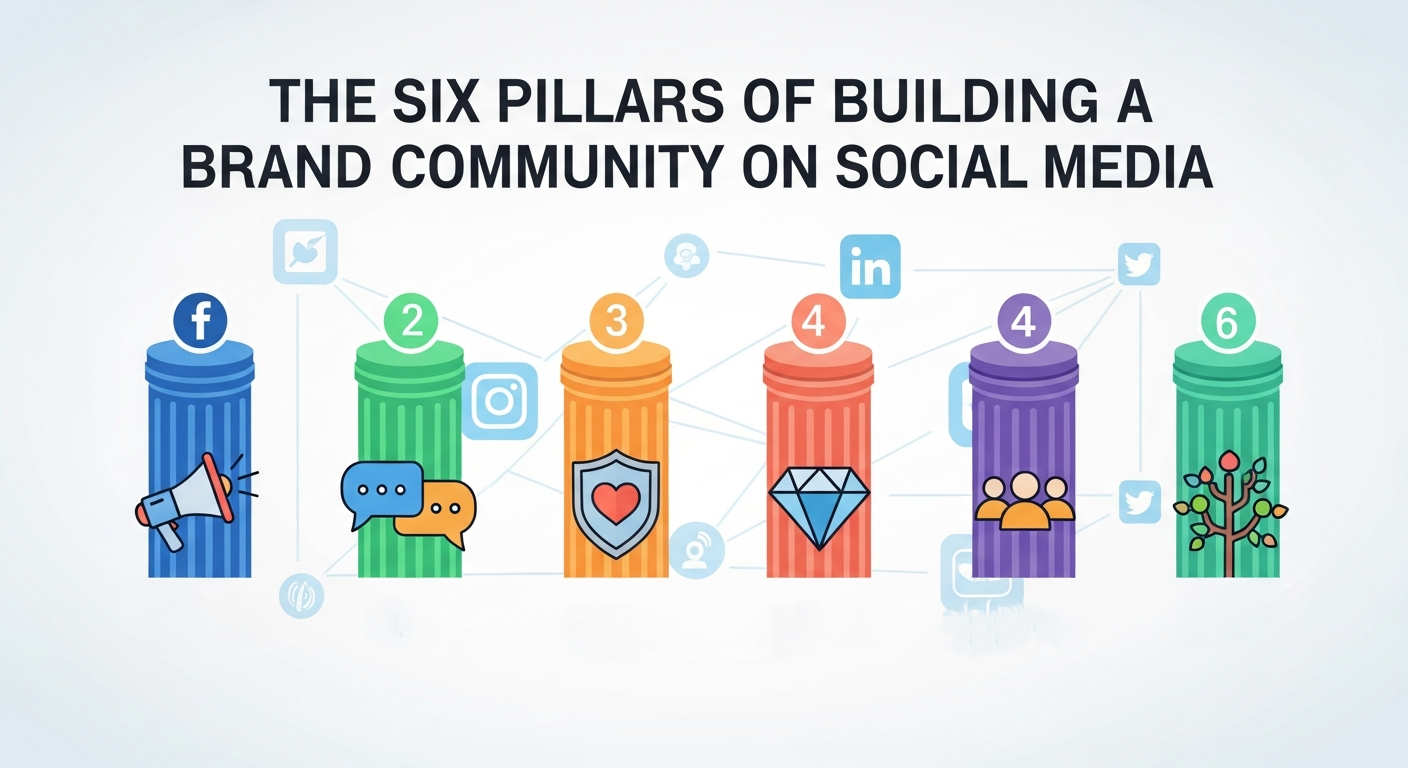
Creating a vibrant online community requires a structured and intentional approach. It’s a process of laying a solid foundation and then consistently nurturing the relationships that form. Here are six essential pillars for success.
1. Define Your Foundation: Brand Identity and Audience
Before you can gather people, you need to give them something to gather around. The foundation of any strong brand community on social media is a crystal-clear understanding of who you are and who you want to attract.
Solidify Your Brand Identity
Your brand identity is your community’s North Star. It’s the set of values, personality traits, and mission that people will align with. Ask yourself:
- What is our purpose? Why do we exist beyond making a profit? This is your brand’s “why.”
- What are our core values? Are you about innovation, sustainability, authenticity, or adventure? These values will attract like-minded individuals.
- What is our brand personality? Are you a witty Jester, a knowledgeable Sage, or a nurturing Caregiver? This brand archetype defines your tone of voice and interaction style.
Example: The beauty brand Glossier built its community by championing values of self-expression, authenticity, and “skin first.” Its personality is minimalist, friendly, and inclusive. This clear identity resonates deeply with its audience, who feel like they are part of a movement, not just customers.
Deeply Understand Your Audience
You can’t build a community for “everyone.” You need to know exactly who you’re talking to. Go beyond basic demographics and create detailed buyer personas. Understand their:
- Psychographics: What are their interests, passions, and lifestyle choices?
- Goals and Challenges: What are they trying to achieve, and what obstacles are in their way?
- Watering Holes: Which social media platforms do they use most? What blogs do they read? Who do they follow?
Action Step: Use social listening tools to monitor conversations related to your industry. Conduct polls and surveys on Instagram Stories or Twitter to ask your current followers about their interests and pain points. Analyzing data from Google Analytics can also reveal key audience characteristics.
2. Foster Shared Experiences and Rituals
Communities are forged through shared experiences. These are the moments that create emotional bonds and turn a group of individuals into a cohesive unit. A successful brand community on social media deliberately creates these moments.
Creating Connection Through Events and Activities
- Live Events: Host live Q&A sessions with your team, virtual workshops, or behind-the-scenes tours on platforms like Instagram Live or LinkedIn Live. This creates a sense of immediacy and exclusivity.
- Group Challenges: Launch a campaign that encourages participation. Starbucks’ seasonal #RedCupContest is a classic example. It brings people together around a shared, fun activity and generates a massive amount of interactive content.
- Brand Rituals: Create predictable, recurring events that your community can look forward to. This could be a “Member of the Week” spotlight, a “Tip Tuesday” post, or a monthly AMA session.
Example: The language-learning app Duolingo uses gamification strategies to create shared experiences. Users maintain “streaks,” compete with friends, and receive humorous push notifications. These rituals make the solitary act of learning a language feel like a collective journey.
Action Step: Plan and host a virtual event, such as a product launch party or an expert panel discussion. Promote it to your followers and encourage real-time interaction through the comments section.
3. Engage Authentically, Don’t Just Broadcast
The biggest mistake brands make is treating social media as a one-way megaphone. Community building is a dialogue, not a monologue. Your role is to be a facilitator and an active participant in the conversation.
Best Practices for Authentic Engagement:
- Respond Thoughtfully: Don’t just “like” comments. Reply to questions, thank users for their feedback, and engage with their stories. Make your members feel seen and heard.
- Ask Open-Ended Questions: Spark conversations by asking questions that go beyond a simple “yes” or “no.” Instead of “Do you like our new product?” ask “What’s your favorite way to use our new product?”
- Humanize Your Brand: Show the people behind the logo. Share employee stories, behind-the-scenes content, and even your own challenges. Authenticity builds trust.
Example: Nike’s social media team frequently comments on posts from everyday athletes who tag the brand. This simple act of recognition validates the customer’s effort and reinforces their connection to the Nike identity, fostering powerful brand advocacy.
Action Step: Dedicate time each day to actively engage with your community. Respond to every comment and direct message. Use a branded hashtag and encourage people to share their stories, then feature and respond to those posts.
4. Amplify Your Community’s Voice with User-Generated Content (UGC)
User-generated content is the lifeblood of a healthy brand community on social media. When members see their own content featured by the brand, it fosters a profound sense of pride and ownership. It also serves as powerful, authentic marketing material.
How to Effectively Leverage UGC:
- Create a Clear Call to Action: Tell your community exactly what you want them to share. Create a specific hashtag for your campaign.
- Always Ask for Permission: Before reposting a user’s content, send them a direct message asking for permission. This shows respect for their work.
- Give Proper Credit: Always tag the original creator in the photo and caption. This not only gives them exposure but also shows your entire community that you value their contributions.
- Integrate UGC Across Channels: Don’t just limit UGC to your social feed. Use it on your website, in email campaigns, and even in digital ads to showcase real customers enjoying your products.
Example: GoPro is the quintessential master of UGC. Its entire marketing strategy is built on showcasing breathtaking photos and videos captured by its users. The “GoPro Awards” program incentivizes the creation of high-quality content, making customers the heroes of the brand’s story.
Action Step: Launch a weekly or monthly UGC feature, like “#FanPhotoFriday.” Create a unique hashtag and encourage your community to submit their content for a chance to be featured on your page.
5. Build a Dedicated Space for Connection
While your main social media channels are great for broad communication, the deepest community bonds are often formed in more intimate spaces. Creating a dedicated hub allows your most passionate members to connect with each other directly.
Choosing the Right Platform for Your Community Hub
|
Platform |
Best For |
Pros |
Cons |
|---|---|---|---|
|
Facebook Groups |
Broad demographics, versatile content |
Highly accessible, powerful moderation tools. |
Can be noisy, declining organic reach. |
|
Discord |
Gamers, tech-savvy audiences, real-time chat |
Excellent for voice/text chat, high engagement. |
Can have a steep learning curve for new users. |
|
Slack |
B2B, professional communities |
Great for organized conversations, integrations. |
Free version has limitations on message history. |
|
Circle/Mighty Networks |
Brands wanting a dedicated, owned platform |
Fully brandable, no algorithmic distractions. |
Requires a monthly subscription fee. |
Example: The graphic design platform Canva created the “Canva Design Circle,” a private Facebook group with millions of members. It has become a thriving ecosystem where users share tips, provide feedback on each other’s designs, and get help from community experts. This space provides immense value beyond the tool itself, fostering deep customer retention.
Action Step: Survey your most engaged followers to see where they would prefer to connect. Start small by launching an exclusive group for your top customers or brand ambassadors to test the concept.
6. Celebrate, Recognize, and Reward Your Members
The final pillar is about closing the loop. To sustain a vibrant community, you must continuously show your members that you appreciate them. Small gestures of recognition can have an outsized impact on loyalty and engagement.
Ways to Celebrate Your Community:
- Member Spotlights: Regularly feature an active community member on your social channels. Share their story and why they are a valued part of the community.
- Gamification and Badges: Award digital badges or titles for milestones, like “Founding Member,” “Top Contributor,” or “One-Year Anniversary.”
- Exclusive Perks: Offer your community members special benefits, such as early access to new products, exclusive discounts, or members-only content.
- Personalized Thank-Yous: Celebrate major brand milestones (like hitting 100,000 followers) with a giveaway or a heartfelt thank-you post that acknowledges the community’s role in your success.
Example: Spotify’s annual “Wrapped” campaign is a brilliant act of community celebration. By creating personalized summaries of each user’s listening habits, Spotify makes them feel unique and understood. The campaign’s shareability turns millions of users into brand advocates for a few weeks each year.
Conclusion
Building a brand community on social media is a long-term investment in relationships, not a short-term tactic for engagement metrics. It requires a strategic shift from broadcasting to conversing, from selling to connecting. By defining your purpose, fostering shared experiences, and genuinely celebrating the people who support you, you can cultivate a community that provides immense, lasting value. This passionate group of advocates will become the resilient heart of your brand, driving loyalty, growth, and authentic connection.
FAQs
1. How do I measure the success of my brand community?
Success isn’t just about follower count. Track metrics like engagement rate (likes, comments, shares), user-generated content volume, and sentiment analysis. For dedicated community platforms, monitor the number of active members and posts. Ultimately, the success of your brand community on social media should also be reflected in business metrics like customer retention rate and customer lifetime value (CLV).
2. How much time should I dedicate to community management?
Initially, you should plan for at least 1-2 hours per day for active engagement. As your community grows, this will increase. Many larger brands have dedicated community managers. The key is consistency. It’s better to dedicate one focused hour every day than to engage sporadically.
3. What’s the difference between an audience and a community?
An audience is a group of people who consume your content. The communication is largely one-way. A community is a group of people who are connected to each other through a shared interest in your brand. The communication is multi-directional—from brand-to-member and, crucially, from member-to-member.
4. Should my brand community be on a public platform or in a private group?
It’s best to have both. Use public platforms like Instagram or TikTok for broad brand awareness and to attract new members. Use private groups (like a Facebook Group or Discord server) to nurture deeper connections with your most engaged and loyal members.
5. How do I handle negative feedback or conflict within the community?
Address negative feedback publicly and professionally. Thank the user for their input and take the conversation to a private channel (like DMs) to resolve the issue. For conflict between members, have clear community guidelines and a moderation policy. Act as a fair mediator to maintain a safe and positive environment.
6. Can a B2B company build a brand community on social media?
Absolutely. B2B communities are incredibly valuable. They can be built on platforms like LinkedIn or in dedicated forums. These communities often revolve around professional development, industry best practices, and networking, with the brand acting as the central facilitator and thought leader.
7. How do I encourage the first members to join and participate?
Personally invite your most loyal customers, engaged social media followers, and brand ambassadors. Offer them an incentive to be “founding members,” such as exclusive access or a special title. In the early days, you and your team will need to be the most active participants to spark conversations.
8. What is the role of an influencer strategy in community building?
Micro-influencers and nano-influencers who are genuinely passionate about your brand can be powerful community builders. Instead of one-off sponsored posts, build long-term relationships with them. Treat them as key community leaders who can help model behavior and spark engagement.
9. How do I choose the right social media platform for my community?
Go where your audience already is. Use your audience persona research to determine their preferred platforms. A visual brand might thrive on Instagram, a gaming brand on Discord or Twitch, and a professional services brand on LinkedIn. Don’t try to be everywhere at once; master one or two channels first.
10. What are some tools to help manage a brand community on social media?
For social media management and listening, tools like Sprout Social or Hootsuite are excellent. For dedicated community platforms, consider Circle, Mighty Networks, or Tribe. Analyzing your social media performance with a tool like SEMrush‘s social media toolkit can also provide valuable insights into what content resonates with your community.