Mastering Brand Alignment: How To Maintain Corporate Culture When Your Company Has Growth Spurts
Growth is exciting. Your team is expanding, revenue is rising, and opportunities seem boundless. However, rapid scaling often brings an unexpected challenge that hits many leaders by surprise: how to preserve the company culture that fueled that success in the first place.
This comprehensive guide explores the critical concept of brand alignment—ensuring your internal culture matches your external promise. You will learn why culture splinters during growth, how to implement leadership-driven alignment strategies, and the systems necessary to scale your values. We cover practical steps for hiring, communication, and measurement to keep your brand identity intact as you grow.
The Growth Paradox: Why Success Threatens Culture
Culture takes care of itself when you’re small. Everybody knows everybody, decisions are made fast over a shared lunch, and your values are lived in every interaction because the founders are always in the room. But once headcount doubles, triples, or continues growing at an even more rapid clip, that organic culture can begin to splinter.
New employees might not know the unwritten rules of the game. Remote teams can become isolated silos. Various departments—sales, engineering, support—could develop subcultures that compete rather than collaborate. This is where the risk of misalignment becomes tangible.
Here is where brand alignment is essential. It’s the strategic pursuit of keeping your company’s values, behaviors, and decision-making consistent at all levels and in all locations, no matter how big you get. Without it, you put your very company—the quirky, innovative DNA you worship—at risk.
What Brand Alignment Truly Is
Brand alignment is not about having a mission statement on your website or values listed on a poster in the break room. It is the depth of the integration of the core identity of your company into everything you do.
True brand alignment is rooted in the notion of “inspire within before sharing externally.” If you’re telling customers that you’re innovative, your employees should feel you are giving them license to take creative risks. If you sell yourself as customer-obsessed, inside you should organize around delivering customer results, not internal convenience.
There are many dimensions to this alignment:
- Leadership Alignment: Do executives model the behaviors they demand?
- Functional Alignment: Are marketing, sales, and product teams telling the same story?
- Operational Alignment: Do your hiring, budgeting, and promotion policies reflect your stated values?
When brand alignment is achieved, the gap between what you say you are and what you actually do disappears.
The Unseen Costs of Brand Misalignment
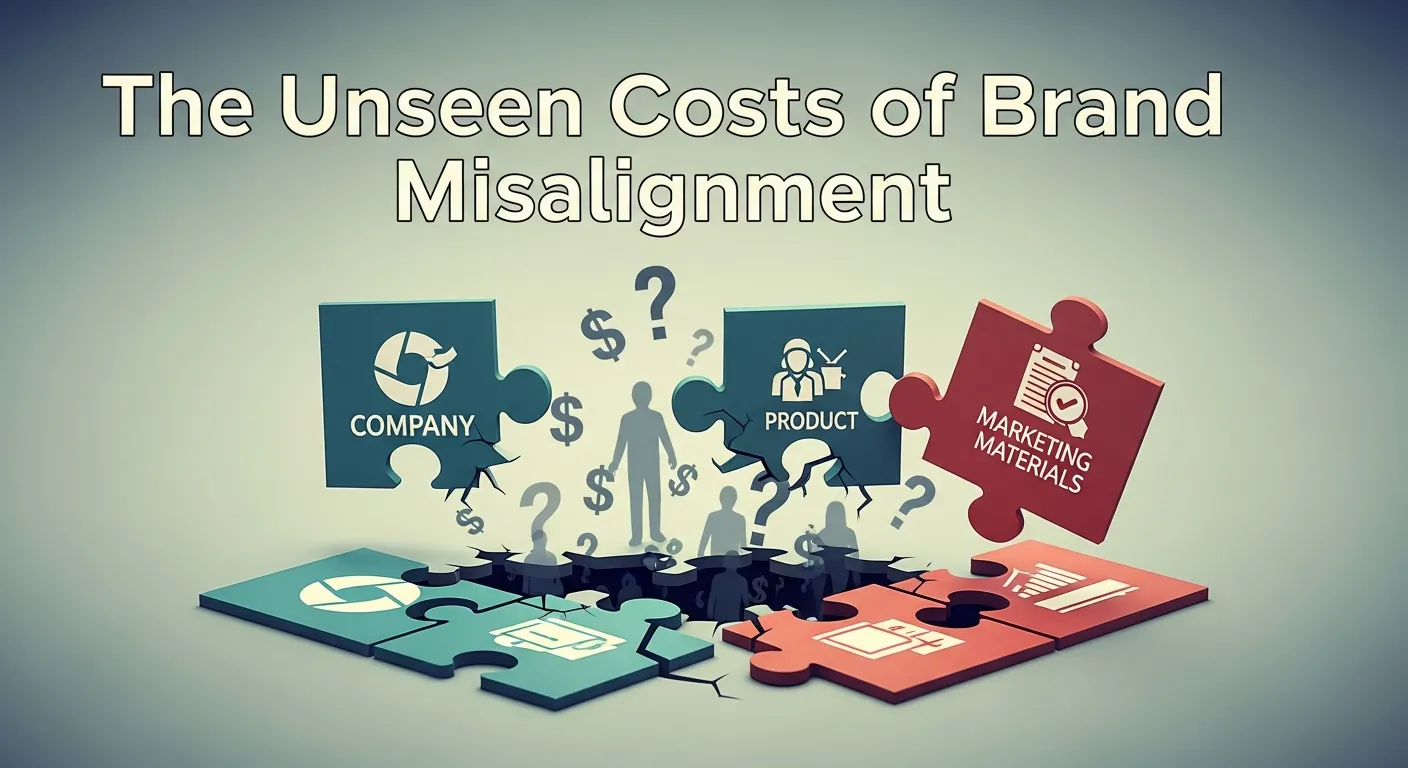
When brand alignment is lost during a growth spurt, it impacts every area of your business, often starting invisibly before causing visible cracks in performance.
1. Erosion of Employee Engagement
The first area to feel the effects is often employee engagement. When people don’t understand or relate to the direction the company is going, they disengage. They might still show up and do the work, but the “burn”—that creative hunger that fuels outstanding results—fades. This “quiet quitting” is often a symptom of poor brand alignment.
2. Fractured Customer Experience
The customer experience also suffers. Unaligned teams render disjointed or random service. One department might prioritize speed (because that’s what their manager bonuses on) while another prioritizes detail. That mixed-message experience confuses clients who expect your brand positioning to set a consistent standard from the start of a project to the finish. This inconsistency damages brand perception in marketing.
3. Decision-Making Paralysis
Decision-making becomes internalized, slowed down, and disputed. Without common values to inform their decisions, teams argue about deeper principles instead of making tactical progress. This creates bottlenecks, which can impede the very growth you’re seeking. Brand alignment acts as a compass; without it, every decision requires a map.
4. Talent Drain
The talent retention implications are arguably worse. Many of your top-performing employees took a job at your company because they believed in that specific mission and culture. When that culture gets watered down, or worse, becomes contradictory, you risk losing the people who built your success. This leads to high turnover costs and a loss of institutional knowledge.
Leadership Level Alignment is Indispensable
Brand alignment begins with the leadership at a company, but not in the way many executives think. It’s not about writing more emails about company values or giving more speeches at town halls. It’s about pulling every decision you make forward into the light and checking it against your values.
Defining Actionable Principles
Leaders need to start by being crystal clear on what their brand really stands for. This requires going beyond generic values such as “integrity” or “excellence,” and identifying specific principles that shape behavior.
For instance, rather than claiming you value “customer focus,” you could describe it as: “We value long-term customer success over short-term revenue opportunities.” This specific distinction helps a sales manager know whether to push a product that isn’t quite right for a client. That is brand alignment in action.
The Filter for Decision Making
When these principles have been established, they must serve as filters for all significant decisions. Every hiring decision, budget allocation, and strategic partnership should be made with these standards in mind. When employees witness leaders sacrificing short-term gain for long-term values, brand alignment is reinforced more powerfully than any internal memo could achieve.
Authentic Communication
Communication becomes paramount, but it needs to be genuine and ongoing. Leaders need to explain not only the what of the decisions they are making but the why as well.
- If you turn down a lucrative contract because the client has a bad environmental record, share that story.
- If you overspend on employee training during a budget crunch because you prioritize growth, explain that choice.
This transparency builds trust and provides a template for employees to make their own decisions.
Creating Scalable Culture Systems
Culture can’t just happen through face-to-face chats and osmosis as you scale. You must build systems that bake your values into the day-to-day operations. This operationalizing of culture is the secret to maintaining brand alignment at scale.
Hiring as a Gatekeeper
Your hiring process is one of the best brand alignment tools you have. In addition to evaluating skills and experience, create interview questions that help you understand whether candidates share your values.
- Scenario-Based Questions: Design scenarios that require people to prioritize values. “Tell me about a time you had to choose between speed and quality. How did you decide?”
- Cultural Interviews: Dedicate a specific round of interviews solely to culture fit (or “culture add”), conducted by peers rather than hiring managers.
Onboarding: The First Imprint
Onboarding is critical. New hires need to know not only what they will be doing but why the company exists. This entails more than just policy manuals and org charts. It is about sharing the folklore of the company—stories about how the company’s values have inspired critical decisions in the past. Effective onboarding ensures new employees achieve brand alignment from their very first week.
Performance Management and Incentives
Performance management systems should reinforce brand alignment by tracking how people achieve results, not just what they achieve.
- If “collaboration” is a core value, evaluate people on how they facilitate teamwork.
- If innovation is a priority, reward smart failures.
If you claim to value teamwork but only promote the “lone wolf” top sales rep who refuses to share leads, you destroy brand alignment instantly.
Consistency in Communication to Promote Consistent Practices
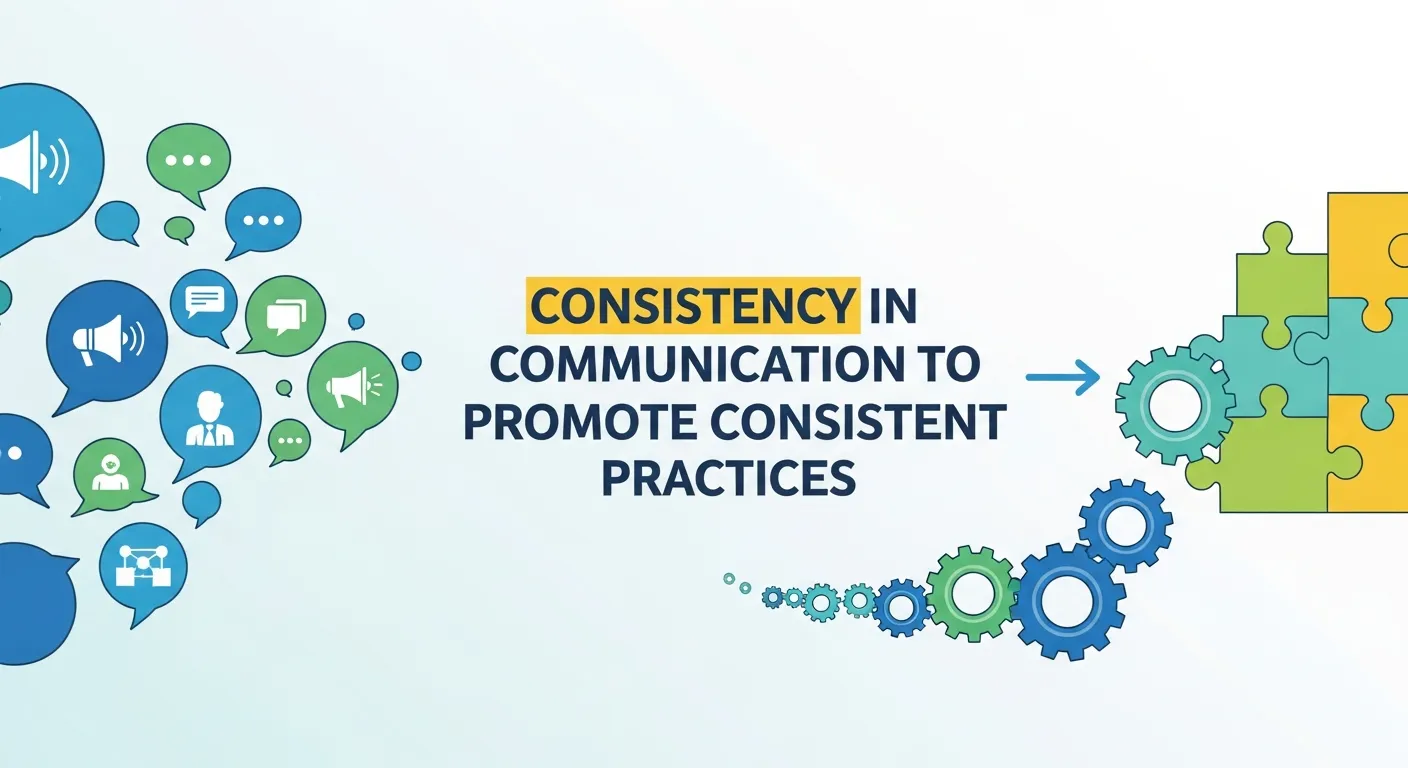
For brand alignment, communication needs to be frequent and diverse. You have to say your piece more times and in varying contexts before it really starts to sink in for people. Marketing wisdom says a customer needs to see a message seven times before they act; employees are no different.
Diverse Channels
Regular all-hands meetings are a fine place to hammer home important messages, but they shouldn’t be the only means.
- Internal Storytelling: Develop a blog or newsletter that highlights employees living the values.
- Slack/Teams Channels: Create channels dedicated to “shout-outs” where peers can recognize each other for demonstrating core values.
Middle Management as Translators
Middle management forms an essential part of the communication process. They are the translation layer between leadership vision and day-to-day execution. Spend time helping managers understand how to take the company’s values and translate that into clear guidance for their teams. Provide them with a toolkit and talking points to enable them to reinforce brand alignment in their daily stand-ups and 1:1s.
Living Documentation
Documentation matters, but it needs to be “living” documentation. Develop playbooks that allow employees to easily interpret how to apply values in everyday situations. Keep these up to date as new problems and lessons arise. A brand strategy guide should be accessible to everyone, not just the marketing team.
Measurement and Alignment Monitoring
It is hard to manage what you don’t measure, and brand alignment is no exception. While culture feels intangible, its effects are measurable.
Employee Surveys
Regular employee surveys (eNPS) help you measure how well people are getting the message about your company’s values. But look beyond simple satisfaction scores. Ask specific questions:
- “Do you have the tools to make decisions that align with our values?”
- “Do you see leadership modeling our core principles?”
Exit Interviews
Exit interviews are a treasure trove of information on where alignment may be going off the rails. People often feel more compelled to provide open, honest feedback about cultural issues when they leave. If you see a trend of people leaving because “the company changed,” it’s a red flag for brand alignment.
Customer Feedback Loops
Alignment gaps can also be exposed through feedback from customers. If your customers perpetually tell stories that are counterintuitive to the brand promise (e.g., “You say you’re fast, but support took 3 days”), that is a signal that you have operational work to do. Metrics like Brand Equity KPIs and Net Promoter Score (NPS) are vital here.
Operational Metrics
Track metrics that express your priorities.
- If customer-centricity is your heart, measure retention and satisfaction.
- If innovation is crucial, monitor how many new ideas are generated and prototyped.
These metrics help you understand if your culture is translating into the results you care about.
Culture Shifts with Core Identity Intact
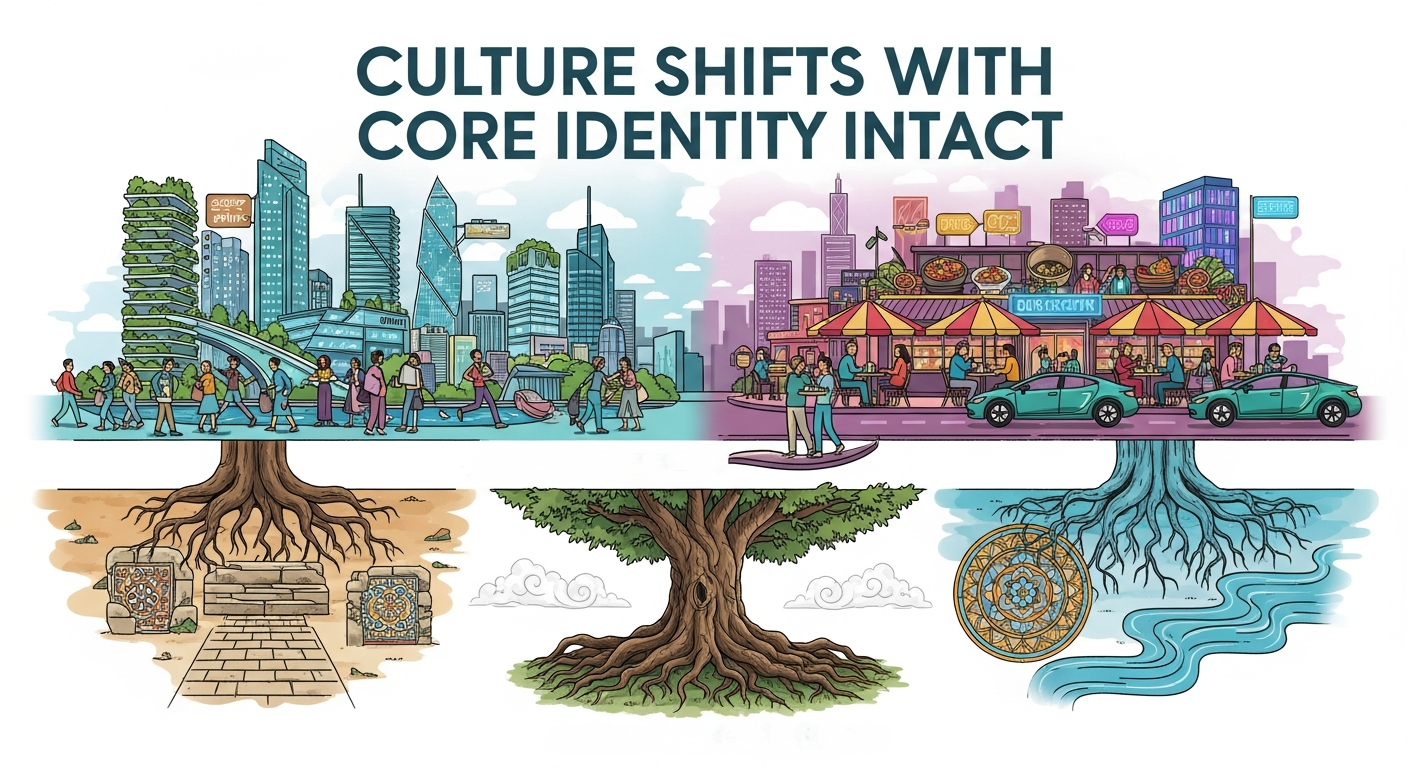
Growth has a way of forcing movement, and your culture will change whether or not you steer it. The trick is being deliberate about what changes and what doesn’t. This is where brand adaptation strategies come into play.
Evolution vs. Revolution
The core values need to stay firm, but how those values are expressed can change. A concept like “moving fast” looks different in a 10-person startup (shipping code daily) compared to a 1000-person enterprise (shipping weekly with automated tests). The principle remains—speed—but the mechanism evolves.
Geographic Expansion
Geographic expansion is a complex problem for brand alignment. Each region may have its own communication style or work habits. It’s not about eradicating those differences but finding ways to respect local tastes while keeping the core brand identity intact. This is crucial for global brand architecture.
The Remote Work Challenge
For digital-first businesses, maintaining brand alignment is harder. Without the physical office to enforce norms, you must work harder to ensure shared experiences. This could mean:
- Virtual coffee chats.
- Digital forums for informal interaction.
- Annual in-person retreats to recharge the cultural battery.
Why Alignment Pays Off in the Long Term
Growth companies with good brand alignment tend to enjoy the upside long-term. It isn’t just a “nice to have”—it is a competitive advantage.
- Performance: Employee engagement is typically higher, resulting in better performance.
- Retention: Less attrition means lower hiring costs.
- Customer Loyalty: When the experience is true to the promise, customers stay.
- Speed: Decision-making is faster because everyone knows the principles to apply.
Perhaps most importantly, good brand alignment provides the confidence to scale. You can open that new office or launch that new product line knowing your culture will remain intact.
What You Can Do Now to Improve Your Brand Fit
Begin with a realistic overview of your own situation. This is essentially a brand audit of your culture.
- Survey the Field: Ask your employees to what extent they understand and relate to the company values. Find the divide between what you claim and what is real.
- Clarify Values: Get past “motherhood and apple pie” statements. Create behavioral guidelines. Test them against recent decisions.
- Invest in Managers: Empower them with the tools and training to be culture carriers.
- Iterate: Treat brand alignment not as a project but as an iterative process. Re-assess regularly.
Frequently Asked Questions (FAQs)
1. What is the difference between brand alignment and brand consistency?
Brand consistency usually refers to the visual and verbal elements of a brand (logos, colors, tone) remaining the same across channels. Brand alignment is deeper; it ensures that the internal culture, employee behaviors, and operational decisions align with that external image. Consistency is about looking the same; alignment is about being the same.
2. Can a company be too aligned?
Yes, this can lead to “groupthink,” where diversity of thought is stifled because everyone is trying too hard to fit a specific mold. Healthy brand alignment unites people around values and goals but welcomes diverse perspectives on how to achieve them. It’s about alignment of direction, not uniformity of thought.
3. How do I fix brand misalignment if it has already happened?
Start by acknowledging it. Conduct a brand audit to identify the gaps. Then, involve employees in the solution. Revisit your core values—are they still relevant? Often, a “re-founding” moment is needed where leadership re-commits to specific behaviors and makes visible changes to demonstrate the shift.
4. Who is responsible for brand alignment?
While the CEO and leadership team set the vision, HR (People Ops) and Marketing play huge roles. Marketing communicates the promise; HR ensures the people systems support it. However, every manager is responsible for alignment within their specific team.
5. How does brand alignment impact customer service?
It is the foundation of great service. If your brand promises “empathy,” but you measure support agents on “call duration,” you have misalignment. Agents will rush calls to hit targets, and customers will feel the disconnect. Brand alignment ensures metrics support the promise.
6. Is brand alignment important for B2B companies?
Absolutely. In B2B digital marketing strategies, trust is the currency. B2B sales cycles are long and involve multiple stakeholders. If a prospect experiences inconsistency between your sales rep, your website, and your implementation team, trust erodes, and deals fall through.
7. How often should we review our brand alignment?
You should be monitoring it continuously through engagement surveys and customer feedback. However, a formal review of your values and their application should happen annually or during major strategic shifts (like a merger, acquisition, or major product launch).
8. What role does internal communications play?
Internal comms is the glue. It ensures that the narrative inside the building matches the narrative outside. Effective internal comms celebrates wins that reinforce values and provides context for tough decisions, keeping the team aligned during change.
9. Can brand alignment help with recruitment?
Yes. Candidates are drawn to authentic organizations. When your employer brand (what you say to candidates) matches the employee experience (reality), you attract better fits and reduce early turnover. It is a key part of building brand authority in the talent market.
10. What tools can help with brand alignment?
Tools like Slack or Microsoft Teams for communication, Lattice or 15Five for performance management and feedback, and brand asset management software (like Frontify) can all support alignment. Additionally, survey tools like Qualtrics or Culture Amp provide the data needed to spot gaps.