Brand Consistency: The Golden Rule for Building Trust & Recognition
Imagine meeting a person who changes their personality, voice, and style every time you see them. You wouldn’t trust them, would you? Brand consistency is the antidote to confusion, serving as the bedrock of trust and recognition in a crowded marketplace.
This comprehensive guide explores the critical importance of brand consistency in building a trusted enterprise. We will cover the psychological impact of consistent messaging, how to align your visual and verbal identity across digital marketing strategies, and the role of integrated marketing. You will learn actionable steps to maintain brand consistency through style guides, employee advocacy, and strategic alignment, ultimately driving brand awareness and revenue.
What is Brand Consistency?
At its core, brand consistency is the practice of delivering messages that align with your core values, brand promise, and identity elements across all channels. It means that whether a customer interacts with you on social media, reads an email, visits your website, or walks into a physical store, the experience feels familiar and coherent.
Brand consistency is not about being repetitive or boring; it is about being reliable. It ensures that your brand personality in marketing remains distinct and recognizable, regardless of the platform. When you achieve brand consistency, you effectively tell your audience, “This is who we are, and this is what you can expect from us, every single time.”
The “Why” Behind the Rule
Why is brand consistency often called the golden rule? Because inconsistency kills trust. If your brand voice is serious and corporate on LinkedIn but uses slang and memes on TikTok without a strategic bridge, you create cognitive dissonance. Customers become unsure of what your brand actually stands for.
According to high-authority sources like Forbes and Lucidpress, consistent presentation of a brand has been seen to increase revenue by 33%. This statistic alone highlights that brand consistency is not just a vanity metric; it is a revenue driver.
The Psychology of Brand Consistency
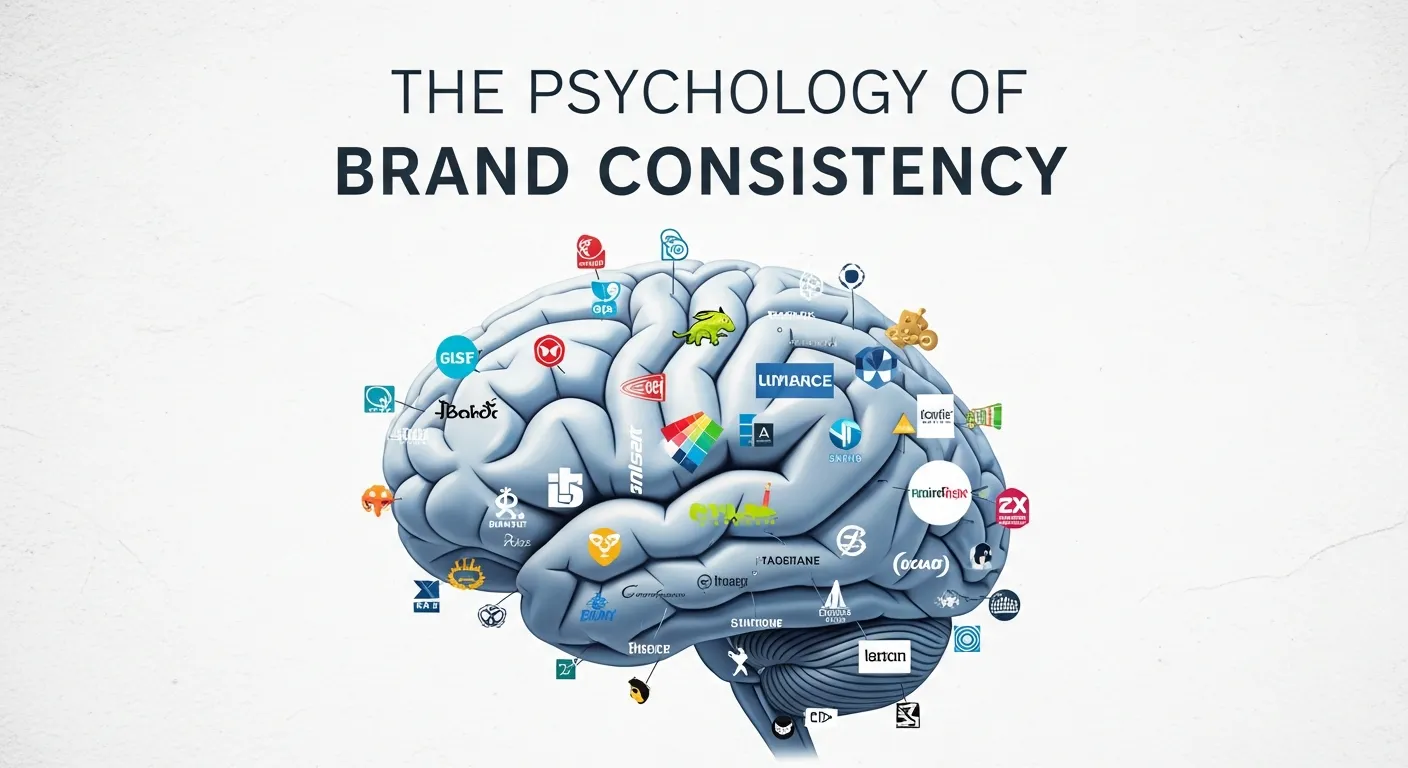
To understand why brand consistency works, we must look at the science of brand memory. The human brain prefers patterns and predictability. This is known as cognitive ease. When a brand is consistent, the brain processes it easily, leading to a feeling of familiarity and trust.
Brand Perception in Marketing
Brand perception in marketing is shaped by every interaction a consumer has with your company. If those interactions are fragmented, the perception is fragmented. Brand consistency unifies these touchpoints into a single, strong narrative. It leverages the psychology of color in branding and brand archetypes to create deep emotional hooks.
For instance, think of Coca-Cola. Their use of red and their messaging around happiness is unwavering. This brand consistency has cemented their place in the global consciousness. They utilize neuromarketing techniques to ensure that every visual and auditory cue reinforces the same neural pathways associated with their brand.
The Three Pillars of Brand Consistency
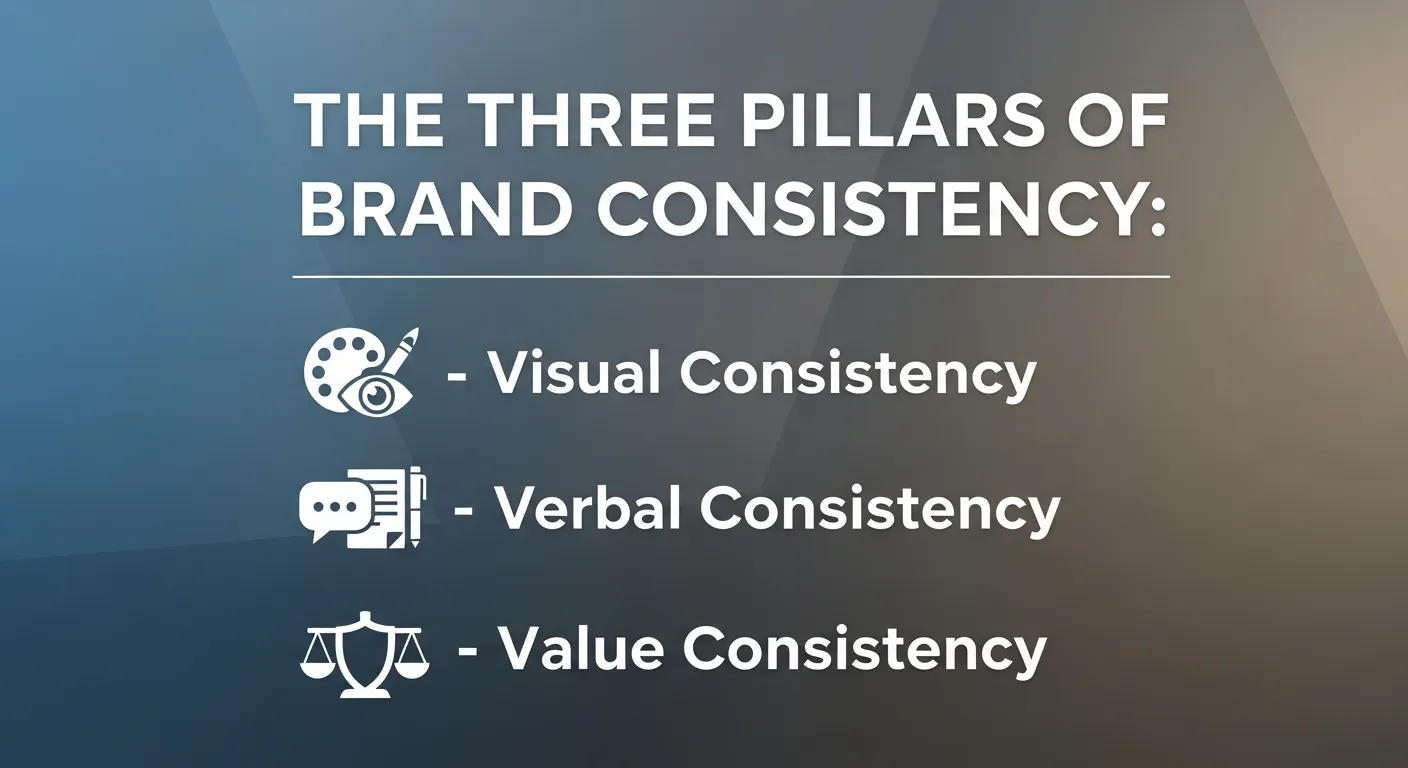
To master brand consistency, you must align three core elements:
1. Visual Consistency
This includes your logo, color palette, typography, and imagery. The psychology of brand design plays a huge role here. Are you using the same hex codes across all digital marketing strategies? Is your logo usage consistent?
- Logo Usage: Never stretch or distort your logo.
- Color Palette: Stick to your primary and secondary colors.
- Typography: Use authorized fonts to maintain hierarchy and readability.
2. Verbal Consistency (Tone and Voice)
What is brand voice in marketing? It is the distinct personality your brand takes on in its communications. Whether you are aiming for luxury brand marketing sophistication or the approachable vibe of family branding in marketing, your voice must remain steady.
- Tone: Can vary depending on the context (e.g., a serious tone for brand crisis management in the social media era vs. an excited tone for a launch), but the underlying voice should not change.
- Language: The specific words and phrases you use define your brand personality.
3. Value Consistency
Your actions must match your words. If you promote sustainable branding strategies and green marketing, your supply chain and packaging must reflect that. The truth behind branded sustainability and environmental harm is often exposed when there is a lack of brand consistency between marketing claims and operational reality.
Integrating Brand Consistency Across Channels
Achieving brand consistency is relatively easy when you only have one channel. It becomes infinitely more complex when you are managing an integrated brand promotion strategy across multiple touchpoints.
Digital Marketing Strategies and Website
Your website is your digital flagship. It should be the ultimate source of truth for your brand consistency.
- UX/UI: Ensure user experience and branding are aligned. Navigation should be intuitive and reflect your brand’s helpfulness.
- Content: From blog posts to product descriptions, every piece of text should reinforce your brand positioning in marketing.
Social Media and Influencer Marketing
Can social media marketing increase brand awareness? Yes, but only if it’s consistent.
- Visuals: Use templates to ensure your Instagram posts, LinkedIn updates, and Tweets look like they come from the same family.
- Influencer Marketing: When engaging in influencer marketing, ensure the influencers you choose align with your brand archetypes. The ROI of influencer marketing is highest when the influencer’s audience overlaps naturally with yours, and their content style doesn’t clash with your brand consistency.
Email and Content Marketing
What is branded content marketing? It is the art of creating content that provides value while subtly promoting the brand.
- Newsletters: Your subject lines, headers, and sign-offs should scream your brand personality.
- Educational Content: Whether it’s a whitepaper or a video, the production quality and tone must meet your brand consistency standards.
Strategies for Maintaining Brand Consistency

How do you keep the wheels on the bus as you scale? Here are actionable strategies.
1. Create a Comprehensive Brand Style Guide
This is your bible. It should detail everything from brand mark in marketing usage to the psychology of color in branding. It should explain what is brand marketing to your employees so they understand the “why.”
- Do’s and Don’ts: clearly outline acceptable and unacceptable uses of brand assets.
- Examples: Show, don’t just tell.
2. Implement Internal Branding
Internal branding: turning employees into your most powerful brand ambassadors is crucial. Your team needs to understand the brand mission to communicate it effectively.
- Training: Regular workshops on brand consistency.
- Communication: Use internal newsletters to highlight examples of great brand consistency.
3. Centralize Asset Management
Use Digital Asset Management (DAM) tools. This ensures everyone has access to the latest logos, templates, and images, preventing the use of outdated assets that dilute brand consistency.
4. Audit Your Brand Regularly
How to conduct a comprehensive brand audit:
- Review all customer-facing touchpoints.
- Check for outdated logos or messaging.
- Analyze brand sentiment using tools like SEMrush or Ahrefs.
- Assess brand equity vs. brand value.
5. Leverage Integrated Marketing
Integrated marketing ensures that your PR, direct marketing, social media, and advertising are not operating in silos. They should all sing from the same song sheet. Integrated brand promotion unifies these efforts to deliver a seamless experience.
Navigating Challenges to Brand Consistency
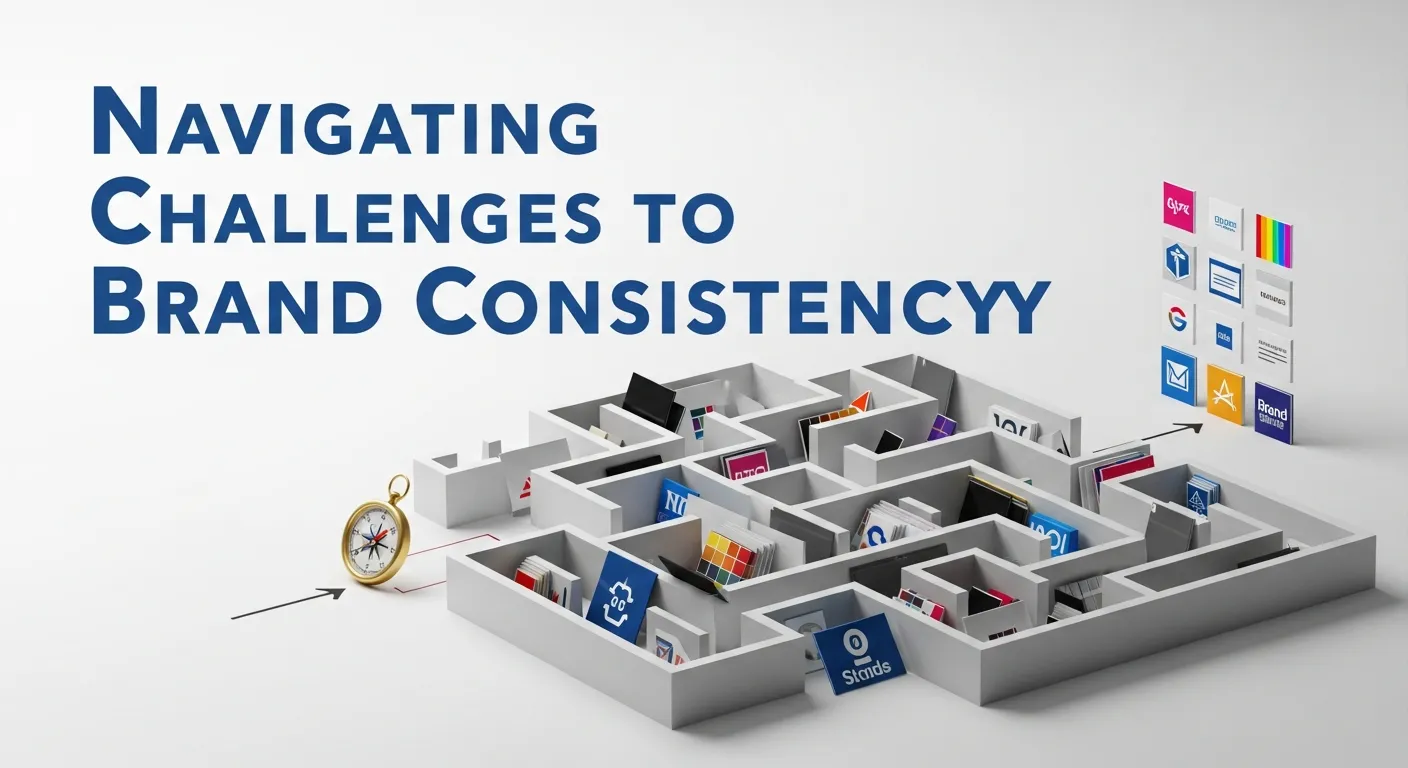
Even the best brands face hurdles.
Rebranding and Brand Refresh
A brand refresh or a full rebrand can be a minefield for brand consistency.
- The Silent Rebrand Phenomenon: Sometimes subtle changes are better than drastic ones.
- Communication: Clearly communicate changes to your audience to avoid confusion.
- Legacy Assets: Be diligent about updating old assets.
Global Brand Localization
When expanding globally, you face the challenge of global brand localization. You want brand consistency, but you also need cultural relevance.
- Adaptation: You might need to tweak colors or slogans to fit local customs without losing the core identity.
- Voice: Ensure translated content retains the original brand voice.
Co-Branding Partnerships
Co-branding in marketing can be powerful, but it risks diluting your brand if the partner isn’t a good fit.
- Alignment: Ensure both brands share similar values.
- Guidelines: Create specific guidelines for the partnership to ensure brand consistency for both parties.
The Role of Modern Trends in Brand Consistency

As marketing evolves, maintaining brand consistency requires adapting to new trends without losing your soul.
Inclusive and Sustainable Branding
Inclusive brand strategies and sustainable branding strategies are no longer optional.
- Authenticity: If you pivot to these values, ensure they are reflected in every aspect of your business, or you risk being accused of “greenwashing” or performative activism.
- Consistency: Make inclusivity a permanent pillar of your brand consistency, not just a campaign for a specific month.
AI and The Metaverse
Mastering metaverse branding and using AI sensory branding are the new frontiers.
- Virtual Identity: How does your brand look and sound in a virtual world? It must be recognizable.
- AI Content: If you use AI for content generation (Generative Engine Optimization), train it on your style guide to maintain brand consistency.
Interactive and Emotional Branding
Interactive storytelling in branding and emotional branding deepen connections.
- Narrative: Ensure the story you tell in an interactive quiz matches the story on your “About Us” page.
- Emotion: The emotional payoff of interacting with your brand should be consistent.
Brand Consistency vs. Rigidity
It is important to note that brand consistency does not mean rigidity. A brand is a living entity. Brand resilience strategies involve adapting to market changes while keeping your core identity intact.
- Flexibility: You can adapt your brand voice slightly for different platforms (e.g., LinkedIn vs. TikTok) while maintaining the underlying personality.
- Evolution: Your brand can evolve, but the evolution should feel like a natural progression, not a jarring shift.
Measuring the Impact of Brand Consistency
You can’t manage what you don’t measure. How do you track the success of your brand consistency efforts?
Key Performance Indicators (KPIs)
- Brand Awareness: Track direct traffic and search volume for your brand name using Google Analytics.
- Brand Recall: Can customers remember your brand elements?
- Revenue Growth: As mentioned, consistent brands see higher revenue.
- Customer Loyalty: Repeat purchase rates and Net Promoter Score (NPS).
Impact on Brand Equity
Brand equity in marketing is the premium value your brand commands. Brand consistency directly builds equity by creating a dependable reputation. High brand equity allows for brand extension—launching new products under the same successful brand name—because customers trust the consistent quality associated with that name.
|
Feature |
Consistent Brand |
Inconsistent Brand |
|---|---|---|
|
Customer Trust |
High; customers know what to expect. |
Low; customers are confused. |
|
Recognition |
Instant; visual and verbal cues are distinct. |
Poor; blends in with competitors. |
|
Marketing Spend |
Efficient; assets are reused and reinforced. |
Wasteful; constantly reinventing the wheel. |
|
Customer Loyalty |
Strong; emotional connection is stable. |
Weak; transactional relationships only. |
|
Revenue Growth |
Steady and compounding. |
Erratic and unpredictable. |
Mastering Brand Consistency: A Checklist
- Define Your Core: clearly articulate your mission, vision, and values.
- Develop a Style Guide: cover visual, verbal, and behavioral guidelines.
- Audit Existing Content: identify and fix inconsistencies.
- Train Your Team: ensure every employee is a brand ambassador.
- Centralize Assets: use a DAM system.
- Monitor and Adapt: use social listening and analytics to stay on track.
By following this checklist, you ensure that brand consistency becomes ingrained in your company culture, driving digital marketing success stories and long-term growth.
Conclusion
Brand consistency is not just a design principle; it is a business strategy. It is the golden rule that transforms a business into a trusted, recognizable, and beloved brand. From your logo to your customer service tone, every interaction is a thread in the tapestry of your brand identity. By maintaining brand consistency, you build trust, foster loyalty, and ultimately, drive revenue. In a world of noise, consistency is the signal that guides your customers home. Start auditing your brand consistency today and watch your brand equity soar.
Frequently Asked Questions (FAQs)
1. What is the difference between brand consistency and brand repetition?
Brand consistency is about coherence and reliability in your message and identity across all platforms. Repetition is simply saying the same thing over and over. Consistency builds trust through a unified experience, while mindless repetition can lead to ad fatigue. You want your audience to recognize you instantly (consistency), not get annoyed by you (bad repetition).
2. How does brand consistency impact ROI?
Research shows that maintaining brand consistency across all platforms can increase revenue by up to 23-33%. When customers recognize and trust a brand, their sales cycles shorten, and they are more likely to become repeat buyers. This directly improves the ROI of your marketing efforts by making every impression work harder for you.
3. Can a brand be consistent but still boring?
Yes, if the underlying brand personality is dull. Brand consistency ensures your personality is delivered reliably, but that personality must be engaging to begin with. You need to combine consistency with creativity and emotional branding to capture and keep attention.
4. How do I maintain brand consistency when using influencers?
To maintain brand consistency in influencer marketing, provide influencers with clear guidelines (a creative brief) that outline your key messages, visual “do’s and don’ts,” and tone. However, allow them enough creative freedom to speak authentically to their audience. The goal is alignment, not total control.
5. Is it possible to have brand consistency across different cultures?
Yes, through “glocalization” (global brand, local touch). You maintain your core visual identity and values (brand consistency) while adapting nuances like language, imagery, and specific offers to fit local cultural norms. This ensures you remain recognizable globally while being relevant locally.
6. What tools can help with brand consistency?
Digital Asset Management (DAM) systems are essential for storing approved logos, images, and templates. Graphic design tools like Canva (for teams) allow you to lock brand colors and fonts. Social media management tools help schedule consistent content. Analytics tools like SEMrush and Google Analytics help measure the impact of your consistency.
7. How often should I update my brand style guide?
Your brand style guide should be a living document. Review it annually to ensure it addresses new channels (like the Metaverse or new social apps) and reflects any subtle evolutions in your brand voice. Major overhauls should happen only during a strategic brand refresh or rebrand.
8. What is the role of employee advocacy in brand consistency?
Employees are the face of your brand. If they don’t understand your values or voice, they can’t communicate them to customers. Internal branding ensures that everyone from the CEO to the customer support agent understands the brand promise, ensuring brand consistency in every human interaction.
9. How does brand consistency affect SEO?
Search engines value user experience. High brand consistency leads to better user engagement signals (lower bounce rates, higher time on site) because users immediately recognize they are in the right place. Furthermore, consistent NAP (Name, Address, Phone) data across the web is a direct ranking factor for local SEO.
10. What happens if I ignore brand consistency?
Ignoring brand consistency leads to “brand confusion.” Customers won’t know what you stand for, leading to a lack of trust. In a competitive market, if a customer doesn’t trust you, they won’t buy from you. It dilutes your brand equity and makes your marketing spend less effective because you are constantly having to re-introduce who you are.