The Science of Brand Memory: Psychological Triggers That Make Brands Sticky
In an overcrowded marketplace, capturing attention is fleeting; true power lies in staying power. Discover how the science of brand memory transforms casual glances into lifelong loyalty and automatic purchasing behavior.
This guide explores the neuroscience behind why we remember certain brands over others. We examine psychological triggers including emotional resonance, distinctiveness, and multisensory encoding. You will learn how to leverage the science of brand memory to build durable mental availability, ensuring your brand remains top-of-mind during critical decision-making moments.
The Neuroscience Behind Brand Memory
To understand how to make a brand “sticky,” we must first look under the hood of the human brain. The science of brand memory is not merely about being catchy; it is about biology. Memory formation is a complex biological process that involves encoding, storage, and retrieval. When a consumer encounters a brand, that information travels through sensory processing areas before it can potentially be consolidated into long-term memory.
The journey from a fleeting commercial to a lasting memory trace (engram) is perilous. Most brand impressions are filtered out by the brain’s reticular activating system (RAS) as irrelevant noise. To bypass this filter, successful brands leverage specific neural mechanisms.
The Role of the Limbic System
The science of brand memory relies heavily on the limbic system, often called the emotional brain. This area, particularly the amygdala and hippocampus, is responsible for processing emotions and consolidating memories. Research suggests that emotionally charged events are prioritized for storage. When a brand stimulates the limbic system—whether through humor, shock, or empathy—the brain tags that experience as “important,” increasing the likelihood of recall.
Neural Pathways and Repetition
Neuroplasticity, the brain’s ability to reorganize itself by forming new neural connections, plays a vital role. Every time a consumer interacts with your brand, specific neurons fire. As the saying in neuroscience goes, “neurons that fire together, wire together.” The science of brand memory dictates that consistent firing of these pathways strengthens the association. This is why brand consistency is not just an aesthetic choice; it is a biological necessity for building strong memory structures.
Cognitive Load and Processing Fluency
The brain is a cognitive miser; it prefers to use as little energy as possible. Brands that are easy to process (high processing fluency) are more likely to be remembered and liked. Complicated messaging increases cognitive load, causing the brain to disengage. The science of brand memory suggests that simplicity is not just a design principle but a survival mechanism for your brand message.
Distinctiveness: Standing Apart to Stand Remembered

Memory thrives on contrast. In the realm of the science of brand memory, distinctiveness is the primary driver of recall. If your brand looks, sounds, or acts like your competitors, the brain files it under a generic category label rather than a specific brand node. This phenomenon is known as the Von Restorff effect, which predicts that an item that “stands out like a sore thumb” is more likely to be remembered than other items.
Pattern Interruption
Brands that break category conventions create “pattern interruption.” This cognitive state forces the brain to allocate additional processing resources because something unexpected has occurred. For example, while most tech hardware companies utilized beige or black boxes, Apple introduced the translucent, colorful iMac. This was a visual pattern interrupt that leveraged the science of brand memory to create an indelible mark on the consumer psyche.
Distinctive Brand Assets
To capitalize on distinctiveness, you must build proprietary assets. These are the sensory cues that trigger the brand name in the memory without the name being present.
- Visual Assets: The shape of a Coca-Cola bottle or the Nike Swoosh.
- Verbal Assets: A unique tagline or brand voice.
- Auditory Assets: The Intel “bong” sound or the Netflix “ta-dum.”
According to data often discussed on platforms like Wikipedia regarding brand management, these assets serve as mental shortcuts. They allow the brain to retrieve the brand instantly, reducing the effort required to make a purchase decision.
The “Sea of Sameness” Trap
Many companies fall into the trap of “best practice” mimicry, leading to a sea of sameness. A brand audit often reveals that competitors in the same vertical use identical color palettes and photographic styles. The science of brand memory warns against this blending. To occupy a unique space in long-term memory, you must be distinctively different, not just better.
Emotional Resonance: The Memory Multiplier

If distinctiveness captures attention, emotion cements it. The science of brand memory proves that emotional resonance acts as a memory multiplier. Neurochemical processes triggered during emotional responses—such as the release of dopamine—literally strengthen the neural pathways associated with the brand encounter.
The Somatic Marker Hypothesis
Neuroscientist Antonio Damasio’s Somatic Marker Hypothesis suggests that emotional experiences leave a chemical “marker” in the brain. When we face a decision later, these markers guide us toward positive outcomes and away from negative ones, often subconsciously. Brands that evoke joy, trust, or inspiration create positive somatic markers. When a consumer sees that brand on a shelf, their “gut feeling” (which is actually a retrieved emotional memory) pushes them toward the purchase.
Rational vs. Emotional Appeals
While rational appeals (features, price) engage the prefrontal cortex, emotional appeals engage the deeper, more primitive parts of the brain.
|
Feature |
Rational Branding |
Emotional Branding |
|---|---|---|
|
Brain Region |
Prefrontal Cortex |
Limbic System |
|
Processing Speed |
Slow, deliberate |
Fast, automatic |
|
Memory Strength |
Weak, fades quickly |
Strong, long-lasting |
|
Decision Driver |
Logic/Comparison |
Feeling/Connection |
The science of brand memory consistently shows that emotional branding outperforms rational messaging in recall studies. This explains why emotional marketing campaigns, like Dove’s “Real Beauty,” generate higher ROI and brand awareness than feature-led campaigns.
Emotional Consistency
Effective emotional branding requires consistency. You cannot be a jester one day and a sage the next. The emotional tone must be a constant thread woven through your brand strategy. This consistency builds a predictable emotional reward for the consumer, reinforcing the habit loop.
Consistency with Strategic Disruption

There is a tension at the heart of the science of brand memory: the brain loves familiarity, but it ignores the mundane. To solve this, successful brands practice “consistent distinctiveness.” They maintain core memory structures while introducing calculated variations that refresh attention.
The Forgetting Curve
Hermann Ebbinghaus’s Forgetting Curve demonstrates how quickly information is lost if not reinforced. Without repetition, brand memories decay. However, pure repetition leads to habituation, where the brain stops noticing the stimulus. The science of brand memory requires a strategy that balances repetition with novelty.
Refreshing Memory Structures
Think of brand positioning as a house. You don’t tear down the house every year (consistency), but you might paint the walls or change the furniture (disruption).
- Google: Changes its Doodle daily (disruption) but keeps the core logo font and search bar functioning the same (consistency).
- Absolut Vodka: Ran the same print ad layout for decades (consistency) but changed the artistic execution within the bottle outline every time (disruption).
This approach keeps the neural networks active. The brain recognizes the familiar pattern (safety/trust) but is intrigued by the novelty (reward/interest), a perfect formula within the science of brand memory.
Multisensory Encoding: Beyond Visual Memory
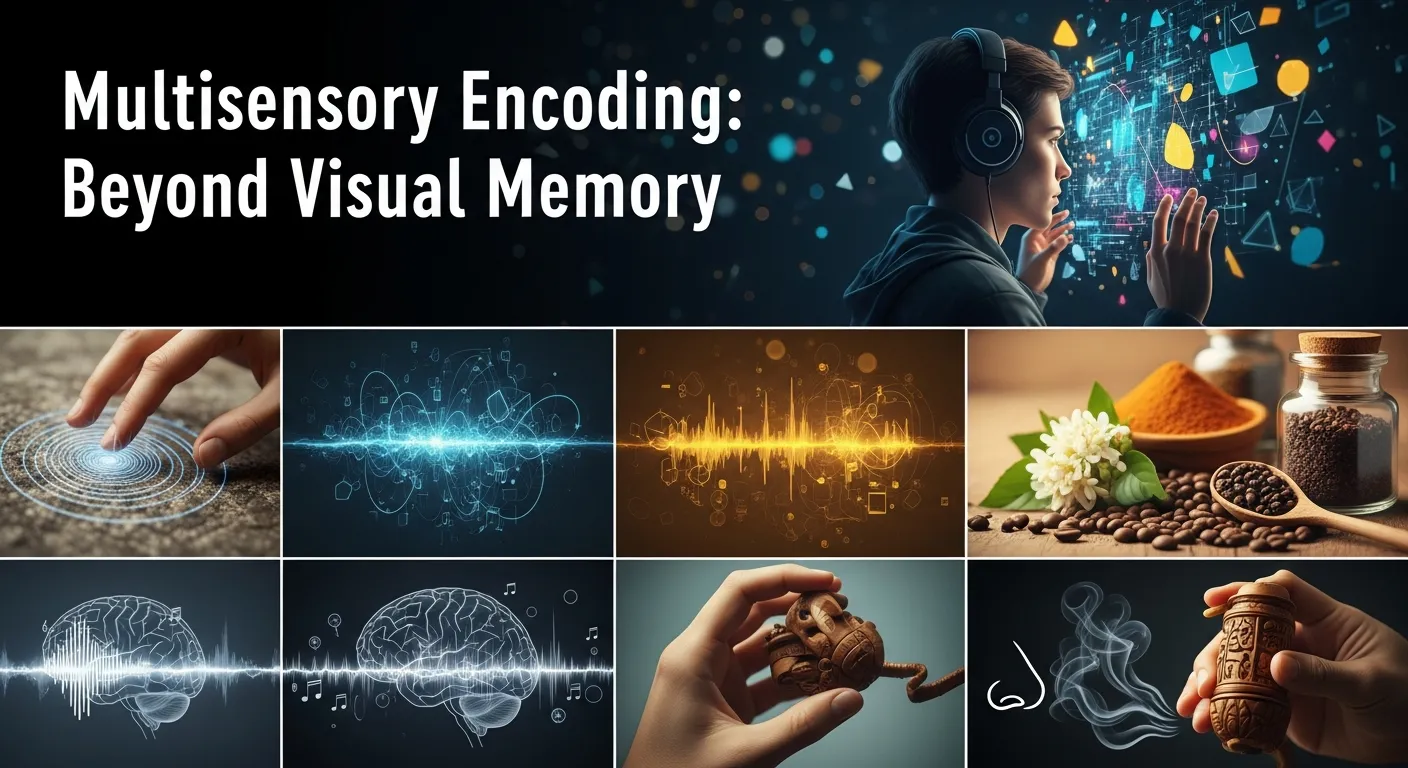
Visual elements often dominate brand marketing, but the science of brand memory confirms that we are multisensory beings. Each additional sensory pathway activated during a brand encounter increases memory strength through redundant encoding. This creates multiple “access points” to the same brand information in the brain.
Olfactory Memory (The Proust Effect)
Scent is the only sense that bypasses the thalamus and goes directly to the olfactory bulb, which is directly connected to the amygdala and hippocampus. This anatomical quirk makes scent the most powerful trigger for memory and emotion.
- Application: Hotels using signature scents in lobbies or retail stores scenting their air with vanilla or citrus. These scents become inextricably linked to the brand experience.
Sonic Branding
Sound travels faster to the brain than visual input. Sonic branding creates an auditory watermark. When you hear the “I’m Lovin’ It” jingle, you don’t need to see the Golden Arches to think of McDonald’s. The science of brand memory validates that audio cues can trigger brand recall even when the consumer is not visually paying attention (e.g., hearing a TV ad from the next room).
Haptic (Touch) Memory
The weight, texture, and temperature of a product or packaging influence perception. High-quality paper stock on a business card or the satisfying “click” of a luxury car door closing are tactile cues that reinforce quality associations. Apple’s focus on the tactile experience of unboxing is a masterclass in haptic memory encoding.
Narrative Structures: Stories as Memory Frameworks

Human memory evolved to retain information organized in narratives. We are storytelling animals. The science of brand memory leverages this evolutionary trait. When data is embedded in a story, it is remembered up to 22 times more effectively than facts alone.
Neural Coupling
When a brand tells a compelling story, “neural coupling” occurs. The listener’s brain activity mirrors the speaker’s brain activity. If the story describes a delicious meal, the sensory cortex of the listener lights up as if they were eating it. Brand storytelling allows you to plant experiences directly into the consumer’s mind.
The Hero’s Journey
Brands that position the customer as the hero and the product as the guide utilize a classic narrative framework that the brain instinctively understands.
- The Problem: The villain (e.g., dirt, inefficiency, boredom).
- The Guide: The brand (offering a solution).
- The Resolution: Success (a clean house, saved time, entertainment).
This structure provides a “mental coat rack” for consumers to hang brand associations on. Without the story, the facts fall to the floor. The science of brand memory relies on narrative to turn disparate facts into a coherent, memorable whole.
Psychological Ownership: From Awareness to Identification
The ultimate goal of the science of brand memory is to transition consumers from simple awareness to “psychological ownership.” This is the feeling that a brand is “mine” or an extension of “who I am.”
The Endowment Effect
In behavioral economics, the endowment effect describes how people value items more simply because they own them. In branding, when a consumer feels a sense of ownership over a brand (even without buying it yet), they defend it and recall it more easily. User experience design that allows for customization (like Nike By You) fosters this sense of ownership.
Identity Signaling
We remember brands that help us tell the world who we are. A Patagonia jacket signals environmental awareness; a Rolex signals status. When a brand integrates into a consumer’s self-concept, recalling the brand activates self-relevant neural networks. The science of brand memory shows that “self-reference” is one of the strongest encoding mechanisms available.
Community and Belonging
Building a community around a brand (like Harley-Davidson or CrossFit) creates shared memories. Social reinforcement strengthens individual memory. When consumers interact with other fans, the brand memory is constantly refreshed and validated, deepening the neural grooves.
Practical Application: Memory-Optimized Brand Strategy
Translating the science of brand memory into a cohesive brand marketing strategy requires intentional execution. You cannot leave memory to chance. Here is how to apply these principles using modern tools and data.
1. Identify Your Distinctive Assets
Conduct a brand audit to identify what elements of your brand are truly distinctive. Use tools like Google Analytics to see which landing pages or visuals retain users longest.
- Action: Strip away the logo from your ads. Can consumers still identify the brand? If not, you lack distinctive assets.
2. Map the Emotional Journey
Use customer journey mapping to identify emotional highs and lows. Ensure your brand provides a positive emotional peak at critical touchpoints.
- Action: script customer service interactions to end on a high emotional note to leverage the “peak-end rule” of memory.
3. Implement Sensory Layering
Review your physical and digital presence. Are you engaging more than just the eyes?
- Action: Add micro-interactions (sounds or haptic feedback) to your app. Choose a consistent paper stock for physical mailers.
4. Optimize for Search and Discovery
Part of memory is findability. Use SEO tools like SEMrush or Ahrefs to understand the keywords your audience associates with your category. By aligning your content marketing with these terms, you reinforce the neural link between the consumer’s problem and your brand as the solution.
5. Measure Mental Availability
Move beyond simple click-through rates. Look at metrics that indicate memory strength, such as direct traffic (people typing your URL) and branded search volume. High branded search volume is a primary indicator that the science of brand memory is working for you.
6. Consistent Repetition Across Channels
Whether it is social media management, email marketing services, or offline advertising, ensure the core message and assets are identical. Fragmentation kills memory. An integrated marketing approach ensures that the neural pathway is reinforced from every angle.
Conclusion
The battle for market share is ultimately a battle for mind share. The science of brand memory offers a blueprint for winning this battle. It moves branding away from subjective “creativity” and toward objective biological reality. By understanding how the brain encodes distinctiveness, emotion, and sensory input, you can design experiences that stick.
Successful brands do not just communicate; they inhabit our memories. They establish residence in our neural networks through consistent, emotionally resonant, and distinctive interactions. As you refine your brand strategy, remember that your goal is not just to be seen, but to be remembered. By applying the science of brand memory, you turn your business into a permanent fixture in the consumer’s mind, driving loyalty and growth for years to come.
FAQs
1. What is the most critical factor in the science of brand memory?
Distinctiveness is widely considered the most critical factor. Before a memory can be formed or an emotion felt, the brand must be noticed. Distinctiveness ensures the brand breaks through the noise and gains the attention required for memory encoding.
2. How long does it take to establish a strong brand memory?
There is no set time, but it relies on frequency and intensity. A highly emotional event can create an instant memory (flashbulb memory), while low-emotion exposure requires consistent repetition over months or years to build strong neural pathways.
3. Can small businesses apply the science of brand memory without a huge budget?
Absolutely. Consistency costs nothing. Using the same color, tone of voice, and logo across all social media and emails is an application of memory science. Small gestures, like a handwritten note (emotional connection), can be more powerful than expensive ads.
4. How does digital marketing impact brand memory compared to traditional media?
Digital marketing allows for higher frequency and targeted repetition, which aids memory. However, the screen environment is often cluttered. Traditional media (like print or direct mail) engages haptic (touch) memory, which digital cannot, potentially creating a deeper, albeit less frequent, impression.
5. What is the difference between brand awareness and brand memory?
Brand awareness is recognized (I know who you are when I see you). Brand memory, specifically “mental availability,” is recall (I think of you when I have a problem, even without seeing an ad). The science of brand memory aims for the latter.
6. Why do emotional ads perform better than rational ones?
The brain processes emotions in the limbic system, which is evolutionarily older and faster than the rational prefrontal cortex. Emotional memories are prioritized for survival reasons, making them stickier and easier to retrieve than data or statistics.
7. What is a “Distinctive Brand Asset”?
It is a sensory cue other than your brand name that triggers brand recognition. Examples include the shape of a Toblerone bar, the color “Tiffany Blue,” or the Geico Gecko. These assets act as mental hooks for the science of brand memory.
8. How does “Social Proof” influence brand memory?
Social proof (reviews, influencer endorsements) validates the brand. When we see others trusting a brand, it lowers our brain’s anxiety regarding the choice. This positive association makes the memory of the brand more favorable and likely to be stored.
9. Can a brand rebrand without losing its memory equity?
Yes, but it is risky. This is why “evolution not revolution” is recommended. When rebranding, keep at least one core distinct asset (e.g., keep the color but change the logo shape) to maintain the neural link for existing customers.
10. How can I measure the effectiveness of my brand memory strategy?
Monitor “Branded Search Volume” in Google Analytics. If more people are searching for your company by name rather than by generic service terms, it proves you have successfully established residence in their memory. Also, track “Direct Traffic” and conduct recall surveys.