Building Resonant Brand Growth: A Guide to Deep Connection
Rapid growth is temporary, but resonance lasts forever. Let’s explore the strategies for building resonant brand growth that create deep, meaningful connections with your audience.
This guide details the framework for building resonant brand growth by moving beyond transactional marketing. We will cover the importance of brand purpose, emotional branding, and community building. You’ll gain actionable strategies for using brand storytelling and sustainable branding strategies to create a brand that doesn’t just sell, but inspires loyalty.
What is Resonant Brand Growth (And Why Is It the Future)?
For decades, brand growth was measured in simple terms: market share, revenue, and units sold. While these metrics are still important, they only tell part of the story. They measure what people are buying, not why they care. The pursuit of building resonant brand growth is a strategic shift from transactional relationships to transformational ones.
Resonant brand growth occurs when a brand’s values, message, and purpose align so perfectly with its target audience that it creates a deep, emotional connection. It’s the difference between a customer who buys your product and a fan who champions your brand. This resonance is the foundation of long-term loyalty, advocacy, and brand equity in marketing. It’s the feeling that makes a customer choose your brand even when a competitor is cheaper or more convenient.
In a marketplace saturated with noise, building resonant brand growth is no longer a “nice-to-have”; it is a strategic imperative for brand longevity. Brands that resonate don’t just occupy space in the market; they occupy a space in their customers’ lives.
The Three Pillars of Building Resonant Brand Growth

Achieving this level of connection is not accidental. It is the result of a deliberate strategy built on three core pillars: Purpose, Personality, and Participation.
Pillar 1: Brand Purpose in Action
Your brand’s purpose is its “why.” It’s the reason you exist beyond making a profit. However, a purpose statement hanging on an office wall is meaningless. The key to building resonant brand growth is putting that purpose into action.
- Patagonia: Their purpose—”We’re in business to save our home planet”—isn’t just a tagline. It informs their product design (using recycled materials), their business model (offering repairs), and their activism (donating to environmental causes). This is a masterclass in brand purpose in action.
- TOMS: Their original “One for One” model was a powerful example of building resonant brand growth by embedding purpose directly into the transaction.
Pillar 2: A Distinct Brand Personality
Your brand personality in marketing is how your brand would behave if it were a person. Is it a wise sage, a rebellious outlaw, or a nurturing caregiver? A clear personality makes your brand relatable and human.
- Liquid Death: With its heavy metal-inspired cans and irreverent humor, Liquid Death has built a powerful personality that stands out in the crowded bottled water aisle. Their personality resonates with a specific subculture, creating fierce loyalty.
- Brand Archetypes: Using frameworks like Jung’s 12 brand archetypes can provide a solid foundation for defining and maintaining a consistent brand personality.
Pillar 3: Active Community Participation
Resonant brands don’t talk at their audience; they talk with them. They foster a sense of belonging and turn customers into community members.
- Sephora’s Beauty Insider: This is more than a loyalty program. It’s a community where members share tips, attend exclusive events, and feel like they are part of an exclusive club.
- Building a brand community on social media through interactive content, user-generated content (UGC) campaigns, and genuine engagement is crucial for building resonant brand growth.
The Psychology of Resonance: Tapping into Emotional Branding

Humans are not logical buying machines. Our decisions are driven by emotion. Building resonant brand growth requires a deep understanding of neuromarketing techniques and emotional branding.
The Power of Brand Storytelling
Stories are the vehicles for emotion. A good story can convey your brand’s purpose and personality in a way that a list of features never could.
- Mastering brand storytelling involves creating a narrative where the customer is the hero, and your brand is the trusted guide.
- Data-driven storytelling uses insights from customer data to craft narratives that are highly relevant and personalized, further strengthening the connection.
Neuroscience-Driven Branding
The concept of the neuroscience of brand loyalty shows that strong brands create powerful neural pathways.
- Sensory Branding: Building resonant brand growth often involves engaging multiple senses. The distinct sound of a Harley-Davidson engine or the signature scent of a Westin hotel are forms of sensory branding that create deep, non-conscious connections.
- The Psychology of Color in Branding: Color choices can evoke specific emotions and reinforce your brand’s personality. Think of the calming blue of Tiffany & Co. or the energetic red of Coca-Cola.
Strategic Framework for Building Resonant Brand Growth
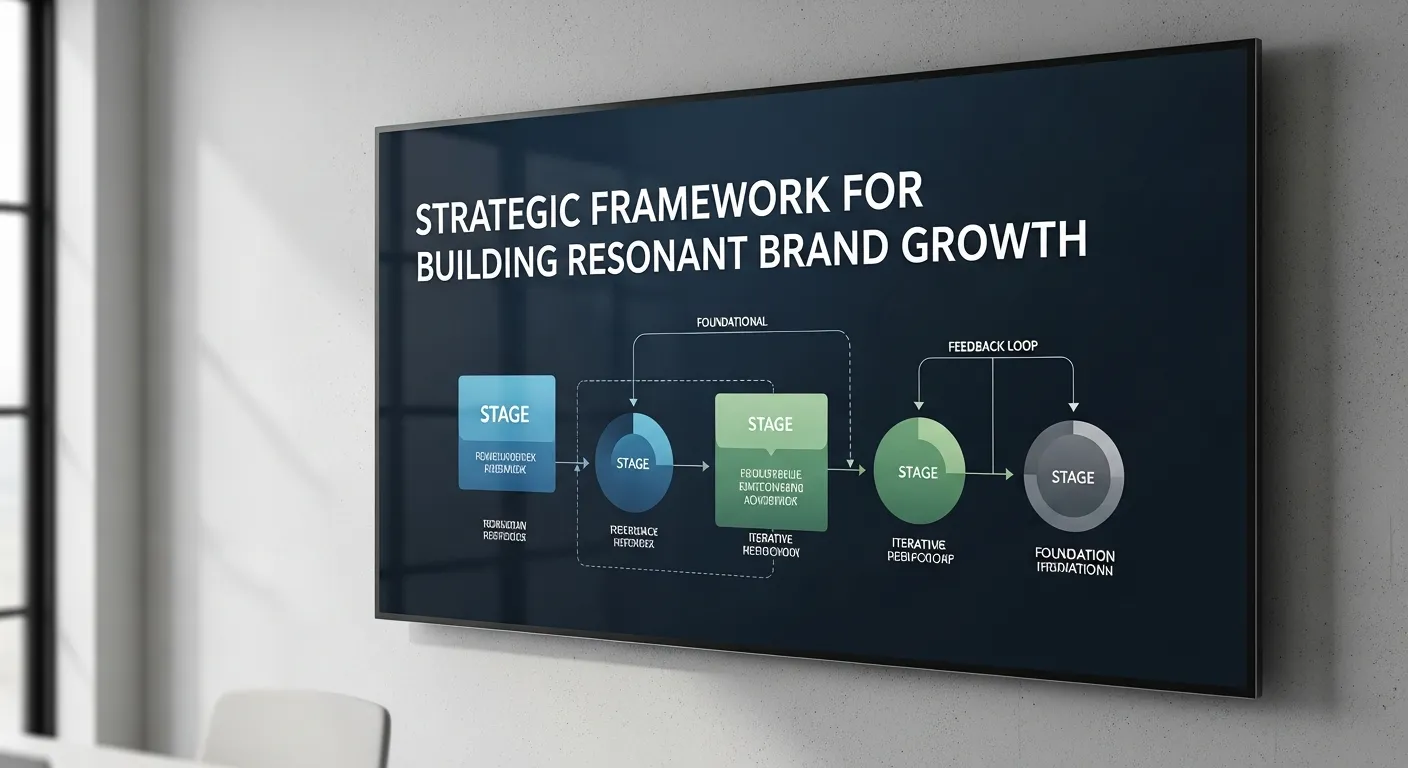
Achieving resonance requires a cohesive and integrated strategy. Here is a step-by-step framework.
Step 1: Conduct a Comprehensive Brand Audit
You can’t know where you’re going until you know where you are.
- Analyze Your Brand Perception: How do customers currently see you? Use social listening tools and customer surveys to get an honest picture of your brand perception in marketing.
- Competitive Brand Analysis: How do you stack up against competitors? What makes you different? Tools like SEMrush can help you analyze competitor messaging and positioning.
- Internal Branding Audit: Do your employees understand and embody your brand’s purpose and values? Internal communication is the lifeline of a strong brand.
Step 2: Define Your Core Identity (The 3 Ps)
Based on your audit, solidify your Purpose, Personality, and plan for Participation.
- Brand Purpose Development: If you don’t have a clear purpose, now is the time to define it.
- Brand Personality Assessment: Use tools like the Big 5 model of brand management or brand archetypes to define your personality traits.
- Community Strategy: Outline how you will foster participation. What platforms will you use? What kind of content will you create to spark conversation?
Step 3: Weave Your Story Across All Touchpoints
Building resonant brand growth depends on brand consistency. Your story must be the same everywhere.
- Customer Journey Mapping: Map out every touchpoint a customer has with your brand, from a social media ad to a post-purchase email. Ensure your purpose and personality shine through at each stage.
- Integrated Marketing: The strength of integrated brand promotion lies in its ability to create a seamless narrative. Your PR, content marketing, and advertising should all be telling the same story.
- Brand Voice in the Era of Conversational AI: Even your chatbots and automated messages should reflect your brand voice.
Step 4: Execute with Value-Driven Content
Your content should serve your audience, not just sell to them.
- Branded Content Marketing: Create content that is so valuable people would seek it out even if it weren’t attached to a brand. This builds trust and authority.
- Inclusive Brand Strategies: Ensure your content and imagery reflect the diversity of your audience. Representation matters for building resonant brand growth.
- Sustainable Branding Strategies: If sustainability is part of your purpose, create content that educates and empowers your audience to make more sustainable choices. Be transparent about your efforts to avoid accusations of “greenwashing.”
Measuring Resonant Brand Growth
Building resonant brand growth requires moving beyond simple vanity metrics. You need to measure the depth of the connection you’re creating.
|
Category |
Key Metrics |
Tools & Methods |
|---|---|---|
|
Brand Equity |
Brand Awareness, Perceived Quality, Brand Associations, Brand Loyalty |
Surveys, Ahrefs (Branded Search), Focus Groups |
|
Emotional Connection |
Brand Sentiment Analysis, Share of Voice (positive mentions) |
Social Listening Tools, Brandwatch, Sprinklr |
|
Community Engagement |
UGC Volume, Community Growth Rate, Engagement per Post |
Native Social Analytics, Community Platforms |
|
Loyalty & Advocacy |
Net Promoter Score (NPS), Customer Lifetime Value (CLV), Repeat Purchase Rate |
CRM Software, Google Analytics, Surveys |
How to measure brand authenticity using real-time data? Monitor the gap between what you say (your marketing) and what your customers say about you (UGC and reviews). A small gap indicates high authenticity, a key driver of building resonant brand growth.
The Role of User Experience (UX) in Resonance
A seamless user experience is a critical, yet often overlooked, component of building resonant brand growth.
- Frictionless Interaction: A clunky website, a confusing checkout process, or poor customer service can instantly shatter any emotional connection you’ve built. User experience and branding are two sides of the same coin.
- Omnichannel Personalization: Your brand should feel consistent and personalized whether the customer is interacting on a mobile app, a desktop site, or in a physical store.
- Harnessing Micro-Moments: Great UX anticipates customer needs in real-time, providing the right information at the right moment. This builds trust and shows that you understand your customer on a deep level.
Future-Proofing Your Brand: Trends Shaping Resonant Growth
The strategies for building resonant brand growth are constantly evolving. Here are some trends to watch.
Hyper-Personalization
Using AI and data to create truly one-to-one experiences. This goes beyond using a customer’s first name in an email. It’s about recommending products, content, and experiences based on their unique behavior and preferences.
The Rise of Brand Ecosystems
Brands are no longer siloed entities. They are creating interconnected ecosystems of content, community, and commerce. This might involve co-branding in marketing with other like-minded brands or creating a diverse portfolio of products and media under a single brand architecture.
Gamification and Interactive Storytelling
Gamified marketing strategies use game mechanics (points, badges, leaderboards) to drive engagement and loyalty. Interactive content marketing, such as quizzes, polls, and AR experiences, invites the audience to become active participants in the brand’s story, which is fundamental to building resonant brand growth.
Navigating the Metaverse
For forward-thinking brands, mastering metaverse branding offers a new frontier for creating immersive, shared experiences that can forge powerful community bonds and contribute to building resonant brand growth in a digital-first world.
Conclusion
Building resonant brand growth is an ongoing commitment to authenticity, connection, and value. It requires you to look beyond short-term gains and focus on creating a brand that truly matters to people. By defining a clear purpose, crafting a distinct personality, and fostering active participation, you can create an unbreakable bond with your audience. This resonance is what turns customers into advocates, drives sustainable growth, and builds a brand that can stand the test of time.
Frequently Asked Questions (FAQs)
1. What is the difference between brand marketing and building resonant brand growth?
Brand marketing focuses on building awareness and recognition. Building resonant brand growth is the next level; it focuses on creating a deep, emotional connection between the brand and its audience, leading to loyalty and advocacy.
2. How can a startup with a small budget start building resonant brand growth?
Focus on authenticity and community. A startup can build resonance by having its founder be highly active and transparent on social media, creating valuable content that solves a specific audience problem, and fostering a tight-knit community on a platform like Discord or Slack.
3. What is the role of employees in this process?
Employees are critical. Internal branding ensures your team understands and lives the brand’s purpose. When employees become powerful brand ambassadors, it authenticates your external message and is a powerful strategy for building resonant brand growth.
4. Can a B2B brand achieve resonant growth?
Absolutely. B2B decisions are still made by people. A B2B brand can build resonance through thought leadership, creating a community for its users, providing exceptional customer service, and having a clear, purpose-driven mission that partners can align with.
5. How does brand storytelling contribute to resonance?
Storytelling translates your brand’s purpose and values into an emotional narrative. A good story makes your brand relatable, memorable, and meaningful, which are the core ingredients for building resonant brand growth.
6. Does our brand need to be on every social media platform?
No. It’s better to be highly engaged and build a strong community on one or two platforms where your target audience is most active than to have a weak presence everywhere.
7. How do you balance data and creativity in building resonance?
Data tells you what is happening, and creativity helps you understand why. Use data to identify trends and understand audience behavior. Then use your creativity and human intuition to craft stories and experiences that will connect on an emotional level.
8. Can a brand change its purpose to achieve resonance?
A brand refresh is possible, but it must be handled carefully. A change in purpose must be authentic and communicated transparently. A sudden, drastic shift can feel disingenuous and damage trust, hindering efforts at building resonant brand growth.
9. What is the most important first step?
A deep and honest understanding of your audience. You cannot resonate with an audience you do not understand. Start with research, surveys, and conversations to learn their true needs, values, and pain points.
10. How long does it take to see results from building resonant brand growth?
It is a long-term strategy, not a short-term tactic. While you may see early indicators like increased engagement and positive sentiment within months, building deep, lasting resonance can take years of consistent effort.