Metaverse Marketing Guide: Strategies for the Virtual Frontier
The internet is evolving from 2D screens to 3D worlds. This Metaverse Marketing Guide is your blueprint for navigating this immersive frontier and connecting with the next generation of digital consumers.
This definitive Metaverse Marketing Guide explores how brands can leverage virtual reality (VR), augmented reality (AR), and digital assets to build immersive communities. We cover actionable strategies, platform selection, gamified branding, and the future of digital marketing strategies in virtual spaces to help you secure a competitive edge.
What is the Metaverse?
Before diving into strategies, we must define the terrain. The term “Metaverse” doesn’t refer to a single app or website. Instead, it describes a shift in how we interact with technology. It is a collective virtual shared space, created by the convergence of virtually enhanced physical reality and physically persistent virtual space.
Think of it as the successor to the mobile internet. Instead of just viewing content, you are in it. This shift creates unprecedented opportunities for immersive brand experiences. From augmented reality branding overlays in physical stores to fully realized 3D worlds in Decentraland or Roblox, the Metaverse is a spectrum of experiences.
For marketers, this means the rules of engagement are changing. Mastering metaverse branding isn’t about buying ad space; it’s about creating value, community, and utility in a virtual economy. This Metaverse Marketing Guide will serve as your compass.
Why Your Brand Needs a Metaverse Strategy Now

You might be asking, “Is this just a fad?” The data suggests otherwise. Major players like Nike, Gucci, and Coca-Cola are already heavily invested. Why? Because the Metaverse offers a level of customer engagement that traditional social media cannot match.
1. The Ultimate Immersive Experience
In a 2D feed, you scroll past an ad in seconds. In the Metaverse, a user might spend 20 minutes exploring your virtual showroom. This depth of interaction builds stronger brand memory and emotional connection.
2. Reaching Gen Z and Alpha
These generations are “digital natives” who value digital assets as much as physical ones. For them, dressing their avatar in a branded skin is a significant form of self-expression. To remain relevant, brands must meet these consumers where they hang out.
3. New Revenue Streams
The Metaverse economy is booming. From selling NFTs (Non-Fungible Tokens) to virtual real estate and digital fashion, brands are unlocking entirely new business models. Virtual reality marketing isn’t just about promotion; it’s about direct sales of digital goods.
Core Pillars of a Successful Metaverse Marketing Strategy
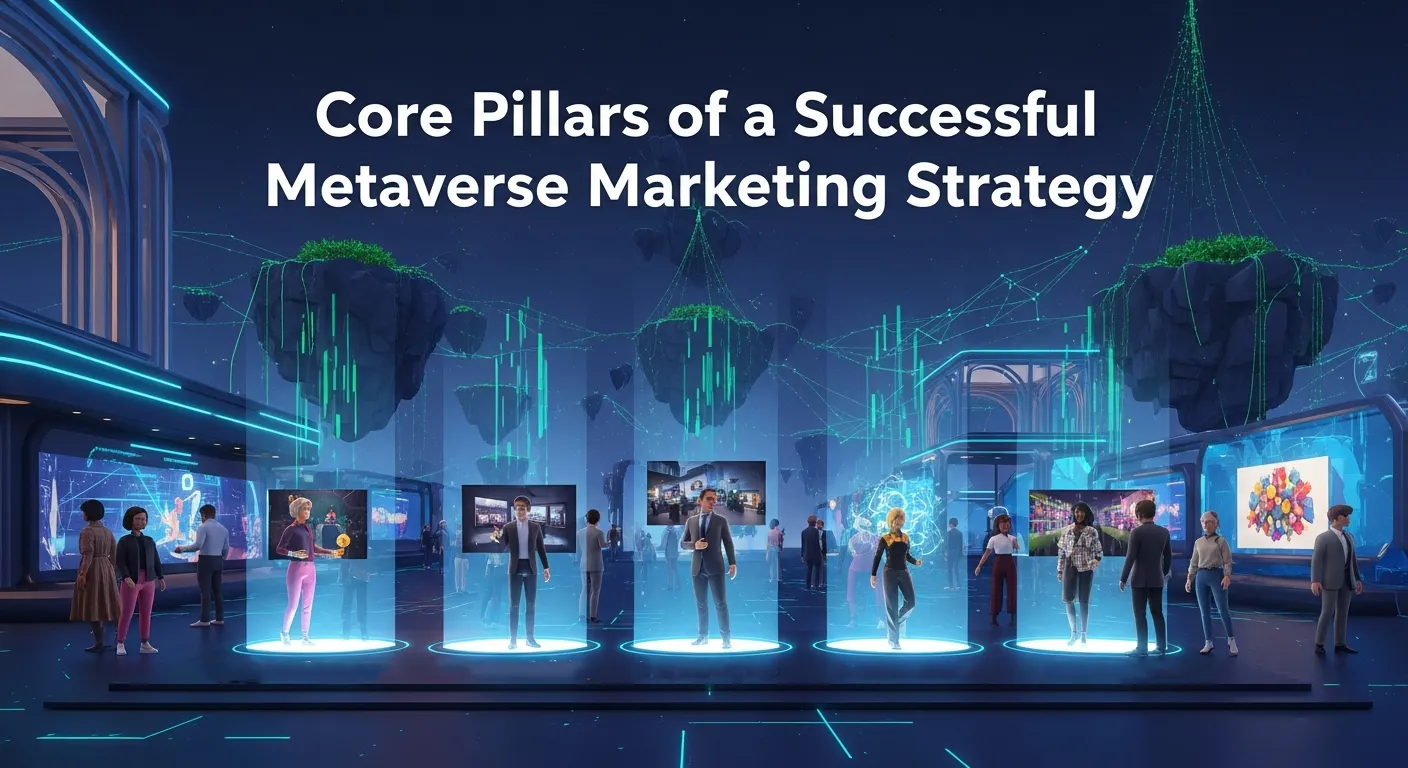
A successful entry into the Metaverse requires a strategic approach. This Metaverse Marketing Guide breaks it down into four core pillars.
Pillar 1: Gamified Branding and Play
The Metaverse is inherently playful. Gamified branding is the most natural entry point. Whether it’s a scavenger hunt in a virtual world or a branded obstacle course on Roblox, games drive engagement.
Actionable Tip: Don’t just slap a logo on a billboard. Create a mini-game where users can earn exclusive digital rewards. This leverages the psychology of achievement and status.
Pillar 2: Digital Collectibles and NFTs
Ownership is a key driver in the Metaverse. NFTs allow brands to create scarce, verifiable digital assets.
Actionable Tip: Launch a limited edition “Digital Twin” of your physical product. If a customer buys a physical pair of sneakers, they get an NFT version for their avatar. This bridges the physical and digital worlds, a concept often called “phygital” marketing.
Pillar 3: Virtual Events and Community
The Metaverse is social. Hosting virtual concerts, product launches, or meetups allows you to gather a global audience without the constraints of geography.
Actionable Tip: Use influencer marketing to host these events. A virtual meet-and-greet with a popular avatar influencer can drive massive traffic to your digital space.
Pillar 4: Augmented Reality (AR) Integration
You don’t need a VR headset to enter the Metaverse. Augmented reality branding brings the Metaverse to the smartphone.
Actionable Tip: Create AR filters for Instagram or Snapchat that allow users to “try on” your products. This reduces purchase hesitation and increases social sharing.
Step-by-Step Metaverse Marketing Guide: Implementation
How do you actually start? Follow this roadmap.
Step 1: Define Your Goals and Audience
Are you trying to increase brand awareness, drive sales of digital goods, or build community? Who are you trying to reach? A luxury brand marketing strategy in the Metaverse will look very different from a CPG brand marketing strategy.
- Luxury: Focus on exclusivity, high-fidelity graphics, and scarce NFTs.
- Mass Market: Focus on accessibility, fun mini-games, and broad social platforms like Roblox.
Step 2: Choose the Right Platform
The Metaverse is fragmented. Choosing where to build is critical.
- Decentralized Platforms (The Sandbox, Decentraland): You own the land. Good for crypto-native audiences and creative freedom.
- Centralized Gaming Platforms (Roblox, Fortnite): Massive audiences, but you play by their rules. Excellent for reaching younger demographics.
- Social VR (Horizon Worlds, VRChat): Focused on social interaction and events.
Step 3: Create Immersive Content
Content in the Metaverse must be 3D and interactive. This requires new skills. You may need to partner with 3D designers or specialized agencies.
- Focus on Utility: What can users do in your space? Can they fly? Can they build? Can they learn? Interactive storytelling in branding is essential here. Static content is invisible in a 3D world.
Step 4: Promote Your Metaverse Presence
“If you build it, they will come” does not apply here. You must drive traffic from Web2 (social media, email) to Web3.
- Cross-Channel Promotion: Use your existing social channels to announce drops and events.
- Discord Communities: Build a dedicated Discord server to nurture your Metaverse community. This is where the most loyal fans live.
Advanced Strategies: AI and Personalization
The future of the Metaverse is intelligent. AI brand storytelling will allow for dynamic environments that change based on user behavior.
AI-Driven Avatars
Imagine a virtual store assistant powered by AI that can answer complex questions, recommend products, and even detect user sentiment. This level of hyper-personalized branding will redefine customer service.
Generative Engine Optimization
As search moves into 3D spaces, Generative Engine Optimization will become vital. Brands will need to optimize their 3D assets to be easily discoverable by AI agents and search algorithms within virtual worlds.
Challenges and Risks in the Metaverse
No Metaverse Marketing Guide is complete without addressing the risks.
Brand Safety
In a user-generated world, brands can end up next to inappropriate content. Brand safety in digital marketing takes on a new dimension here. You need strict moderation tools and clear community guidelines.
Technical Barriers
VR headsets are still expensive, and high-fidelity Metaverse experiences require strong internet connections. This can limit accessibility. Inclusive brand strategies should ensure you have lightweight, mobile-friendly entry points (like AR) alongside high-end VR experiences.
Privacy and Data Ethics
The Metaverse collects biometric data (eye movement, gait). Brands must be hyper-transparent about how this data is used. Building brand trust is non-negotiable.
Measuring Success: Metaverse KPIs
How do you measure ROI in a virtual world? Traditional metrics like click-through rates don’t tell the whole story.
- Dwell Time: How long do users stay in your experience? High dwell time indicates strong engagement.
- Interaction Rate: How many users played the game, tried on the item, or spoke to an NPC?
- NFT Sales / Secondary Market Value: If you sell digital assets, their resale value is a key indicator of brand heat.
- Community Growth: Track the growth of your Discord or social channels driven by Metaverse activations.
Industry Use Cases: Who is Winning?
Fashion and Retail
Nike created “Nikeland” on Roblox, a space where users can play games and dress their avatars in Nike gear. It has attracted millions of visitors and serves as a massive testing ground for new products. This is a prime example of gamification in marketing done right.
Automotive
Hyundai launched “Hyundai Mobility Adventure” on Roblox to introduce young consumers to their future mobility solutions. By letting users drive virtual cars and explore futuristic cities, they are building brand perception long before these users can get a driver’s license.
Entertainment
Travis Scott’s concert in Fortnite drew over 12 million concurrent players. This event showed the massive potential of virtual reality marketing for events, transcending physical limitations.
Comparison of Major Metaverse Platforms
|
Platform |
Type |
Best For |
Target Audience |
Key Feature |
|---|---|---|---|---|
|
Roblox |
Centralized / Gaming |
Gamified Experiences, Brand Awareness |
Gen Z, Gen Alpha |
Massive user base, easy game creation tools |
|
Decentraland |
Decentralized / Crypto |
Virtual Real Estate, Art Galleries |
Crypto-natives, Investors |
User ownership of land (LAND NFTs) |
|
The Sandbox |
Decentralized / Gaming |
Voxel-based Games, Co-branding |
Gamers, Creators |
Partnership network (Snoop Dogg, Adidas) |
|
Fortnite |
Centralized / Battle Royale |
Pop Culture Collaborations, Concerts |
Gen Z, Gamers |
High-fidelity graphics, massive cultural impact |
|
Horizon Worlds |
Centralized / Social VR |
Social Hangouts, Corporate Events |
VR Enthusiasts, Professionals |
Integration with Meta (Facebook) ecosystem |
The Future of Metaverse Marketing
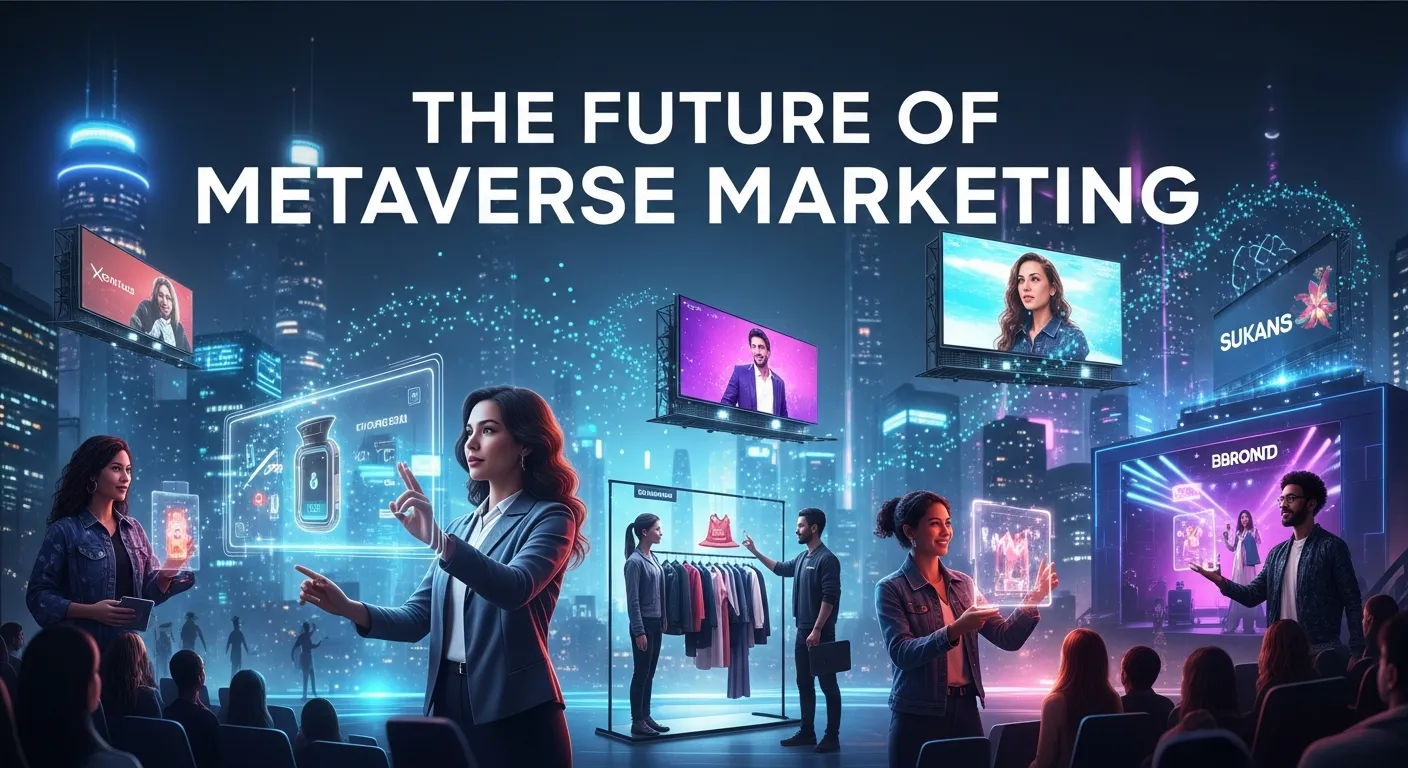
We are in the early innings. As technology improves, the Metaverse will become more photorealistic, more interoperable, and more integrated into our daily lives.
Interoperability
Currently, if you buy a digital shirt in Roblox, you can’t wear it in Fortnite. True Metaverse marketing success will come when assets are interoperable—meaning users can take their digital identity and belongings across different worlds.
The Rise of Virtual Commerce (v-commerce)
We will move from buying digital goods to buying physical goods inside the Metaverse. Imagine walking into a virtual Walmart, picking up a product, inspecting it in 3D, and having the physical item delivered to your door an hour later.
Sensory Branding
As haptic suits and olfactory devices evolve, sensory branding will enter the Metaverse. You won’t just see the virtual coffee; you will smell it. This opens up incredible possibilities for multisensory branding strategies.
Conclusion
The Metaverse represents the next great horizon for digital connection. While it may feel daunting, the core principles of marketing remain the same: offer value, build community, and tell a compelling story. This Metaverse Marketing Guide is your starting point. The brands that are brave enough to experiment now, to fail fast and learn, will be the ones that define the future of the internet. Don’t wait for the Metaverse to be perfect; jump in, start building, and position your brand at the forefront of this digital revolution. The virtual world is waiting for you.
Frequently Asked Questions (FAQs)
1. Is the Metaverse just for gaming companies?
No. While gaming is the current entry point, the Metaverse is for everyone. Retail, education, real estate, and even B2B companies are finding value in virtual spaces for training, collaboration, and immersive brand experiences.
2. How much does it cost to enter the Metaverse?
It varies wildly. Creating a simple AR filter for Instagram might cost a few thousand dollars. Building a custom, high-fidelity world in Decentraland or Roblox can cost hundreds of thousands. Start small and scale up as you prove ROI.
3. Do I need a VR headset to market in the Metaverse?
No. Most Metaverse platforms (like Roblox, Decentraland, and Fortnite) are accessible via PC, console, or mobile. Augmented reality branding is also a huge part of the Metaverse and requires only a smartphone.
4. What is the difference between AR and VR?
VR (Virtual Reality) immerses the user in a completely digital environment. AR (Augmented Reality) overlays digital elements onto the real world (like Pokemon Go). Both are key components of a Metaverse Marketing Guide strategy.
5. How do NFTs fit into Metaverse marketing?
NFTs (Non-Fungible Tokens) act as the deed of ownership for digital items. They allow brands to sell limited-edition digital merchandise, access passes to VIP virtual events, or loyalty rewards that have real-world value.
6. Is the Metaverse safe for brands?
It carries risks. User-generated content can be unpredictable. However, by using moderation tools and choosing platforms with robust safety features, brands can mitigate these risks. Brand safety in digital marketing protocols must be updated for 3D spaces.
7. Can small businesses use the Metaverse?
Yes. Small businesses can host virtual events, use AR filters for products, or sponsor local creators in virtual worlds. You don’t need to buy virtual land to participate; you can collaborate with those who already own it.
8. How does SEO work in the Metaverse?
It’s evolving. Currently, it’s about optimizing your content for the internal search engines of platforms like Roblox. In the future, Generative Engine Optimization will help AI agents find your 3D assets and present them to users.
9. What is “phygital” marketing?
It is the blending of physical and digital experiences. For example, buying a physical toy that unlocks a digital character in a game. This is a powerful strategy for bridging the gap between traditional retail and the Metaverse.
10. How can I learn more about Metaverse marketing trends?
Stay updated by following industry leaders on LinkedIn, reading reports from firms like McKinsey and Deloitte, and actively participating in Metaverse communities on Discord and Reddit. Experience is the best teacher—create an avatar and explore!