The Power of Sonic Branding in Today’s Digital Landscape
In a world saturated with visual content, sound offers a direct line to human emotion and memory. Effective sonic branding can define how your audience recognizes and connects with you.
This article explores the comprehensive world of sonic branding, from its core components to strategic implementation and measurement. You will learn how to build a powerful audio identity that resonates across all customer touchpoints, creating a lasting competitive advantage in an increasingly audio-first environment.
The Unseen Influence: Why Sonic Branding is Essential Now
Our daily lives have transformed dramatically. We ask voice assistants for weather updates, listen to podcasts during our commutes, and let smart speakers curate our evening playlists. In this audio-first environment, brands that rely solely on visual identity are missing countless opportunities to connect with their audiences. The shift towards screenless interactions has created entirely new touchpoints where sound is not just an addition, but the primary mode of communication.
Consider the rise of devices like Amazon Echo and Google Home. When a customer interacts with your brand without seeing it, how do they know it’s you? A well-defined audio signature provides the answer. Sonic branding fills this sensory gap, ensuring your brand is recognizable and consistent even when a screen is not present. This is not just a futuristic concept; it’s a present-day reality for millions of consumers who integrate voice-activated technology into their daily routines.
The human brain processes sound in a fundamentally different way than it processes visuals. Audio cues can trigger emotional responses and memories more quickly and deeply. This neurological reality makes sound a potent, yet often underutilized, branding element. A simple melody or a unique sound effect can evoke feelings of trust, excitement, or comfort, forging a powerful emotional bond between the consumer and the brand. This connection is key to building long-term brand loyalty and advocacy.
Furthermore, the ubiquity of mobile devices has amplified the importance of sound. Consumers frequently use their smartphones while multitasking, meaning their eyes might be elsewhere. In these moments, audio becomes the primary tool for capturing attention and conveying a message. A distinctive notification sound or a memorable audio cue in a mobile ad can cut through the noise and make a lasting impression.
Beyond Jingles: The Components of a Modern Sonic Brand
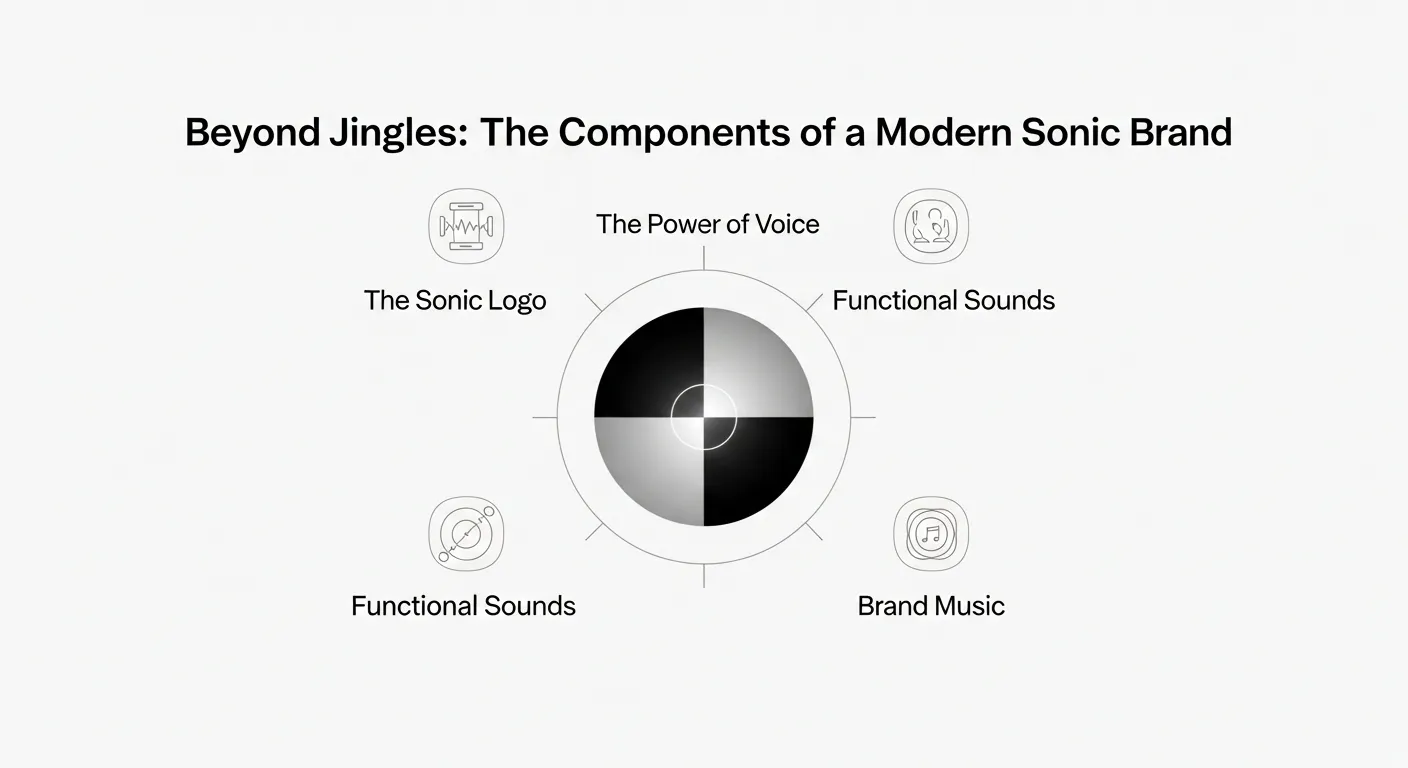
Many people mistakenly equate sonic branding with having a catchy jingle. While jingles are a part of the audio landscape, a comprehensive sonic identity goes much deeper. It involves creating a cohesive ecosystem of sounds that represents the brand across all platforms and interactions. Let’s break down the essential components.
1. The Sonic Logo: Your Brand’s Audio Signature
A sonic logo, also known as a sound logo or mnemonic, is the audio equivalent of your visual logo. It’s a brief, distinctive, and memorable sound that instantly identifies your brand.
- Function: To create immediate brand recognition.
- Characteristics: Typically 1-3 seconds long, unique, and musically pleasing.
- Examples: The iconic five-note “I’m Lovin’ It” melody from McDonald’s, the deep “ta-dum” of Netflix, and the chiming sound of Intel Inside.
These sounds are so deeply embedded in our culture that we can identify the brand without any visual context. A strong sonic logo is versatile and can be used at the end of commercials, in mobile apps, and during payment transactions, reinforcing the brand identity at every turn. Developing a sonic logo is a strategic process that requires a deep understanding of the brand’s personality and values.
2. The Power of Voice: Selecting Your Brand’s Character
The voice that speaks for your brand is a critical element of your sonic identity. Whether it’s the voice in your commercials, the automated responses on your customer service line, or the personality of your brand’s skill on a voice assistant, consistency is key.
- Warm and Authoritative: Often used by financial institutions or healthcare providers to build trust.
- Friendly and Conversational: Common for CPG brands or tech companies aiming for an approachable feel.
- Energetic and Youthful: Adopted by brands targeting younger demographics.
The chosen voice character must align with your overall brand personality. This decision should not be taken lightly. It involves casting, directing, and creating guidelines to ensure that any voice actor or AI-generated voice representing your brand sounds consistent.
3. Functional Sounds (UI/UX Sounds)
Functional sounds are the beeps, clicks, and alerts that accompany user interactions with your products or services. These are often overlooked but have a significant impact on the user experience.
- Confirmation Chimes: A pleasant sound that confirms a successful action, like a completed purchase or a sent message.
- Error Alerts: A sound that clearly indicates an error without causing frustration.
- Notification Pings: A unique sound that signals a new message or update from your app, distinguishing it from all other notifications on a user’s device.
When thoughtfully designed, these micro-sounds reinforce brand personality with every interaction. For example, a luxury car brand might use smooth, sophisticated sounds for its in-car interface, while a gaming app might use exciting, energetic sounds. These subtle cues contribute to a cohesive and immersive brand experience.
4. Brand Music: Setting the Emotional Tone
The background music used in your advertising, physical stores, or on-hold systems plays a crucial role in establishing an emotional tone. This collection of music, often called a brand music library, should feel like it comes from the same world.
- Genre and Instrumentation: Does your brand sound like classical piano, ambient electronica, or upbeat indie pop? The choice of genre creates an immediate impression of your brand’s values and positioning.
- Tempo and Mood: The speed and emotional quality of the music should match the context of the interaction. A high-energy track might work for a product launch video, while a calm, ambient piece is better suited for a spa’s waiting area.
By creating a consistent musical palette, you ensure that your brand always feels familiar, no matter where your audience encounters it.
Strategic Development of Your Sonic Identity
Creating an effective sonic brand is not a matter of simply picking a few sounds you like. It is a meticulous, strategic process that requires deep insight into your brand, your audience, and the competitive landscape. This process transforms abstract brand values into tangible audio assets.
Step 1: Laying the Foundation with a Brand Audit
Before a single note is composed, you must understand your brand’s core essence. This initial phase involves introspection and research to define the sonic territory.
- Define Your Brand Archetype: What is your brand’s personality? Is it a Sage, a Hero, a Jester, or a Caregiver? Understanding your archetype, a concept popularized in brand strategy, provides a clear direction for the emotional tone of your sound. For example, a Sage brand (like Google) might sound intelligent and clear, while a Hero brand (like Nike) would sound powerful and inspiring.
- Identify Core Attributes: List 3-5 keywords that describe your brand. Are you innovative, traditional, luxurious, accessible, bold, or trustworthy? These attributes will serve as the creative brief for your sound designers.
- Analyze Your Audience: Who are you trying to reach? What are their cultural references and musical tastes? Sound carries different associations across demographics. The sound that excites a Gen Z audience might not resonate with Baby Boomers. Resources like Google Analytics can provide demographic data to inform these decisions.
- Competitive Brand Analysis: Audit the sonic landscape of your industry. What do your competitors sound like? Are they all using upbeat corporate music? Identifying a “sea of sameness” presents a clear opportunity for differentiation. Your goal is to find a unique sonic space that is ownable and distinct.
Step 2: Translating Brand DNA into Sound
Once the strategic foundation is set, the creative work begins. This is where sound designers, composers, and strategists collaborate to translate your brand’s attributes into a cohesive audio ecosystem.
The Sonic Mood Board:
Similar to visual design, the process often starts with a mood board, but for sound. This involves collecting various audio clips, musical pieces, and sound textures that align with the brand’s desired emotional territory. This helps stakeholders align on a direction before significant resources are invested in original composition.
The Brand Soundscape Framework:
This framework outlines how the core sonic identity will adapt across different touchpoints.
|
Touchpoint |
Sonic Element |
Desired Emotion |
Example Implementation |
|---|---|---|---|
|
TV Commercial |
Sonic Logo |
Memorable, Recognizable |
2-second mnemonic at the end of the ad |
|
Mobile App |
UI/UX Sounds |
Seamless, Helpful |
A subtle chime for a successful login |
|
Customer Service |
On-Hold Music |
Calming, Reassuring |
A slow-tempo, ambient brand theme |
|
In-Store |
Background Music |
Welcoming, On-Brand |
A curated playlist from the brand library |
|
Voice Assistant |
Voice Character |
Trustworthy, Clear |
A consistent, friendly voice for all skills |
This table illustrates how a single sonic strategy can be flexibly applied. The key is coherence—all sounds should feel like they belong to the same family, even if they serve different functions.
Step 3: Ensuring Coherence with Visual Branding
Your sonic identity should not exist in a vacuum. It must feel like a natural extension of your visual branding.
- Color and Sound Synesthesia: There is a psychological connection between colors and sounds. Bright, vibrant colors might translate to high-pitched, energetic sounds, while muted, earthy tones might suggest lower-pitched, more organic textures.
- Logo Motion and Sound: How does your visual logo animate? The sound should match the movement. A logo that sweeps in might be paired with a whoosh sound, while one that materializes might have a gentle fade-in.
- Typography and Voice: The choice of font can also inform the brand’s voice. A modern, sans-serif font might suggest a clear, direct voice, while an elegant serif font could align with a more classic, authoritative tone.
When audio and visual elements are aligned, they create a multiplicative effect, where each element strengthens the other. This synergy is central to building strong brand equity.
Step 4: Cultural and Global Considerations
Sound is not a universal language. A melody or rhythm that is positive in one culture might be inappropriate or even offensive in another. Global brands must approach sonic branding with cultural sensitivity and rigorous testing.
- Musical Scales: Certain musical scales are associated with specific cultural traditions. Using them out of context can be perceived as inauthentic or disrespectful.
- Instrumentation: The sound of a specific instrument can carry deep cultural meaning.
- Voice Inflection: The tone and inflection of a voice can be interpreted differently across regions.
Mastercard is an excellent example of a brand that navigated this challenge successfully. They created a core sonic melody that is globally recognizable but can be adapted with local instrumentation—like sitars in India or ukuleles in the Caribbean—to feel culturally relevant in different markets. This approach, known as “glocalization,” is a best practice for international brands.
Step 5: Prioritizing Distinctiveness and Consistency
In a crowded marketplace, standing out is paramount. Your sonic branding must be distinctive enough to be memorable and cut through the noise. This often means avoiding industry clichés. If every tech company is using minimalist electronic sounds, perhaps your brand should explore a more organic, acoustic palette. SEO tools like Ahrefs or SEMrush can be used to analyze competitor content and marketing, which may provide clues about their audio-visual strategies.
Once your sonic assets are created, consistency is the key to success. Your sonic logo should appear across all relevant touchpoints, from TV commercials to podcast sponsorships. Your brand music should be used consistently in videos and physical spaces. This repetition is what builds recognition and embeds the sound in the consumer’s memory. A brand strategy road map should include clear guidelines for how and when to use each sonic asset.
Measuring the ROI of Sonic Branding
Like any significant marketing investment, the impact of sonic branding should be measured. While attributing sales directly to a sound can be complex, several key metrics can help quantify its effectiveness and demonstrate its value to stakeholders.
1. Brand Recognition and Recall
This is the most direct measure of a sonic logo’s success. The goal is for audiences to identify your brand through sound alone.
- How to Measure: Conduct surveys where participants listen to a series of sonic logos (including your own and competitors’) and are asked to identify the corresponding brand. This can be done with and without visual aids.
- Key Metric: Unaided recall rate. A high percentage indicates a strong and memorable sonic identity.
- Tools: Survey platforms like SurveyMonkey or Qualtrics can be used to administer these tests to a target demographic.
2. Emotional Response Measurement
Does your sonic branding evoke the intended feelings? Understanding the emotional impact is crucial for ensuring your sound aligns with your brand’s personality.
- How to Measure: This can range from simple self-reporting surveys (e.g., “How does this sound make you feel?”) to more advanced neuromarketing techniques. Facial coding analysis can detect subtle changes in expression, while biometric sensors can track physiological responses like heart rate and skin conductivity.
- Key Metric: Correlation between the intended emotion (e.g., “trust”) and the measured response.
- Insights: This data provides objective feedback on whether your sound is hitting the right emotional notes and helps refine your audio assets.
3. Brand Attribution and Lift
Effective sonic branding can improve the attribution of your marketing efforts, especially in audio-heavy channels like radio and podcasts.
- How to Measure: Use brand lift studies, often offered by platforms like YouTube and Spotify. A control group is exposed to an ad without the sonic logo, while a test group sees the version with it. Subsequent surveys measure the difference in brand awareness and ad recall between the two groups.
- Key Metric: The percentage lift in brand awareness or ad recall in the test group.
- Connection to SEO: Improved brand recall can lead to an increase in branded searches, a signal that Google Search Console data can validate. As more people remember your brand, they are more likely to search for you directly.
4. User Experience and Engagement Metrics
For UI/UX sounds, success can be measured through user behavior and feedback.
- How to Measure: Analyze user engagement data within your app or software. Do users complete tasks more efficiently? Is there a reduction in user errors? A/B test different sounds to see which ones perform better. You can also gather qualitative feedback through user interviews and support tickets.
- Key Metric: Improvements in task completion rates, reduction in bounce rates, or positive mentions in user reviews.
- Tools: Platforms like Google Analytics can track user flows and conversion funnels, helping you identify areas where sound design might be improving the user journey.
By tracking these metrics over time, you can build a strong business case for sonic branding and demonstrate its tangible contribution to your brand’s overall health and growth.
Case Studies: Sonic Branding in Action
Theory and strategy are important, but seeing how leading brands have successfully implemented sonic branding provides powerful, real-world lessons. These examples span different industries and demonstrate the versatility of sound as a branding tool.
Mastercard: The Architecture of Trust
Perhaps one of the most comprehensive modern sonic branding initiatives comes from Mastercard. Recognizing the shift to digital payments and voice commerce, they invested heavily in creating a full sonic architecture.
- The Challenge: In a world of silent taps and screenless transactions, how do you provide the reassurance that a payment was successful and secure?
- The Solution: Mastercard developed a distinct sonic melody that plays at the point of sale. It’s a pleasant, reassuring sound that confirms the transaction is complete.
- The Strategy: They didn’t stop at one sound. They created a global sonic identity with a core melody that is recognizable everywhere, but also developed regional variations using local instruments to enhance cultural relevance. They also have an “acceptance” sound (for successful payments) and a more attention-grabbing “brand” sound for advertising.
- The Result: Internal research showed that 77% of consumers felt more positive about merchants who used the sonic logo, and 83% believed the sound made the transaction and the brand feel more secure. This is a masterclass in using sound to build brand perception and trust.
Netflix: The Sound of Entertainment
The “ta-dum” sound that precedes every Netflix original has become one of the most iconic sonic logos in the world.
- The Origin: The sound was created to build anticipation and signal the start of a quality viewing experience. Sound designer Lon Bender originally envisioned the sound of a goat bleating, but thankfully the team settled on the now-famous “ta-dum,” which is the sound of his wedding ring knocking on a wooden cabinet, combined with other layered sounds.
- The Evolution: As Netflix moved from a streaming service to a major film production studio, they recognized that the brief two-second sound wouldn’t have the same gravitas in a movie theater. They commissioned Hans Zimmer, a legendary film composer, to create a longer, more cinematic version for their theatrical releases.
- The Lesson: This demonstrates the importance of adapting sonic assets for different contexts while maintaining the core identity. The theatrical version is grander, but it still resolves with the familiar “ta-dum,” creating a seamless brand experience across platforms. This is a prime example of successful brand extension marketing.
BMW: The Sound of Performance and Innovation
Luxury car brands have long understood the power of sound, but BMW has taken it to the next level by focusing on the sound of their electric vehicles (EVs).
- The Challenge: Electric cars are naturally silent, which removes the auditory feedback drivers are accustomed to. This can feel strange and even unsafe at low speeds.
- The Solution: BMW collaborated with the same film composer, Hans Zimmer, to create unique driving sounds for their electric models. The sounds are not meant to imitate a gasoline engine but to create a new, futuristic auditory experience that reflects the brand’s values of performance and innovation.
- The Implementation: The sounds change based on the driving mode. In “Comfort” mode, the sound is calm and serene. In “Sport” mode, it becomes more powerful and dynamic, providing the driver with emotional feedback that enhances the driving experience.
- The Impact: This proactive approach turns a potential negative (silence) into a powerful branding opportunity. It demonstrates brand leadership and a deep understanding of the customer journey, moving beyond functional necessity to create an emotional connection. This is a form of sensory branding that builds brand equity.
A Regional Insurance Company: Small Budget, Big Impact
You don’t need a multi-million dollar budget to succeed with sonic branding. Smaller brands can also achieve significant results with a focused strategy.
- The Goal: A regional insurance company wanted to increase brand awareness and differentiate itself from larger national competitors who dominated the airwaves.
- The Strategy: They couldn’t afford a full sonic ecosystem, so they focused on two key areas: a consistent voice character and a simple sonic logo. They hired a single voice actor with a warm, trustworthy voice for all their radio ads, on-hold messages, and automated phone systems. They also created a simple, 3-note melody that was played at the end of every ad.
- The Result: After one year, a brand tracking study showed a 23% increase in unaided brand recognition among their target demographic. Customers reported that the consistent voice made the company feel more familiar and reliable. This case study shows that a smart, focused brand marketing strategy can be highly effective, even with limited resources.
Implementation Challenges and Practical Solutions
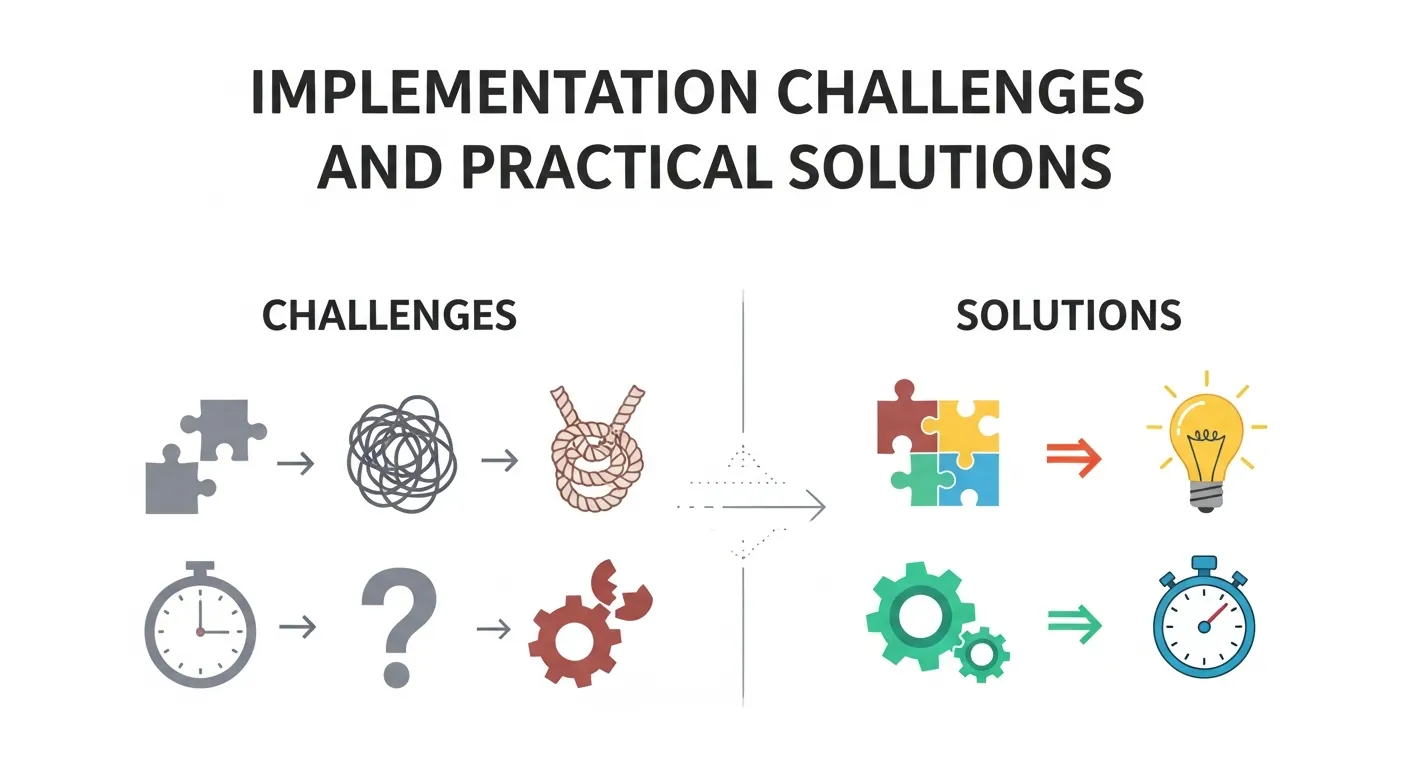
Embarking on a sonic branding journey is exciting, but it’s not without its challenges. From budget constraints to technical hurdles, brands can face several obstacles. Anticipating these challenges and having solutions ready is key to a smooth and successful implementation.
Challenge 1: Limited Budgets and Resources
The Problem: Many organizations, especially smaller businesses and startups, perceive sonic branding as a luxury they can’t afford. The cost of hiring top-tier composers and sound design agencies can be prohibitive.
The Solution: Start Small and Scale
- Focus on the Core: You don’t need a full orchestral suite from day one. Start by investing in the most critical asset: a high-quality sonic logo. This is the cornerstone of your audio identity.
- Leverage Production Music Libraries: For background music in videos or on-hold systems, high-quality, royalty-free music libraries offer a cost-effective alternative to custom composition. The key is to select tracks that align with your brand’s defined attributes.
- Phased Rollout: Develop a brand strategy road map that outlines a phased implementation. Phase one might be the sonic logo and a consistent voice. As you measure the ROI and demonstrate value, you can secure more budget for phase two, which might include custom brand music or UI/UX sounds.
Challenge 2: Maintaining Consistency Over Time
The Problem: As marketing teams change, new agencies are brought on board, and campaigns evolve, the brand’s sonic identity can become diluted or inconsistent. A file is lost, a new hire is unaware of the guidelines, or a freelancer uses the wrong version of the sonic logo.
The Solution: Strong Governance and Centralized Assets
- Create a Sonic Brand Guidelines Document: This is the bible for your audio identity. It should be as detailed as your visual style guide. It must include:
-
- The core sonic logo files in various formats.
- Clear “do’s and don’ts” for its usage (e.g., “Do not alter the pitch,” “Always allow for a moment of silence after the logo”).
- Guidelines for the brand voice character.
- A curated list of approved tracks from your brand music library.
- Use a Digital Asset Management (DAM) System: Store all your approved audio files in a centralized, cloud-based DAM. This ensures that everyone, from internal teams to external partners, is using the correct, most up-to-date assets. This prevents the “I couldn’t find the file, so I used this old one” problem. This practice is essential for building brand consistency.
Challenge 3: Technical and Platform-Specific Limitations
The Problem: An audio file that sounds perfect in a high-fidelity studio environment might sound terrible when compressed for a mobile app notification or played through a low-quality phone speaker during an on-hold message.
The Solution: Optimize for Every Environment
- Create Multiple Versions: Your sound designer should provide a master file and several optimized versions for different use cases. This includes:
-
- High-Fidelity: For broadcast, cinema, and high-quality web video.
- Mono-Compatible: Many listening environments (like phone speakers) are mono. Your sonic logo must sound good without stereo effects.
- Compressed: For use in mobile apps and other data-constrained environments.
- Equalized for Telephony: The frequency range for phone systems is very narrow. A special version of your audio assets should be created to sound clear and pleasant over the phone.
- Test Extensively: Before a full rollout, test your sonic assets in real-world environments. Listen to your on-hold music through an actual phone. Trigger your app notifications on different devices. This real-world testing is invaluable for catching issues before they impact the customer experience. This is a critical part of any brand audit.
Challenge 4: Overcoming Internal Resistance
The Problem: Stakeholders who are unfamiliar with the value of sound in branding may be skeptical. They might see it as a “nice-to-have” creative indulgence rather than a strategic investment. Finance may question the ROI, and marketing leaders might prefer to allocate budget to more traditional, easily measured channels.
The Solution: Educate and Advocate with Data
- Build the Business Case: Don’t lead with creative concepts; lead with strategy and data. Use the information in this article and external sources to explain the neurological impact of sound, the shift to audio-first interactions, and the competitive advantages of a strong sonic identity.
- Share Case Studies: Present success stories from other brands, especially competitors or brands in adjacent industries. Showcasing tangible results (like Mastercard’s 77% positive reception) makes the benefits concrete.
- Run a Pilot Program: Propose a small-scale pilot project with clear success metrics. For example, A/B test a video ad with and without the sonic logo and measure the brand lift. A successful pilot provides the internal proof needed to justify a larger investment. This approach aligns with modern integrated marketing principles.
The Future of Sonic Branding: What’s Next?

The world of audio is evolving at a breakneck pace. The trends that are emerging today will shape the brand experiences of tomorrow. Brands that stay ahead of these developments will be well-positioned to build deeper, more meaningful connections with their audiences.
Voice Commerce (v-commerce)
Voice-based shopping is on the rise. Consumers are increasingly using voice assistants to reorder products, search for local businesses, and make purchases.
- The Opportunity: In a voice-only transaction, your sonic brand is your entire brand. There are no visuals. A recognizable brand voice and a reassuring sonic logo to confirm a purchase become essential elements of the v-commerce experience.
- The Future: Brands that establish a strong and trusted sonic presence now will have a significant advantage as v-commerce becomes mainstream. Imagine saying, “Hey Google, order my usual from Starbucks.” The familiar voice and confirmation sound will be crucial for a seamless experience.
Personalized and Adaptive Audio
The next frontier in branding is personalization. Just as websites can adapt content based on user data, sonic identities will become more dynamic.
- The Concept: Adaptive sonic branding involves creating audio elements that can adjust to individual preferences, context, and user behavior while still maintaining core brand recognition.
- The Application: Imagine a brand’s theme music subtly changing its tempo or instrumentation based on the time of day, the user’s location, or even their current mood (as inferred from their listening habits). A fitness app’s UI sounds could become more energetic as the user approaches their workout goal. This level of personalization creates a deeply engaging and relevant experience.
Immersive Audio Technologies
Technologies like spatial audio (popularized by Apple) and 3D audio are creating new possibilities for immersive brand experiences.
- The Technology: Unlike traditional stereo, which just sends sound to the left and right, spatial audio creates a three-dimensional soundscape where sounds can be placed all around the listener.
- The Opportunity: Forward-thinking brands are already experimenting with this. A car brand could create an immersive audio experience that makes you feel like you’re sitting inside their new model. A travel company could transport you to a bustling city or a tranquil beach through a 3D soundscape. This is the pinnacle of emotional marketing, creating memorable experiences that go far beyond traditional advertising.
Artificial Intelligence (AI) in Sound Creation
AI is transforming how sonic identities are created and deployed. AI-powered tools can now generate vast amounts of on-brand music and sound, and smart systems can adapt these elements in real time.
- AI Composition: AI can be trained on a brand’s core music library and then generate endless variations that are always on-brand. This solves the challenge of needing a constant supply of fresh music for social media content or personalized ads.
- Contextual Adaptation: Smart systems can analyze the user’s environment and adjust the audio accordingly. For example, an app’s notification sound could be louder in a noisy street and softer in a quiet library. This demonstrates a high level of brand intelligence and respect for the user’s context.
Getting Started With Your Sonic Branding Journey
Feeling inspired to harness the power of sound for your brand? Here is a practical, step-by-step guide to getting started.
- Audit Your Current Audio Touchpoints.
Before you create anything new, take stock of what you already have. Many brands discover they have a collection of “accidental” sonic assets. Listen to your on-hold music, your video intros, your app notifications, and your automated phone system. Is there any consistency? Do these sounds reflect your brand’s personality? This initial brand audit will reveal your starting point. - Involve Audio Professionals Early.
While it may be tempting to use a stock sound or have an intern create something, sonic branding requires specialized expertise. A professional sound designer or a sonic branding agency brings a deep understanding of music theory, psychoacoustics, and branding strategy. Their involvement is a crucial investment, not an expense. - Define Your Sonic DNA.
Work with your team to complete the foundational exercises mentioned earlier. Define your brand’s personality, attributes, and archetype. This strategic brief will guide the entire creative process and ensure the final product is aligned with your brand. - Test Extensively Before Full Deployment.
Audio that sounds great in a studio might fail in the real world. Test your sonic assets across different devices (laptops, cheap headphones, high-end speakers), in different environments (a quiet office, a noisy café), and with your target audience. Gather feedback and be prepared to make adjustments. - Develop a Plan for Evolution.
Your sonic brand, like your visual logo, should be built to last. However, it may need to be refreshed over time to stay relevant. Plan for this from the beginning. A strong sonic identity is flexible enough to evolve without losing its core recognition. This is a key component of ensuring brand longevity.
Conclusion
In an increasingly audio-driven world, sonic branding has evolved from an interesting marketing tactic to an essential component of a comprehensive brand strategy. Brands that strategically develop a distinctive and coherent audio identity create a powerful competitive advantage that resonates across every customer touchpoint. As screenless interactions become more common and audio content consumption continues to rise, the brands we remember will be the ones we recognize by sound. The question is no longer whether your brand needs a sonic identity, but how you can build one that is strategic, memorable, and enduring.
Frequently Asked Questions (FAQs)
1. What is the difference between a jingle and a sonic logo?
A jingle is a short song, often with lyrics, that communicates a marketing message (e.g., “Nationwide is on your side”). A sonic logo is a much shorter, typically non-lyrical musical or sound-based signature that functions as an audio version of the brand’s visual logo (e.g., the Netflix “ta-dum”). While both are forms of audio branding, a sonic logo’s primary purpose is pure identification, whereas a jingle is more of a melodic advertisement.
2. How much does sonic branding cost?
The cost can vary dramatically. A simple sonic logo from a freelancer might cost a few thousand dollars. A comprehensive sonic identity system from a specialized agency, including a sonic logo, brand music library, and UI/UX sounds, can cost anywhere from $50,000 to over $500,000 for a large global brand. The key is to see it as a long-term asset investment, similar to a visual identity redesign.
3. How long does it take to develop a sonic brand?
The timeline also varies with the scope of the project. A simple sonic logo project might take 4-8 weeks, from strategy briefing to final delivery. A full sonic identity system for a global brand can take 6-12 months or longer, as it involves extensive research, creative exploration, testing, and development of a wide range of assets and guidelines.
4. Can a small business benefit from sonic branding?
Absolutely. As shown in the case study, even a focused, small-scale implementation can have a big impact. A small business can start with a professional sonic logo to use in their videos and a consistent, pleasant on-hold music track. The key is to focus on the touchpoints that have the most impact on their customers and ensure consistency. This can be a highly effective way to build brand authority in a local market.
5. How do I know if my sonic logo is effective?
Effectiveness is measured through a combination of metrics. The most important is unaided recall: can people identify your brand when they hear the sound? You can also measure emotional response to see if it evokes the intended feelings. Over time, you can track brand lift studies and monitor for increases in branded search queries to see if the sonic brand is contributing to overall brand health.
6. Do I need to trademark my sonic logo?
Yes, it is highly recommended. A sonic logo is a valuable piece of intellectual property. You can trademark a sound, just as you would a visual logo or a brand name. This protects your asset from being used or imitated by competitors and solidifies its status as a unique identifier for your brand. Famous trademarked sounds include the Aflac duck quack and the 20th Century Fox fanfare.
7. How does sonic branding relate to SEO?
The connection is indirect but important. A strong sonic brand increases top-of-mind awareness and brand recall. When a consumer remembers your brand, they are more likely to search for you directly online (e.g., typing “Nike shoes” instead of “running shoes”). This increase in branded search traffic is a positive signal to search engines like Google, indicating brand authority and relevance, which can indirectly support your overall SEO efforts.
8. What makes a sonic logo “good”?
A good sonic logo is:
- Distinctive: It stands out from competitors and the general noise.
- Memorable: It’s easy to remember and hum.
- Flexible: It works across various platforms and in different formats (e.g., as a 2-second logo or a 10-second animation).
- On-Brand: It aligns with the brand’s personality and values.
- Timeless: It avoids trendy sounds that will feel dated in a few years.
9. Can I use AI to create my sonic brand?
AI can be a powerful tool in the sonic branding process, particularly for generating large volumes of on-brand background music or creating adaptive audio experiences. However, for the core creative and strategic work of developing a sonic logo and defining the brand’s sonic DNA, human expertise, creativity, and strategic insight are still irreplaceable. The best approach is often a collaboration between human creativity and AI-powered tools.
10. Where should I use my sonic brand?
You should use it consistently across all relevant audio-visual touchpoints. This includes:
- Marketing: TV and radio ads, online videos, podcast sponsorships.
- Digital Products: App open screens, notifications, and key interactions (UI/UX sounds).
- Customer Service: On-hold music, automated phone systems (IVR).
- Physical Spaces: In-store background music, event intros and outros.
- Brand Interactions: Point-of-sale systems, voice assistant skills.
The goal is to create a cohesive and ubiquitous brand experience.