What Is a Personal Brand Strategy (And Why You Need One)
In today’s competitive digital landscape, a personal brand strategy is no longer optional. It is a systematic roadmap that transforms your unique skills and brand storytelling into a powerful, recognizable professional identity.
A successful branding strategy requires aligning your unique values with customer-centric brand development. By consistently delivering value through inbound marketing and purposeful awareness building, you move beyond being a “ghost brand” to become a trusted industry authority with measurable brand equity KPI.
Defining a Personal Brand Strategy
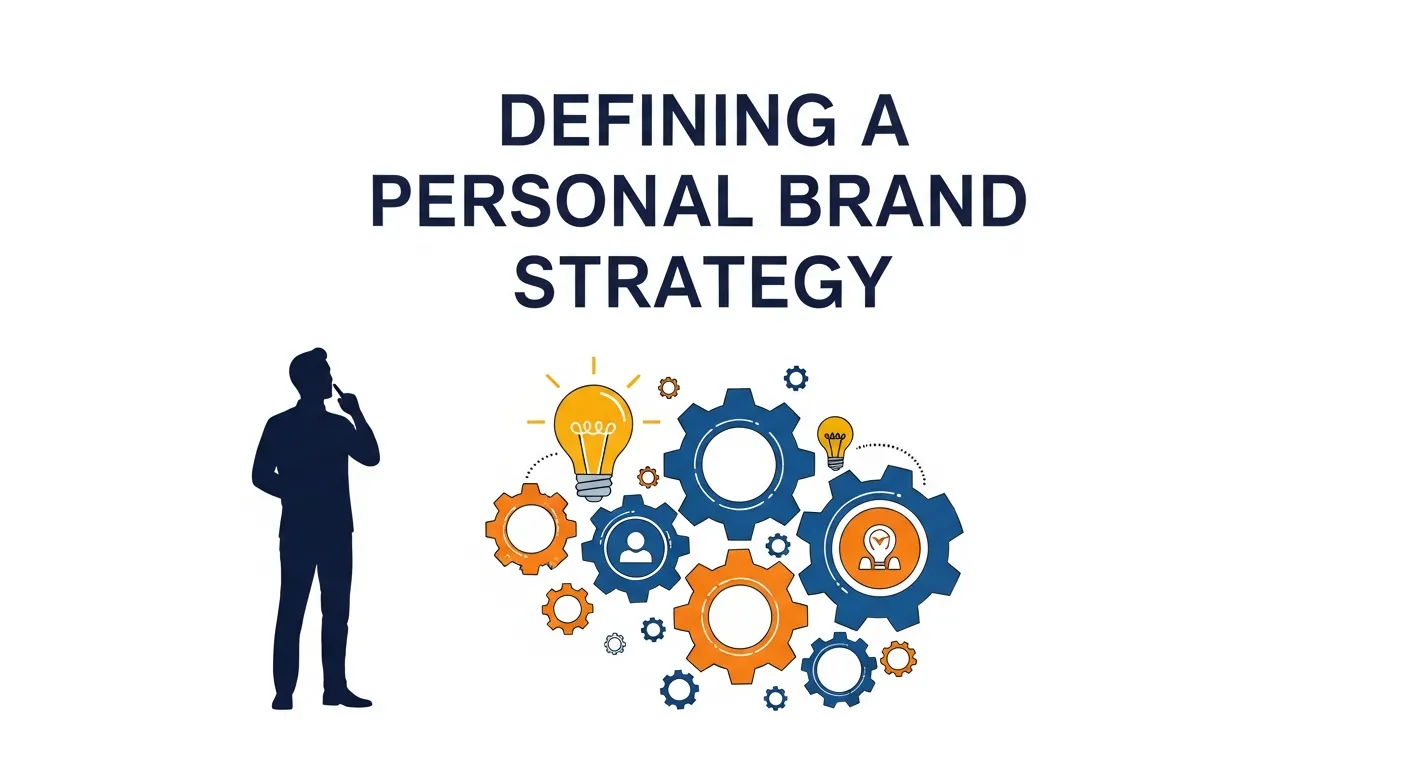
A personal brand strategy is a deliberate plan. It should be something you go about implementing systematically—not just a one-off event. The process involves identifying your unique strengths, values, and personality traits, and then conveying these consistently across many platforms and networks.
You could look at it a little like putting together an identity. Making you memorable involves more than just sticking in the minds of your target market; however, a personal brand strategy will also clearly define what you are there to do in your audience’s eyes and establish yourself as an authority figure within the field.
Developing a successful branding strategy requires a deep dive into brand purpose development, ensuring that every post, interaction, and project aligns with your core mission. By moving beyond surface-level aesthetics and focusing on brand storytelling, you create a narrative that resonates deeply with your target audience and fosters long-term trust establishment.
Why Does a Personal Brand Strategy Matter?
1. It Builds Credibility and Trust
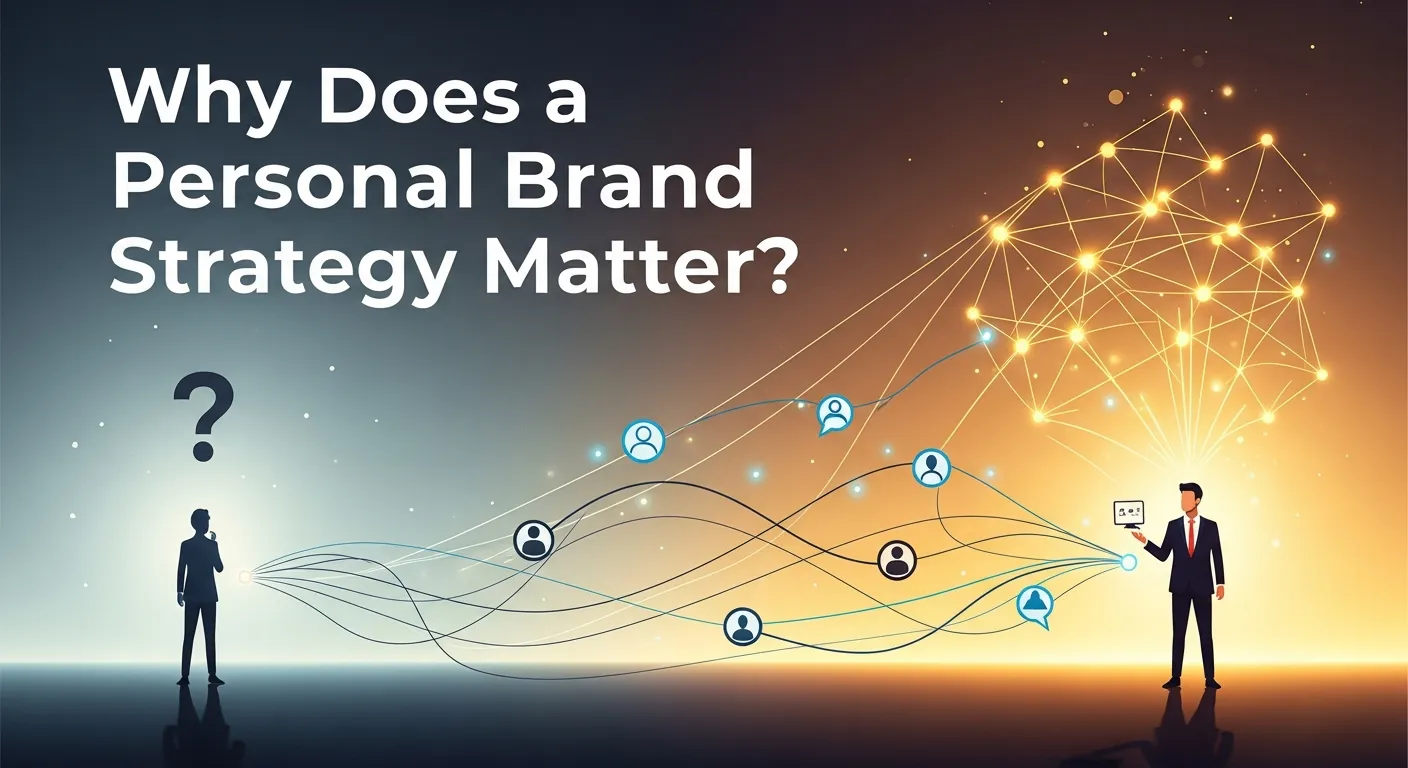
Your brand tells your story, and when done right, it creates trust. By consistently delivering valuable insights or demonstrating expertise, people are more likely to view you as a reliable resource. This awareness building ensures that when your name comes up, it is associated with quality and reliability.
2. It Sets You Apart
No matter what industry you’re in, competition is everywhere. A well-defined personal branding effort helps you stand out by highlighting what makes you unique. It becomes your professional “signature,” separating you from ghost brands that lack a distinct voice or clear value proposition.
3. It Attracts Opportunities
From collaborations to job offers, a strong brand makes it easier for the right opportunities to find you. By utilizing inbound marketing principles—creating content that draws people to you—you become a magnet for speaking engagements and consulting roles.
4. It Boosts Career Security
Traditional career paths are less predictable than they once were. By focusing on resonant brand growth, you create a safety net. Your influence and connections become assets that sustain your trajectory, even during industry transitions.
Core Components of Brand Development
To ensure brand alignment across all touchpoints, consider these key pillars of your strategy:
-
Brand Archetype: Defining the “character” or personality of your brand to ensure consistent communication.
-
Customer Perception: Actively managing how your audience views your expertise and values.
-
Interactive Content Marketing: Engaging your followers to turn a passive audience into a brand community.
-
Competitive Brand Analysis: Identifying what others in your field are doing to find your own “blue ocean” of opportunity.
Branding vs. Marketing: The Strategic Difference
Understanding branding vs marketing is vital for long-term success. While marketing focuses on the tools of brand promotion, branding is about the soul of your professional identity.
| Feature | Personal Brand Strategy | Brand Promotion (Marketing) |
| Primary Goal | Define your identity and brand purpose development | Drive traffic and generate immediate leads |
| Duration | Long-term; focuses on brand longevity challenges | Short-term; focused on specific campaigns |
| Key Metric | Brand equity KPI and reputation | Reach, clicks, and conversion rates |
| Core Action | Brand storytelling and value alignment | Distribution across social media platforms |
By treating your career as a form of customer-centric brand development, you ensure that every action you take adds value to your audience while solidifying your place as an industry leader.
Crafting Your Personal Brand Strategy in 6 Steps
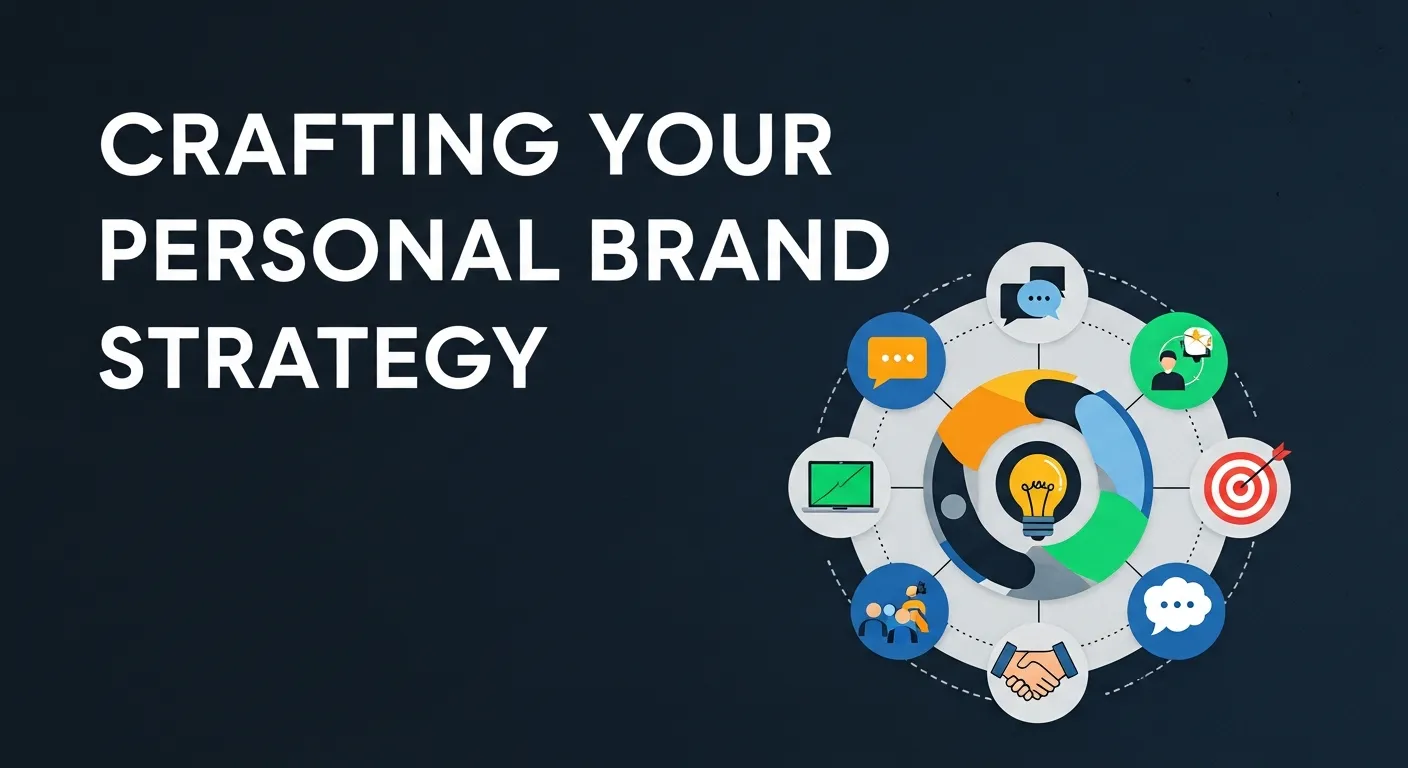
Crafting an effective personal brand strategy involves much more than simply updating your LinkedIn profile. It requires a commitment to customer-centric brand development to ensure your message hits home. By treating your career with the same rigor as a brand development consultant, you can build a professional identity that resonates and endures.
1. Define Your ‘Why’
Every successful branding strategy begins with purpose. Before seeking visibility, you must establish your internal compass. This foundational stage of brand purpose development involves asking:
-
What are your core values and non-negotiables?
-
What excites you most in your professional life?
-
What specific expertise do people consistently seek from you?
2. Identify Your Target Audience
Your personal branding won’t resonate with everyone, and that’s okay. To avoid the trap of ghost brands—identities that are spread too thin to be noticed—focus on a specific niche. Use customer journey mapping to understand who you are talking to:
-
Are you appealing to startup founders, corporate executives, or creatives?
-
Where does your audience spend their “micro-moments” online?
3. Define Your Unique Value Proposition (UVP)
Your UVP is the heart of your brand storytelling. It is the specific intersection of your skills and personality that creates customer perception of high value. Ask yourself:
-
What do you do exceptionally well that others struggle with?
-
How does your unique brand archetype help solve your audience’s problems?
4. Create a Content and Communication Plan
Once your identity is set, you need a distribution plan. This is where brand marketing and content marketing intersect. High-quality interactive content marketing ensures you aren’t just broadcasting, but building a brand community.
| Channel | Strategy Type | Goal |
| LinkedIn/Twitter | Conversational marketing | Real-time engagement and trust establishment |
| Personal Blog | Inbound marketing | Establishing long-form authority and SEO |
| Podcasts | Brand promotion | Humanizing your voice and expanding reach |
| Newsletters | Hyper-personalized branding | Nurturing deep connections with core followers |
5. Leverage Visual Branding
While substance is king, visuals provide the necessary cues for awareness building. Consistent aesthetics help overcome brand longevity challenges by making you instantly recognizable across different platforms. Ensure your headshots, color palettes, and typography align with the professional “signature” you want to project.
6. Engage With Your Community
A personal brand strategy doesn’t exist in a vacuum; it thrives on resonant brand growth through two-way communication.
-
Respond to comments: Foster trust establishment by being present.
-
Network strategically: Connect with peers to avoid isolation in the market.
-
Ask questions: Use polls or open-ended posts to spark conversational marketing cycles.
By following these steps, you transition from a general practitioner to a recognized authority, ensuring your brand alignment remains strong as your career evolves.
Personal Brand Strategy Examples You Can Learn From
Studying a successful branding strategy in action is the best way to understand how to apply these concepts to your own career. These leaders don’t just post content; they excel at brand storytelling and maintain a high level of brand alignment across every touchpoint, turning their names into powerful assets with massive brand equity KPI.
Real-World Success Stories
1. Gary Vaynerchuk (Gary Vee)
Gary Vee is a master of awareness building and relentless engagement.1 He positions himself as both a brand development consultant and a relatable peer. By leveraging meme marketing and high-energy video, he has built a global brand community that trusts his “hustle” narrative. His UVP is his raw, authentic connection and his ability to predict the next big shift in branding and marketing.
2. Brené Brown
Brené Brown has crafted a deeply resonant brand archetype—the “Sage” who leads with empathy. Her personal branding is built on a foundation of academic rigor mixed with human vulnerability.2 Through consistent emotional branding, she has moved beyond being a researcher to becoming a global authority whose brand purpose development centers on courage and leadership.3
3. Adam Grant
As an organizational psychologist, Adam Grant excels at inbound marketing by sharing high-value, research-backed insights.4 His personal brand strategy focuses on solving practical leadership problems through science. By consistently engaging in conversational marketing on social platforms, he has established himself as a go-to resource for modern workplace culture.
Comparative Analysis of Brand Styles
The following table illustrates how different strategies achieve resonant brand growth through distinct approaches:
| Leader | Core Strategy | Primary Content Type | Audience Perception |
| Gary Vee | Brand Promotion & Hustle | Short-form Video | Energetic & Practical |
| Brené Brown | Emotional Branding | Books & TED Talks | Empathetic & Wise |
| Adam Grant | Inbound Marketing | Data-driven Articles | Intellectual & Insightful |
Building Your Own Path
To mirror these results, you must focus on customer-centric brand development. This means providing value that your specific audience craves while navigating brand longevity challenges like staying relevant in a changing digital landscape. Whether you are aiming for the high-energy output of a “celebrity” or the deep insights of a “thought leader,” your strategy must be consistent to achieve lasting trust establishment.
Pitfalls to Avoid While Building Your Personal Brand
Navigating the path to professional authority requires a strategic mindset, as a single misstep in customer perception can derail months of progress. To maintain brand alignment, you must treat your identity with the same precision a brand development consultant uses for a Fortune 500 company. Avoiding these common mistakes is essential for maintaining a successful branding strategy.
Common Branding Stumbling Blocks
While the goal is awareness building, doing so without a clear focus can lead to brand longevity challenges. Be mindful of these specific traps:
-
Trying to Be Everything to Everyone: Your personal branding should serve a specific audience and purpose, not the masses. Diluting your message prevents you from achieving resonant brand growth within a high-value niche.
-
Copying Others Excessively: It’s okay to take inspiration, but your brand storytelling must reflect your unique personality. Over-mimicking influencers leads to “copycat” status, stripping away the trust establishment that comes with authenticity.
-
Lack of Patience: Building brand equity KPI takes time. Consistency and persistence are key; those who seek “overnight” fame often fail to build a sustainable brand community.
-
Neglecting Your Digital Footprint: In the age of voice search optimization, ensure your name is associated with the right keywords and expertise across all searchable platforms.
Strategic Misalignment: A Comparison
Understanding the difference between a high-performing personal brand strategy and a failing one can be summarized by how you handle branding and marketing fundamentals:
| Pitfall | The “Weak” Brand Approach | The Strategic Brand Approach |
| Targeting | Broad and generic (The “Everyone” Trap) | Niche and customer-centric brand development |
| Voice | Inconsistent or borrowed from others | Rooted in a specific brand archetype |
| Strategy | Reactive and sporadic posting | Planned inbound marketing cycles |
| Goal | Vanity metrics (likes/follows) | Deep trust establishment and authority |
Staying the Course
Ultimately, a personal brand strategy is a marathon, not a sprint. By focusing on brand purpose development and avoiding the urge to pivot every time a new trend emerges, you ensure your professional identity remains robust. Remember, even the most successful figures face brand longevity challenges; the difference is their commitment to a core message that survives market shifts.
Conclusion
Mastering your personal branding is a long-term commitment to authenticity and resonant brand growth. By avoiding common pitfalls and maintaining strict brand alignment, you create a professional “signature” that attracts opportunities naturally. Start today by refining your brand archetype and investing in the trust establishment necessary for career longevity.
Frequently Asked Questions
What is the primary goal of a personal brand strategy?
The main objective is to intentionally shape customer perception and establish yourself as a reliable, go-to authority within your specific professional niche.
How does branding vs marketing differ for individuals?
Branding defines your core identity and brand purpose development, while marketing focuses on the tactical brand promotion and distribution of your message.
Why is trust establishment important in personal branding?
Without trust, your audience will not engage with your insights; building credibility is the foundation for long-term brand community growth and loyalty.
Can brand storytelling really improve my career?
Yes, using narrative techniques makes your expertise more memorable and relatable, significantly boosting your awareness building efforts among key decision-makers.
What are the biggest brand longevity challenges?
The hardest part is maintaining consistency over several years and evolving your personal branding without losing the core essence of your original identity.
How do I start a competitive brand analysis?
Begin by researching leaders in your field to identify their brand archetype and finding “gaps” in the market where your unique skills can shine.
What role does inbound marketing play in my strategy?
It allows you to create high-value content that naturally attracts your target audience to you, rather than you having to constantly chase leads.
How do I measure the success of my branding?
You can track your brand equity KPI by monitoring growth in network requests, speaking invitations, and the quality of professional opportunities that find you.
What is a brand archetype and why do I need one?
An archetype is a specific “personality type” (like the Creator or the Sage) that helps guide your brand storytelling for more consistent communication.
How does customer-centric brand development apply to me?
It means shifting the focus from “what I want to say” to “what problems can I solve,” ensuring your personal brand strategy provides genuine value.
Read more: 5 Branding Blueprints That Will Help You Gain Trust And Loyalty In 2026