AI-Powered Brand Analysis: Using Technology to Enhance Brand Decision-Making
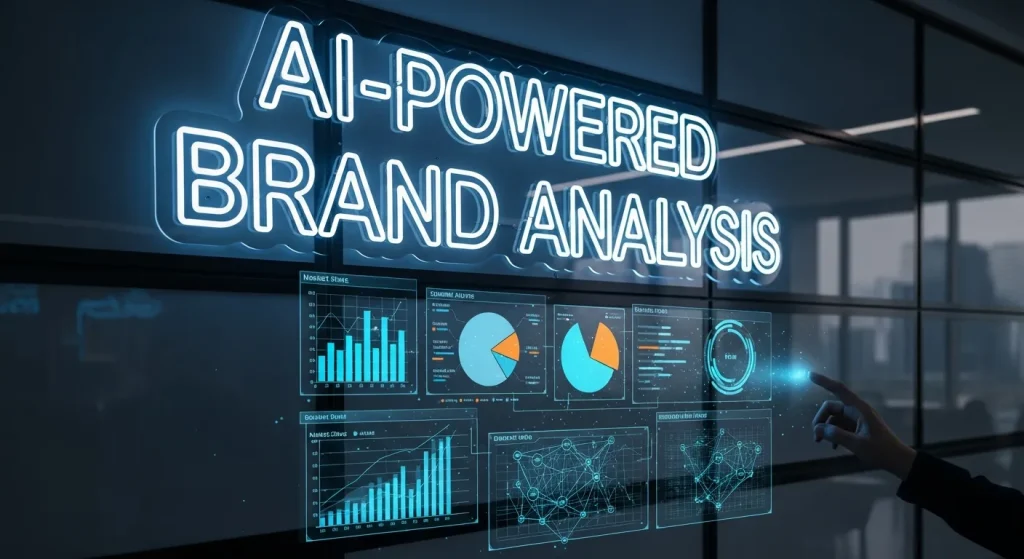
In a data-rich world, intuition alone is no longer enough. AI-powered brand analysis is transforming how businesses understand their market, enabling smarter, data-driven brand decisions at unprecedented speed.
This guide explores how AI-powered brand analysis is revolutionizing brand strategy. We cover key applications like real-time sentiment analysis, predictive trend forecasting, and deep competitive intelligence. Learn to leverage AI tools to move from reactive adjustments to proactive, informed brand decision-making and gain a decisive edge.
The End of Guesswork: A New Era for Brand Strategy
For decades, brand management has been a delicate blend of art and science, heavily leaning on intuition, historical data from focus groups, and annual surveys. Brand managers made critical decisions based on experience and often-outdated information, hoping their instincts were correct. While this approach built empires, its limitations are becoming starkly clear. Today’s market is a torrential, 24/7 flood of data—social media conversations, online reviews, competitor content, and shifting consumer behaviors. Human analysis simply cannot keep up. This is where AI-powered brand analysis emerges not as a futuristic concept, but as a present-day necessity.
AI-powered brand analysis represents a fundamental shift from making decisions based on what we think we know to what we can prove with data. It involves using artificial intelligence technologies like machine learning (ML), natural language processing (NLP), and predictive analytics to sift through massive, unstructured datasets in real-time. The goal is to extract actionable insights about brand health, customer perception, and the competitive landscape. This isn’t about replacing the human strategist; it’s about augmenting their abilities with a superhuman capacity for data processing and pattern recognition.
Imagine trying to understand how your brand is perceived by manually reading every tweet, TikTok comment, and product review. It’s an impossible task. Now, imagine an AI that does this instantly, categorizing millions of mentions by sentiment (positive, negative, neutral), theme (customer service, product quality, pricing), and even emotion (joy, anger, frustration). This is the new reality. By leveraging AI-powered brand analysis, companies can gain a clear, dynamic, and granular understanding of their brand’s position in the market. This empowers leaders to make faster, more accurate decisions, pre-empt crises, and uncover opportunities that their competitors, still relying on guesswork, will completely miss.
1. Unlocking the Voice of the Customer with AI-Powered Sentiment Analysis
One of the most immediate and impactful applications of AI-powered brand analysis is in sentiment analysis. Traditionally, understanding customer sentiment involved costly surveys and time-consuming focus groups. These methods provide a static snapshot in time, often with inherent biases. AI-driven sentiment analysis, in contrast, offers a continuous, live feed of public opinion.
What is AI-Powered Sentiment Analysis?
At its core, AI-powered sentiment analysis uses Natural Language Processing (NLP) to analyze written text from a vast array of sources—social media, blogs, forums, news articles, and customer reviews—to determine the emotional tone behind the words. Advanced models go beyond a simple positive/negative/neutral classification. They can detect nuanced emotions like gratitude, disappointment, or confusion, and even identify the specific aspects of the brand being discussed.
For example, a simple keyword search might tell you your brand was mentioned 10,000 times today. An AI-powered brand analysis tool can tell you that 40% of those mentions were positive, 35% were negative, and 25% were neutral. More importantly, it can reveal why. It might show that the positive sentiment is driven by excitement over a new feature, while the negative sentiment is concentrated around recent changes to your pricing model. This level of detail transforms raw data into strategic intelligence.
Practical Applications for Brand Decision-Making
- Real-Time Brand Health Monitoring: Instead of waiting for quarterly reports, brand managers can track sentiment daily. A sudden dip in sentiment can act as an early warning system for a PR crisis, allowing the team to respond before the issue escalates. This is a core component of brand crisis management in the social media era.
- Product Development Insights: By analyzing sentiment around product features, both yours and your competitors’, you can identify what customers love, what they hate, and what they wish they had. This data can directly inform your product roadmap, ensuring you build what the market actually wants.
- Campaign Performance Measurement: How is your latest marketing campaign really landing? AI-powered brand analysis can track public reaction to your messaging, ads, and influencer partnerships in real-time, allowing for agile adjustments. If a particular slogan is being misinterpreted or ridiculed, you’ll know within hours, not weeks.
Example in Action: A fast-food chain launches a new plant-based burger. Traditional metrics like sales might take weeks to show a clear trend. Using AI-powered brand analysis, the company monitors social media conversations from day one. The AI detects high positive sentiment around the taste but also uncovers a significant volume of negative conversation from customers who are disappointed the burger is cooked on the same grill as meat products, creating a cross-contamination concern for strict vegetarians. Armed with this insight, the brand can immediately address the issue, either by changing its process or clarifying its communication, thereby protecting its brand perception in marketing.
2. Gaining Competitive Supremacy with AI-Driven Intelligence

Knowing your own brand is only half the battle. A true understanding of the market requires an equally deep understanding of your competitors. Manual competitive analysis is tedious and incomplete, often limited to reviewing a competitor’s website and social media profiles. AI-powered brand analysis automates and deepens this process, providing a 360-degree view of the competitive landscape.
Beyond Simple Tracking
AI tools can monitor your competitors’ every move at a scale no human team could ever match. This includes:
- Content and SEO Strategy Analysis: AI can crawl a competitor’s entire website and blog, analyzing their content strategy, keyword focus, and backlink profile. Tools like Ahrefs and SEMrush incorporate AI to identify the keywords your competitors rank for that you don’t, revealing “content gaps” you can exploit. This data helps in how to create strong brand positioning in your market.
- Ad Campaign Monitoring: AI can track the digital ads your competitors are running across various platforms, including the creative they use, the copy they write, and the audiences they target. This allows you to learn from their tests, identify their messaging angles, and position your own ads more effectively.
- Share of Voice (SOV) Analysis: AI can calculate your brand’s “share of voice” versus competitors across online conversations. It can tell you what percentage of the total industry conversation is about you, what percentage is about your rival, and how that is trending over time. A rising SOV is a strong indicator of growing brand awareness.
From Data to Strategic Decisions
This constant stream of competitive intelligence, processed through AI-powered brand analysis, enables several strategic advantages:
- Identifying Market White Space: By analyzing the features, benefits, and messaging of all key players, AI can help identify unmet customer needs or positioning angles that no one is claiming. This is critical for differentiating your brand and avoiding the “sea of sameness.”
- Predicting Competitor Moves: By tracking a competitor’s hiring patterns (e.g., hiring a team of blockchain developers), new patent filings, and subtle shifts in their marketing language, AI can help predict their next strategic move, giving you time to prepare a counter-strategy.
- Optimizing Pricing Strategy: AI can monitor competitor pricing changes in real-time, providing the data needed for dynamic pricing adjustments or to reinforce a value-based pricing position. This is an application of using pricing as brand strategy informed by AI.
Example in Action: A B2B SaaS company in the project management space uses AI-powered brand analysis to monitor its main competitor. The AI detects that the competitor has started running a series of ads targeting “remote-first companies” and has published several blog posts about “asynchronous work.” This signals a strategic pivot to capture the growing remote work market. The SaaS company, alerted by this trend, can now make an informed decision: either cede that niche and double down on their own specialty (e.g., enterprise construction firms) or quickly develop and market their own features tailored for remote teams to compete head-on.
3. Forecasting the Future with AI-Powered Predictive Analytics
The holy grail of strategy is not just understanding the present but anticipating the future. AI-powered brand analysis is making this possible through predictive analytics. By analyzing historical data and identifying subtle patterns, machine learning models can forecast emerging trends, shifts in consumer behavior, and potential risks.
How Predictive Analytics Works in Branding
Predictive models are trained on vast datasets containing information on past brand performance, market trends, economic indicators, and consumer behavior. The AI learns the complex relationships between these variables and uses that knowledge to make predictions about the future.
Key applications in AI-powered brand analysis include:
- Trend Forecasting: AI can analyze data from social media, search queries (using tools like Google Trends), and news articles to identify nascent trends before they become mainstream. This could be a new aesthetic in fashion, a new dietary preference in the CPG space, or a new technology protocol in B2B. For example, AI could have predicted the rise of “quiet luxury” by tracking a decrease in mentions of “logo” and an increase in mentions of “minimalist” and “quality craftsmanship” in fashion forums.
- Customer Churn Prediction: By analyzing customer behavior patterns—such as a decrease in app usage, a drop in support ticket submissions, or negative sentiment in feedback surveys—AI can predict which customers are at high risk of churning. This allows the customer success team to intervene proactively with targeted offers or support to retain them.
- Demand Forecasting: For CPG and retail brands, AI can analyze historical sales data alongside external factors like weather patterns, upcoming holidays, and even social media trends to predict demand for specific products. This helps optimize inventory, reduce waste, and ensure products are in stock when customers want them. This is especially useful for CPG brand marketing.
The Strategic Advantage of Foresight
Using AI-powered brand analysis for prediction allows brands to move from a reactive to a proactive stance.
- First-Mover Advantage: Brands that can spot and act on trends before their competitors gain a significant first-mover advantage, capturing market share and being perceived as leaders and innovators. This directly impacts the major objective of all brand marketing: to increase market share.
- Resource Optimization: By anticipating demand and risks, businesses can allocate their marketing budgets, inventory, and personnel more effectively, improving ROI and reducing costs.
- Enhanced Brand Resilience: By predicting potential PR crises or negative shifts in consumer sentiment, brands can build strategies to mitigate these risks, building brand resilience against market volatility.
Example in Action: A beverage company uses predictive AI-powered brand analysis to monitor health and wellness blogs and social media. The AI detects a small but rapidly growing conversation around “adaptogens” and their stress-reducing benefits. While the volume is still low, the AI model, trained on past wellness trends, flags it as a high-potential emerging trend. The company’s R&D team begins developing a new line of adaptogenic drinks. A year later, when “adaptogens” become a mainstream buzzword, the company is the first to market with a fully developed product line, capturing the category while competitors are still scrambling to catch up.
4. Personalizing at Scale: The Role of AI in Brand Experience
In an era of endless choice, personalization is a key differentiator. Customers expect brands to understand their individual needs and communicate with them accordingly. However, true personalization at scale has been a long-standing challenge. AI-powered brand analysis is finally making it a reality, enabling what is known as hyper-personalized branding.
From Segmentation to Individualization
Traditional marketing relies on broad audience segmentation (e.g., “millennial urban dwellers”). AI allows for a shift towards a “segment of one.” By analyzing an individual user’s browsing history, purchase data, demographic information, and real-time behavior, AI can create a dynamic profile for each customer.
This profile allows brands to:
- Deliver Personalized Content: AI can dynamically change the content on a website or in an email to match a user’s interests. A visitor who has been reading about hiking shoes will see a homepage banner featuring the brand’s new trail runners, while a visitor who has been looking at formal wear will see a promotion for dress shoes.
- Recommend Relevant Products: The recommendation engines on sites like Amazon and Netflix are classic examples of AI in action. These systems analyze your past behavior and the behavior of similar users to predict what you might like next, driving significant revenue through upselling and cross-selling.
- Tailor Communications and Offers: AI can help determine the best channel, time, and message for communicating with each customer. It might learn that one customer responds best to SMS offers in the evening, while another prefers a weekly email digest sent on Sunday mornings. This level of conversational marketing makes brand interactions feel more relevant and less intrusive.
Building Deeper Customer Relationships
This deep level of personalization, driven by AI-powered brand analysis, does more than just increase conversion rates. It fundamentally changes the customer’s relationship with the brand.
- Enhanced Customer Experience: When a brand consistently shows it understands a customer’s needs, the overall user experience and branding perception is elevated. The customer feels seen and valued, not just like another number in a database.
- Increased Brand Loyalty: Personalization fosters a sense of connection and loyalty. Customers are less likely to switch to a competitor if their current brand provides a tailored experience that makes their life easier. This directly contributes to building long-term brand trust.
- Improved Brand Authenticity: When done correctly, personalization can make a brand feel more authentic and human. The communication is no longer a generic blast but a one-on-one conversation, which can even strengthen emotional branding.
Example in Action: An online beauty retailer uses an AI-powered brand analysis platform to drive personalization. When a new user signs up, they are asked a few questions about their skin type and concerns. The AI combines this information with the user’s browsing behavior on the site. If the user spends time looking at products for sensitive, dry skin, the AI ensures that all future marketing communications—from email newsletters to social media ads—feature products and content relevant to that specific need. The website’s “Recommended for You” section is populated with gentle, hydrating products, and the user even receives an article about “The Best Skincare Routine for Dry, Sensitive Skin.” This creates a seamless, helpful journey that builds trust and makes the user feel understood.
Implementing AI-Powered Brand Analysis: A Practical Framework
Adopting AI-powered brand analysis can seem daunting, but it can be approached systematically. Integrating these powerful technologies requires a strategic framework that combines the right tools, talent, and processes.
Step 1: Define Your Goals and KPIs
Before you invest in any tool, clarify what you want to achieve. Are you trying to improve brand perception, reduce customer churn, or increase your market share? Your goals will determine which AI applications to prioritize.
- Goal: Improve brand health. KPIs: Sentiment score, share of voice, Net Promoter Score (NPS).
- Goal: Increase customer retention. KPIs: Churn prediction accuracy, customer lifetime value (CLV).
- Goal: Optimize marketing campaigns. KPIs: Conversion rate, return on ad spend (ROAS), cost per acquisition (CPA).
Step 2: Choose the Right Tools and Platforms
The market for AI marketing tools is exploding. It’s important to choose platforms that align with your goals and can integrate with your existing technology stack.
|
Tool Category |
Key Function |
Popular Tools |
|---|---|---|
|
Social Listening & Sentiment Analysis |
Monitors online conversations and analyzes sentiment. |
Brand24, Qualtrics, Talkwalker |
|
Competitive Intelligence |
Tracks competitor SEO, content, and ad strategies. |
SEMrush, Ahrefs, SpyFu |
|
Predictive Analytics |
Forecasts trends, churn, and demand. |
IBM Watson, Google AI Platform, anaconda |
|
Personalization Engines |
Delivers personalized content and product recommendations. |
Dynamic Yield, Optimizely, anaconda |
|
Decision Intelligence Platforms |
Integrates various AI types to guide the decision process. |
Cloverpop, anaconda |
Step 3: Ensure Data Quality and Governance
AI is only as good as the data it’s trained on. “Garbage in, garbage out” is the rule.
- Data Integration: Ensure you can pull clean data from all relevant sources (CRM, website analytics, social platforms, etc.).
- Data Privacy: Be transparent with customers about how their data is being used and comply with regulations like GDPR and CCPA. Ethical data handling is a cornerstone of brand safety in digital marketing.
- Bias Mitigation: Be aware that AI models can inherit biases present in the training data. Regularly audit your models to ensure they are not producing biased or unfair outcomes, which is crucial for inclusive brand strategies.
Step 4: Foster a Culture of Data-Driven Decision-Making
Technology alone is not enough. Your team needs to be trained to interpret AI-driven insights and empowered to act on them. This involves:
- Training and Upskilling: Invest in training for your brand and marketing teams on how to use new tools and understand basic data science concepts.
- Breaking Down Silos: Insights from AI-powered brand analysis should be shared across departments. The product team needs to see customer sentiment data, and the sales team needs to see churn prediction insights.
- Balancing AI and Human Expertise: Emphasize that AI is a tool to augment, not replace, human judgment. The AI can identify a correlation, but it’s the human strategist who understands the context, interprets the “why,” and makes the final creative and strategic leap. This is a crucial part of brand strategy vs marketing strategy.
Conclusion
The shift towards AI-powered brand analysis marks a pivotal moment in the history of marketing. We are moving away from an era of intuition-led decision-making and into an age of data-driven certainty. By harnessing the power of AI to analyze sentiment, track competitors, predict trends, and personalize experiences, brands can develop a deeper, more dynamic understanding of their market than ever before.
This technological leap empowers businesses to build more resilient, relevant, and resonant brands. It allows for proactive strategies that anticipate customer needs and preempt competitive threats, ultimately leading to smarter decisions, stronger customer loyalty, and sustainable growth in an increasingly complex world.
Frequently Asked Questions (FAQs)
1. What is AI-powered brand analysis?
AI-powered brand analysis is the use of artificial intelligence technologies, such as machine learning and natural language processing, to analyze vast amounts of data from various sources (social media, reviews, etc.). Its purpose is to generate deep, real-time insights into brand health, customer sentiment, competitive positioning, and market trends to enhance brand decision-making.
2. How does AI improve brand decision-making?
AI improves brand decision-making by replacing guesswork with data-driven insights. It can process millions of data points in real-time to provide early warnings for PR crises, identify emerging market trends before competitors, predict customer behavior like churn, and uncover “white space” opportunities for brand positioning.
3. What is sentiment analysis?
Sentiment analysis is an application of natural language processing (NLP) that automatically identifies and categorizes opinions expressed in text to determine whether the writer’s attitude towards a particular topic, product, or brand is positive, negative, or neutral. Advanced AI can even detect specific emotions like anger or joy.
4. Can AI predict future market trends?
Yes. By analyzing historical data, search query trends, and patterns in online conversations, AI-powered predictive analytics can forecast emerging trends with a high degree of accuracy. This allows brands to be proactive and gain a first-mover advantage by developing products or campaigns that align with future consumer interests.
5. What are the best AI tools for brand analysis?
The best tools depend on your specific goals. For social listening and sentiment analysis, platforms like Brand24 or Talkwalker are popular. For competitive SEO and content analysis, tools like SEMrush and Ahrefs are industry standards. For comprehensive decision intelligence, platforms like Cloverpop are emerging as leaders.
6. Is AI-powered brand analysis expensive to implement?
The cost can vary widely. While building a custom in-house AI platform can be very expensive, many SaaS (Software-as-a-Service) tools are available on a subscription basis, making AI-powered brand analysis accessible even for small and medium-sized businesses. The key is to start with a clear goal and choose a tool that fits your budget and needs.
7. How does AI help with competitive analysis?
AI automates and deepens competitive analysis by tracking competitors’ digital footprint at scale. It can analyze their content strategies, SEO performance, ad campaigns, pricing changes, and share of voice in online conversations, providing a continuous stream of intelligence to inform your own brand strategy.
8. What are the ethical considerations of using AI for brand analysis?
The primary ethical concerns are data privacy and algorithmic bias. Brands must be transparent about how they collect and use customer data, complying with regulations like GDPR. They must also be vigilant in auditing their AI models to ensure they do not perpetuate harmful biases that could lead to unfair or discriminatory outcomes.
9. Will AI replace brand managers?
No, AI is a tool to augment, not replace, brand managers. AI excels at processing data and identifying patterns, but it lacks human context, creativity, and strategic judgment. The future role of a brand manager will be to interpret the insights provided by AI and use them to make smarter, more creative strategic decisions.
10. How can a small business start with AI-powered brand analysis?
A small business can start by using accessible tools. Begin with Google Analytics and Google Trends for basic insights. Then, explore freemium or entry-level plans of social listening tools like Brand24 to monitor brand mentions and sentiment. The key is to start small, focus on a specific goal, and gradually expand your use of AI as you see ROI.