Business Reputation Management: Build and Protect a Strong Brand

Business reputation management helps companies monitor public perception, build customer trust, manage reviews, address negative feedback, and protect their brand across online and offline channels. A consistent approach combining customer service, reputation monitoring, content, review management, and genuine business improvements can help create a stronger and more trustworthy brand presence over time.
Business reputation management is the process of building, monitoring, protecting, and improving how customers, employees, partners, and the wider public perceive a business. A company’s reputation can influence customer trust, purchasing decisions, partnerships, employee attraction, and long-term growth. Because people can quickly find reviews, social media conversations, search results, and other information about a company, maintaining a positive reputation has become an important part of modern marketing.
A strong reputation does not happen by accident. Businesses need to consistently deliver quality experiences, communicate clearly, respond to customers, and address concerns before they become larger problems. Effective reputation management also involves understanding what people are saying online and identifying opportunities to strengthen the brand.
Why Business Reputation Management Matters
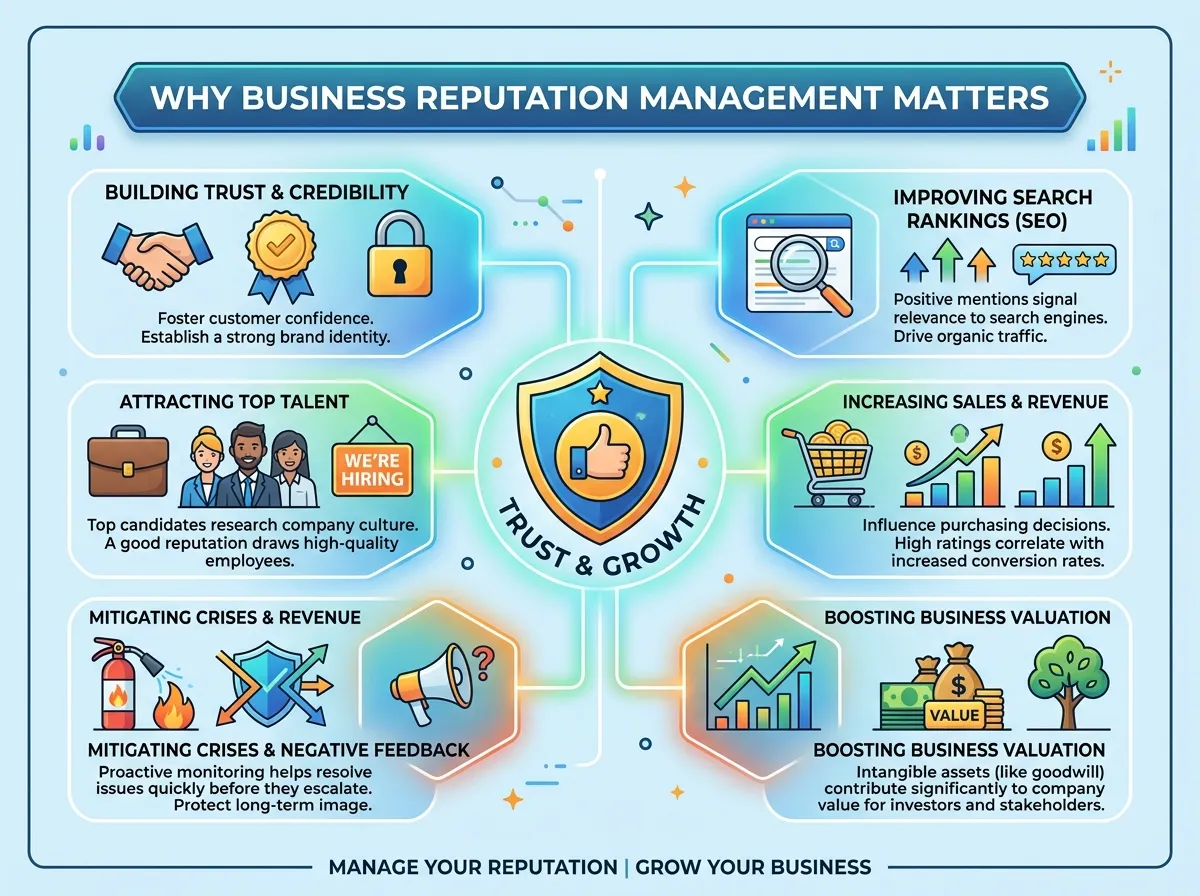
Customers often research a business before making a purchase. They may read reviews, visit the company website, check social media profiles, or search for comments from previous customers. These interactions can shape expectations before a customer ever contacts the business.
Business reputation management helps companies take a proactive approach to these interactions. Instead of simply reacting when a negative review or complaint appears, businesses can monitor conversations, encourage positive customer experiences, and respond professionally when problems occur.
Reputation also affects existing customers. A company that communicates openly and takes customer concerns seriously can create stronger relationships and encourage repeat business. Over time, consistent reputation management can help a business develop credibility and become more recognizable within its market.
Understanding Online Business Reputation Management
Online business reputation management focuses on how a company is represented across digital channels. Search engines, review websites, social media platforms, business directories, forums, news websites, and other online sources can all contribute to public perception.
A company may have excellent products or services, but outdated information, unanswered reviews, inconsistent branding, or unresolved complaints can create a different impression online. This is why businesses need to pay attention to both the information they publish and the conversations taking place around their brand.
Online reputation management should also extend beyond responding to negative reviews. Businesses can publish useful content, maintain accurate business information, highlight customer experiences, and communicate their values through appropriate digital channels. These activities can help create a more complete and accurate representation of the company.
The Role of Corporate Reputation Management
Corporate reputation management is especially important for larger organizations that interact with multiple groups, including customers, employees, investors, suppliers, media organizations, and business partners. A corporate reputation can be influenced by company communication, customer service, leadership decisions, employee experiences, social responsibility, and public responses to difficult situations.
Consistency is important because different audiences may encounter different parts of the organization. A company that communicates one message through its website but presents a completely different tone on social media can create confusion.
Businesses can strengthen corporate reputation by maintaining clear communication, responding responsibly to concerns, and ensuring that public-facing information reflects their actual practices. Reputation management should therefore be connected to broader communication and brand strategies rather than treated as an isolated marketing activity.
For companies working on their overall identity, resources such as Brand Personality Assessment can help businesses think more carefully about how their personality and communication style are represented across customer touchpoints.
Brand Reputation Management and Customer Trust
Brand reputation management focuses on how people perceive the brand itself. While reputation can be influenced by individual transactions, it is also shaped by the broader identity, messaging, customer experience, and values associated with a business.
A recognizable brand should provide a consistent experience across its website, social media profiles, advertisements, customer support channels, and other communication platforms. When the brand promise and actual customer experience are closely aligned, customers have clearer expectations.
Brand reputation can also benefit from authentic communication. Businesses should avoid making claims that cannot be supported by their actual products, services, or customer experiences. Clear and honest communication can make it easier to maintain trust when the company faces criticism or unexpected challenges.
Businesses that want to strengthen their overall brand development can also explore why every business needs a brand development consultant as part of a broader branding strategy.
Developing an Online Reputation Management Strategy
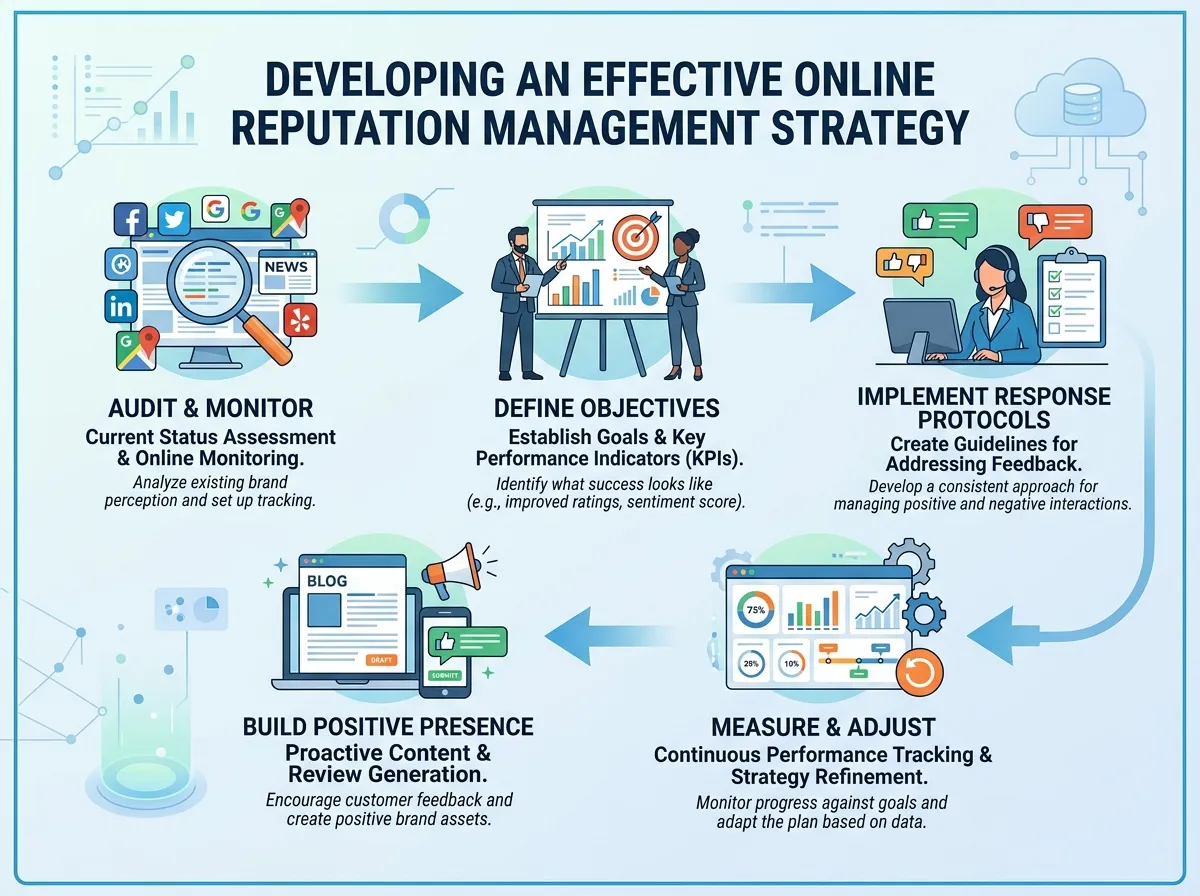
An effective online reputation management strategy should begin with visibility. Businesses need to understand where customers are discussing the company and what information appears when people search for the brand.
The next step is monitoring. Companies can track reviews, social media mentions, search results, news coverage, and other relevant conversations. Monitoring makes it easier to identify recurring customer concerns and respond before small issues become larger reputation problems.
Businesses should also establish clear response practices. Positive feedback can be acknowledged with genuine appreciation, while negative feedback should be handled professionally. A response should focus on understanding the issue, providing useful information, and moving the conversation toward an appropriate resolution.
The strategy should also include content and communication. Publishing helpful information, answering common questions, showcasing genuine customer experiences, and maintaining accurate business profiles can create a stronger digital presence.
Reputation Management for Businesses
Reputation management for businesses is not limited to large companies. Small businesses can benefit just as much because a few customer reviews or search results can have a noticeable effect on local purchasing decisions.
A small business may depend heavily on word-of-mouth recommendations and online reviews. If customers consistently see positive experiences and professional responses, they may feel more comfortable choosing that company.
Businesses should also make reputation management part of their everyday operations. Customer service teams, marketing departments, sales representatives, and management can all contribute to the company’s reputation. A strong reputation is created through the combined experience customers have with the business.
Business Reputation Monitoring
Business reputation monitoring allows companies to identify what customers and other audiences are saying about them. Monitoring can include review platforms, social media, search engine results, business directories, blogs, forums, and other relevant online sources.
The goal is not simply to collect mentions. Businesses should look for patterns. If multiple customers complain about the same issue, the problem may require an operational solution rather than another individual response.
Monitoring can also identify positive opportunities. Businesses may discover customers praising a particular service, employee, product, or feature. These insights can help companies understand what is working well and potentially use those strengths in future marketing communications.
Regular monitoring also helps businesses detect inaccurate information. Incorrect business details, outdated descriptions, duplicate listings, or misleading content can create confusion. Keeping important digital information accurate is therefore an important part of reputation protection.
Customer Review Management
Customer review management is one of the most visible parts of business reputation management. Reviews can influence how potential customers evaluate a company, particularly when they are comparing several businesses.
Businesses should make it easy for satisfied customers to provide honest feedback. However, review requests should be handled ethically and should not pressure customers to provide a particular rating or misleading testimonial.
Responding to reviews is equally important. Positive reviews provide an opportunity to thank customers and reinforce the company’s commitment to service. Negative reviews provide an opportunity to acknowledge concerns, clarify misunderstandings where appropriate, and offer a path toward resolution.
Businesses should avoid emotional or defensive responses. A public argument can attract more attention to a complaint and may create a second reputation problem. Professional, concise, and customer-focused communication is usually more appropriate.
Managing Negative Reputation
Negative reputation management involves identifying reputation threats and taking appropriate steps to address them. Negative information can come from genuine customer complaints, poor experiences, inaccurate information, outdated content, misunderstandings, or other sources.
The first step is understanding the issue. Businesses should determine whether the information is accurate and identify what caused the problem. If the company made a genuine mistake, acknowledging it and taking corrective action can be more constructive than attempting to hide it.
If information is inaccurate, the business can use appropriate channels to request corrections or provide factual clarification. In cases involving serious complaints, companies may also need internal investigation and formal communication procedures.
Businesses should avoid aggressive tactics or attempts to manipulate public discussion. Long-term reputation is generally better supported by accurate information, responsible communication, and genuine improvements to the customer experience.
Business Reputation Repair
Business reputation repair becomes necessary when negative perceptions have already affected customer trust. Repairing a reputation usually requires more than publishing a few positive messages. Customers need to see meaningful changes and consistent behavior over time.
The process can begin by identifying the main causes of dissatisfaction. Businesses can examine reviews, support requests, customer feedback, social conversations, and internal processes to understand where improvements are needed.
After identifying the issues, the company can communicate appropriate corrective actions. For example, a business might improve customer support, update its policies, correct inaccurate information, improve product quality, or introduce better communication practices.
Positive reputation should be earned through consistent experiences. Businesses can support this process by sharing authentic customer stories, useful educational content, community activities, and other information that accurately reflects the organization.
For brands that want to build stronger relationships beyond individual transactions, building brand communities can support deeper customer engagement and long-term brand relationships.
Using Content to Support Reputation
Content marketing can play an important role in reputation management because it gives businesses an opportunity to communicate directly with their audiences. Helpful articles, videos, case studies, customer stories, FAQs, and educational resources can provide useful information while reinforcing the company’s expertise.
Content should remain consistent with the company’s actual capabilities. Overpromising can create expectations that are difficult to meet and may eventually damage trust.
Video can also contribute to reputation because it allows companies to communicate their personality and expertise in a more engaging format. Businesses can use platforms such as YouTube to explain products, answer customer questions, demonstrate services, and share educational information. Companies interested in this approach can explore how to get brand promotion on YouTube as part of their wider brand communication efforts.
Creating a Consistent Reputation Across Channels
A business can appear on many digital platforms, and customers may encounter different versions of the brand across those channels. Consistency helps reduce confusion and strengthens recognition.
Business names, descriptions, contact details, logos, messaging, service information, and customer communication should be reviewed regularly. Inconsistent information can make a company appear less reliable even when the underlying business is legitimate.
Consistency does not mean every platform needs identical content. Each channel can have its own format and communication style while maintaining the same core brand identity and accurate information.
Turning Reputation Management Into a Long-Term Process
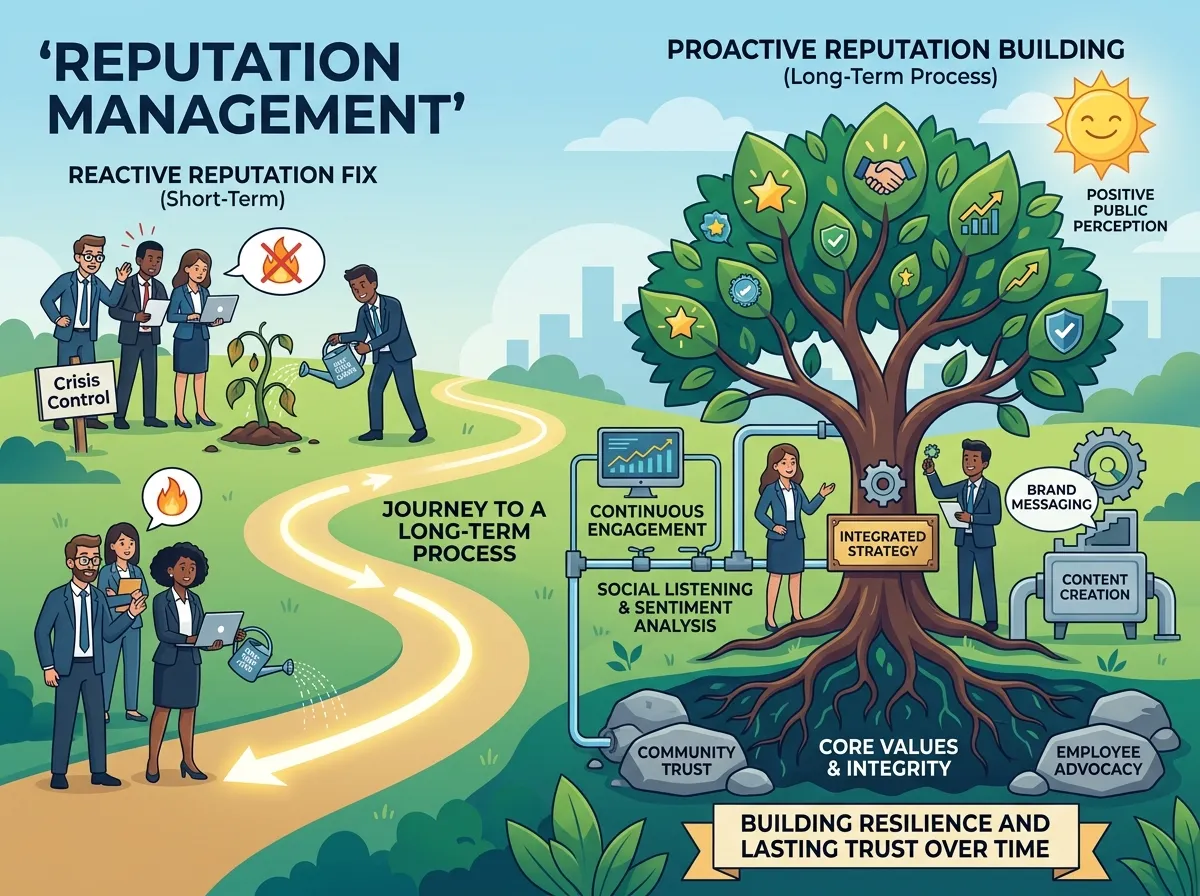
Business reputation management works best as an ongoing process rather than a one-time campaign. Customer expectations change, new platforms appear, and conversations about a company can develop quickly.
Regular monitoring helps businesses identify new concerns. Consistent customer service helps prevent avoidable reputation problems. Useful content can strengthen brand visibility, while thoughtful review management can demonstrate that the company values customer feedback.
Management should also review reputation data periodically. Recurring complaints can reveal operational problems, while recurring positive feedback can reveal competitive strengths. These insights can inform customer service, marketing, product development, and broader business decisions.
A company with a strong reputation is not necessarily one that never receives criticism. Every business can experience complaints or negative feedback. The difference often comes from how responsibly the company responds, how quickly it learns from problems, and whether its actions match its public communication.
Frequently Asked Questions
1. What is business reputation management?
Business reputation management is the process of monitoring, protecting, and improving how customers and other audiences perceive a company. It can include review management, online monitoring, customer communication, content creation, brand management, and responding to reputation issues.
2. Why is business reputation management important?
Business reputation management is important because customers often research companies before making purchasing decisions. Reviews, search results, social media discussions, and customer experiences can influence trust and expectations.
3. What are business reputation management services?
Business reputation management services can include online monitoring, review management, reputation analysis, content development, customer feedback management, search result monitoring, and strategies for addressing negative information.
4. How does online business reputation management work?
Online business reputation management involves monitoring digital channels where a company is discussed or represented. Businesses can track reviews, social media mentions, search results, directories, and other online content while responding appropriately to customer feedback.
5. What is the difference between brand reputation management and corporate reputation management?
Brand reputation management focuses primarily on how customers perceive a specific brand, while corporate reputation management can cover the broader reputation of an organization among customers, employees, investors, partners, media, and other stakeholders.
6. How can a business manage negative reviews?
Businesses can manage negative reviews by responding professionally, understanding the customer’s concern, correcting factual inaccuracies when appropriate, and offering a reasonable path toward resolution. Companies should also look for recurring complaints that may indicate larger operational problems.
7. What is business reputation monitoring?
Business reputation monitoring involves tracking mentions, reviews, search results, social media conversations, and other public information related to a company. It helps businesses identify positive feedback and potential reputation issues.
8. Can a damaged business reputation be repaired?
A damaged reputation can sometimes be improved through consistent corrective action, better customer experiences, accurate communication, and responsible reputation management. The process generally requires sustained effort rather than a short-term campaign.
9. How can small businesses improve their reputation?
Small businesses can focus on delivering reliable customer experiences, encouraging honest feedback, responding professionally to reviews, maintaining accurate online information, and communicating clearly with customers. Consistency is particularly important because local customers may rely heavily on reviews and recommendations.
10. How does content marketing support business reputation management?
Content marketing gives businesses an opportunity to provide accurate, useful information and demonstrate their expertise. Articles, videos, case studies, FAQs, and educational resources can help answer customer questions while supporting a consistent and credible brand presence.