Digital Brand Engagement: Strategies to Build Stronger Online Customer Relationships
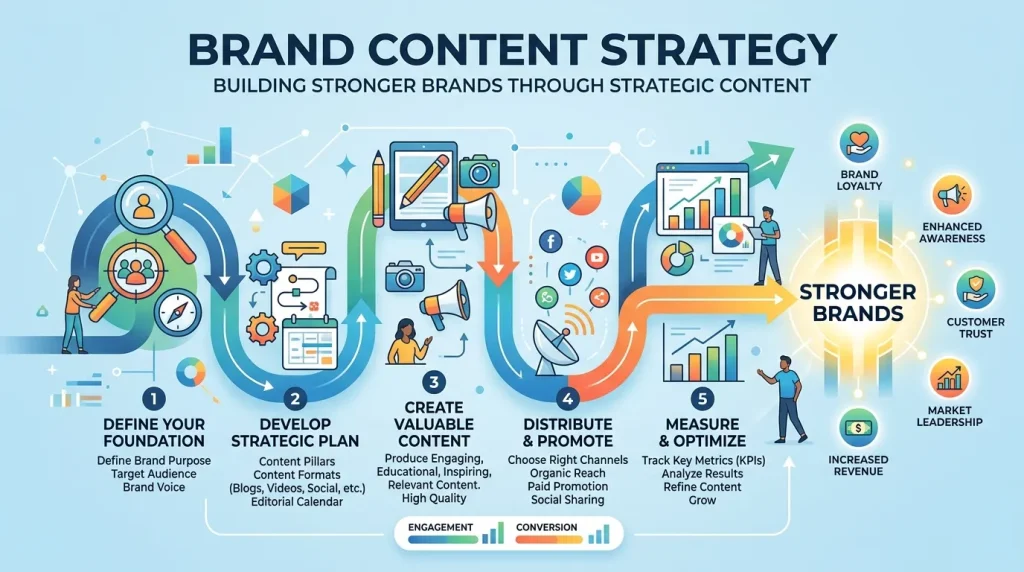
A strong brand content strategy helps businesses create meaningful content that communicates their identity, connects with the right audience, and supports long-term growth. From brand storytelling and messaging to content creation and audience engagement, a strategic approach ensures every piece of content has a clear purpose. When content consistently reflects a brand’s values and customer needs, it can improve awareness, trust, engagement, and overall brand performance.
Content has become one of the most important ways for businesses to communicate with their audiences. People do not simply interact with brands because they sell useful products or services. They also look for information, ideas, stories, experiences, and values that they can connect with. This makes a thoughtful brand content strategy essential for businesses that want to build a recognizable and trusted presence.
A brand content strategy goes beyond publishing blog posts or social media updates. It creates a clear connection between a brand’s identity, audience, communication style, and content goals. Every article, video, social post, email, landing page, or visual should contribute to the larger perception of the brand.
When businesses approach content strategically, they can communicate more consistently and build stronger relationships with customers. Content can explain what a company stands for, demonstrate expertise, answer customer questions, and create reasons for people to continue engaging with the brand.
What Is a Brand Content Strategy?

A brand content strategy is a structured approach to planning, creating, distributing, and evaluating content that represents a brand and supports its business objectives. It combines branding principles with content marketing to create communication that is useful, recognizable, and relevant to a specific audience.
Instead of treating every content piece as an individual marketing activity, businesses can use a strategic framework to make their content work together. A blog article can introduce an important topic, a social media post can encourage discussion around it, and an email can bring the audience back to the company’s website.
The goal is not simply to publish more content. The goal is to create content that strengthens the brand while providing genuine value to the audience.
A successful strategy also considers the different stages of the customer journey. Someone discovering a brand for the first time may need educational content, while an existing customer may respond better to product insights, customer stories, or helpful resources.
Creating a Strong Brand Content Marketing Strategy
A successful brand content marketing strategy begins with a clear understanding of what the brand represents. Before creating content, businesses should understand their mission, values, positioning, personality, and target audience.
Audience research is particularly important because content becomes more effective when it addresses real customer interests and problems. Businesses can examine customer questions, search behavior, feedback, social conversations, and common challenges to identify useful content opportunities.
The next step is defining content objectives. A company may want to increase brand awareness, strengthen authority, generate leads, improve engagement, support customer retention, or establish a stronger position within its industry. Different objectives require different types of content.
Consistency should also be part of the strategy. Consistency does not mean publishing identical messages repeatedly. It means maintaining a recognizable voice, visual identity, quality standard, and overall direction across different channels.
Building a Content Strategy for Brands
A content strategy for brands should connect content with the broader brand positioning. This ensures that marketing communication does not become disconnected from the identity that the company wants customers to remember.
For example, a company positioned as innovative may focus on research, emerging trends, expert insights, and forward-looking ideas. A brand focused on simplicity may create straightforward educational content that makes complicated subjects easier to understand.
Content topics should also reflect audience interests. A brand can develop several core content themes and use them consistently across its channels. These themes create structure while still allowing room for creativity.
A strong strategy should also determine where content will be distributed. A website may be the primary source of long-form educational content, while social media can encourage conversations and increase visibility. Email marketing can maintain relationships with existing audiences, while videos can communicate ideas in a more visual and engaging format.
Using a Brand Storytelling Strategy
People often remember stories more easily than isolated facts. This is why a brand storytelling strategy can play an important role in content marketing.
Brand storytelling allows companies to communicate their purpose, journey, challenges, values, and customer experiences in a way that feels more human. Instead of simply saying that a business provides high-quality products, a brand can explain why it was created, what problem it wanted to solve, or how it helped customers overcome a particular challenge.
Storytelling can also make complex brand messages easier to understand. Customer success stories, founder stories, behind-the-scenes content, employee experiences, and community stories can all contribute to a stronger brand narrative.
Effective storytelling should remain authentic. Audiences can quickly recognize content that feels exaggerated or disconnected from the actual brand experience. The strongest stories are usually connected to real people, meaningful experiences, and genuine values.
Developing a Branded Content Strategy
A branded content strategy focuses on creating content that is closely connected to the identity and personality of a company. The content should provide value while also helping audiences recognize the brand behind it.
This could include educational articles, original research, industry reports, videos, podcasts, interviews, social media campaigns, visual content, or interactive experiences. The format can change, but the underlying brand message should remain consistent.
Branded content is particularly useful when businesses want to differentiate themselves from competitors. Instead of competing only through product features or price, companies can develop a distinctive voice and perspective that audiences associate with the brand.
Businesses can also use competitive research to understand how other companies communicate and identify opportunities for differentiation. A detailed competitive brand analysis can help reveal competitor positioning, messaging patterns, content approaches, and areas where a brand can create a stronger identity.
Improving Brand Content Creation
Effective brand content creation starts with purpose. Every piece of content should have a reason for existing. It might educate an audience, answer a question, introduce an idea, support a campaign, strengthen credibility, or encourage further interaction.
Content quality is also more important than simply producing a large quantity. A well-researched article that answers an important customer question can create more value than several short pieces with little useful information.
Businesses should also adapt content to the platform. A detailed blog post may require a different approach from a LinkedIn post, Instagram caption, email newsletter, or video. The central brand message can remain consistent while the presentation changes according to audience behavior.
Content creation should also include optimization. Search-friendly titles, relevant keywords, useful headings, internal links, clear introductions, and readable paragraphs can help valuable content reach a larger audience through organic search.
Content Marketing for Brand Awareness
Content marketing for brand awareness focuses on making more people familiar with a company and what it represents. At this stage, content should usually provide value without immediately pushing for a sale.
Educational articles, industry insights, social media content, videos, podcasts, expert commentary, and original research can introduce a brand to potential customers. When people repeatedly encounter useful and consistent content, the brand can become more recognizable.
Awareness also depends on distribution. Creating excellent content is not enough if the intended audience never sees it. Businesses should consider organic search, social media, email, partnerships, online communities, influencer collaborations, public relations, and other relevant channels.
Over time, consistent exposure can help build familiarity. Familiarity combined with useful information and positive experiences can contribute to stronger brand trust.
Creating a Strong Brand Messaging Strategy
A brand messaging strategy defines how a business communicates its key ideas to its audience. It helps ensure that different content channels communicate a coherent story rather than disconnected messages.
Important elements can include the brand promise, value proposition, positioning, tone of voice, key benefits, customer problems, and reasons to believe in the brand.
Messaging should be clear enough that audiences can quickly understand what the brand offers and why it matters. At the same time, it should have enough personality to distinguish the company from competitors.
A strong messaging strategy can also make content creation easier. Writers, designers, social media managers, and marketing teams have a clearer understanding of what the brand should sound like and what ideas should be emphasized.
Building a Content Strategy for Brand Growth
A content strategy for brand growth should evolve as the business and audience develop. What works for a new company may not be appropriate for an established brand with a larger customer base.
Growth-focused content can support multiple objectives. Educational content can attract new audiences, expert content can establish authority, customer stories can strengthen trust, and product-focused content can help interested prospects make decisions.
Businesses should also analyze content performance regularly. Traffic, engagement, conversions, returning visitors, shares, search visibility, and audience feedback can reveal which topics and formats are creating the greatest value.
The goal is not to chase every metric. Instead, businesses should identify the performance indicators that connect most closely with their objectives and use those insights to improve future content.
For brands undergoing major changes, content can also help communicate the transition. Reviewing rebranding case studies can provide useful insight into how businesses communicate changes in identity, positioning, messaging, and customer perception.
Strengthening Brand Audience Engagement
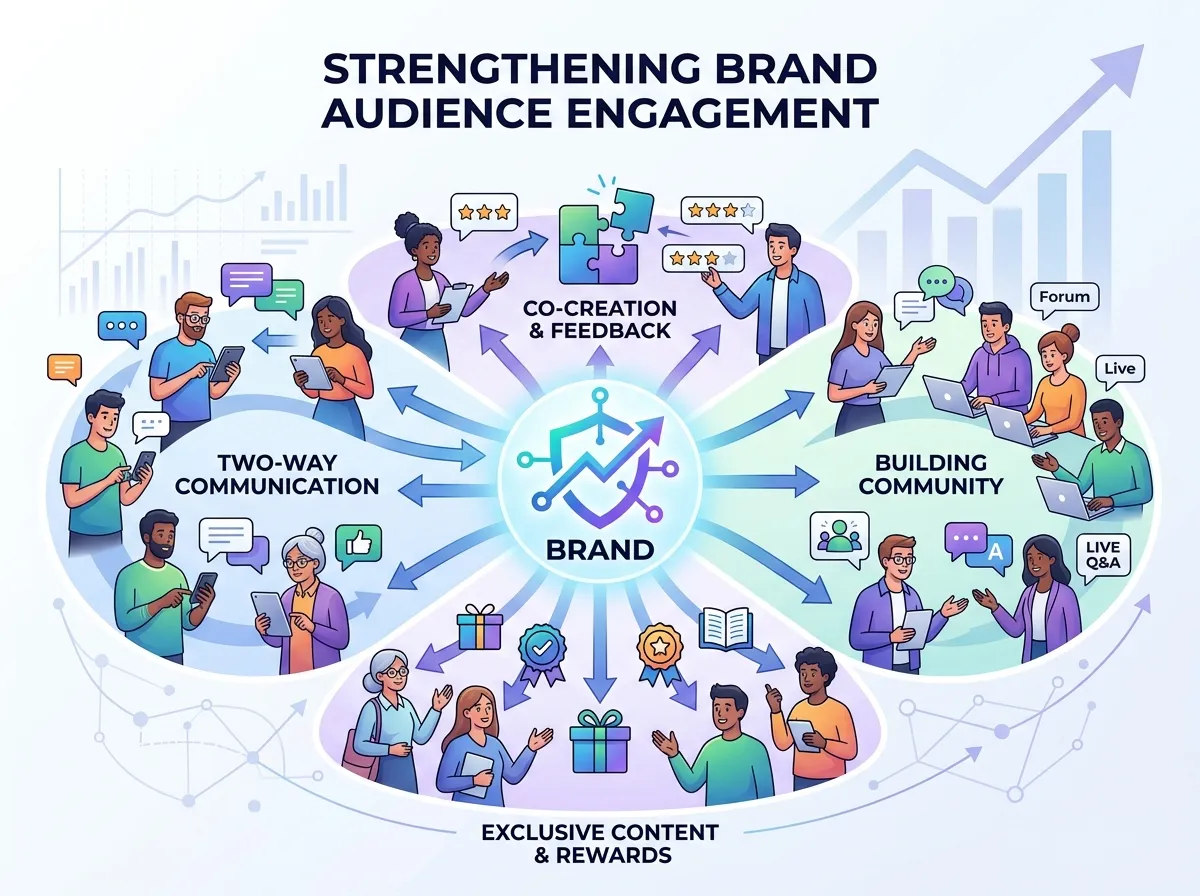
Brand audience engagement is an important part of long-term content success. Content should create opportunities for people to interact with a brand rather than simply consume information.
Questions, comments, polls, discussions, user-generated content, customer stories, live sessions, and interactive campaigns can encourage participation. Responding to audience feedback can also make the brand feel more accessible and human.
Engagement becomes stronger when content is relevant to the audience. A business that understands its customers can create topics that address their interests, concerns, aspirations, and experiences.
This creates a two-way relationship. The brand provides useful content, while audience reactions provide information that can improve future communication.
Strategic Brand Content Marketing
Strategic brand content marketing brings together branding, audience research, content creation, distribution, and measurement. It ensures that content does not operate separately from the brand’s broader marketing objectives.
A business should think about how different content assets work together. An educational article can support search visibility, a social post can increase awareness of the article, an email can distribute it to existing subscribers, and a customer story can reinforce the same brand message from another perspective.
Brand structure can also influence how content is organized. Companies with multiple products, services, or sub-brands need clear relationships between them. Understanding brand architecture can help businesses organize their brand portfolio and maintain consistency across different offerings.
Strategic content marketing is therefore less about producing isolated pieces and more about creating a connected communication system.
The Role of Brand Sponsorship and Partnerships
Content strategy can extend beyond owned channels. Sponsorships, partnerships, events, collaborations, and other external opportunities can help brands reach new audiences.
For businesses considering sponsorship as part of their marketing mix, understanding brand sponsorship in marketing can help clarify how partnerships can contribute to awareness, credibility, audience reach, and brand association.
The key is ensuring that external activities fit the brand. A partnership may generate significant exposure, but if the audience or message is unrelated to the brand, the long-term value can be limited.
Measuring the Success of a Brand Content Strategy
Measuring a brand content strategy requires looking beyond page views. Different objectives require different measurements.
For awareness, businesses may monitor organic impressions, branded searches, reach, social visibility, and new visitors. For engagement, metrics such as comments, shares, time on page, returning visitors, and content interactions can provide useful signals.
For business growth, companies may examine leads, conversions, assisted conversions, customer acquisition, and revenue influenced by content.
Qualitative feedback is also valuable. Customer comments, reviews, direct messages, sales conversations, and audience questions can reveal how people perceive the brand.
Regular analysis allows businesses to identify successful themes and improve weaker areas. Over time, this creates a more efficient content operation and a stronger connection between content and business results.
Conclusion
A well-planned brand content strategy helps businesses communicate with greater consistency, relevance, and purpose. It brings together storytelling, messaging, content creation, audience engagement, distribution, and measurement to create a stronger overall brand presence.
The most effective strategies are not built around publishing as much content as possible. They are built around understanding the audience and creating useful experiences that consistently reflect the brand.
When businesses combine a clear identity with valuable content, strong storytelling, consistent messaging, and ongoing optimization, content can become much more than a traffic-generation tool. It can become a long-term asset for building awareness, trust, engagement, and sustainable brand growth.
Frequently Asked Questions
1. What is a brand content strategy?
A brand content strategy is a planned approach to creating and distributing content that represents a brand and supports its marketing and business objectives. It connects brand identity, audience needs, messaging, content topics, distribution channels, and performance measurement.
2. Why is a brand content strategy important?
A brand content strategy helps businesses maintain consistent communication while creating useful experiences for their audiences. It can improve brand awareness, strengthen trust, increase engagement, support organic visibility, and contribute to long-term business growth.
3. What is the difference between content marketing and brand content strategy?
Content marketing focuses broadly on using valuable content to attract, engage, and convert audiences. A brand content strategy adds a stronger focus on brand identity, positioning, voice, storytelling, and consistent communication across the customer journey.
4. How does storytelling support a brand content strategy?
Storytelling makes brand communication more relatable and memorable. Businesses can use customer experiences, founder stories, company journeys, values, and real-world examples to communicate their identity and create stronger emotional connections with audiences.
5. What types of content work well for brand building?
Blog articles, educational resources, videos, social media content, customer stories, case studies, podcasts, original research, newsletters, interviews, and visual content can all support brand building. The best format depends on the audience, brand goals, and distribution channels.
6. How can content increase brand awareness?
Useful and consistent content can introduce a brand to new audiences through search engines, social media, email, partnerships, and other channels. Repeated exposure to valuable information can improve brand recognition and help audiences associate the company with particular topics or areas of expertise.
7. How often should a business publish branded content?
There is no universal publishing frequency. Businesses should prioritize consistency and quality over producing content simply to meet a specific number. A sustainable schedule that allows the company to create useful, well-researched content is generally more effective than an unrealistic publishing target.
8. How can businesses improve brand audience engagement?
Businesses can improve engagement by creating relevant content, asking meaningful questions, encouraging discussion, responding to comments, using interactive formats, sharing customer experiences, and adapting content based on audience feedback.
9. How does SEO fit into a brand content strategy?
SEO helps valuable brand content reach people who are actively searching for related information. Keyword research, search-focused content creation, internal linking, useful headings, strong page structure, and helpful information can improve organic visibility while supporting broader brand goals.
10. How can a business measure its brand content strategy?
Businesses can measure performance through metrics such as organic traffic, branded search visibility, social reach, engagement, returning visitors, leads, conversions, and content-assisted revenue. Qualitative feedback from customers can also help determine whether content is improving brand perception.