Business Development: Strategies for Sustainable Growth
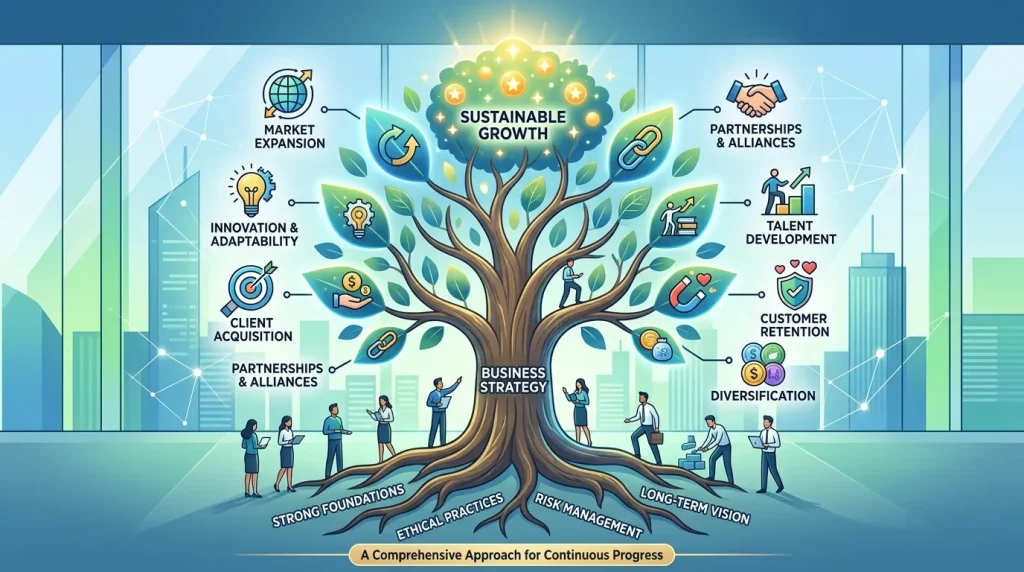
Business development helps companies create new opportunities through customer acquisition, strategic partnerships, market expansion, sales coordination, and strong business relationships. A clear strategy and consistent relationship management can support sustainable business growth.
Business development is an important part of building long-term growth, creating new opportunities, and developing valuable relationships. It involves more than simply increasing sales. Businesses use development activities to identify potential markets, connect with customers, build partnerships, improve their offerings, and create new sources of revenue.
A successful business development approach connects marketing, sales, customer relationships, partnerships, and strategic planning. When these areas work together, a company can identify opportunities that support both immediate objectives and long-term expansion. Whether a business is a startup, growing company, or established organization, having a clear development process can help it respond to changing customer needs and market conditions.
What Is Business Development?
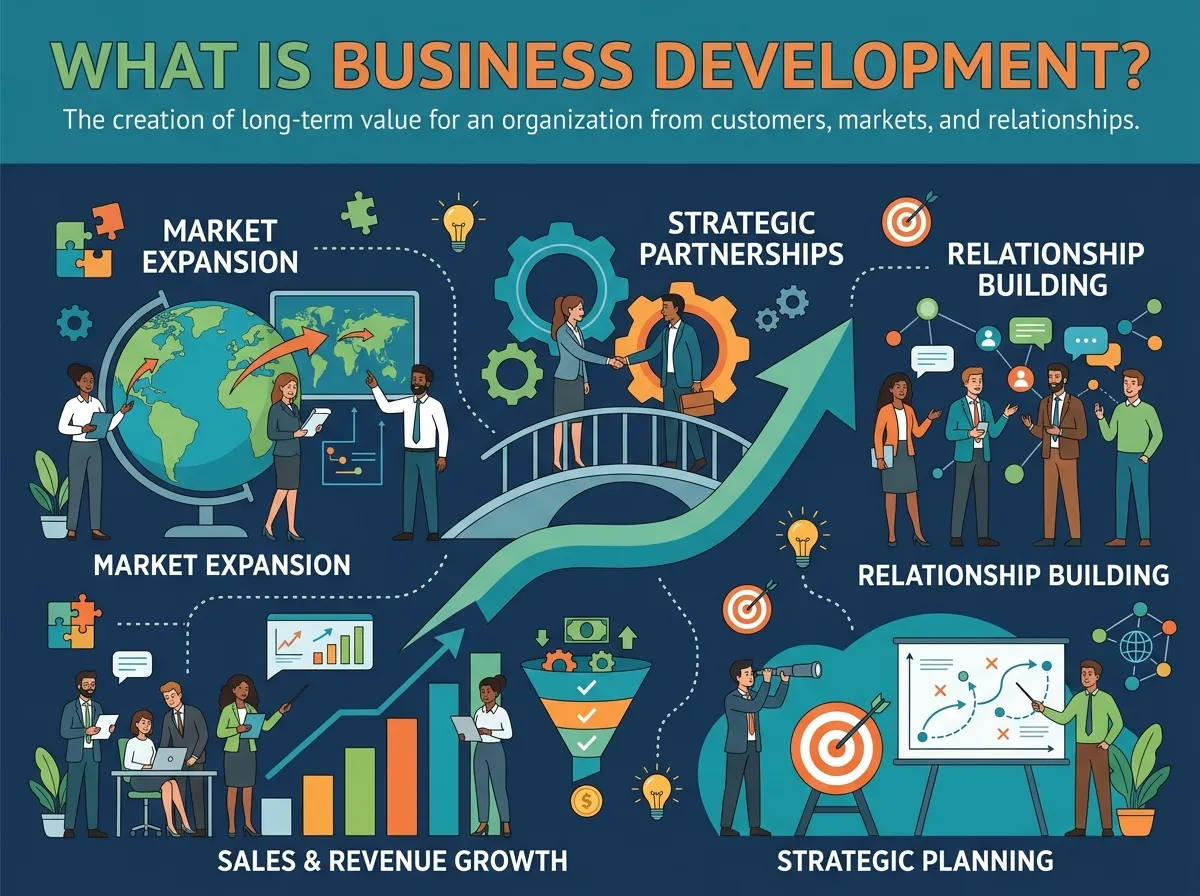
Business development refers to the activities and strategies a company uses to create new business opportunities and strengthen its position in the market. These activities can include finding new customers, entering new markets, developing partnerships, improving customer relationships, and identifying opportunities for revenue growth.
Unlike a process that focuses only on closing sales, business development takes a broader view of how a company can create sustainable commercial relationships. A business development professional may work with marketing teams to identify target audiences, sales teams to qualify prospects, product teams to understand customer needs, and leadership teams to evaluate expansion opportunities.
The focus can vary depending on the company. For one organization, development may mean entering a new geographic market. For another, it could involve creating a strategic partnership, expanding a product line, or developing a new customer segment.
Why Business Development Matters for Business Growth
Businesses need continuous opportunities to remain competitive and adapt to market changes. A strong development function helps organizations look beyond their existing customers and identify areas where additional value can be created.
A well-planned business growth strategy can support customer acquisition, revenue expansion, market diversification, and stronger relationships. It can also help companies identify opportunities before competitors become established in the same space.
Development activities can be especially important when a company reaches a stage where relying on existing customers or traditional sales channels is no longer enough. New markets, partnerships, products, and customer segments can provide additional ways to support growth.
Long-term growth also depends on reputation and trust. Companies that actively manage how customers and stakeholders perceive them can create a stronger foundation for new relationships. A well-developed business reputation management strategy can therefore complement broader business development activities.
Creating a Business Development Strategy
A business development strategy provides direction for identifying and pursuing commercial opportunities. It begins with a clear understanding of the company’s objectives, target customers, market position, resources, and competitive environment.
Businesses should determine what type of growth they want to achieve. Some may focus on increasing sales within an existing market, while others may want to enter new industries or geographic areas. Clear objectives make it easier to determine which opportunities deserve attention.
Understanding the target audience is equally important. Businesses need to know who their potential customers are, what problems they face, what influences their purchasing decisions, and how the company’s products or services can address those needs.
A strong target market strategy can help businesses define the audiences that are most relevant to their development objectives. When market targeting is clear, business development teams can spend more time pursuing opportunities that align with the company’s capabilities.
Business Development Techniques That Create Opportunities
Effective business development techniques can include networking, referrals, content marketing, customer research, industry events, partnership development, outbound communication, and strategic prospecting.
Networking allows professionals to create relationships with people who may eventually become customers, partners, or referral sources. These relationships often take time to develop, so businesses should focus on providing value rather than treating every interaction as an immediate sales opportunity.
Referrals can also contribute to development because recommendations from existing customers or professional contacts may introduce a company to relevant prospects. Maintaining strong customer relationships increases the possibility of these introductions occurring naturally.
Content marketing can support business development by demonstrating expertise. Educational articles, research, case studies, videos, and interactive experiences can help prospects understand a company’s capabilities before entering a direct sales conversation. Businesses exploring interactive content marketing can use engaging formats to create more opportunities for audience interaction and relationship building.
Understanding the Business Development Process
The business development process usually begins with identifying potential opportunities and understanding whether they align with the company’s objectives. Research helps determine whether a prospect, market, partnership, or new offering has genuine commercial potential.
The next stage often involves building a relationship. Initial conversations can help businesses understand customer requirements, challenges, budgets, decision-making processes, and expectations. This information allows teams to determine whether their solution is a suitable fit.
Qualified opportunities can then move toward proposals, negotiations, partnerships, or sales discussions. At this stage, communication between business development and sales teams becomes important. Both teams need to understand the prospect’s requirements and the value being offered.
After an agreement or sale, the relationship should not necessarily end. Continued communication, customer support, account management, and relationship development can create opportunities for renewals, referrals, cross-selling, and future partnerships.
Business Expansion Strategy
A business expansion strategy focuses on increasing a company’s presence by entering new markets, serving additional customer groups, launching new products, or developing new distribution channels.
Expansion should be supported by research rather than assumptions. Businesses need to understand the demand, competition, customer behavior, regulatory environment, operational requirements, and potential costs associated with entering a new market.
Geographic expansion is one example. A company operating successfully in one region may consider entering another region where similar customer needs exist. However, differences in customer preferences, pricing, regulations, and competition can affect the outcome.
Product or service expansion is another possibility. Businesses may use customer feedback and market research to identify complementary products or services that can address additional needs.
The objective of expansion should be connected to the company’s broader strategy. Rapid expansion without sufficient resources, operational capacity, or market understanding can create challenges rather than sustainable growth.
Customer Acquisition Strategy and Business Development

A customer acquisition strategy is closely connected with business development because new customers are an important source of commercial growth. However, acquisition should focus on attracting customers who are likely to benefit from the company’s offerings rather than simply increasing the number of leads.
Businesses can use multiple channels to support acquisition, including search marketing, social media, content marketing, email campaigns, referrals, partnerships, events, and direct outreach.
The business development team can help identify which customer groups have the greatest potential and which acquisition channels are most relevant. Marketing can then create campaigns that communicate the company’s value to those audiences.
Customer acquisition also becomes more effective when businesses understand the complete customer journey. Prospects may interact with several touchpoints before deciding whether to purchase. Consistent messaging across these touchpoints can help create a clearer experience.
Strategic Business Partnerships
Strategic business partnerships can create opportunities that may be difficult for a company to achieve independently. Partnerships can provide access to new audiences, technologies, expertise, distribution channels, or complementary services.
A partnership works best when both organizations have a clear reason to collaborate. For example, a software company might partner with a consulting firm whose clients need the software solution. Both companies can potentially create value by combining their capabilities.
Successful partnerships require clear communication and expectations. Businesses should establish responsibilities, objectives, communication processes, commercial terms, and performance measures before beginning a long-term collaboration.
Partnerships should also be reviewed over time. Market conditions and business objectives can change, so companies may need to adjust their partnership strategies to maintain mutual value.
Sales and Business Development
Sales and business development are closely related but serve different functions. Sales typically focuses on converting qualified prospects into customers, while business development often focuses on identifying new opportunities, markets, relationships, and potential channels for growth.
The two functions work best when they share information. Business development teams may identify an opportunity and build an initial relationship, while sales teams take the opportunity further through qualification, proposals, negotiation, and closing.
Clear communication can prevent leads from being lost between teams. Shared CRM systems, defined processes, and consistent qualification criteria can help maintain continuity throughout the customer journey.
Marketing also plays an important supporting role. Content and campaigns can create awareness and generate interest, while business development and sales teams can turn relevant interest into conversations and commercial opportunities.
Finding Business Development Opportunities
Identifying business development opportunities requires ongoing market awareness. Companies can look for changes in customer behavior, emerging technologies, new industries, underserved markets, partnership possibilities, and evolving business needs.
Customer feedback can be an especially useful source of information. Existing customers may identify problems that the company can solve through additional services, product improvements, or new offerings.
Competitor research can also reveal gaps in the market. Businesses can study how competitors position their products, serve customers, communicate their value, and respond to changing demands. This does not mean simply copying competitors. Instead, the information can help identify areas where a company may offer a different or more relevant solution.
Industry events, professional networks, online communities, research reports, and customer conversations can provide additional signals about emerging opportunities.
Businesses can also explore technologies that change how marketing and customer interactions are managed. For example, generative AI in marketing can support content creation, customer research, personalization, and other marketing activities when implemented with appropriate human oversight.
Business Relationship Management
Business relationship management focuses on maintaining productive and mutually valuable relationships with customers, partners, suppliers, and other stakeholders.
Strong relationships require communication and consistency. Businesses should understand the priorities of important stakeholders and ensure that commitments are clearly communicated and delivered.
Customer relationships can create opportunities beyond the initial transaction. A satisfied customer may purchase additional services, renew a contract, recommend the company to others, or provide valuable feedback.
Partnership relationships require similar attention. Regular communication can help identify problems early and create opportunities to improve collaboration.
Trust is an important part of relationship management. Businesses that communicate transparently, respond to concerns, and maintain consistent service can create stronger foundations for long-term commercial relationships.
Using Content to Support Business Development
Content can support development by helping potential customers understand a company’s expertise and solutions. Instead of relying entirely on direct sales communication, businesses can use useful content to answer common questions and address industry challenges.
Blog articles, case studies, reports, videos, webinars, research content, and interactive experiences can all contribute to this process. Different content formats can serve different stages of the customer journey.
For example, educational content can introduce a business to a new audience, while a detailed case study can help an interested prospect evaluate a solution. More product-focused content can support prospects who are closer to making a purchasing decision.
The most useful content is closely connected to customer needs. Businesses should avoid producing content simply for volume and instead focus on topics that help their target audience understand problems, opportunities, and potential solutions.
Measuring Business Development Performance
Measuring business development helps organizations understand whether their activities are creating meaningful opportunities. Metrics can include qualified leads, new accounts, partnership opportunities, proposal activity, conversion rates, customer acquisition costs, revenue generated, and retention.
The right metrics depend on the company’s business model and development objectives. A company focused on partnerships may track new strategic relationships and revenue influenced by partners, while a service business may focus more heavily on qualified opportunities and new client revenue.
Businesses should also examine the quality of opportunities rather than relying solely on volume. A large number of unqualified leads may require more resources than a smaller number of highly relevant prospects.
Regular performance reviews can help identify which activities contribute to business objectives and where processes need improvement.
Challenges in Business Development
Business development can involve uncertainty because not every opportunity produces a positive commercial result. Prospects may change their priorities, partnerships may fail to develop, and new markets may not generate the expected demand.
One common challenge is pursuing too many opportunities simultaneously. Without clear priorities, teams can spread their resources across activities that have limited strategic value.
Another challenge is poor coordination between marketing, business development, and sales. When teams operate independently, important information about prospects and customer needs can be lost.
Businesses may also struggle with inconsistent follow-up. A promising conversation can lose momentum if there is no clear process for maintaining contact.
These challenges can be reduced through defined objectives, organized customer information, regular communication, and continuous evaluation of development activities.
Building Sustainable Business Growth

Sustainable business development requires a balance between short-term opportunities and long-term relationships. Businesses should look beyond immediate revenue and consider whether their activities create lasting customer value and strengthen their market position.
Customer feedback, market research, performance data, and relationship insights can help businesses refine their strategies over time. This creates a continuous cycle in which companies identify opportunities, test approaches, measure outcomes, and improve their processes.
Technology can also support this process by helping teams organize customer information, automate repetitive marketing activities, analyze data, and communicate more efficiently. However, technology should support business objectives rather than replace strategic thinking and human relationships.
Ultimately, business development works best when it becomes part of the company’s broader growth culture. Marketing, sales, customer service, leadership, and partnership teams can all contribute to identifying and developing opportunities.
Conclusion
Business development brings together customer acquisition, sales, partnerships, market research, networking, and relationship management to create opportunities for sustainable growth. A clear business development strategy helps organizations understand where opportunities exist and how those opportunities connect with broader business objectives.
From developing strategic business partnerships to entering new markets and strengthening customer relationships, development activities can support businesses at different stages of growth. The process requires research, communication, consistent follow-up, and an understanding of customer needs.
When businesses combine these elements with a focused business growth strategy and regular performance measurement, they can create a structured approach to discovering opportunities and building lasting commercial relationships.
FAQs About Business Development
1. What is business development?
Business development is the process of identifying and creating opportunities that can contribute to business growth. It can involve customer acquisition, partnerships, market expansion, networking, relationship management, and developing new revenue opportunities.
2. What is a business development strategy?
A business development strategy is a structured plan for identifying target markets, customers, partnerships, and other opportunities that align with a company’s growth objectives. It provides direction for development activities and resource allocation.
3. How does business development differ from sales?
Sales generally focuses on converting qualified prospects into customers, while business development has a broader focus on finding new markets, relationships, partnerships, and commercial opportunities. The two functions often work closely together.
4. What are common business development techniques?
Common techniques include networking, referrals, content marketing, customer research, industry events, strategic partnerships, prospecting, direct outreach, and market expansion activities.
5. Why are strategic business partnerships important?
Strategic business partnerships can give companies access to complementary expertise, new audiences, technology, distribution channels, and other resources. The value depends on whether the partnership creates meaningful benefits for the participating organizations.
6. How does business development support customer acquisition?
Business development can identify relevant customer segments, understand their needs, develop relationships, and create opportunities that marketing and sales teams can pursue. This can complement broader customer acquisition activities.
7. What is the business development process?
The business development process can include identifying opportunities, researching prospects or markets, building relationships, qualifying opportunities, developing proposals or partnerships, negotiating terms, and maintaining relationships after an agreement.
8. How can businesses find new development opportunities?
Businesses can identify opportunities through customer feedback, market research, industry trends, networking, competitor analysis, partnerships, emerging technologies, and changes in customer behavior.
9. What metrics can measure business development?
Businesses may track qualified opportunities, new customers, partnership activity, proposal rates, conversion rates, customer acquisition costs, revenue generated, and customer retention. The most relevant metrics depend on the organization’s objectives.
10. How can businesses build long-term development success?
Long-term success can be supported through clear objectives, consistent relationship management, targeted customer acquisition, strategic partnerships, market research, useful content, effective sales coordination, and regular performance measurement.