Social Listening as a Brand Strategy Tool: Converting Insights to Action
Stop guessing what your audience wants and start knowing. Social listening as a brand strategy tool unlocks the power of real-time conversations, transforming raw data into the strategic roadmap your brand needs to thrive.
This guide explores how to leverage social listening as a brand strategy tool to drive business growth. We cover moving beyond vanity metrics to actionable intelligence, identifying micro-trends, managing brand reputation, and refining product development. Learn to turn online chatter into a competitive advantage and build a brand that truly resonates.
Beyond Monitoring: Why Social Listening is the New Focus Group
For decades, brands relied on expensive, slow-moving focus groups to understand their audience. You would gather a dozen people in a room, ask them hypothetical questions, and hope their answers reflected reality. Today, that model is obsolete. The world’s largest, most honest focus group is happening 24/7 on social media, forums, and review sites. People are discussing your brand, your competitors, and your industry without any prompting. This is where social listening as a brand strategy tool becomes indispensable.
Unlike social monitoring, which is reactive (responding to mentions and support tickets), social listening is proactive. It is the strategic process of tracking online conversations to uncover patterns, sentiments, and trends that inform high-level business decisions. It’s not just about “what” is being said, but “why” it’s being said and “where” the conversation is going next.
When you treat social listening as a brand strategy tool, you gain access to unfiltered consumer feedback. You can spot a crisis before it explodes, identify a product flaw before it ruins your reputation, or discover a new market segment you didn’t know existed. In an era where brand perception in marketing can shift overnight, having your ear to the digital ground is not just a nice-to-have; it is a survival mechanism.
This comprehensive guide will walk you through how to transform passive listening into active strategy. We will explore how to use listening for competitive intelligence, product innovation, and content strategy, ensuring your brand remains culturally relevant and deeply connected to its audience.
1. The Strategic Distinction: Monitoring vs. Listening
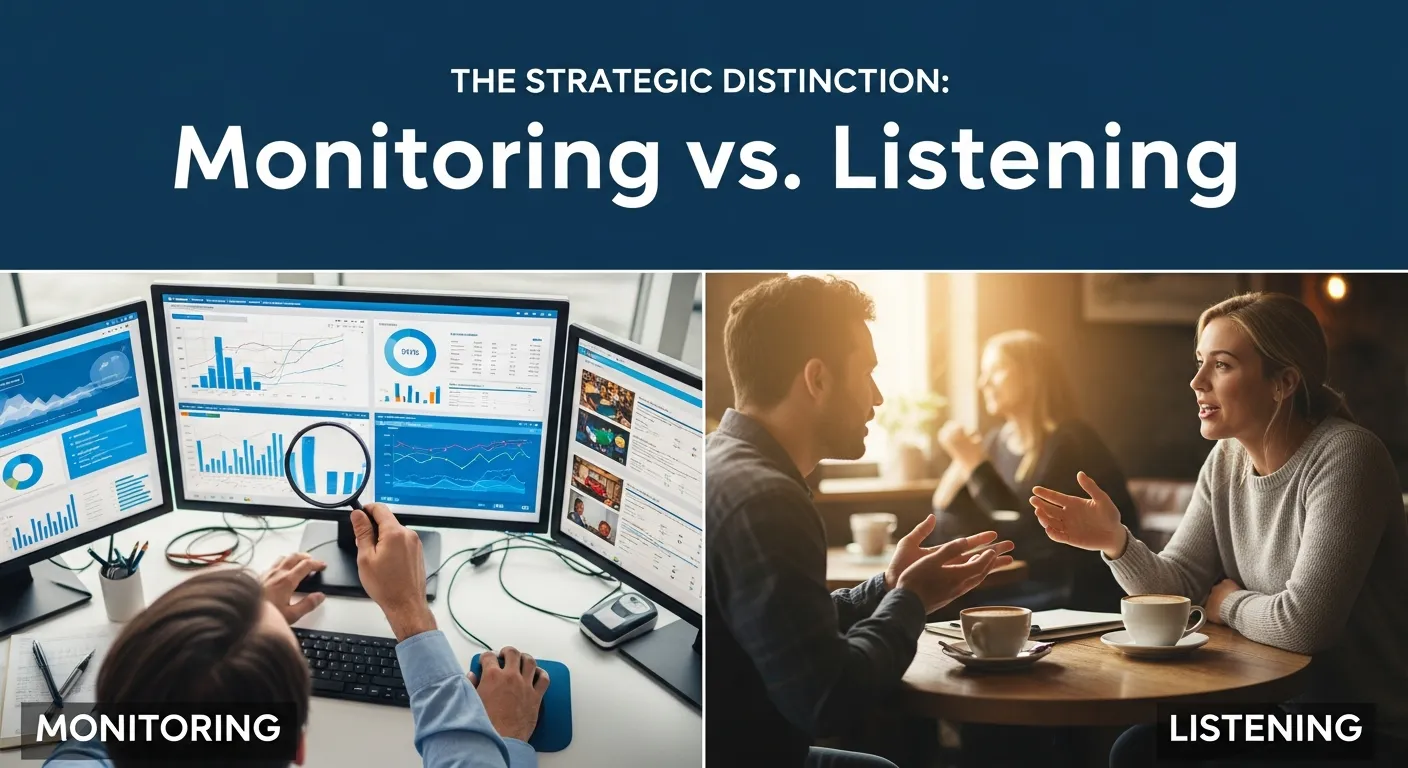
To effectively use social listening as a brand strategy tool, you must first understand how it differs from social monitoring. These terms are often used interchangeably, but they serve very different functions in a marketing ecosystem.
- Social Monitoring (Reactive): This is about customer service and reputation management. It involves tracking mentions of your brand to respond to individual comments, answer questions, or resolve complaints. It is micro-focused. If a customer tweets that their order is late, monitoring ensures you reply and fix it.
- Social Listening (Proactive): This is about analyzing the bigger picture. It involves aggregating those individual mentions to find trends. If 500 customers tweet that their orders are late, listening tells you that you have a logistics problem that threatens your brand equity.
Why the Shift Matters
If you stay stuck in monitoring, you are always fighting fires. You are reacting to what has already happened. By elevating your approach to social listening as a brand strategy tool, you become an architect of your brand’s future. You move from “How do I answer this tweet?” to “How does this conversation change our Q4 marketing strategy?”
Key Components of Strategic Listening
- Sentiment Analysis: Going beyond the volume of mentions to understand the emotion behind them. Is the chatter positive, negative, or neutral? High volume with negative sentiment is a crisis; high volume with positive sentiment is a viral opportunity.
- Share of Voice (SOV): Understanding how much of the industry conversation you own compared to your competitors.
- Trend Tracking: Identifying emerging topics and hashtags before they peak, allowing for trend marketing and newsjacking.
2. Competitive Intelligence: Spying Without the Espionage

One of the most powerful applications of social listening as a brand strategy tool is competitive analysis. Your competitors are likely making moves, launching campaigns, and facing backlash that you can learn from without spending a dime.
analyzing Competitor Weaknesses
Social listening allows you to filter conversations about your competitors to find their “Achilles’ heel.” Look for negative sentiment keywords associated with their brand.
- Example: If you are a project management software company, you might set up listening streams for your top competitor + keywords like “glitch,” “slow,” “expensive,” or “support.” If you notice a spike in complaints about their recent price hike, you have a strategic opening. You can launch a campaign highlighting your value-based brand pricing or offer a special discount for switchers.
Identifying Content Gaps
By monitoring what content your competitors share and—more importantly—how the audience reacts to it, you can identify gaps in the market. Maybe your competitor is posting generic “how-to” guides, but the audience is asking complex technical questions in the comments. This signals a need for thought leadership content or deep-dive whitepapers, which you can provide.
Benchmarking Brand Health
How does your brand perception in marketing compare to the market leader? Social listening tools can visualize this data side-by-side. If your competitor’s sentiment score is 80% positive and yours is only 50%, you know you have a brand health issue to address, regardless of your sales numbers.
Actionable Tip: Use tools like SEMrush or Ahrefs to cross-reference social listening data with search intent data. If social chatter about a competitor’s new feature correlates with a spike in search traffic for that feature, you know it’s a high-priority trend to address.
3. Product Development: Co-Creating with Your Audience

The traditional product development cycle is slow and risky. Brands spend months building something they think people want, only to launch it to silence. Social listening as a brand strategy tool de-risks this process by integrating customer feedback into the very beginning of the innovation cycle.
Uncovering Unmet Needs
Customers are constantly sharing their pain points online. They might not be tagging your brand, but they are complaining about the problem your product solves.
- Scenario: A skincare brand notices a rising conversation on Reddit and TikTok about “skin barrier repair” and “redness.” People are tired of harsh exfoliants.
- Strategy: Instead of launching another acid peel, the brand pivots to develop a soothing ceramide serum. They use the exact language found in social posts—”barrier repair,” “calming,” “gentle”—in their marketing copy. This is consumer brand marketing at its finest.
Validating Features Before Launch
Before investing in expensive engineering or manufacturing, use social listening to validate demand. You can analyze reactions to rumors, competitor launches, or even run “soft” tests by posting questions to your community. If the excitement isn’t there, you save millions by pivoting early.
Detecting Product Flaws
Sometimes, customers discover use cases or flaws that your QA team missed. Social listening acts as an early warning system. If users start posting photos of your product breaking in a specific way, you can initiate a recall or fix the manufacturing process before it becomes a PR disaster.
Case Study: When Nintendo launched the Switch, they closely monitored social media for feedback. Issues like “Joy-Con drift” surfaced quickly in community discussions. While it became a significant issue, early listening allowed them to understand the scale of the problem and eventually offer repairs, managing the brand resilience strategy.
4. Content Strategy: Fueling the Content Engine
“What should we post today?” is the most common and frustrating question in marketing. When you use social listening as a brand strategy tool, you never run out of ideas because your audience writes your content calendar for you.
Identifying the “Voice of the Customer” (VoC)
Your content resonates most when it speaks the language of your audience. Social listening captures the exact vernacular, slang, and phrasing your customers use.
- Application: If you sell B2B software and your audience keeps using the phrase “bandwidth constraints” rather than “time management,” update your landing pages and ad copy to match. This alignment improves conversion rates and brand authenticity.
Finding Micro-Influencers and Brand Advocates
Social listening helps you identify who is already talking about you. These aren’t just celebrities; they are micro-influencers and super fans who have high trust within niche communities.
- Strategy: Instead of paying a generic influencer with millions of followers, reach out to the customer who posted a passionate 5-minute video review of your product to their 5,000 followers. Partnering with them for user-generated content (UGC) or influencer marketing campaigns often yields a higher ROI because the endorsement is genuine.
Riding the Wave of Cultural Relevance
Brands often struggle with nostalgia in digital branding or jumping on memes. It can feel forced. Listening helps you identify which cultural moments your audience actually cares about.
- Example: If your listening data shows your audience is heavily engaging with a specific reality TV show finale or a viral TikTok sound, you have permission to participate. If they are ignoring it, you stay away. This ensures your brand voice remains authentic and you avoid the “cringe” factor.
5. Crisis Management: The Early Warning System

In the age of cancel culture and viral outrage, a brand crisis can escalate from a single tweet to a global news story in hours. Social listening as a brand strategy tool is your fire alarm.
Detecting Abnormal Sentiment Spikes
Set up alerts for spikes in negative sentiment or specific keywords like “scam,” “boycott,” “insensitive,” or “apology.” A sudden jump in these terms is a signal to investigate immediately.
Understanding the Context
Not all negative comments require a press release. Listening helps you gauge the severity. Is it just a few trolls, or is it your core customer base that is angry? Is the anger directed at a product flaw, a CEO’s statement, or a misunderstood ad?
- Action: If the data shows confusion is driving the negativity, your strategy is clarification. If the data shows genuine hurt or anger, your strategy is apology and remediation.
Monitoring the Recovery
After a crisis, social listening tracks how well your response landed. Did the negative sentiment subside? Are people accepting your apology? This data is crucial for knowing when to return to business-as-usual marketing or when to keep a low profile. This is essential for brand crisis management in the social media era.
6. Enhancing Customer Experience (CX) and Retention

Acquiring a new customer is five times more expensive than retaining an existing one. Social listening as a brand strategy tool plays a pivotal role in customer journey mapping and retention.
Identifying Friction Points
Customers often complain about the purchase process, shipping times, or confusing website navigation on social media rather than sending a formal support ticket.
- Insight: You notice a trend of tweets saying, “I love the product, but the checkout process was a nightmare.”
- Action: You immediately audit your UX design and streamline the checkout. This removes a barrier to purchase and improves the overall user experience and branding.
Surprise and Delight
Listening allows for proactive customer care. If a customer posts, “I wish I could afford these shoes for my birthday,” and a brand intervenes to gift them, that moment creates a lifelong loyalist and viral positive sentiment. This strategy builds emotional branding and deepens brand loyalty.
Building Brand Communities
By listening to the topics that bond your audience together, you can foster a brand community. If you see your customers connecting over shared values like sustainability or outdoor adventure, you can create spaces (Facebook groups, events, hashtags) for them to congregate. This strengthens brand communities and turns customers into advocates.
7. Informing B2B Strategy: Listening for Leads
While often associated with B2C, social listening as a brand strategy tool is equally powerful for B2B.
Social Selling
Monitor conversations where people ask for recommendations. “Can anyone recommend a good CRM?” is a buying signal.
- Strategy: Engage helpfully (not just pitching) or have a brand advocate chime in. This is social selling 101.
Tracking Industry Trends
For B2B brands, thought leadership is currency. Listening to industry conversations on LinkedIn and Twitter helps you identify the “hot topics” executives are worrying about. Producing white papers or webinars addressing these specific concerns positions your brand as a strategic partner. This is vital for B2B brand differentiation.
8. Choosing the Right Tools and Metrics

To execute social listening as a brand strategy tool, you need the right technology stack. Free tools like Google Alerts are insufficient for strategic analysis.
Top Social Listening Tools
- Brandwatch: Enterprise-level depth with powerful historical data analysis.
- Sprout Social: Excellent for integrating listening with publishing and engagement.
- Mention: Good for real-time monitoring across the web, not just social.
- Talkwalker: Strong visual recognition capabilities (analyzing logos in images).
- BuzzSumo: Great for content analysis and identifying key influencers.
Metrics That Matter
Don’t get distracted by vanity metrics like “total likes.” Focus on strategic metrics:
- Share of Voice (SOV): Your brand’s dominance in the conversation.
- Net Sentiment Score: The ratio of positive to negative mentions.
- Conversation Volume Trend: Is interest in your brand growing or shrinking over time?
- Theme Analysis: Which topics are most frequently associated with your brand? (e.g., is your brand associated with “innovation” or “reliability”?)
9. Integrating Listening into the Marketing Mix
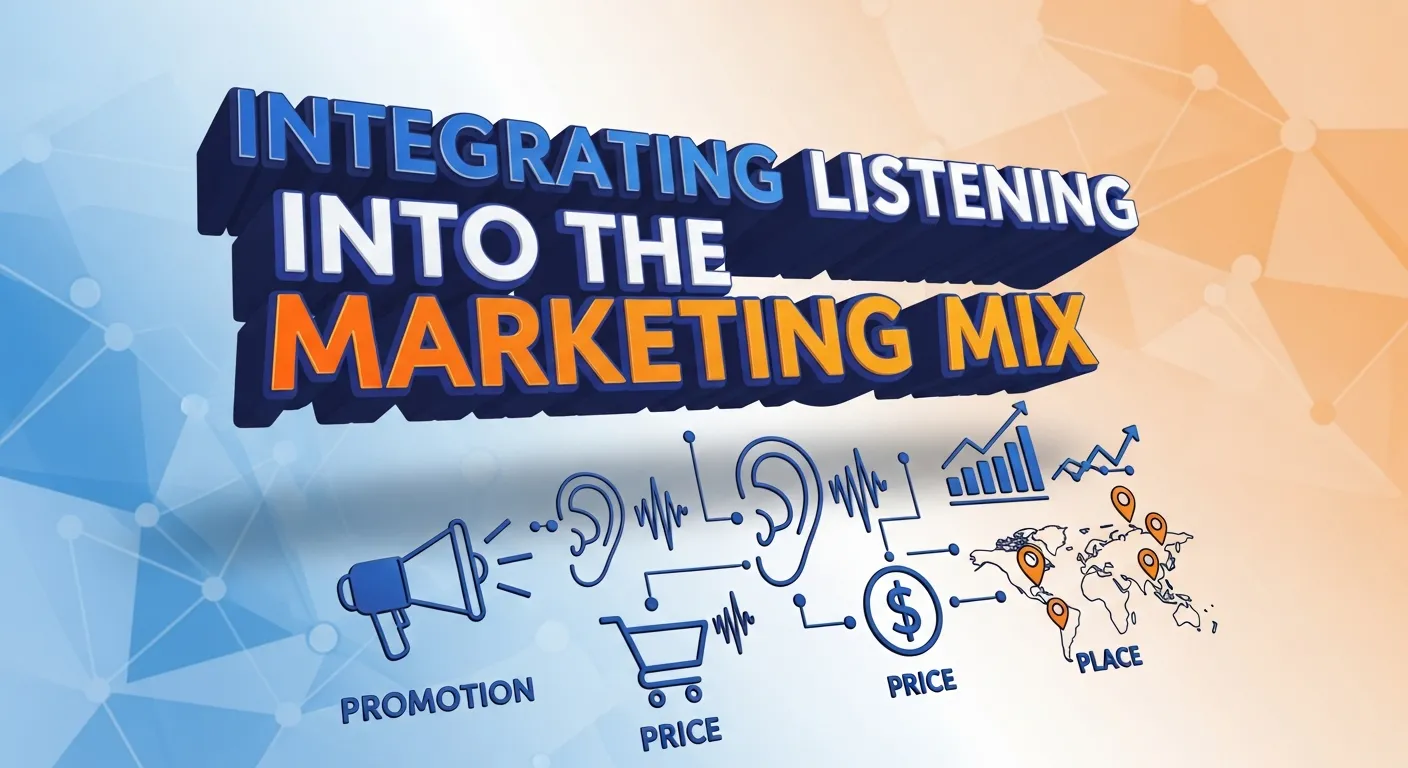
Social listening as a brand strategy tool should not live in a silo. It must inform every aspect of your integrated marketing plan.
- SEO: Use social queries to inform keyword research. The questions people ask on social media are the questions they type into Google.
- Paid Media: Use listening to define audience segments. If you find a sub-segment of gamers loves your snack brand, target them with specific ads.
- PR: Use listening to measure the impact of press hits. Did that TechCrunch article actually drive conversation?
Conclusion
In a noisy digital world, the brands that win are the ones that listen best. Social listening as a brand strategy tool is no longer optional; it is the foundation of customer-centricity. It transforms the chaotic roar of the internet into a clear signal, guiding your product roadmap, your content calendar, and your crisis response.
By converting insights into action, you move beyond guessing what your audience wants to knowing exactly what they need. You build a brand that is responsive, relevant, and resilient. Start listening today, because your customers are already talking—and they are giving you the answers to the test.
Frequently Asked Questions (FAQs)
1. What is the difference between social listening and social monitoring?
Social monitoring is reactive; it involves tracking mentions to respond to individual customer service issues or comments. Social listening as a brand strategy tool is proactive; it involves analyzing aggregated data from those conversations to identify trends, sentiment, and insights that inform broader business strategies like product development or campaign planning.
2. Can social listening help with SEO?
Yes, absolutely. Social listening reveals the exact language, questions, and keywords your audience uses when discussing your industry. You can incorporate these “long-tail” phrases into your website content and blog posts to better align with user intent, effectively boosting your SEO optimization.
3. Is social listening useful for B2B brands?
Social listening is critical for B2B. It helps identifying industry trends on platforms like LinkedIn, monitoring competitor product launches, and finding “buying signals” where prospects ask for software or service recommendations. It is a powerful tool for B2B brand differentiation and thought leadership.
4. How does social listening improve crisis management?
It acts as an early warning system. By monitoring sentiment spikes, you can detect a potential PR crisis (like a negative viral tweet) before it spreads to mainstream news. This allows you to prepare a response or intervene early to mitigate damage to your brand reputation.
5. What are the best tools for social listening?
Popular tools include Brandwatch, Sprout Social, Hootsuite, Talkwalker, and Mention. The best tool depends on your budget and needs—whether you need deep enterprise analytics (Brandwatch) or integrated social management (Sprout Social).
6. How often should I review social listening data?
For brand health and crisis detection, monitoring should be daily (or real-time via alerts). For strategic insights like content planning or competitor analysis, a weekly or monthly deep-dive report is typically sufficient to spot meaningful trends without getting lost in the noise.
7. Can social listening help product development?
Yes. By analyzing customer complaints and feature requests—both for your brand and your competitors—you can identify unmet needs. This data helps prioritize your product roadmap, ensuring you build features that the market actually wants, reducing the risk of a failed launch.
8. What is sentiment analysis in social listening?
Sentiment analysis uses Natural Language Processing (NLP) and AI to categorize online mentions as positive, negative, or neutral. It helps brands understand not just how much people are talking about them, but how they feel about the brand, providing a qualitative measure of brand health.
9. How do I measure the ROI of social listening?
ROI is measured by the outcomes of the actions taken. For example: Did you avoid a costly PR crisis? Did a new content strategy based on listening data increase engagement? Did a product fix derived from feedback reduce customer churn? These tangible business results demonstrate the value of the tool.
10. Can social listening track competitors?
Yes, this is one of its primary uses. You can set up “listeners” for competitor brand names, products, and hashtags. This allows you to benchmark your share of voice, learn from their mistakes, and capitalize on their dissatisfied customers.