Business Model Strategy: Build a Sustainable and Profitable Business
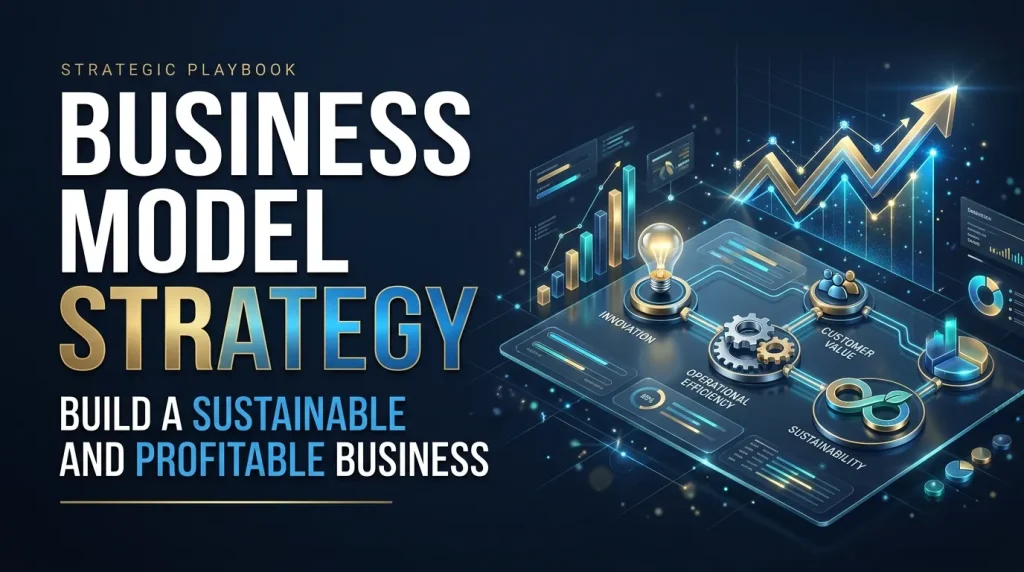
Business Model Strategy helps companies create customer value, generate sustainable revenue, and establish a clear path toward long-term growth. By aligning business model development, revenue optimization, operational efficiency, and value proposition strategy, organizations can improve profitability and respond more effectively to market changes. Regular business model analysis also helps identify opportunities for innovation, transformation, and sustainable competitive positioning.
A successful business needs more than a good product or an attractive service. It needs a clear understanding of how it creates value for customers, delivers that value effectively, and generates enough revenue to support long-term growth. A well-defined Business Model Strategy connects these elements and helps a company make informed decisions about its operations, market position, and future direction.
Businesses operate in changing environments shaped by customer expectations, competition, technology, and economic conditions. A model that performs well today may become less effective when customer needs change or new competitors introduce better alternatives. Without a clear strategy, businesses can struggle to identify profitable opportunities, control operating costs, and maintain a meaningful position in the market.
Business Model Strategy provides a framework for understanding how the different parts of a business work together. It considers the target audience, value proposition, revenue sources, cost structure, distribution channels, and relationships that support business performance. By aligning these elements with long-term objectives, companies can improve profitability, strengthen customer relationships, and identify opportunities for sustainable growth.
Whether a business is launching a new venture, expanding into another market, or improving an established operation, a thoughtful approach to its business model helps turn strategic ideas into practical commercial outcomes.
Understanding Business Model Strategy
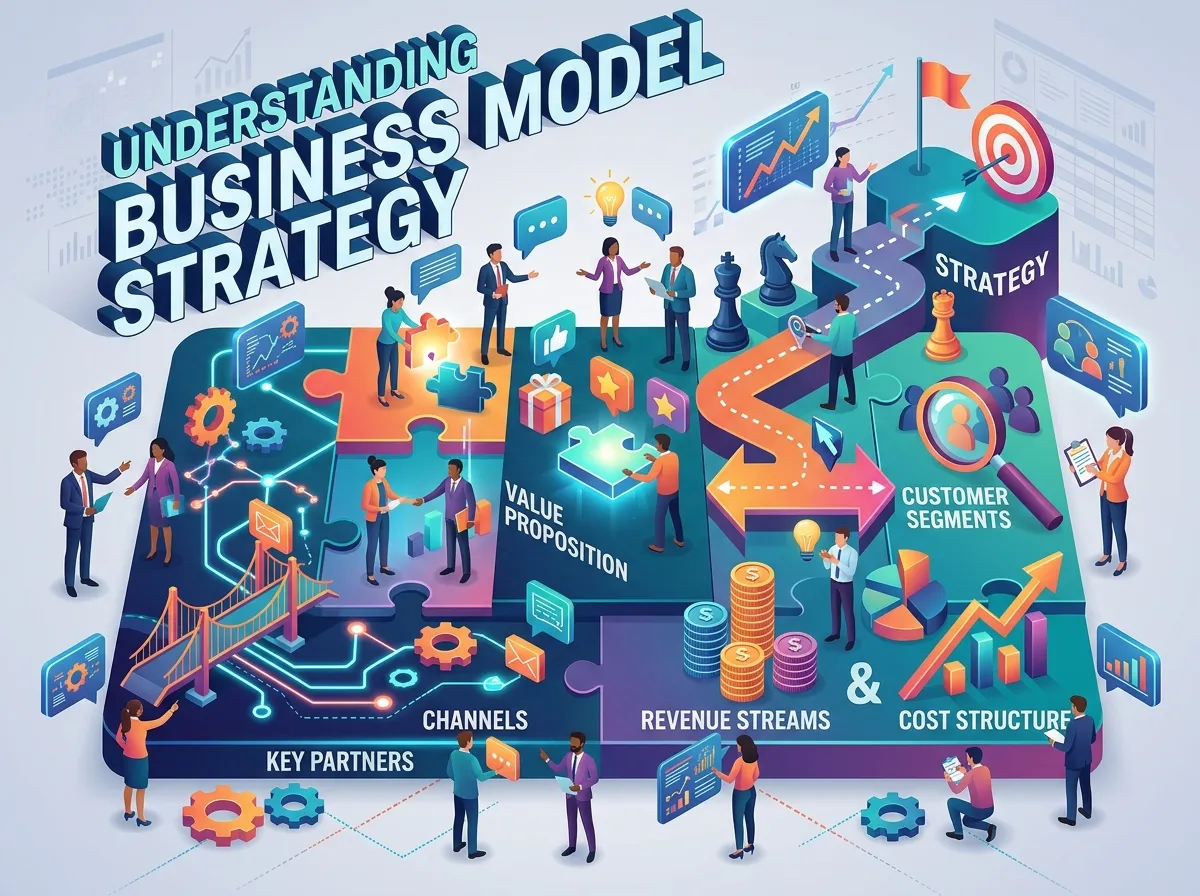
Business Model Strategy describes how a company organizes its resources and activities to create, deliver, and capture value. It connects what the business offers with the customers it serves, the channels it uses, and the financial structure that supports its operations.
For example, a software company might generate revenue through monthly subscriptions, while a consulting firm may charge for projects or ongoing advisory services. A retailer may depend on product sales, whereas a digital marketplace might earn commissions from transactions between buyers and sellers. Each model creates value differently and requires a different approach to customer acquisition, service delivery, pricing, and cost management.
A strong strategy considers these relationships as a complete system rather than treating each business decision independently. A company may attract many customers but still struggle if its delivery costs are too high. Another business may offer an excellent product but fail to grow because its pricing does not reflect the value customers receive.
The purpose of Business Model Strategy is to establish a commercially viable structure that supports the company’s goals and responds to market realities. It gives decision-makers a clearer view of how revenue, customer value, resources, and operational activities influence one another.
Business Model Development and Strategic Direction
Business Model Development involves shaping the fundamental structure of a business around a defined market opportunity. It begins with understanding the problem customers need to solve and determining whether the business can provide a valuable, practical, and financially sustainable solution.
Market research plays an important role in this process. Customer interviews, industry information, competitor analysis, and purchasing behavior can help reveal unmet needs and expectations. These insights allow businesses to assess whether their proposed offering addresses a meaningful problem or simply adds another option to an already crowded market.
Business development also requires an understanding of the company’s capabilities. A business may identify strong demand for a service but lack the technology, expertise, distribution network, or financial resources to deliver it effectively. Recognizing these limitations early can help decision-makers refine the model before making substantial investments.
As the business develops, its operating structure must support the intended customer experience. This includes decisions about suppliers, staffing, technology, service delivery, and customer support. When these elements work together, the business is better positioned to deliver consistent value while managing costs.
A clear development process also gives businesses room to test assumptions. Early customer feedback and small-scale trials can reveal whether the proposed pricing, offering, and delivery method work as expected. This makes business development a process of informed refinement rather than relying entirely on initial assumptions.
Business Strategy Planning and Competitive Positioning
Business Strategy Planning connects a company’s business model with its wider objectives. It helps leaders determine where the company intends to compete, which customers it wants to serve, and how it will create a meaningful advantage over alternatives in the market.
Strategic planning requires an understanding of the competitive environment. Businesses need to consider customer expectations, market demand, industry trends, competitor strengths, and changes that could affect their operations. These factors influence decisions about pricing, product development, distribution, partnerships, and investment priorities.
Competitive positioning is particularly important when customers have several similar options. A business may distinguish itself through specialized expertise, convenience, service quality, affordability, innovation, or a particularly strong customer experience. However, its chosen position must be supported by the actual business model. Promising premium service without the resources to deliver it can weaken customer trust and increase operating pressure.
Companies can gain additional perspective by examining Brand Benchmarking. Comparing relevant brand and market characteristics can help a business understand how it is positioned against competitors and where its strengths or weaknesses may influence customer decisions.
Effective planning turns this information into a coherent direction. Instead of pursuing every available opportunity, the business can prioritize activities that align with its capabilities, customer needs, and financial objectives.
Business Model Innovation in Changing Markets
Business Model Innovation occurs when a company changes how it creates, delivers, or captures value. Innovation does not always require inventing a new product. Sometimes, a more effective revenue structure, distribution method, partnership, or customer experience can create a significant difference.
Subscription services illustrate this concept. A company that traditionally sells individual products might introduce a recurring service that provides continued access, maintenance, or updates. A manufacturer could develop direct-to-customer sales channels, reducing its dependence on intermediaries. A professional service provider might combine consulting with digital resources to reach more customers without increasing costs at the same rate.
These changes can create new opportunities, but innovation should be based on customer demand and operational feasibility. A new model may require additional technology, staff training, investment, or changes to existing customer relationships. Businesses should evaluate whether the expected benefits justify these costs and whether the organization can manage the transition.
Innovation also requires attention to changing market conditions. Digital platforms, automation, new customer expectations, and emerging competitors can influence how value is delivered. Businesses that regularly evaluate their models are better positioned to recognize opportunities before their existing approach becomes less effective.
The most successful innovation usually strengthens the connection between customer value and commercial performance. It gives customers a useful reason to choose the business while creating a structure that can support continued investment and growth.
Revenue Model Optimization and Financial Performance
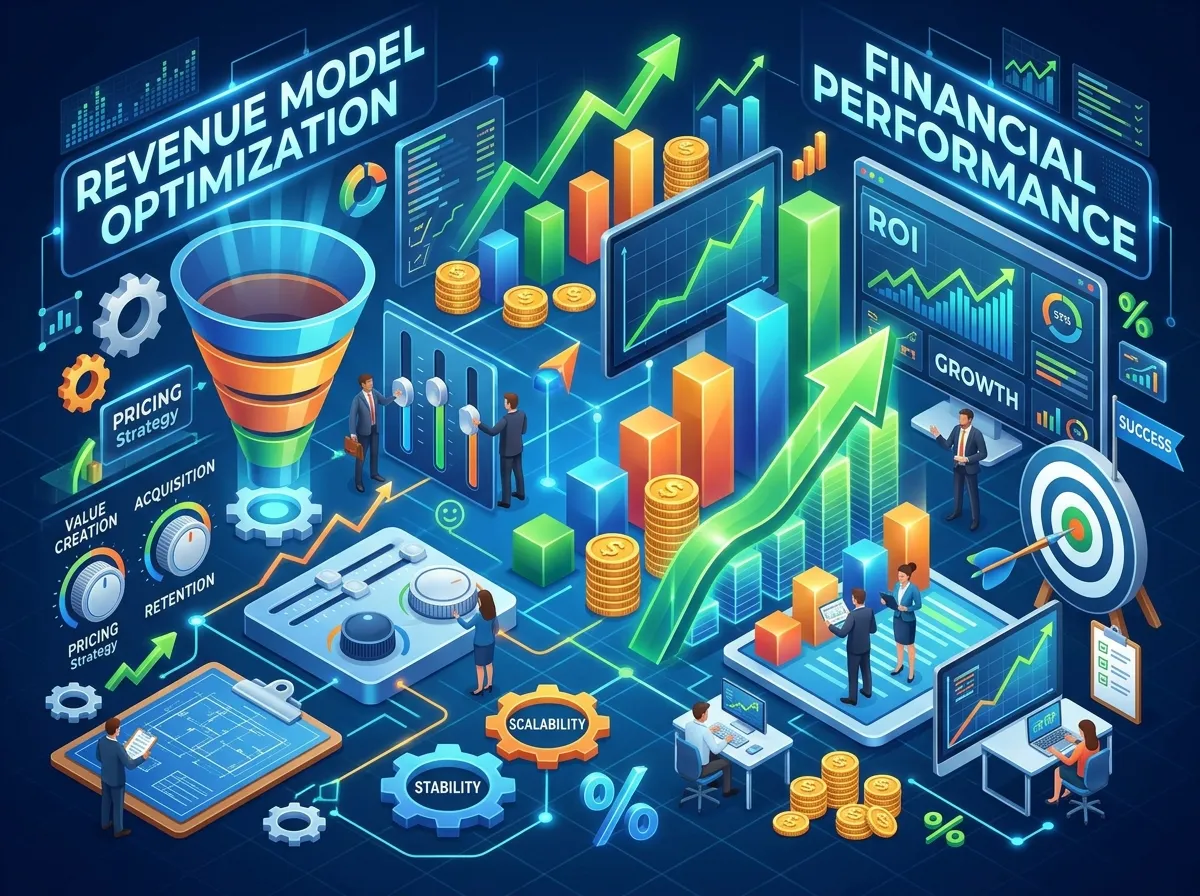
Revenue Model Optimization focuses on improving how a business earns income from its products, services, and customer relationships. It involves evaluating pricing, payment structures, revenue streams, and the relationship between sales volume and profitability.
A business may earn revenue through one-time transactions, subscriptions, licensing, commissions, service contracts, advertising, or a combination of several methods. The right structure depends on the value offered, customer purchasing preferences, industry conditions, and the cost of delivering the product or service.
For example, a subscription model may provide more predictable recurring revenue, but it also requires the company to maintain customer satisfaction and reduce cancellations. A project-based business may generate substantial income from individual contracts, yet experience uneven cash flow when projects are delayed. Understanding these differences helps companies choose a structure that fits their operations.
Pricing should also reflect customer expectations and the value delivered. Setting prices too low may attract customers but leave insufficient room to cover costs and invest in improvement. Excessively high prices can reduce demand if customers do not understand the benefits or perceive adequate value.
Revenue optimization therefore involves more than increasing prices or selling more products. Businesses need to understand customer lifetime value, acquisition costs, profit margins, repeat purchases, and the stability of different revenue sources. These insights can help leaders determine which opportunities contribute to sustainable financial performance.
Business Model Design and Operational Efficiency
Business Model Design defines how the major components of a business fit together. It includes the value offered to customers, target market, key activities, resources, partners, channels, cost structure, and revenue streams.
A well-designed model creates a logical connection between the customer promise and the company’s ability to fulfill it. For example, a business that competes on speed needs reliable processes, suitable technology, and a delivery system that supports quick service. A company focused on customization may require more specialized staff and flexible production capabilities.
Operational efficiency is essential because even strong demand cannot guarantee profitability if the business model consumes too many resources. Companies should understand which activities create the most value and which generate unnecessary complexity. Improving workflows, simplifying service delivery, and selecting suitable technology can reduce costs without compromising quality.
Partnerships may also influence business model design. Working with suppliers, distributors, technology providers, or specialist service companies can give a business access to capabilities it would be expensive to develop independently. However, these relationships should be evaluated for reliability, cost, risk, and alignment with customer expectations.
The strongest designs balance commercial ambition with operational reality. They provide enough flexibility to respond to changing needs while maintaining the systems and resources required to deliver consistent results.
Sustainable Business Models and Long-Term Value
Sustainable Business Models are designed to support continued business performance while considering long-term economic, environmental, and social responsibilities. Sustainability in this context goes beyond short-term profit. It includes the ability to operate reliably, adapt to change, maintain stakeholder trust, and use resources responsibly.
Financial sustainability remains a central consideration. A business needs sufficient revenue, manageable costs, and appropriate cash flow to fund daily operations and future development. Rapid growth without a viable financial structure can create pressure when expenses rise faster than income.
Environmental and social factors may also affect long-term performance. Responsible sourcing, efficient resource use, fair business practices, and reliable working conditions can help reduce risks and strengthen relationships with customers, employees, suppliers, and communities. The relevance of each factor depends on the industry and the company’s activities.
A sustainable model should also be resilient. Overdependence on a single customer, supplier, sales channel, or revenue source can expose a business to unexpected disruption. Diversification and contingency planning may improve its ability to respond when market conditions change.
Long-term sustainability does not mean avoiding risk or innovation. Instead, it means evaluating opportunities with a broader understanding of their costs, benefits, and consequences. This perspective can help businesses make decisions that support lasting value rather than temporary gains.
Business Model Analysis and Informed Decisions
Business Model Analysis helps companies evaluate whether their existing structure is meeting its objectives. It examines the relationships between customer demand, operating costs, revenue generation, competitive position, and business capabilities.
Financial performance provides an important starting point. Revenue growth, gross margins, operating expenses, cash flow, customer acquisition costs, and customer retention can reveal strengths and weaknesses in the model. However, financial figures should be interpreted alongside customer feedback and operational information.
For instance, rising revenue accompanied by declining margins may indicate that growth is becoming more expensive. Strong website traffic but limited sales could suggest a mismatch between the value proposition, customer expectations, pricing, or conversion process. Frequent customer complaints may reveal problems in service delivery rather than weaknesses in demand.
Customer perception is another valuable source of insight. Understanding how customers view the business can reveal whether its actual experience matches its intended position. Companies can explore Customer Perception to learn more about how customer beliefs and experiences influence brand evaluation and business decisions.
Analysis should lead to practical decisions. Depending on the findings, a company might refine its pricing, simplify operations, strengthen customer support, introduce a new revenue stream, or focus on a more suitable customer segment. Regular evaluation helps ensure that the model continues to support the company’s objectives.
Value Proposition Strategy and Customer Expectations
A Value Proposition Strategy explains why customers should choose a business instead of competing alternatives. It identifies the main problem the company solves, the benefits customers receive, and the characteristics that make the offering valuable.
A compelling value proposition must be relevant to the target audience. Customers may prioritize affordability, convenience, reliability, expertise, personalization, or speed depending on their circumstances. Understanding these priorities helps a business shape an offering that addresses meaningful needs.
The value proposition must also be reflected in the business model. If a company promises convenience, its purchasing and delivery processes should make transactions easier. If it emphasizes expert service, the organization needs the knowledge and resources to provide that expertise. A disconnect between the promise and the actual experience can damage credibility.
Customer perception can influence how value is interpreted. Two businesses may offer similar services, yet customers may view one as more dependable or convenient because of its communication, service quality, or reputation. Businesses should therefore consider both the practical benefits of their offerings and the experiences that shape customer judgments.
A clear value proposition also helps guide investment decisions. When the company understands which benefits matter most to customers, it can prioritize product features, service improvements, and communication that reinforce its position. This alignment makes the business model more focused and easier for customers to understand.
Business Growth Planning and Business Model Transformation

Business Growth Planning considers how a company can expand without weakening the financial and operational foundations that support it. Growth may involve entering new markets, reaching additional customer segments, expanding product offerings, forming partnerships, or improving sales through existing channels.
Each opportunity should be evaluated against the current business model. Entering a new market may require different pricing, distribution, local expertise, or customer support. Adding a new service could create additional revenue but also introduce operational complexity. Growth planning helps businesses understand these requirements before committing significant resources.
In some cases, expansion requires Business Model Transformation rather than incremental improvement. A company may need to shift from traditional sales to digital distribution, introduce recurring revenue, restructure partnerships, or redesign how customers access its offerings. These changes can open new opportunities, but they also require careful communication, resource planning, and performance monitoring.
Leadership plays a major role in successful transformation. Employees need to understand why the model is changing, how the changes affect their work, and which outcomes the business is trying to achieve. Clear communication helps reduce uncertainty and encourages teams to work toward shared priorities.
Leadership visibility can also influence how customers, employees, and partners interpret major business changes. For organizations where executive reputation forms part of the company’s market presence, Personal Branding for CEOs provides relevant context on communicating leadership credibility and impact.
Sustainable growth depends on balancing ambition with the capacity to deliver. Businesses that evaluate demand, resources, customer expectations, and financial implications can make more informed decisions about when to expand and when to improve their existing operations first.
Conclusion
Business Model Strategy helps organizations understand how they create customer value, generate revenue, organize operations, and pursue long-term growth. By connecting business model development, strategic planning, innovation, financial performance, and customer expectations, companies can create a more coherent foundation for commercial success.
A strong business model is not fixed permanently. It should evolve as markets change, customers develop new needs, and new opportunities emerge. Regular analysis helps businesses identify weaknesses, test new ideas, and determine whether their current structure remains effective.
The goal is to create a model that customers value and the business can deliver profitably and responsibly. When strategy, operations, and customer needs work together, businesses are better equipped to adapt, compete, and build lasting value.
Frequently Asked Questions
1. What is Business Model Strategy?
Business Model Strategy explains how a company creates, delivers, and captures value. It connects the company’s products or services with its target customers, revenue sources, operating activities, resources, and cost structure. A strong strategy helps ensure that the business can meet customer needs while maintaining financial viability.
2. Why is Business Model Strategy important?
Business Model Strategy helps businesses establish a clear direction, understand their competitive position, and make informed decisions about pricing, operations, and growth. It also helps identify weaknesses in revenue generation or service delivery before they become larger problems.
3. What are the key elements of a business model?
Common elements include the value proposition, target customers, distribution channels, customer relationships, revenue streams, cost structure, key resources, key activities, and business partnerships. These components work together to determine how the company delivers value and earns revenue.
4. How does business model innovation support growth?
Business model innovation changes how a company creates, delivers, or captures value. It may involve introducing subscriptions, developing new distribution channels, forming partnerships, or changing pricing structures. When based on customer demand and operational feasibility, innovation can create new revenue opportunities and improve competitiveness.
5. What is revenue model optimization?
Revenue model optimization involves improving how a business earns income through pricing, payment structures, revenue streams, and customer relationships. It considers factors such as profit margins, recurring revenue, customer lifetime value, and acquisition costs to help improve financial performance.
6. How can a business evaluate its current business model?
Businesses can evaluate their models by reviewing financial performance, customer feedback, market conditions, operating costs, sales patterns, and competitive positioning. This analysis helps identify which activities create value, where inefficiencies exist, and what changes may improve performance.
7. What makes a business model sustainable?
A sustainable business model supports long-term financial viability while managing operational, environmental, and social considerations relevant to the business. It relies on a workable revenue structure, responsible resource use, customer value, and the ability to adapt to changing market conditions.
8. How does a value proposition affect business success?
A value proposition explains why customers should choose a company’s offering over alternatives. When it addresses important customer needs and is supported by the actual product or service experience, it can strengthen differentiation, improve customer understanding, and support customer acquisition and retention.
9. When should a business transform its business model?
A business may need to transform its model when customer expectations change, revenue declines, costs become difficult to manage, competitors introduce more effective alternatives, or new technologies reshape the market. Transformation can also be appropriate when the company identifies a new opportunity that its existing model cannot support effectively.
10. How can Business Model Strategy support long-term growth?
Business Model Strategy supports long-term growth by aligning customer value, revenue generation, operational capabilities, and investment priorities. It helps businesses choose suitable expansion opportunities, improve existing processes, manage risk, and adapt their offerings as market conditions evolve.