Brand Assets: Building & Managing Brand Resources
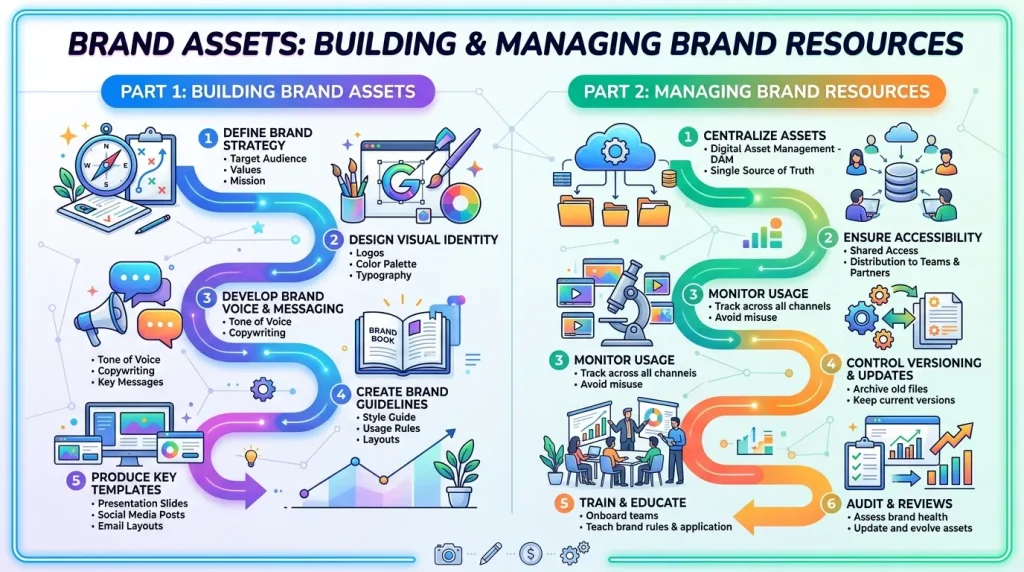
Brand Assets provide the visual, verbal, and creative foundation businesses use to communicate consistently with their audiences. Effective Brand Asset Management, Digital Brand Assets, Brand Identity Assets, and a structured Brand Asset Library can improve consistency, efficiency, and recognition. When assets are connected with brand positioning, purpose, and customer expectations, they become valuable resources for long-term brand development.
Brand Assets are the recognizable elements a business uses to communicate its identity, values, personality, and market presence. They can include logos, colors, typography, photography, illustrations, packaging, videos, templates, messaging resources, and other materials used across customer touchpoints. When these assets are created and managed consistently, they help customers recognize a brand and develop stronger associations with it.
Modern brands often operate across websites, social media platforms, advertising channels, email campaigns, presentations, sales materials, physical locations, and digital marketplaces. Each of these environments may require different creative materials, but the underlying brand identity needs to remain consistent. Effective management of brand resources therefore plays an important role in maintaining recognition and creating a cohesive customer experience.
Brand assets are not limited to visual materials. They can also include verbal identity elements, messaging frameworks, photography styles, campaign concepts, product presentation resources, and other reusable materials. Together, these resources provide businesses with a foundation for communicating consistently as they grow.
Understanding Brand Assets
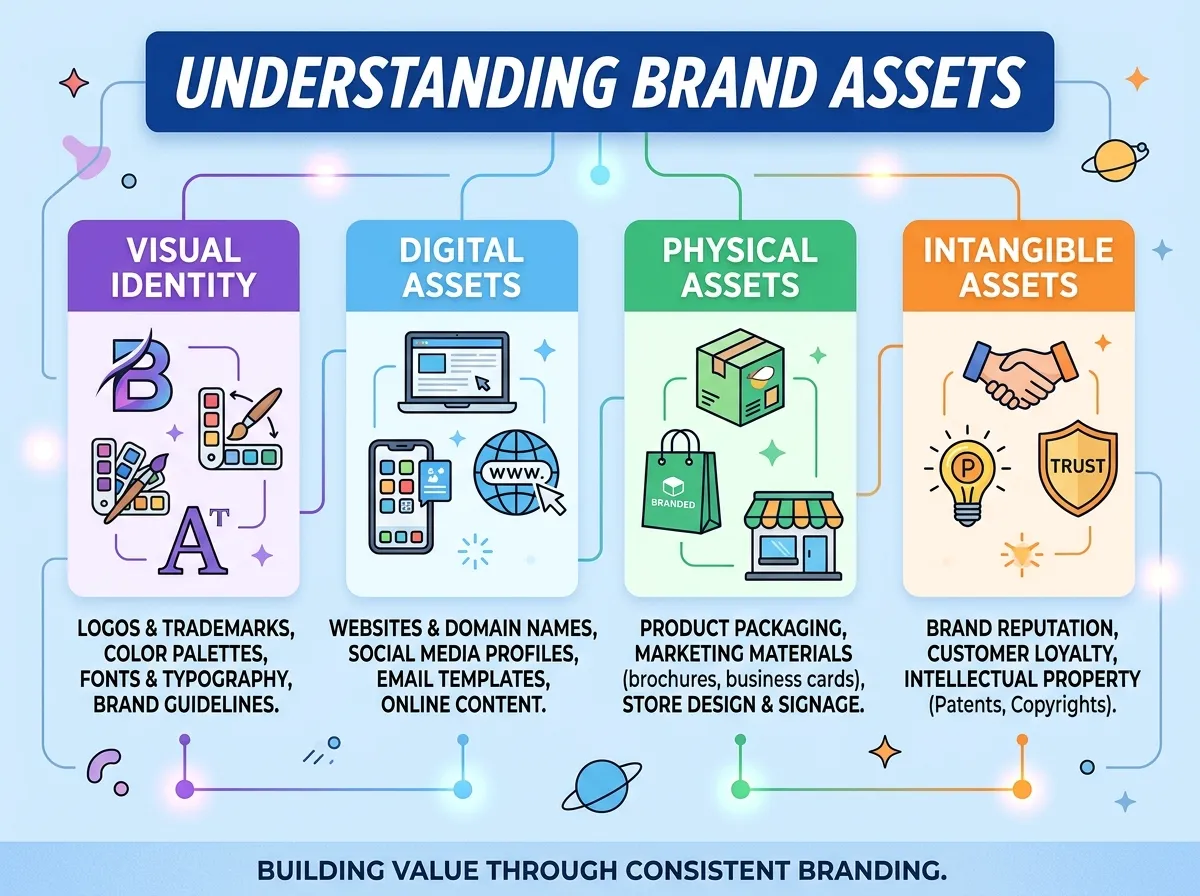
Brand Assets represent the tangible and digital resources that communicate a company’s identity to its audience. A logo may be one of the most recognizable assets, but it is only one part of a broader brand system. Colors, fonts, imagery, icons, packaging, advertising creatives, website components, and communication templates can all contribute to brand recognition.
The value of these assets comes from how consistently and strategically they are used. A single logo does not create a complete brand experience. Customers form impressions through repeated interactions with multiple brand elements, making consistency across these elements increasingly important.
Businesses with well-organized assets can also work more efficiently. Marketing teams, designers, sales teams, agencies, and external partners can access approved resources without repeatedly recreating the same materials. This can save time while reducing the risk of inconsistent branding.
Brand Asset Management
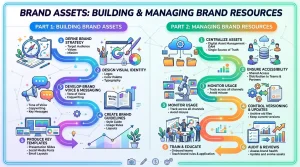
Brand Asset Management refers to the organization, maintenance, distribution, and controlled use of brand resources. It helps businesses keep important files accessible while ensuring that teams are using current and approved versions.
Without effective management, organizations may accumulate duplicate logos, outdated campaign graphics, old product images, incorrect templates, and inconsistent messaging files. These issues can create unnecessary work and may result in different teams presenting the brand in different ways.
A centralized approach makes it easier to identify which assets are current, where they are stored, who can access them, and how they should be used. This becomes increasingly valuable as businesses expand their marketing activities and collaborate with multiple teams or external partners.
Digital Brand Assets and Modern Marketing
Digital Brand Assets have become particularly important as businesses increasingly communicate through online channels. These assets can include website graphics, social media templates, digital advertisements, email designs, videos, animations, downloadable resources, presentation materials, and digital product imagery.
Digital assets often need to be adapted to different platforms. A social media graphic may require different dimensions from a website banner, while an online advertisement may need multiple creative variations for different audiences. Despite these differences, the underlying brand elements should remain recognizable.
The growing number of digital channels makes organized asset management especially useful. Teams can maintain multiple formats of the same core asset while preserving visual and messaging consistency across platforms.
Brand Identity Assets
Brand Identity Assets are the resources that help communicate the distinctive characteristics of a brand. These may include logos, color systems, typography, imagery, iconography, packaging elements, tone of voice, and other components associated with the brand identity.
Strong identity assets make it easier for audiences to recognize a company even when its name is not immediately visible. Consistent colors, visual styles, typography, and design patterns can create familiarity across different customer interactions.
These assets should work together rather than being treated as unrelated creative elements. When identity components support the same positioning and personality, they create a more unified representation of the brand.
A clear Brand Value Proposition can also provide important context for these assets. When the visual and verbal identity reflects the value a brand promises to customers, communications can feel more coherent and purposeful.
Brand Asset Strategy
A Brand Asset Strategy defines how brand resources are created, organized, distributed, and used across different marketing and communication channels. It connects creative assets with broader branding objectives rather than treating design as an isolated activity.
A strong strategy considers the different audiences and touchpoints a business serves. Customer-facing assets may differ from internal resources, while sales teams may need specific presentations and marketing teams may require campaign templates.
The strategy should also account for scalability. As a company grows, the number of assets usually increases. Creating a clear structure from the beginning can make it easier to maintain consistency when additional products, markets, campaigns, or teams are introduced.
Brand Design Assets and Creative Consistency
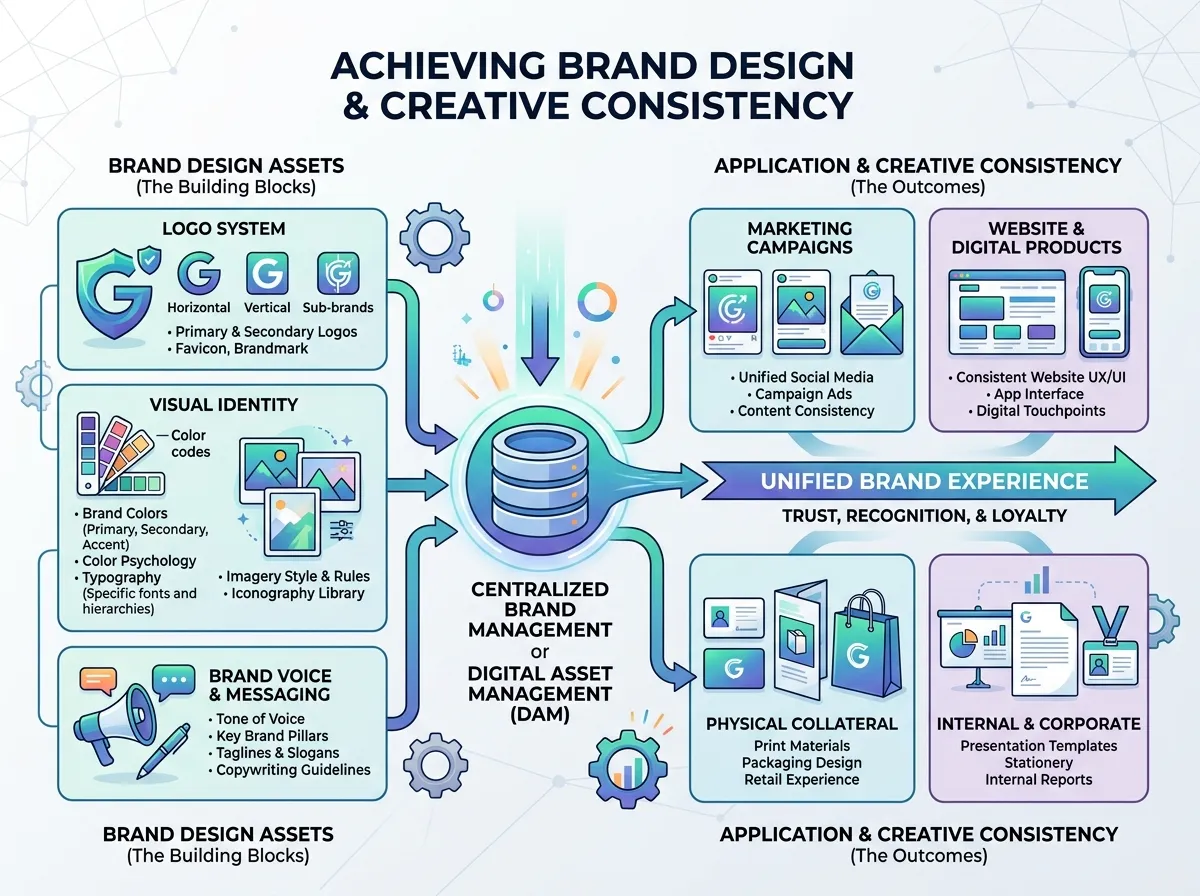
Brand Design Assets include the visual resources used to represent a company across different communication materials. These can include logos, layouts, illustrations, icons, typography systems, packaging designs, presentation templates, and advertising creatives.
Design assets should provide flexibility without losing consistency. A business may need different creative styles for social media, product packaging, websites, presentations, and advertising, but the relationship between these materials should remain clear.
Well-designed assets can also improve production efficiency. Reusable templates and approved design components allow teams to create new materials faster while reducing unnecessary variations.
Brand Visual Assets
Brand Visual Assets are particularly influential because audiences often form immediate impressions from what they see. Photography, illustrations, graphics, colors, typography, videos, and visual layouts can all affect how a brand is perceived.
Consistency in visual assets can help establish recognition across different platforms. For example, a customer who encounters a brand on social media should be able to recognize the same organization when visiting its website or receiving an email.
Visual consistency does not require every communication to look identical. Instead, the assets should share recognizable characteristics that connect them to the broader brand identity.
Brand Marketing Assets
Brand Marketing Assets support promotional and customer-facing activities across the marketing lifecycle. They can include advertisements, social media graphics, email templates, brochures, landing page designs, case studies, sales presentations, videos, product images, and campaign materials.
These assets allow marketing teams to communicate brand messages consistently while adapting content to different audiences and campaigns. They also help businesses maintain continuity between awareness campaigns and later stages of the customer journey.
Marketing assets become especially valuable when multiple teams contribute to campaigns. A centralized collection of approved materials can help ensure that designers, marketers, sales teams, agencies, and other contributors are working from consistent resources.
Brand Asset Guidelines and Consistent Usage
Brand Asset Guidelines provide information about how specific brand resources should be used. They may explain logo placement, acceptable color combinations, typography, image styles, spacing, file formats, messaging approaches, and other brand requirements.
Guidelines help reduce ambiguity when multiple people create content for the same organization. They can be particularly useful when external agencies, freelancers, partners, influencers, or distributors are involved in brand communication.
The purpose of guidelines is not to make every communication identical. Instead, they provide a consistent framework that allows teams to create different types of content while preserving the recognizable characteristics of the brand.
Brand Asset Library
A Brand Asset Library provides a centralized location where approved brand resources can be stored and accessed. It can contain logos, images, videos, templates, campaign materials, product photographs, presentations, documents, and other frequently used assets.
A useful library should make assets easy to find. Clear naming conventions, categories, folders, tags, file previews, and version information can reduce the time employees spend searching for the correct resource.
A library can also help prevent outdated materials from remaining in circulation. When teams know where the official versions are stored, they are less likely to rely on files saved on personal devices or old email attachments.
Brand Resource Management
Brand Resource Management focuses on controlling and maintaining the wider collection of resources that support brand communication. It can involve asset storage, permissions, version control, approval processes, metadata, archiving, and distribution.
Effective resource management becomes increasingly important as a business works across multiple markets or locations. Different teams may require localized assets while still needing to follow the central brand identity.
Brand resource management can also support collaboration with external partners. Providing controlled access to approved materials helps agencies, publishers, event organizers, and other partners use the correct brand resources without giving them unnecessary access to internal files.
Brand Assets and Inclusive Communication
Brand assets should also reflect how businesses want to communicate with diverse audiences. Photography, illustrations, language, representation, and visual choices can influence whether customers feel recognized and included.
An Inclusive Branding approach can influence the development and selection of brand assets by encouraging thoughtful representation across customer-facing communications.
Inclusive asset development should remain connected to authenticity. Representation should reflect genuine brand values and customer understanding rather than being treated simply as a visual trend. When brand assets accurately represent the communities a business serves, communication can feel more relevant and respectful.
Brand Assets and Brand Purpose
Brand assets can also help communicate a company’s broader purpose. Visual identity, messaging, photography, campaigns, and content can reinforce the ideas a brand wants customers to associate with its organization.
A clear connection between assets and purpose can make marketing communications more meaningful. For example, a business that emphasizes sustainability may reflect those values through its photography, packaging, content design, and campaign messaging.
This relationship becomes particularly important when purpose is translated into customer experiences. Content related to Brand Purpose in Action can show how purpose can move beyond messaging and become part of broader brand engagement.
Managing Brand Assets Across Multiple Channels

Businesses rarely communicate through a single channel. Websites, social media, email, advertising, events, sales materials, mobile applications, packaging, and physical locations may all require brand assets.
Each channel has its own technical and creative requirements. A logo may need different file formats, while photographs may require different dimensions and resolutions. Marketing campaigns may also require multiple versions of the same creative.
Centralized management makes these variations easier to control. Teams can maintain channel-specific versions while ensuring that all materials originate from the same approved brand system.
The Business Value of Strong Brand Asset Management
Well-managed brand assets can improve both marketing efficiency and brand consistency. Teams spend less time searching for files, recreating existing materials, or correcting outdated resources. This can make campaign production more efficient and reduce unnecessary creative costs.
Strong asset management can also support brand recognition. When customers repeatedly encounter consistent visual and verbal elements, those elements can become associated with the company and its offerings.
As businesses grow, this consistency becomes increasingly valuable. New employees, agencies, regional teams, and business partners can access the resources they need without having to interpret the brand independently.
Maintaining Brand Assets Over Time
Brand assets should evolve as businesses develop. Changes in products, audiences, market positioning, technology, and visual trends may eventually require updates to existing resources.
However, updates should be managed carefully. Frequent and unnecessary changes can weaken recognition, while outdated assets can make a brand appear disconnected from its current identity.
Regular reviews can help businesses identify outdated materials, duplicate files, unused assets, and resources that no longer reflect the current brand. A structured approach to Building Brand Resilience Strategies can also help organizations adapt their brand resources to changing market conditions while maintaining consistency and recognition over time.
Frequently Asked Questions
1. What are Brand Assets?
Brand Assets are the visual, verbal, and creative resources a business uses to represent its identity. They can include logos, colors, typography, photography, videos, packaging, templates, advertising materials, messaging resources, and other communication elements.
2. What is Brand Asset Management?
Brand Asset Management is the process of organizing, storing, maintaining, distributing, and controlling brand resources. It helps businesses ensure that teams use current and approved assets across different marketing and communication channels.
3. What are Digital Brand Assets?
Digital Brand Assets are brand resources created for online and digital environments. They can include website graphics, social media designs, digital advertisements, email templates, videos, animations, product images, and downloadable marketing materials.
4. Why are Brand Identity Assets important?
Brand Identity Assets help communicate the distinctive characteristics of a business. Consistent logos, colors, typography, imagery, and other identity elements can make a brand easier for customers to recognize across different touchpoints.
5. What is a Brand Asset Strategy?
A Brand Asset Strategy establishes how brand resources should be created, organized, distributed, and used. It connects creative resources with broader brand objectives and helps maintain consistency as marketing activities expand.
6. What are Brand Design Assets?
Brand Design Assets are visual resources used to represent a brand. They can include logos, layouts, illustrations, icons, typography systems, packaging designs, templates, and advertising creatives.
7. What are Brand Visual Assets?
Brand Visual Assets include the imagery and visual components associated with a business. Photography, illustrations, colors, videos, graphics, and visual layouts can all contribute to the way customers recognize and perceive a brand.
8. What are Brand Asset Guidelines?
Brand Asset Guidelines explain how specific brand resources should be used. They can cover logo placement, colors, typography, imagery, spacing, file formats, and other requirements that help maintain consistent brand communication.
9. Why is a Brand Asset Library useful?
A Brand Asset Library provides a centralized location for approved brand resources. It makes files easier to find, supports collaboration, reduces duplication, and helps teams avoid using outdated or incorrect brand materials.
10. What is Brand Resource Management?
Brand Resource Management involves organizing and controlling the broader collection of resources used for brand communication. It can include asset storage, permissions, version control, approvals, metadata, distribution, and archiving.