Brand Archetype Development: Building a Distinctive Brand Personality and Identity
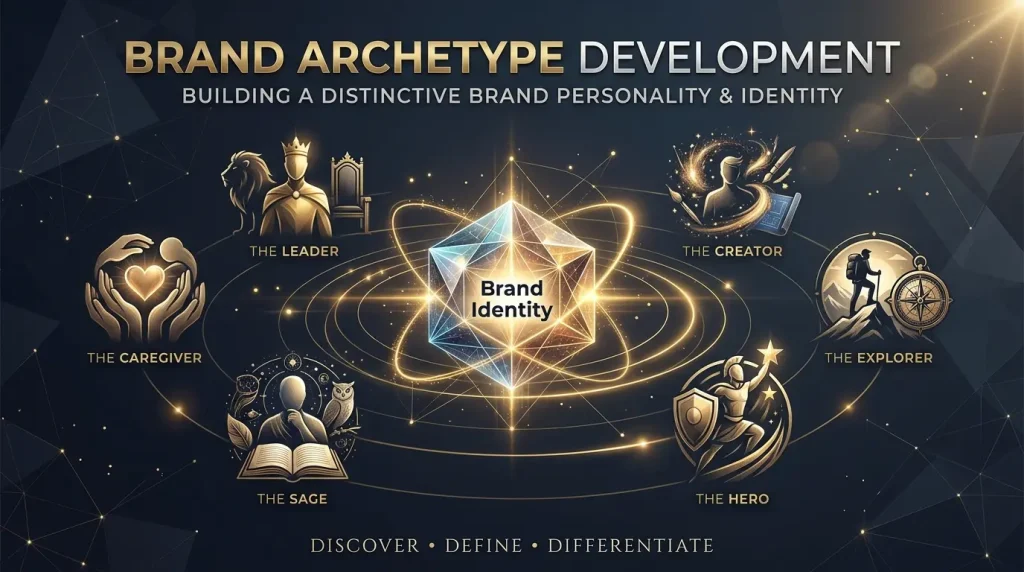
Brand Archetype Development helps businesses establish a recognizable personality through defined values, communication styles, and customer experiences. By connecting archetypes with brand positioning, storytelling, and voice development, organizations can create consistent identities that differentiate them from competitors. A clear archetype framework also strengthens customer perception, supports brand recognition, and provides a foundation for sustainable business growth.
Every successful brand has a personality that influences how people recognize it, understand its values, and connect with its message. Some brands are known for innovation and creativity, while others build their reputation around reliability, leadership, adventure, or emotional connection. These characteristics do not develop accidentally. They are shaped through deliberate decisions about brand identity, communication, positioning, and customer experience. This is where Brand Archetype Development becomes an important part of building a recognizable and memorable brand.
Brand archetypes provide a framework for defining how a business presents itself and what it represents in the minds of its audience. Inspired by recurring human character patterns, archetypes help organizations develop consistent personalities that customers can understand and relate to. They give brands a recognizable identity beyond their products, services, and visual appearance.
For example, a technology company may position itself as an innovator that challenges traditional thinking, while a financial organization might emphasize security, trust, and stability. These differences influence everything from marketing messages and storytelling to customer interactions and visual communication.
However, selecting an archetype is only one part of the process. Businesses must also translate their chosen personality into practical brand decisions. Their messaging, tone, customer experience, and overall positioning should reflect the same character.
A well-developed archetype creates a foundation for consistent communication and meaningful customer relationships. It helps businesses express what makes them different while building an identity that audiences can recognize and remember.
Understanding the Psychology Behind Brand Archetypes
Brand archetypes are recurring personality patterns that help people understand and interpret brands. They draw inspiration from familiar human motivations, characteristics, and behavioral patterns that appear across different cultures and storytelling traditions.
In branding, these patterns make it easier for businesses to communicate an identity without explaining every characteristic directly.
A brand that represents the Hero archetype might focus on achievement, courage, and overcoming challenges. A Caregiver brand may emphasize support, compassion, and customer well-being. Meanwhile, a Creator brand might communicate originality, imagination, and innovation.
These personalities influence how customers interpret a company’s behavior and communication.
A brand does not necessarily need to announce its archetype to the public. Instead, customers recognize its personality through repeated experiences, including advertisements, website content, product design, customer service, and social media communication.
The commonly recognized 12 brand archetypes include:
-
The Innocent: Optimism, simplicity, and honesty.
-
The Explorer: Freedom, discovery, and independence.
-
The Sage: Knowledge, intelligence, and truth.
-
The Hero: Courage, achievement, and determination.
-
The Outlaw: Rebellion, transformation, and challenging conventions.
-
The Magician: Vision, imagination, and transformation.
-
The Everyman: Belonging, accessibility, and familiarity.
-
The Lover: Passion, connection, and appreciation.
-
The Jester: Humor, entertainment, and enjoyment.
-
The Caregiver: Compassion, protection, and support.
-
The Creator: Creativity, originality, and self-expression.
-
The Ruler: Authority, leadership, and control.
Each archetype communicates a different personality, but businesses should avoid selecting one simply because it sounds attractive. The most appropriate choice reflects the organization’s actual values, customer expectations, and long-term positioning.
Brand Personality Development Starts With Business Identity
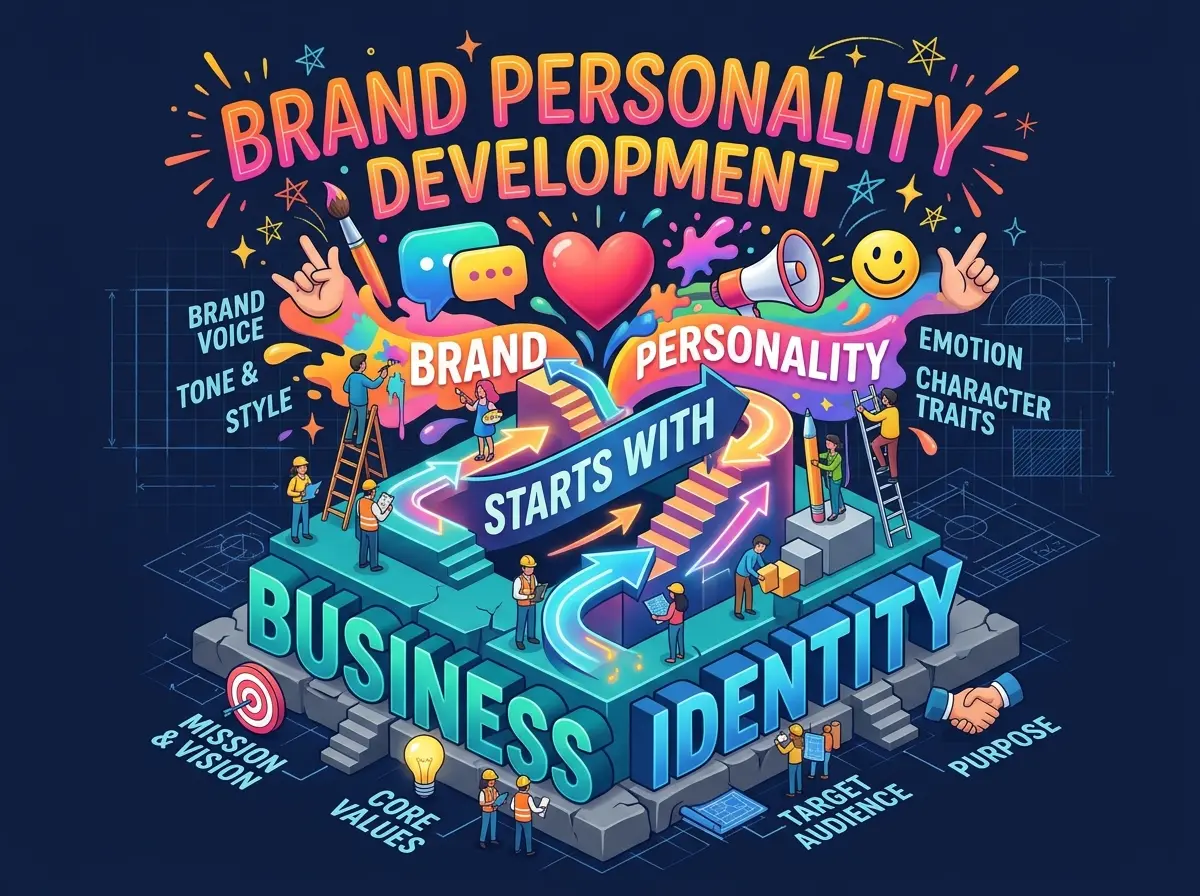
Before choosing a brand archetype, businesses need a clear understanding of their own identity. This includes their purpose, values, market position, and the experience they want customers to associate with their name.
Brand personality development becomes more effective when these elements are considered together.
A company that prioritizes customer education may naturally communicate through knowledgeable, helpful, and informative messaging. A business built around creative solutions might express originality, experimentation, and unconventional thinking.
The important distinction is that personality should emerge from the business rather than being created entirely for promotional purposes.
Consider two companies operating in the same industry. Both may offer similar products, but one could emphasize simplicity and accessibility while the other focuses on innovation and premium experiences. Their brand personalities create different expectations, even when their products serve similar purposes.
Businesses should also consider how employees represent the brand. Customer support teams, sales representatives, and marketing professionals all contribute to the personality customers experience.
When internal behavior reflects external communication, the brand becomes more believable.
A clearly defined personality gives organizations a consistent foundation for decisions about messaging, design, advertising, and customer relationships. It also makes it easier to maintain a recognizable identity as the business expands into new markets.
Choosing an Archetype That Supports Brand Positioning
Selecting an archetype requires an understanding of the relationship between business objectives and customer expectations.
Brand archetype strategy should begin with the question of what the organization wants customers to associate with its identity. Some businesses want to become recognized for expertise, while others aim to create emotional connections, inspire action, or challenge established industry practices.
Market positioning provides important context for this decision.
A financial consulting company might benefit from the Sage archetype because its customers value expertise, accurate information, and informed decision-making. A fitness brand could connect with the Hero archetype through messaging centered on personal achievement and overcoming limitations.
However, the choice should also consider the competitive environment.
If several competitors communicate through similar personalities, adopting an identical approach may make differentiation more difficult. Businesses should identify opportunities to express their values in a distinctive way without losing relevance to their target audience.
This process connects naturally with a broader Brand Marketing Strategy, where positioning, communication, and audience understanding contribute to a stronger market identity.
An archetype should support the company’s long-term direction rather than restrict its ability to grow. Businesses may evolve their messaging as their products, services, and audiences change, but their central personality should remain recognizable.
Defining Brand Character Beyond Visual Appearance
A brand is often recognized through its logo, colors, typography, and other visual elements. Although these components contribute to recognition, they do not fully explain what the brand represents.
Brand character definition focuses on the attitudes, behaviors, and emotional qualities that make an organization recognizable.
For example, a brand might describe itself as confident, approachable, innovative, and dependable. These characteristics provide a foundation for how the organization communicates and interacts with customers.
The same personality should be visible across different touchpoints.
A company that describes itself as approachable should not use unnecessarily complicated language in its customer communication. Similarly, a business that positions itself as an expert should provide accurate information and demonstrate knowledge through its content.
Brand character also influences how organizations respond to problems. A Caregiver-oriented business might prioritize empathy and reassurance, while a Ruler-oriented organization may emphasize responsibility, structure, and professional standards.
These behavioral differences help customers form expectations about the company.
When brand character is clearly defined, employees can better understand how to represent the organization. Marketing teams can create more consistent content, and designers can develop visual identities that support the same personality.
The result is a brand that feels more unified rather than a collection of disconnected marketing elements.
Developing a Consistent Brand Voice and Storytelling Strategy
A brand’s personality becomes particularly visible through its communication. The words it chooses, the tone it uses, and the stories it shares all contribute to how customers understand its identity.
Brand voice development translates an abstract personality into recognizable communication patterns.
A Sage brand might use informative language, explain complex subjects carefully, and prioritize accuracy. A Jester brand could use conversational expressions, humor, and entertaining content. A Hero brand might communicate through motivating messages that encourage confidence and achievement.
These differences should influence website content, social media posts, advertisements, newsletters, and customer communication.
Consistency does not mean repeating identical phrases everywhere. A business may adjust its tone depending on the platform and situation while maintaining its central personality.
For example, customer support messages may need a more reassuring tone than promotional advertisements. However, both should reflect the same underlying brand character.
Storytelling adds another dimension to this process. Instead of presenting only product features, businesses can communicate their purpose, experiences, values, and customer impact through meaningful narratives.
A thoughtful brand storytelling strategy connects the company’s personality with real experiences. Customer stories, company milestones, product development journeys, and behind-the-scenes content can make a brand feel more relatable.
Artificial intelligence is also influencing how organizations develop and distribute brand stories. Businesses exploring this area can gain additional context from AI Brand Storytelling, particularly when considering how technology can support creative communication while maintaining a recognizable brand identity.
Ultimately, a consistent voice and meaningful storytelling make an archetype easier for customers to recognize through everyday interactions.
Connecting Brand Personality With Customer Perception
A company may define its personality internally, but its actual identity is also shaped by how customers experience it.
Customer brand perception refers to the opinions, emotions, and associations people develop through their interactions with a business.
These perceptions can be influenced by advertising, product quality, customer service, online reviews, social media discussions, and recommendations from other people.
For example, a company may describe itself as innovative, but customers may not recognize that quality if its products appear outdated or its communication lacks originality.
Similarly, a business that emphasizes reliability must consistently meet customer expectations through its services and support.
This creates an important relationship between intended brand identity and actual customer perception.
Businesses can better understand this relationship through customer feedback, brand surveys, online reviews, and social media conversations. These sources reveal whether customers recognize the personality the company intends to communicate.
Differences between intended identity and customer perception can highlight areas that need improvement.
For instance, a business might discover that customers consider its communication too formal despite its efforts to appear approachable. This information can guide changes in language, messaging, and customer interactions.
An effective archetype should therefore be evaluated through real customer experiences rather than internal branding decisions alone.
Creating a Brand Personality Framework for Consistency
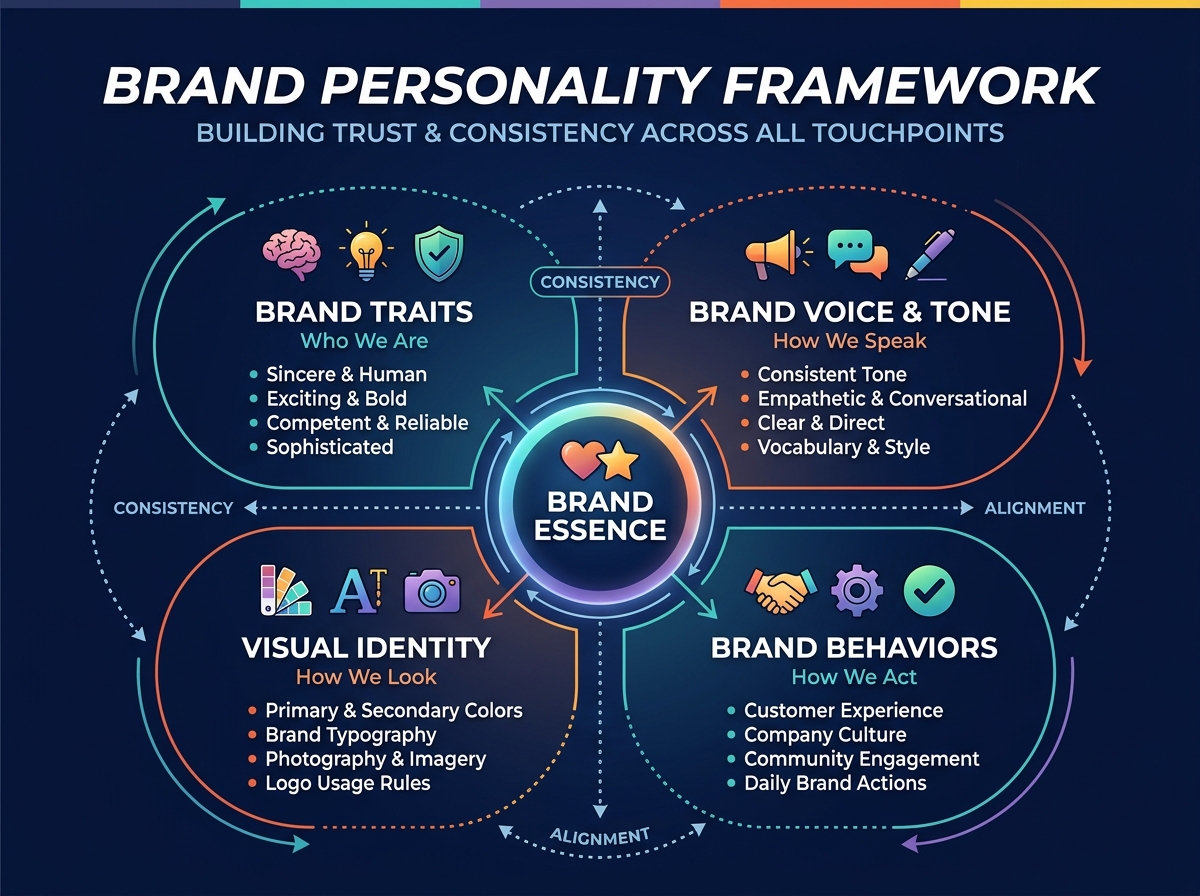
Once a brand personality and archetype have been established, businesses need a practical framework for applying them across the organization.
A brand personality framework translates strategic decisions into clear communication and behavioral expectations.
It can include personality characteristics, tone preferences, messaging principles, storytelling themes, and examples of how the brand should communicate in different situations.
For instance, a brand built around the Explorer archetype may emphasize discovery, independence, and new experiences. Its communication might use inspiring language, while its visual identity could support a sense of movement and exploration.
A company using the Caregiver archetype may prioritize empathy, clarity, and reassurance in both its messaging and customer service.
The framework should also identify communication styles that do not fit the brand. A business with a friendly and accessible personality may want to avoid unnecessarily technical or distant language.
These distinctions help different departments maintain a shared understanding of the brand.
The framework becomes particularly valuable as organizations grow and bring new employees, agencies, designers, and marketing partners into their operations.
Instead of relying on individual interpretations, everyone can work from a common identity structure.
A well-developed framework also supports future campaigns because marketers can create new messages without rebuilding the brand personality each time.
Brand Differentiation Through Archetype Development
Competing businesses often offer similar products, services, and pricing structures. In these situations, brand identity can influence how customers distinguish between available choices.
Brand differentiation strategy involves establishing recognizable qualities that separate one organization from its competitors.
An archetype can support this process by giving the brand a distinct personality and communication direction.
For example, two software companies may provide similar business tools. One could position itself as a Sage by emphasizing expertise, research, and informed decisions. The other might adopt a Creator personality by highlighting flexibility, experimentation, and innovative possibilities.
Their products may serve comparable purposes, but their messaging creates different brand experiences.
Differentiation should not rely entirely on personality, however. The brand’s claims need to be supported by its products, services, customer experience, and actual business practices.
A company cannot build lasting credibility by presenting itself as a market leader without demonstrating meaningful value.
Brand asset consistency also matters. Logos, visual materials, marketing content, and other identity elements should communicate the same positioning. Businesses can explore the importance of protecting and managing these elements through Brand Asset Rights.
When personality, positioning, and brand assets work together, the organization can create a more distinctive and recognizable presence.
Adapting Brand Archetypes as Businesses Grow
Brand identity should provide stability without preventing development. As businesses enter new markets, introduce products, or attract different customer groups, their communication needs may change.
However, changing every aspect of a brand personality whenever market conditions shift can create confusion.
A more effective approach is to maintain the central archetype while adapting its expression to new circumstances.
For example, a company initially known for personal customer support may expand into enterprise services. Its communication might become more formal and technically detailed, but its underlying commitment to helping customers can remain unchanged.
Similarly, a Creator-oriented business may introduce new product categories without abandoning its focus on originality and innovation.
This balance is important for brand-led growth. When business decisions, customer experiences, and marketing activities reflect a consistent identity, the brand can become a stronger foundation for expansion.
The relationship between identity and growth is explored further through Brand-Led Growth, which highlights the role of a recognizable brand in supporting sustainable business development.
Organizations should periodically review their archetype framework to ensure it still reflects their values, market position, and customer expectations.
The objective is not to follow every branding trend but to maintain an identity that remains relevant while preserving its defining characteristics.
Measuring the Effectiveness of Brand Archetype Development
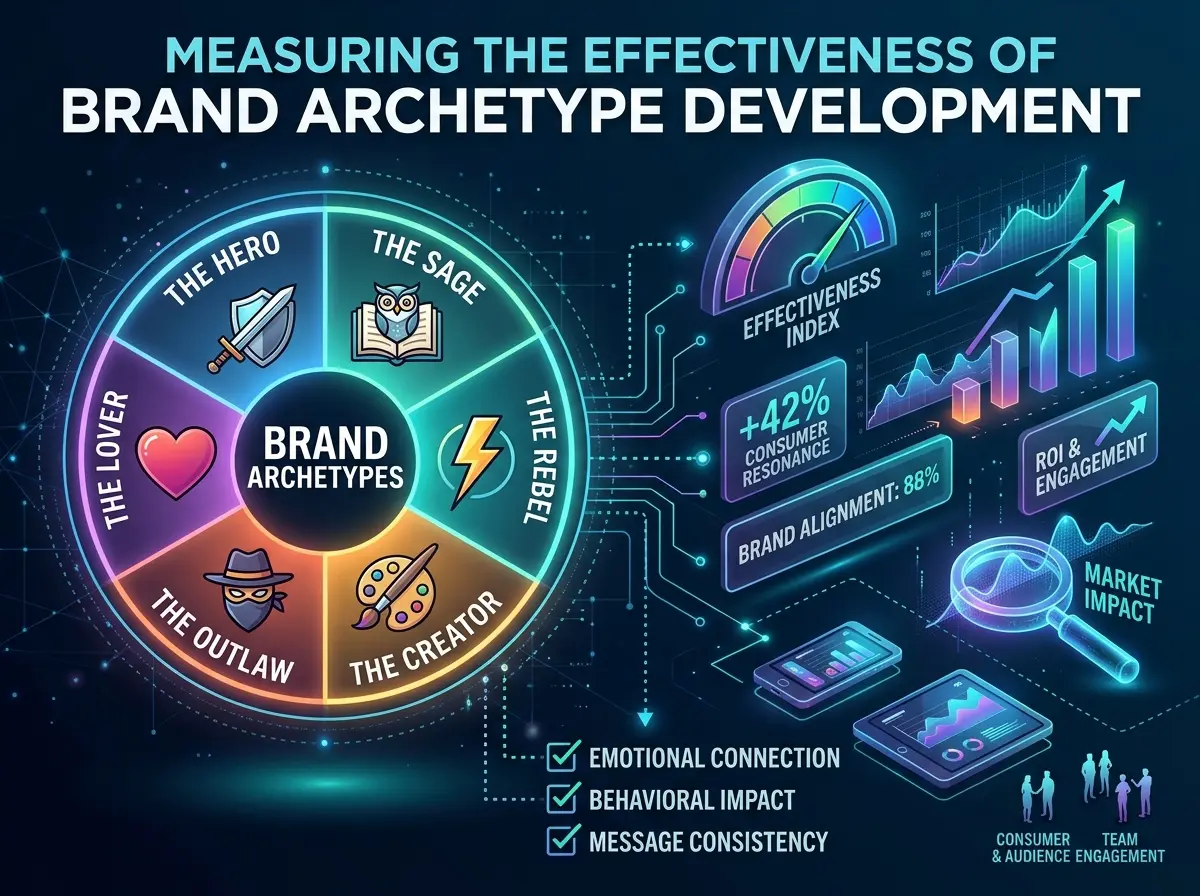
Brand archetype development should contribute to measurable improvements in brand recognition, communication consistency, and customer relationships.
Although personality itself is not a simple numerical measurement, businesses can evaluate its influence through several indicators.
Brand awareness research can reveal whether customers recognize the organization and associate it with specific qualities. Customer surveys can help determine whether the intended personality is reflected in actual audience perceptions.
Engagement metrics also provide useful information. Businesses can examine how audiences respond to different storytelling approaches, social media content, and marketing campaigns.
Brand consistency can be evaluated by reviewing website content, advertisements, customer support communication, and visual materials.
Organizations may also examine customer loyalty, referral activity, and brand preference to understand whether their identity contributes to stronger relationships.
However, these indicators should be interpreted together. An increase in social media engagement does not automatically prove that a brand archetype is successful.
The most meaningful results emerge when customer perceptions, business performance, and brand communication support the same strategic direction.
Regular evaluation allows organizations to identify inconsistencies and refine their approach without losing the personality that makes the brand recognizable.
Conclusion
Brand Archetype Development provides businesses with a structured way to define their personality, communicate their values, and establish a recognizable market identity. By understanding archetypes and connecting them with business objectives, organizations can create more consistent relationships between their messaging, visual presentation, and customer experiences.
Successful development involves more than selecting a personality category. It requires clear brand positioning, thoughtful storytelling, consistent voice development, and an understanding of how customers perceive the business.
A strong brand personality can also support differentiation and long-term growth by giving customers meaningful reasons to recognize and connect with an organization.
As businesses evolve, maintaining a recognizable central identity while adapting its expression helps protect brand consistency. When personality and business behavior align, a brand becomes more than a name or visual identity. It becomes an experience that customers can understand, recognize, and trust.
10 Frequently Asked Questions (FAQs)
1. What is brand archetype development?
Brand archetype development is the process of defining a brand’s personality using recognizable character patterns. It helps businesses establish consistent communication, positioning, and emotional connections with their audiences.
2. What are the 12 main brand archetypes?
The 12 common archetypes are Innocent, Explorer, Sage, Hero, Outlaw, Magician, Everyman, Lover, Jester, Caregiver, Creator, and Ruler. Each represents different motivations and personality characteristics.
3. Why is brand archetype strategy important?
It provides a consistent personality framework that helps businesses communicate their values, establish recognizable identities, and create meaningful relationships with customers.
4. How do businesses choose the right brand archetype?
Businesses should consider their core values, target audience, industry positioning, customer expectations, and long-term objectives before selecting an archetype.
5. What is the difference between brand personality and brand archetype?
Brand personality describes the human characteristics associated with a brand, while an archetype provides a structured model for organizing and expressing those characteristics.
6. How does brand storytelling support archetype development?
Brand storytelling communicates the personality through meaningful narratives, company experiences, customer stories, and messages that reflect the organization’s values.
7. What role does brand voice play in brand identity?
Brand voice establishes how a business communicates across different platforms. It helps maintain a consistent tone and ensures that marketing messages reflect the intended personality.
8. Can a business use more than one brand archetype?
Yes. A business can have one primary archetype supported by a secondary archetype. However, the main personality should remain clear and consistent across its communication.
9. How does brand archetype development improve differentiation?
It gives businesses a recognizable personality and communication style that helps distinguish them from competitors offering similar products or services.
10. How often should businesses review their brand archetype?
Businesses should review their archetype periodically, particularly when their target audience, market positioning, products, or long-term objectives change. The central personality should remain consistent unless there is a strong strategic reason to reposition it.