Brand Asset Rights: Protecting Ownership, Usage, and Brand Identity
Brand Asset Rights help businesses protect ownership, manage usage permissions, and safeguard valuable brand materials such as trademarks, logos, digital content, and creative designs. Clear agreements, copyright protection, licensing, and proper asset management help maintain brand consistency, prevent unauthorized use, and preserve long-term brand value.
A brand is built from more than its name and logo. It includes visual designs, written content, photographs, videos, slogans, trademarks, product packaging, website materials, and other creative elements that help customers recognize a business. These assets carry commercial and reputational value, making it important for organizations to understand who owns them, how they can be used, and what legal protections apply. This is where Brand Asset Rights become essential.
Businesses often invest considerable time and resources in developing a recognizable identity, but ownership and usage arrangements are not always clear. A company may hire an agency to design its logo, work with freelancers to produce marketing content, license photographs for advertising, or allow partners to use its brand materials. Without clear agreements, these relationships can create uncertainty about ownership, permissions, and future use.
Understanding Brand Asset Rights helps businesses protect their intellectual property, maintain consistent brand presentation, and avoid disputes involving creative materials. It also supports responsible collaboration with employees, agencies, suppliers, distributors, and other external partners. When ownership and usage permissions are properly managed, businesses can use their brand assets with greater confidence while preserving the value of their identity.
Understanding the Value of Brand Asset Rights
Brand Asset Rights refer to the legal and contractual rights associated with creating, owning, controlling, licensing, and using the materials that represent a business. These rights may cover trademarks, copyrighted content, visual designs, photographs, videos, digital materials, and other forms of intellectual property.
The exact rights attached to an asset depend on its nature, how it was created, the applicable laws, and the agreements between the involved parties. For example, a business may own its registered trademark while using a photograph under a limited commercial license. Similarly, a company may have permission to publish a freelancer’s content without automatically receiving every copyright interest associated with the original work.
This distinction matters because access to an asset does not necessarily mean ownership. A marketing team might have permission to use a design, but that permission may be limited by location, duration, platform, or purpose. Understanding these conditions prevents businesses from assuming that every asset they possess can be used without restrictions.
Brand Asset Rights also contribute to long-term brand value. A company with clearly documented ownership can manage its intellectual property more effectively, enter licensing arrangements, expand into new markets, and maintain control over how its identity appears across different channels.
Brand Ownership Is More Than Possessing Creative Files
Brand Asset Ownership establishes who legally owns a particular brand-related asset and who has authority to control its use. This can involve a company, an individual creator, a business partner, or another rights holder.
For businesses, ownership questions frequently arise when creative work is outsourced. A designer may create a logo, a marketing agency may develop campaign graphics, or a content writer may produce website copy. Although the company has paid for the work, payment alone does not always transfer copyright ownership. The agreement and applicable law determine whether the rights have been assigned, licensed, or retained by the creator.
A written contract can clarify whether the business receives full ownership, exclusive usage rights, or a limited license. It can also explain whether the creator may reuse the work in a portfolio, modify it for another client, or distribute it through other channels.
Clear ownership arrangements are particularly important when a business changes agencies, restructures its marketing department, or sells part of its operations. If the company cannot establish its rights to essential brand materials, transferring or updating those assets may become difficult.
Businesses should also distinguish between owning an asset and controlling every element included within it. A marketing design may contain licensed fonts, stock photography, illustrations, or third-party software. Even when the business owns the final design, the underlying materials may remain subject to separate usage restrictions.
The Role of Intellectual Property in Brand Protection
Brand Intellectual Property Rights provide the legal foundation for protecting many of the creative and identifying elements associated with a business. Different forms of intellectual property protect different types of assets, and selecting the appropriate protection depends on what the business wants to secure.
Trademarks generally protect distinctive signs that identify the source of goods or services, such as brand names, logos, and certain slogans. Copyright protects original creative expression, including written articles, photographs, illustrations, videos, and graphic designs. Other legal protections may apply to product designs, inventions, confidential information, and commercial secrets.
These rights should not be treated as interchangeable. Registering a trademark does not automatically establish copyright ownership over every image or marketing document containing that mark. Likewise, copyright protection for a logo does not necessarily provide the same commercial identity protection as trademark rights.
Businesses developing new identities should consider these differences early in the branding process. A proper review of names, logos, designs, and creative materials can help identify ownership concerns before substantial marketing investment takes place. When a company is preparing to introduce a new identity, understanding the relationship between asset protection and market readiness also makes Brand Clearance an important part of the process.
Why Usage Permissions Require Clear Boundaries
Brand Usage Permissions determine how another person or organization may use a company’s protected materials. These permissions are important in partnerships, sponsorships, advertising campaigns, distribution agreements, influencer collaborations, and other commercial relationships.
A business may allow a distributor to display its logo on product listings or permit a marketing partner to use approved images in promotional campaigns. However, these permissions do not necessarily provide unlimited rights. The agreement may restrict the permitted channels, geographic markets, campaign duration, product categories, or types of modification.
For example, a company could authorize a partner to use its logo in a specific promotional campaign but prohibit the partner from changing the logo’s colors or combining it with unrelated messages. Another agreement might allow a retailer to use product photographs on its website while preventing their use in printed advertising.
Clear permission terms reduce the possibility of inconsistent or unauthorized brand representation. They also make it easier for businesses to address situations where a partner continues using outdated materials after an agreement ends.
The strongest arrangements describe the permitted use in practical terms. They identify the relevant assets, explain the purpose of the permission, establish any limitations, and clarify whether approval is required before publication.
Trademark Asset Protection and Brand Recognition
Trademark Asset Protection focuses on safeguarding the distinctive elements that help customers identify a business and distinguish it from competitors. A recognizable name, logo, symbol, or other qualifying brand identifier can become a valuable commercial asset when consistently used and properly protected.
Trademark rights are territorial, and the scope of protection depends on the relevant jurisdiction, registration status, goods or services, and applicable law. A business operating in multiple countries should not assume that protection in one market automatically applies everywhere.
Monitoring is also important after a trademark has been registered. Similar names, confusingly related logos, and unauthorized commercial uses may create risks for brand recognition. Businesses need a way to identify potential conflicts and determine whether further action is appropriate.
Trademark protection is closely connected to how a company develops and maintains its overall market position. When a brand expands into new product categories or introduces additional business identities, the relationship between its trademarks and wider brand structure becomes increasingly important. A well-considered Brand Portfolio Strategy can help organizations manage these identities while maintaining a coherent commercial presence.
Brand Licensing Rights and Commercial Opportunities
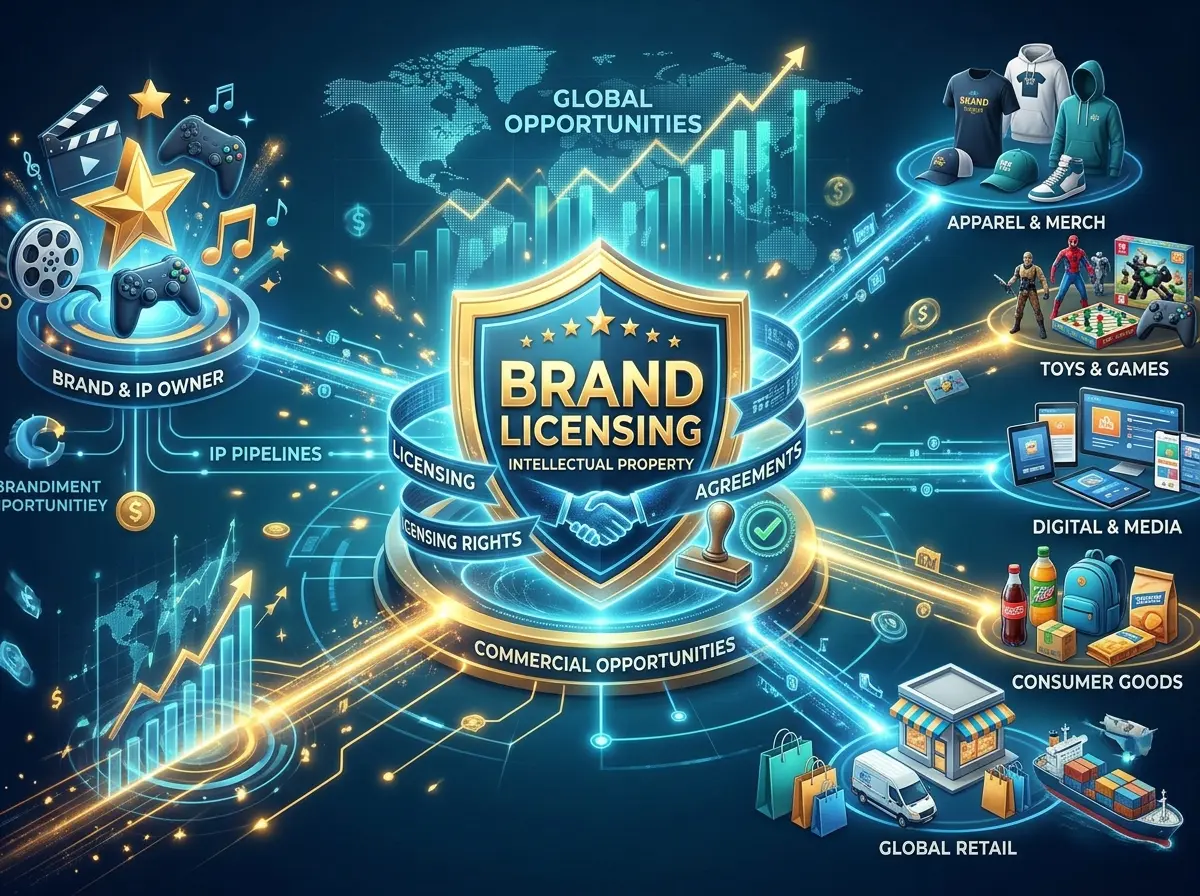
Brand Licensing Rights allow a rights holder to authorize another party to use specified brand assets under agreed conditions. Licensing can create new revenue opportunities, support market expansion, and make it possible for other businesses to produce or promote goods and services using an established brand identity.
For example, a clothing company might license its brand name to a manufacturer for a particular product category. A media business could authorize a publisher to use selected illustrations, while a software company might permit a reseller to display approved branding in its sales materials.
A licensing agreement typically addresses the assets being licensed, the permitted activities, the duration of the arrangement, geographic coverage, payment terms, quality requirements, and conditions for renewal or termination. It may also establish whether the license is exclusive or non-exclusive.
Quality control is particularly important because a licensee’s actions can influence how customers perceive the original brand. Poor product quality, misleading advertising, or inconsistent visual presentation may damage the reputation of the rights holder.
Licensing should therefore be treated as more than permission to display a logo. It is a structured commercial relationship that requires clear responsibilities and appropriate oversight. Businesses should also consider how licensing arrangements affect their wider brand equity, since the perceived value of a brand can be influenced by the quality and consistency of every authorized interaction.
Digital Brand Asset Rights in an Expanding Online Environment
Digital Brand Asset Rights cover the ownership and permitted use of online materials associated with a business. These include website graphics, digital advertisements, social media content, product photographs, videos, downloadable resources, email templates, illustrations, and other creative materials used across digital platforms.
Digital assets are easy to copy, share, edit, and redistribute. This creates opportunities for broader brand exposure but also increases the possibility of unauthorized use. A photograph published on a company’s website, for example, may be downloaded and reused by another organization without permission. Similarly, a social media graphic may be modified in a way that misrepresents the original brand.
Ownership can become complicated when several parties contribute to digital content. A business may commission a video from an external production company, use licensed music, incorporate stock footage, and publish the finished material across multiple platforms. Each component may have different ownership and licensing conditions.
Companies should maintain records of the original creators, agreements, license terms, and approved uses of their digital materials. These records make it easier to determine whether an asset can be reused in a new campaign or transferred to another platform.
Platform policies should also be considered. Permission to publish content on one digital service does not automatically establish unrestricted rights to use it elsewhere. Businesses need to review both the relevant license agreements and the terms governing the platforms where their materials appear.
Brand Content Ownership Across Internal and External Teams
Brand Content Ownership becomes especially important when content production involves multiple contributors. Website copy, blog articles, product descriptions, advertising messages, videos, and social media materials may be created by employees, freelancers, agencies, or collaborative teams.
The ownership of these materials depends on applicable copyright laws and the agreements governing their creation. Businesses should avoid relying on informal assumptions, particularly when content is developed through long-term agency relationships or repeated freelance assignments.
A clear agreement can establish whether the business receives copyright assignment, an exclusive license, or permission for specific uses. It can also address editing rights, translation, adaptation, republication, and the ability to distribute content through different channels.
Another important consideration is third-party material. Content creators may use quotations, photographs, illustrations, music, or other copyrighted elements. The business needs to understand whether these materials are properly licensed and whether the relevant permissions cover the intended publication.
When content ownership is clearly established, marketing teams can update existing materials, reuse successful campaigns, and maintain consistent messaging without repeatedly questioning who controls the underlying work.
Copyright Protection and the Limits of Brand Control
Brand Copyright Protection helps safeguard original creative materials from unauthorized reproduction, distribution, adaptation, or other uses restricted by applicable copyright law. It can apply to many assets that contribute to a brand’s identity, including photographs, videos, written materials, graphic designs, illustrations, and certain artistic elements of logos.
Copyright protection generally concerns the expression of an idea rather than the underlying idea itself. For instance, a business may own the copyright in an original advertising photograph, but that does not automatically give it exclusive rights over the general concept of promoting a product through photography.
Businesses should keep evidence of creation and ownership, including original files, project records, contracts, and licensing documents. Such records can help establish the history of an asset if a dispute occurs.
It is also important to recognize that copyright rules vary across jurisdictions. Some rights may arise automatically when an eligible work is created, while registration and other formalities can provide additional benefits depending on the country. Businesses operating internationally should seek appropriate legal advice when valuable assets or significant disputes are involved.
Copyright protection is most effective when supported by clear ownership arrangements and consistent monitoring. A company that understands which materials it owns and which it licenses is better positioned to respond when unauthorized use is discovered.
Brand Usage Guidelines as a Practical Control System
Brand Usage Guidelines translate ownership and permission requirements into practical instructions for anyone working with a company’s identity. They explain how logos, colors, typography, photographs, messaging, and other visual or creative elements should appear in different situations.
These guidelines are particularly valuable when a business works with external designers, advertising agencies, distributors, franchise partners, or regional marketing teams. Without a shared reference, different contributors may create materials that look inconsistent or use brand elements in ways that have not been approved.
Usage guidelines can specify approved logo versions, minimum spacing, background requirements, color combinations, image treatments, and rules for adapting materials. They may also explain which assets require approval before publication and where users can access current versions.
However, brand guidelines should not be confused with a legal license or ownership agreement. A document explaining how to use a logo does not automatically grant permission to use it. The organization must still establish who is authorized to access and publish its assets.
Combining clear usage guidelines with formal permissions helps businesses maintain a recognizable identity while reducing the likelihood of unauthorized modifications or outdated materials appearing in public.
Managing Brand Assets Without Losing Control
Brand Asset Management connects ownership information, usage permissions, creative files, and approval processes within a coordinated system. As businesses grow, the number of brand materials they produce can increase significantly. Without organized records, teams may struggle to identify which files are current, who owns them, and whether the required permissions remain valid.
A centralized asset management process can make this information easier to access. It may include original design files, approved logos, content libraries, licensing agreements, creator details, expiration dates, and records of authorized users.
This process is also useful when businesses manage multiple brands or operate through subsidiaries and regional teams. Different departments may need access to shared materials, but not every user should have the same authority to edit, distribute, or approve them.
A structured system can help maintain consistency while supporting operational efficiency. It also provides a clearer view of how brand assets contribute to the organization’s overall position. Businesses evaluating their identity structure may find that asset management works alongside Brand Benchmarking, since understanding competitor positioning can help identify which brand elements deserve stronger protection and investment.
Asset management also supports better commercial decision-making. When organizations know which materials they own, which are licensed, and which are approaching the end of their permitted use, they can reduce unnecessary duplication and avoid relying on assets that may no longer be available.
Brand Asset Rights and Long-Term Business Value

Brand assets are not simply creative resources used to make marketing materials attractive. They can represent substantial business value through customer recognition, market differentiation, trust, and commercial reputation.
A distinctive trademark may help customers identify a company’s products, while original content can communicate expertise and strengthen relationships with an audience. Consistent visual materials can also make a business easier to recognize across different platforms and customer interactions.
When these assets are protected and managed effectively, they contribute to stronger brand equity. Ownership clarity makes it easier to preserve valuable materials, while licensing arrangements can create additional opportunities for commercial growth. Proper permissions also allow businesses to collaborate without unnecessarily exposing their intellectual property to misuse.
However, rights management must develop alongside the organization. New products, partnerships, acquisitions, international expansion, and changes in marketing channels can introduce new ownership and licensing questions. Businesses should periodically review their asset records and agreements to ensure that they still reflect actual operations.
Brand Asset Rights ultimately provide a foundation for responsible brand development. By understanding ownership, protecting intellectual property, defining permissions, and managing creative resources, companies can preserve control over the materials that distinguish them in the market. This approach helps turn brand protection from an occasional legal concern into a consistent part of business management.
Conclusion
Brand Asset Rights help businesses establish control over the creative and intellectual property that supports their identity. From trademarks and copyrighted content to digital materials and licensed designs, every asset can carry different ownership and usage conditions.
Clear agreements, appropriate legal protection, practical usage guidelines, and organized asset management reduce uncertainty and support consistent brand representation. As companies expand their marketing activities and commercial partnerships, these measures become increasingly important for protecting their reputation and long-term brand value.
By treating brand assets as valuable business resources rather than simply marketing files, organizations can protect their identity, manage collaboration more effectively, and build a stronger foundation for sustainable growth.
Frequently Asked Questions
1. What are Brand Asset Rights?
Brand Asset Rights are the legal and contractual rights associated with owning, controlling, licensing, and using brand-related materials. They can cover trademarks, copyrighted content, logos, designs, photographs, videos, and digital assets.
2. Why are Brand Asset Rights important for businesses?
They help businesses protect their intellectual property, clarify ownership, control how brand materials are used, reduce unauthorized usage, and preserve the commercial value of their identity.
3. What is the difference between brand ownership and usage permission?
Ownership establishes who holds the relevant rights to an asset. Usage permission allows another party to use that asset under specified conditions without necessarily transferring ownership.
4. Do businesses automatically own designs created by freelancers?
Not necessarily. Ownership depends on applicable law and the agreement between the business and the creator. A written contract should clarify whether copyright is assigned or a license is granted.
5. How do trademark rights protect brand assets?
Trademark rights can protect distinctive signs, such as brand names and logos, that identify the source of particular goods or services. Their scope depends on registration, jurisdiction, and applicable trademark law.
6. What are Brand Licensing Rights?
Brand Licensing Rights allow a rights holder to authorize another party to use specified brand assets under agreed conditions. These arrangements may include restrictions on duration, location, products, and commercial activities.
7. What do Digital Brand Asset Rights cover?
They can cover website graphics, social media materials, digital advertisements, videos, photographs, downloadable resources, and other online creative assets. Ownership and usage conditions depend on the relevant rights and agreements.
8. How can a company protect its brand content?
A company can establish ownership through suitable agreements, retain original creation records, obtain necessary third-party licenses, and monitor how its content is reproduced or distributed.
9. Are Brand Usage Guidelines legally binding?
Brand Usage Guidelines provide instructions for presenting and using brand materials. Their legal effect depends on how they are incorporated into contracts, policies, or other binding arrangements. They do not automatically grant usage permission.
10. What is the role of Brand Asset Management?
Brand Asset Management organizes creative files, ownership records, licenses, permissions, and approval processes. It helps businesses find current materials, control access, and maintain consistent brand representation.