Brand Naming Process: Create a Name That Makes Your Business Stand Out

The brand naming process helps businesses choose a memorable, relevant, and distinctive name that reflects their identity and appeals to their target audience. By combining brand positioning, creative brainstorming, customer research, selection criteria, and availability checks, companies can reduce naming risks and build a stronger foundation for long-term brand recognition.
A strong brand name can influence how customers recognize, remember, and perceive a business. It often creates the first impression before people explore a company’s products, services, or values. A clear and memorable name can help a business stand out in a competitive market, communicate its personality, and build a recognizable identity over time. However, choosing an effective name involves more than finding a creative word or combining a few attractive terms. It requires research, strategic thinking, and a clear understanding of the audience a brand wants to reach.
The brand naming process brings these elements together to help businesses select a name that reflects their purpose and supports their long-term goals. From understanding brand positioning to exploring creative possibilities and checking name availability, every decision can influence how effectively a brand communicates with its audience. A thoughtful approach also helps businesses avoid names that are confusing, difficult to pronounce, or too similar to existing brands.
Whether a company is launching a new business, introducing a product, or refreshing an established identity, a structured naming process provides a foundation for consistent branding. The right name can become a valuable business asset when it is relevant to the audience, distinctive within its market, and flexible enough to support future growth.
Why a Strong Brand Name Shapes Customer Perception

The brand naming process begins with understanding what the business wants its name to communicate. A name should reflect the company’s purpose, personality, and market position without attempting to explain every detail of its operations. The most effective names create a meaningful connection between the business and the people it serves.
For example, a company targeting professional customers may prefer a name that communicates reliability and expertise, while a lifestyle brand might choose something expressive and emotionally appealing. Neither approach is automatically better. The right choice depends on the audience, industry, business model, and desired brand perception.
Brand naming also influences how easily people remember and recommend a business. A name that is simple to pronounce, easy to spell, and distinct from competitors may be easier to share through conversations, online searches, and social media. Conversely, a complicated or ambiguous name can create unnecessary barriers to recognition.
A clear understanding of the brand’s purpose helps keep the naming decision focused. Instead of selecting a name solely because it sounds attractive, businesses can evaluate whether each option supports their identity, audience expectations, and future direction.
Defining Your Brand Before Developing a Name
Brand name development becomes more effective when businesses first establish their positioning. This means identifying the audience they serve, the problems they solve, the value they provide, and the qualities that distinguish them from competitors. These details create a foundation for generating relevant naming ideas.
A business that offers premium consulting services, for instance, may want a name that suggests confidence, clarity, and expertise. A company focused on accessible everyday products may prefer a name that feels friendly, practical, and approachable. Understanding these differences helps businesses explore names that match their intended market position.
Brand positioning also prevents naming decisions from becoming disconnected from the overall business strategy. A name may sound modern or impressive, but it can create confusion if it suggests a different product category or customer experience. Establishing clear brand attributes makes it easier to identify names that fit the company’s intended identity.
Businesses should also consider their long-term direction during this stage. A name that describes only one product or a narrow service may become restrictive when the company expands. Choosing a name that reflects the broader purpose of the business can provide more flexibility as new products, services, or customer segments emerge.
Aligning Your Business Naming Strategy With Customer Expectations
A successful business naming strategy considers how the intended audience thinks, speaks, and makes purchasing decisions. Different customer groups may respond to different naming styles. Some prefer familiar words that communicate an immediate benefit, while others may appreciate distinctive names that suggest innovation, creativity, or exclusivity.
Understanding the audience involves more than identifying basic demographic information. Businesses should consider customer motivations, expectations, cultural references, and the language people naturally use when discussing the relevant products or services. These insights can help identify words, themes, and naming styles that feel appropriate to potential customers.
Competitor research is equally important. Reviewing existing businesses in the same category can reveal common naming patterns and opportunities to create a more distinctive identity. Companies looking to understand their market more clearly can explore Data-Driven Inbound Marketing for perspectives on using data and customer insights to support marketing decisions.
The goal is not to imitate successful competitors. Instead, businesses should identify what customers already associate with the category and decide how their own brand can communicate a different or more compelling position. This balance between familiarity and differentiation helps a name feel relevant without becoming indistinguishable from other businesses.
Exploring Creative Directions for a Distinctive Brand Name
Creative brand naming ideas can emerge from many sources, including the company’s mission, customer needs, founder story, product benefits, industry concepts, and emotional associations. Exploring several creative directions gives businesses more flexibility than committing to the first appealing name.
Descriptive names communicate what a business does or offers. Suggestive names imply a benefit or experience without explaining it directly. Invented names use newly created words, while abstract names may rely on sound, symbolism, or a distinctive combination of letters. Each approach offers different advantages depending on the business and its audience.
Descriptive names can be easier to understand, especially for businesses that want immediate clarity. However, they may be difficult to distinguish from competitors or protect legally if they rely on common industry terms. Invented and abstract names can offer greater distinctiveness, but they may require more marketing effort before customers understand what the brand represents.
The most useful brainstorming sessions explore several naming styles before evaluating individual options. Teams can combine relevant words, experiment with different sounds, explore metaphorical concepts, or develop names around the brand’s main promise. This creative exploration should remain connected to the company’s positioning so that originality does not come at the expense of relevance.
Evaluating Potential Names With Clear Selection Criteria
Brand name selection criteria help businesses compare potential names objectively. Without clear criteria, naming discussions can become dominated by personal preferences, disagreements, or temporary trends. A name that one team member loves may not communicate effectively with customers or fit the company’s future direction.
Memorability is one important consideration. A name should be distinctive enough to stand out and simple enough for people to recall after encountering it. Pronunciation and spelling also matter because customers may need to search for the business online, mention it in conversation, or share it with others.
Relevance is another essential factor. The name should support the intended brand personality and make sense within the company’s market, even if it does not describe the product directly. Businesses should also consider whether the name has unwanted meanings, confusing associations, or cultural implications in the markets where they intend to operate.
Scalability should be part of the evaluation as well. A name that works for one product may become limiting if the company expands into related categories. By assessing names against a consistent set of criteria, businesses can focus on the options that provide the strongest combination of clarity, distinctiveness, relevance, and flexibility.
Connecting Brand Naming With Your Overall Brand Identity
Brand identity naming influences how customers interpret the business before they interact with its products or services. A name works alongside the logo, visual design, messaging, tone of voice, and customer experience to create an overall impression. When these elements support the same positioning, the brand can communicate more consistently.
For example, a business that promises simplicity may benefit from a name that feels clear and uncomplicated. A brand positioned around innovation might choose a more distinctive or forward-looking name. The visual identity and messaging can then reinforce the same qualities, making the overall presentation feel coherent.
The name should also work across different communication channels. Businesses may use it on websites, packaging, storefront signs, advertisements, social profiles, invoices, and presentations. A name that looks appealing in a logo but becomes difficult to read in smaller formats may create practical challenges.
Businesses should therefore test how potential names sound and appear in realistic situations. Reading them aloud, placing them in sample headlines, and imagining them in customer conversations can reveal issues that are not obvious during brainstorming. These checks help ensure that the name works as part of a complete brand experience rather than as an isolated creative idea.
Researching Names to Understand Their Market Potential
Brand name research methods help businesses understand how potential names may be interpreted and whether they create practical or legal concerns. Research should begin before a final name is selected, because a promising idea can become unsuitable if another company already uses a confusingly similar name or if the term has an unintended meaning.
Customer research can provide useful feedback on clarity, pronunciation, relevance, and recall. Businesses can present a shortlist to a small group of representative customers and ask what each name suggests, how easy it is to remember, and which option feels most appropriate. The feedback should be interpreted carefully, since a name does not need to appeal equally to every person.
Competitor research helps identify naming similarities and category conventions. Reviewing established businesses, emerging competitors, and related product categories can reveal whether a proposed name feels distinctive enough to build recognition. Businesses should also investigate linguistic and cultural meanings when targeting audiences in different regions or languages.
Market research can be supported by broader customer insights and engagement methods. For example, Interactive Content Marketing explores ways to encourage audience participation, an approach that can inspire businesses to collect structured feedback during brand development. Research should support the naming decision without turning it into a popularity contest; the final choice still needs to fit the brand’s strategic direction.
What Makes a Business Name Easy to Remember?
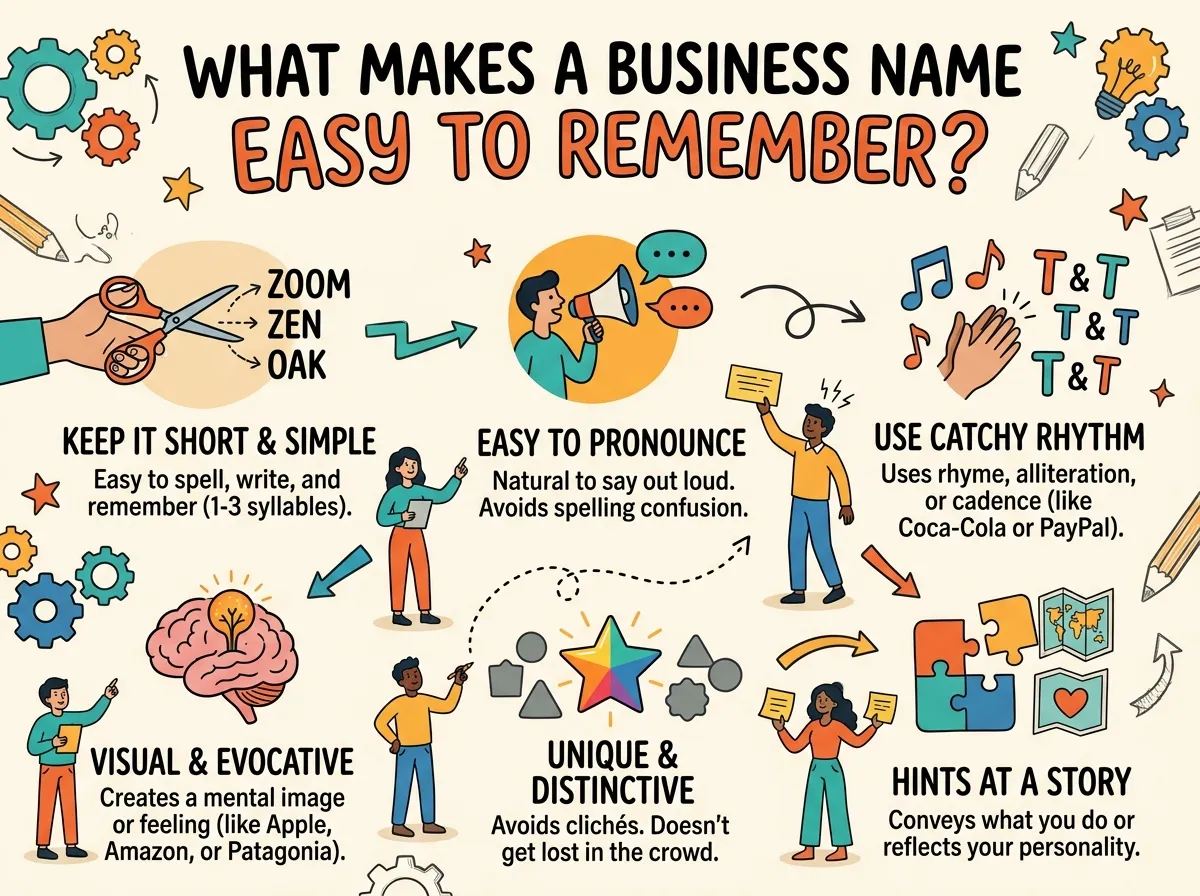
Memorable business names often combine clarity, distinctiveness, and a recognizable sound. A name does not necessarily need to be short to succeed, but unnecessary complexity can make it harder for customers to remember or communicate. Names that are easy to pronounce and spell may have an advantage when people encounter them through recommendations, conversations, or audio advertising.
Sound can influence how a name feels. Certain combinations may seem energetic, refined, playful, or dependable, although these impressions vary by language and culture. Rhythm and pronunciation can make a name more pleasant to say, while unusual spelling may create a distinctive appearance but introduce problems when customers try to search for it.
Simplicity should not mean choosing a generic name. A common word may be easy to understand but difficult to distinguish from other businesses. The challenge is to find a name that feels natural while still creating a recognizable identity. A carefully chosen combination of familiar words can sometimes achieve this balance better than an unnecessarily complicated invented term.
The name should also be tested outside the brainstorming room. If people consistently misspell it, confuse it with another brand, or misunderstand its intended association, those patterns may indicate that the name needs refinement.
Establishing Naming Principles for a Consistent Brand
Effective brand naming guidelines establish the principles that shape the final choice. These principles may include preferred naming styles, language requirements, brand personality, pronunciation standards, and restrictions on terms that could create confusion. Clear guidelines help teams maintain consistency when evaluating multiple ideas.
Businesses should consider how the name fits with the rest of their brand architecture. A company with several products or services may need a naming system that allows each offering to be recognized as part of the same organization. Businesses exploring how multiple brands and offerings fit together can learn more from Brand Portfolio Strategy, which discusses creating a balanced brand ecosystem.
Naming guidelines should provide direction without limiting creativity unnecessarily. If the rules are too restrictive, teams may overlook promising ideas. If they are too vague, the selection process may become inconsistent. A practical framework defines what the name needs to achieve while leaving room for original thinking.
The guidelines should also account for future communication. The selected name must work with the company’s messaging and support a consistent customer experience. A strong naming decision becomes more valuable when the business can use it consistently across its marketing, customer service, products, and other brand touchpoints.
Checking Brand Name Availability Before Making a Commitment
A brand name availability check is an essential part of the naming process. Before investing in a name, businesses should investigate whether it is already being used by another company and whether relevant digital and legal protections may be available. A name that looks unique in a brainstorming session may already belong to an established brand.
Checking domain names and social media usernames can help determine whether the desired online identity is practical. However, an available domain or username does not automatically mean that the name is legally available for use. Businesses should also search relevant trademark databases and review similar names in the markets and product categories where they intend to operate.
Trademark rules vary by jurisdiction, and similar names may create problems even when they are not identical. Businesses planning to operate in multiple countries should consider the relevant markets rather than checking only one national database. For important naming decisions, advice from a qualified trademark professional can help identify potential conflicts and clarify available options.
Availability checks should take place before major investments in packaging, advertising, signage, or website development. This reduces the risk of having to change the name after launch. It is also sensible to keep a small shortlist of alternative names in case the preferred option presents legal, technical, or practical obstacles.
Choosing Naming Techniques That Support Future Growth
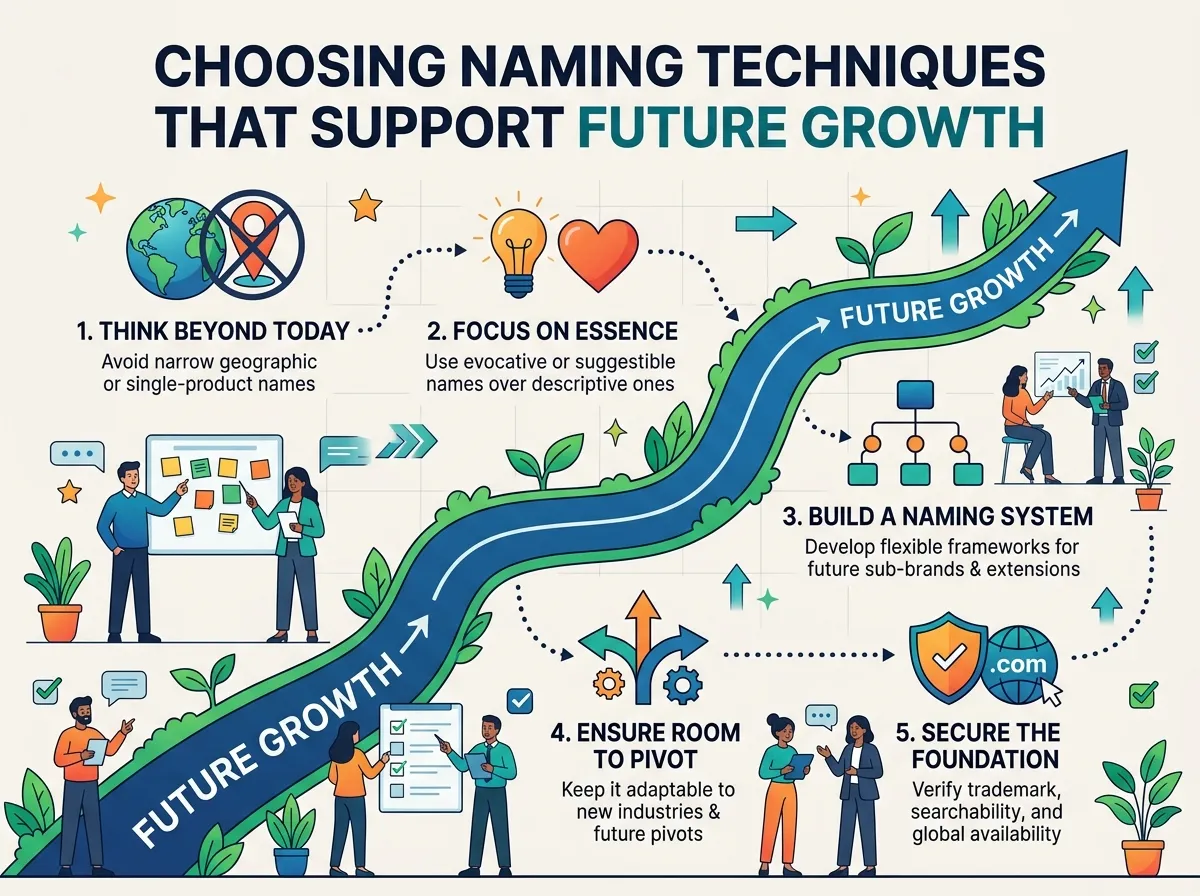
Effective brand naming techniques bring strategic thinking, creative exploration, customer research, and practical verification together. The process works best when businesses allow enough time to explore different options before narrowing the list. Rushing toward a decision can cause teams to overlook stronger alternatives or ignore problems that become expensive to correct later.
A useful approach is to generate a broad set of names, group them by creative direction, and evaluate them against established selection criteria. The strongest candidates can then be tested for pronunciation, recall, audience relevance, competitor similarity, and availability. This creates a more consistent basis for comparison and makes it easier to explain why a particular name is the best fit.
Businesses should also consider how naming supports customer understanding and future marketing. A distinctive name may attract attention, but it must work alongside a clear value proposition so that customers understand why the business matters. The relationship between recognition and action is important; companies can explore Marketing Conversion for broader perspectives on helping marketing activity support meaningful customer responses.
Ultimately, the most effective name is not necessarily the cleverest or most unusual option. It is the name that communicates the right impression, fits the business strategy, resonates with the intended audience, and remains useful as the company develops. When these qualities come together, the name can support recognition and become an enduring part of the brand’s identity.
Conclusion
The brand naming process is an important part of building a recognizable and consistent business identity. By defining brand positioning, understanding the target audience, exploring creative ideas, applying clear selection criteria, and researching availability, businesses can make more confident naming decisions.
A successful brand name should be memorable, relevant, distinctive, and flexible enough to support future growth. It should also work naturally across customer interactions, marketing channels, and the broader brand identity. Rather than relying only on personal preference, businesses benefit from combining creativity with research and strategic evaluation. This thoughtful approach helps create a name that customers can recognize, understand, and remember over time.
Frequently Asked Questions
1. What Does the Brand Naming Process Involve?
The brand naming process is the method businesses use to develop, evaluate, research, and select a name for a company, product, or service. It involves understanding brand positioning, generating creative ideas, assessing potential names, researching customer perceptions, and checking availability before making a final decision.
2. How Can a Strong Name Benefit a Business?
Brand naming is important because a name helps customers recognize and remember a business. It can influence first impressions, communicate brand personality, and distinguish a company from competitors. A suitable name also supports consistent marketing and can remain valuable as the business grows.
3. What Should Businesses Consider When Creating a Brand Name?
Businesses should consider their target audience, brand positioning, industry, desired personality, and long-term goals. They should also evaluate pronunciation, spelling, memorability, distinctiveness, cultural meanings, and legal availability before selecting a name.
4. How Can You Make a Business Name More Memorable?
A memorable business name is generally easy to recall, pronounce, and communicate. Distinctive wording, a recognizable sound, and a relevant association can help customers remember it. The name should also be different enough from competitors to avoid confusion.
5. Which Factors Matter Most When Comparing Brand Names?
Important brand name selection criteria include relevance to the brand, audience appeal, memorability, ease of pronunciation, spelling clarity, distinctiveness, flexibility, and legal availability. Evaluating names against the same criteria helps businesses make a more objective decision.
6. Where Can Businesses Find Creative Naming Ideas?
Businesses can generate creative brand naming ideas by exploring their mission, customer benefits, industry concepts, brand personality, founder story, and desired market position. Brainstorming descriptive, suggestive, invented, and abstract names can provide several creative directions to evaluate.
7. How Do You Verify That a Brand Name Is Available?
A business can search the web, business directories, domain registrars, social media platforms, and relevant trademark databases. These checks help identify potential conflicts, but domain or username availability does not guarantee legal clearance. Professional trademark advice may be appropriate before a major launch.
8. Is a Descriptive Name Better Than an Invented Name?
Not necessarily. A descriptive name can help customers understand the offering quickly, while a suggestive or invented name may create a more distinctive identity. The best choice depends on the audience, competitive environment, brand positioning, and long-term business goals.
9. How Does a Brand Name Influence Brand Identity?
Brand naming supports brand identity by creating a recognizable element that works alongside visual design, messaging, tone of voice, and customer experience. When the name and other brand elements communicate consistent qualities, customers can develop a clearer understanding of what the business represents.
10. When Should a Business Consider Changing Its Name?
A business can change its name if its positioning, audience, ownership, or long-term goals change. However, rebranding may require updates to legal registrations, trademarks, websites, marketing materials, and customer communications. Careful research at the beginning can reduce the likelihood of needing a costly change later.