Brand Intellectual Property: Protecting Identity and Value

Brand intellectual property includes the names, logos, designs, creative materials, and other distinctive assets that help a business establish its identity in the market. Protecting these assets through trademark registration, copyright protection, clear ownership agreements, and responsible licensing helps reduce misuse and preserve brand value. A well-managed intellectual property strategy also supports business expansion, strengthens customer trust, and provides a clearer framework for handling infringement risks.
Your Brand Is More Than a Name

A recognizable brand is built through much more than a logo or a memorable business name. Its identity may include original designs, product packaging, advertising materials, website content, slogans, photographs, software, and other creative assets that distinguish it from competitors. Over time, these elements become valuable business resources that deserve careful protection.
Brand intellectual property refers to the intellectual property rights and creative assets associated with a brand. Depending on the asset and the applicable law, protection may involve trademarks, copyrights, patents, design rights, trade secrets, or contractual arrangements. Each category serves a different purpose, and understanding those differences helps businesses protect what they create and control what others are permitted to use.
Consider a company that invests years in building a recognizable visual identity. If another business begins using a confusingly similar name or reproduces its original packaging, customers may struggle to distinguish the two brands. The original company could lose sales, face reputational damage, or spend substantial resources resolving the dispute.
These risks make intellectual property management an important business responsibility rather than simply a legal formality. Businesses that understand their rights can make more informed decisions about branding, partnerships, marketing campaigns, and expansion into new markets.
Protecting a brand does not mean preventing every similar idea or visual choice. It means identifying the assets that qualify for protection, securing the appropriate rights, documenting ownership, and taking proportionate action when those rights are threatened.
Understanding Brand Intellectual Property Rights
Brand intellectual property rights give businesses or individuals certain legal protections over qualifying creations, identifiers, and confidential information. The scope of protection depends on the type of intellectual property, the relevant jurisdiction, and the circumstances in which the asset was created or used.
Trademarks are particularly important for brand identity. They may protect distinctive names, logos, slogans, and other signs that identify the commercial source of goods or services. Their purpose is to help distinguish one business from another and reduce the likelihood of consumer confusion.
Copyright generally protects qualifying original creative expression, such as written content, photographs, illustrations, videos, and certain graphic designs. It does not ordinarily give the owner exclusive rights over a general idea, business concept, or short phrase simply because it was used in marketing. The exact scope of protection and any registration requirements vary by jurisdiction.
Other rights may also be relevant. Registered designs can protect qualifying visual features of products in jurisdictions that recognize them. Patents may apply to eligible inventions, while trade secret protection can cover valuable confidential information when the required conditions are maintained.
These categories can overlap. A company logo might qualify for trademark protection because it identifies a business and may also qualify for copyright protection as an original artistic work. The available rights are not necessarily identical, so a business should evaluate each asset according to its intended purpose and legal status.
Understanding these distinctions helps organizations avoid relying on the wrong form of protection. Registering a company name, for example, does not automatically provide comprehensive trademark rights in every market or for every category of goods and services.
Trademark Protection Strategy: Securing a Distinctive Identity
A strong trademark protection strategy begins before a business invests heavily in a new name, logo, product line, or slogan. Early research can reveal whether another organization already uses a similar identifier for related goods or services.
Trademark searches may include official national or regional trademark databases, business directories, domain names, and relevant marketplace sources. These checks help identify potential conflicts, although a basic search cannot guarantee that a proposed mark is legally available. Similarity, industry overlap, existing rights, and local legal rules may all influence the outcome.
Distinctiveness is another important consideration. Names that are highly descriptive or commonly used in a particular industry may be more difficult to protect than distinctive identifiers. A business should consider how its proposed brand will function in the market and whether it can be clearly distinguished from competing offerings.
Once a suitable mark has been selected, the company can determine where protection is needed and which goods or services should be covered. A business operating in one country may have different priorities from an organization selling internationally through distributors or online marketplaces.
Trademark protection should also continue after registration. Businesses need to monitor relevant markets, maintain registrations according to applicable requirements, and review new product or service categories as the brand develops. A trademark portfolio that accurately reflects the company’s activities is easier to manage than a collection of registrations that no longer match its commercial operations.
Brand Asset Ownership: Knowing Who Owns What
One of the most overlooked areas of intellectual property management is brand asset ownership. Businesses often assume that paying for a creative asset automatically gives them complete ownership of the resulting work. That assumption can create problems when designers, freelancers, agencies, employees, and technology providers contribute to the brand.
The legal position depends on the jurisdiction, the nature of the work, the relationship between the parties, and the terms of their agreement. A company may receive permission to use a logo or campaign design without obtaining every intellectual property right associated with it. Similarly, the use of stock photographs, fonts, templates, or third-party software may be subject to license restrictions.
Written agreements help establish the intended arrangement. Contracts with creative suppliers can specify ownership, permitted uses, transfer requirements, source-file delivery, confidentiality, and any restrictions that continue after the project ends. Businesses should also review whether the work contains third-party materials that cannot be transferred or sublicensed without additional permission.
Internal records are equally valuable. An asset register can document key brand names, logos, campaign materials, website content, domains, design files, and related rights. It can identify the current owner, relevant registration details, license terms, renewal dates, and the person responsible for managing each asset.
Clear ownership records become especially useful during acquisitions, rebranding projects, agency changes, and international expansion. When rights are documented from the beginning, businesses can make decisions more confidently and reduce the likelihood of disputes over assets they have used for years.
Intellectual Property Management Across Marketing Channels
Modern brands distribute creative assets across websites, social media accounts, email campaigns, advertising platforms, presentations, packaging, and partner channels. This creates more opportunities for visibility, but it also makes unauthorized use and inconsistent brand presentation harder to monitor.
Intellectual property management brings these assets and responsibilities into a coordinated system. It involves identifying protected materials, documenting ownership, controlling access to files, tracking licenses, and ensuring that marketing teams understand the limits of permitted use.
For example, a company may authorize a marketing agency to use its logo and product photography for a particular campaign. That permission does not necessarily allow the agency to use those materials for unrelated clients or continue using them indefinitely after the engagement ends. The relevant agreement should clarify the scope of authorization.
Marketing performance can also depend on the proper use of brand assets. Campaign teams may create interactive experiences, publish educational resources, and develop personalized content to engage audiences. Resources on Interactive Content Marketing can complement this work, while an asset management process helps ensure that the creative elements used in those experiences are properly owned or licensed.
As marketing operations grow, businesses should establish consistent procedures for approving new creative work, checking third-party materials, and archiving previous versions. This is particularly useful when several departments or external partners work with the same brand.
A well-managed intellectual property portfolio does not have to be complicated. Even a straightforward inventory, supported by clear contracts and regular reviews, can significantly improve visibility and control.
Brand Copyright Protection: Safeguarding Original Creative Work
Brand copyright protection helps safeguard qualifying original works used to communicate a brand’s message. These may include articles, product photographs, promotional videos, illustrations, website copy, original graphics, and certain design elements.
Copyright protection generally arises automatically when qualifying work is created in many jurisdictions, although rules differ. Some countries offer registration systems that can provide procedural or evidentiary advantages, and certain legal remedies may depend on registration or other formalities. Businesses should check the rules that apply where protection is needed.
The first challenge is establishing ownership. When an employee creates work within the scope of employment, the employer may own the copyright under applicable law. Freelance and agency arrangements can be different. A contract may need to expressly transfer rights or define a suitable license, rather than relying on the assumption that payment alone settles the issue.
Third-party materials require similar attention. A business cannot automatically reproduce an image found online simply because it is publicly accessible. Stock images, licensed fonts, music, video clips, and software may each carry restrictions concerning commercial use, modification, distribution, or attribution.
When unauthorized copying occurs, the business should preserve relevant evidence, including the original files, creation dates where available, contracts, and records showing how the material was used. The appropriate response may involve contacting the platform, requesting removal, seeking legal advice, or pursuing another remedy available under the applicable law.
Copyright protection is most effective when ownership is documented before a dispute occurs. This allows businesses to focus on resolving the issue rather than first trying to establish who controls the material.
Trademark Registration Process: From Research to Ongoing Maintenance
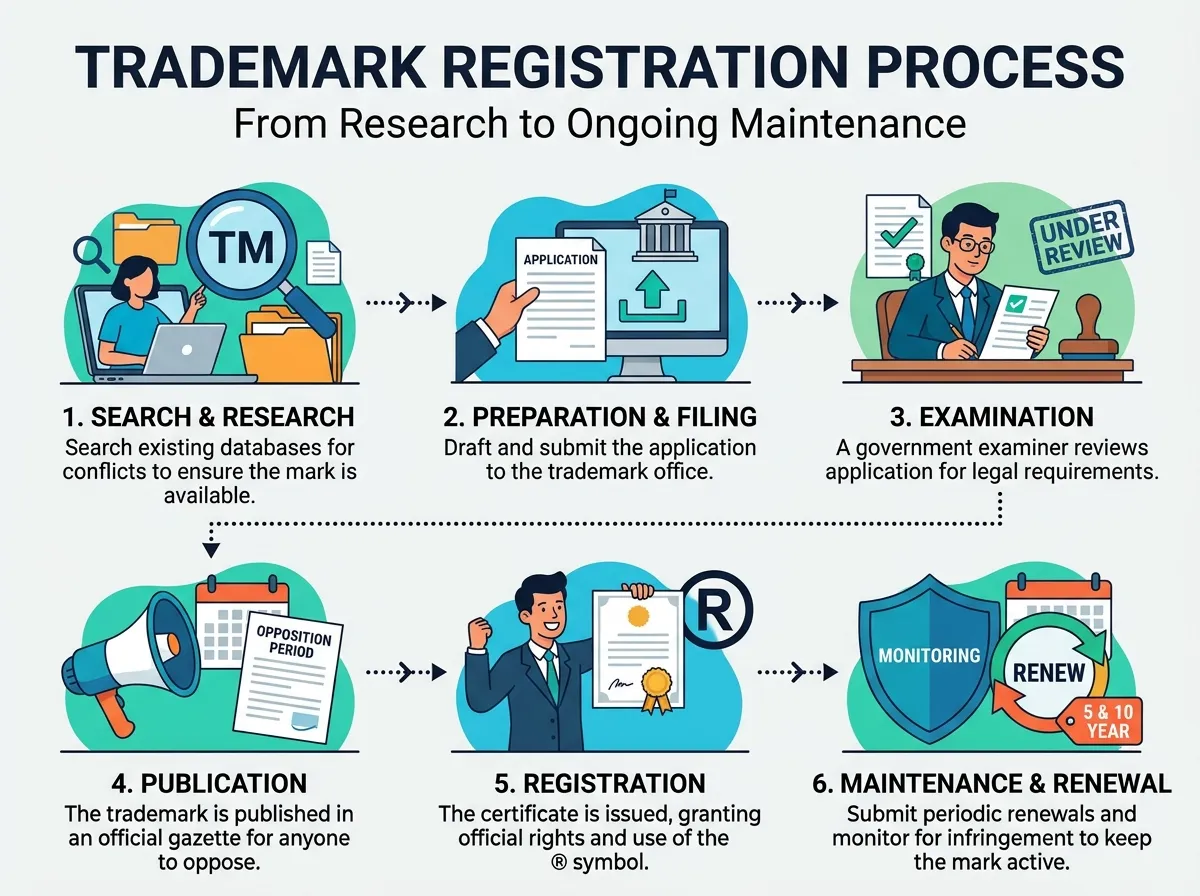
The trademark registration process usually involves several stages, although the details differ between jurisdictions.
First, a business identifies the mark it wants to protect and the goods or services associated with it. A search of relevant trademark records helps identify potentially conflicting marks. This stage is especially important when the business is choosing a name for a new product or planning to enter another market.
Next, the applicant prepares and submits an application to the relevant trademark office. The application generally includes the mark, information about the applicant, and a description or classification of the relevant goods and services. Requirements may vary according to whether the mark is a word, logo, or another recognized type.
The trademark office reviews the application under its rules. It may raise objections concerning distinctiveness, formal requirements, or other legal issues. Depending on the jurisdiction, the application may also be published for opposition, allowing eligible third parties to challenge the registration.
If the application proceeds successfully, the mark may be registered subject to applicable conditions. The business must then monitor maintenance deadlines and comply with any renewal, use, or filing requirements.
Registration is not an absolute guarantee that every possible use of a similar mark can be prevented. The scope of protection depends on factors such as the mark itself, the covered goods and services, the relevant market, and the rights of other parties.
Businesses expanding internationally should also understand that trademark rights are territorial. A registration in one country does not automatically provide equivalent protection everywhere else. A planned expansion should therefore include a review of trademark availability and protection needs in the intended markets.
Intellectual Property Licensing: Turning Brand Assets Into Opportunities
Intellectual property can create commercial value beyond a company’s direct products and services. Through intellectual property licensing, an owner may authorize another party to use a protected asset under agreed conditions while retaining ownership.
Licensing arrangements can involve trademarks, copyrighted materials, designs, patents, or other eligible rights. A brand might license its name for approved merchandise, permit a distributor to use specified marketing materials, or authorize a partner to incorporate protected creative assets into a product.
The agreement should define the rights being granted, the permitted territory, the duration, the products or services covered, and whether the license is exclusive or non-exclusive. Financial terms may include fixed payments, royalties, minimum guarantees, or other commercial arrangements.
Quality control is especially important when a license involves a recognizable brand. If a partner produces low-quality goods or presents the brand in misleading ways, the resulting damage may affect customer trust even if the owner did not manufacture the product directly. Suitable quality standards, approval procedures, reporting requirements, and termination provisions can help manage these risks.
Businesses should also confirm that they have the authority to grant the proposed license. If an asset includes third-party photographs, software, or design elements, the original license may not permit sublicensing. A trademark or other right may also be subject to territorial or contractual limitations.
When structured carefully, licensing can support partnerships, reach new audiences, and create additional revenue. It allows a business to extend the commercial use of valuable assets without necessarily transferring ownership of those assets.
Brand Infringement Prevention: Recognizing and Managing Risks
Brand infringement prevention involves identifying potential misuse of intellectual property and taking reasonable steps to protect legitimate rights. The risks may arise through confusingly similar business names, unauthorized logo use, copied creative content, counterfeit products, misleading advertisements, or misuse of licensed materials.
Monitoring should reflect how and where the brand operates. Businesses may review online marketplaces, search results, social platforms, domain registrations, distributor activity, and industry publications. Companies selling internationally may need additional monitoring because the relevant risks and legal protections can vary across markets.
Not every similarity constitutes infringement. Two businesses may use similar words in unrelated industries, and some uses may be permitted under applicable law. A meaningful assessment considers the relevant rights, the nature of the use, the market context, and the likelihood of confusion or other legally recognized harm.
When a potential violation is identified, preserving evidence is an important first step. Businesses should record the relevant URLs, dates, screenshots, product details, and available information about the party involved. They can then assess the issue and determine whether a platform complaint, direct communication, legal notice, or other response is appropriate.
Responses should be proportionate and based on the available evidence. An unsupported accusation can create unnecessary conflict, while ignoring serious misuse may allow damage to continue. For complex or cross-border disputes, advice from a qualified intellectual property professional can help clarify the available options.
Prevention also includes educating employees and partners. Clear brand ownership guidelines, approved asset libraries, and defined permissions reduce the chance that the company itself will misuse someone else’s intellectual property or unintentionally allow unauthorized use of its own assets.
Brand Identity Protection During Business Expansion
Growth introduces new intellectual property challenges. A company entering a new market may encounter existing trademarks, different copyright rules, unfamiliar licensing requirements, and new opportunities for counterfeiters to imitate its products.
Brand identity protection should therefore be included in expansion planning rather than postponed until the business has established a presence. The company can review its proposed names, logos, packaging, digital assets, and partnership arrangements before committing significant resources to a new territory.
A Brand Expansion Strategy should account for the availability and protection of important identifiers in the markets being targeted. This can help businesses avoid investing in a name or design that creates legal complications after launch.
Expansion can also change the way assets are used. Local agencies may translate marketing materials, distributors may adapt packaging, and licensing partners may request permission to use a logo in additional formats. These activities should be governed by clear agreements that specify what can be modified, who approves the changes, and which party retains ownership of newly created materials.
The commercial value of intellectual property should also be considered alongside marketing performance. Businesses may use data-driven analysis to assess audience response, campaign effectiveness, and market opportunities. Data-Driven Inbound Marketing provides a related perspective on using performance information to inform marketing decisions. Intellectual property controls can support these efforts by helping teams use approved assets consistently across campaigns and channels.
Ultimately, expansion works best when the business understands both the value of its brand and the boundaries of its rights. That awareness supports more confident partnerships, more consistent communication, and fewer avoidable disputes.
Creating Clear Brand Ownership Guidelines
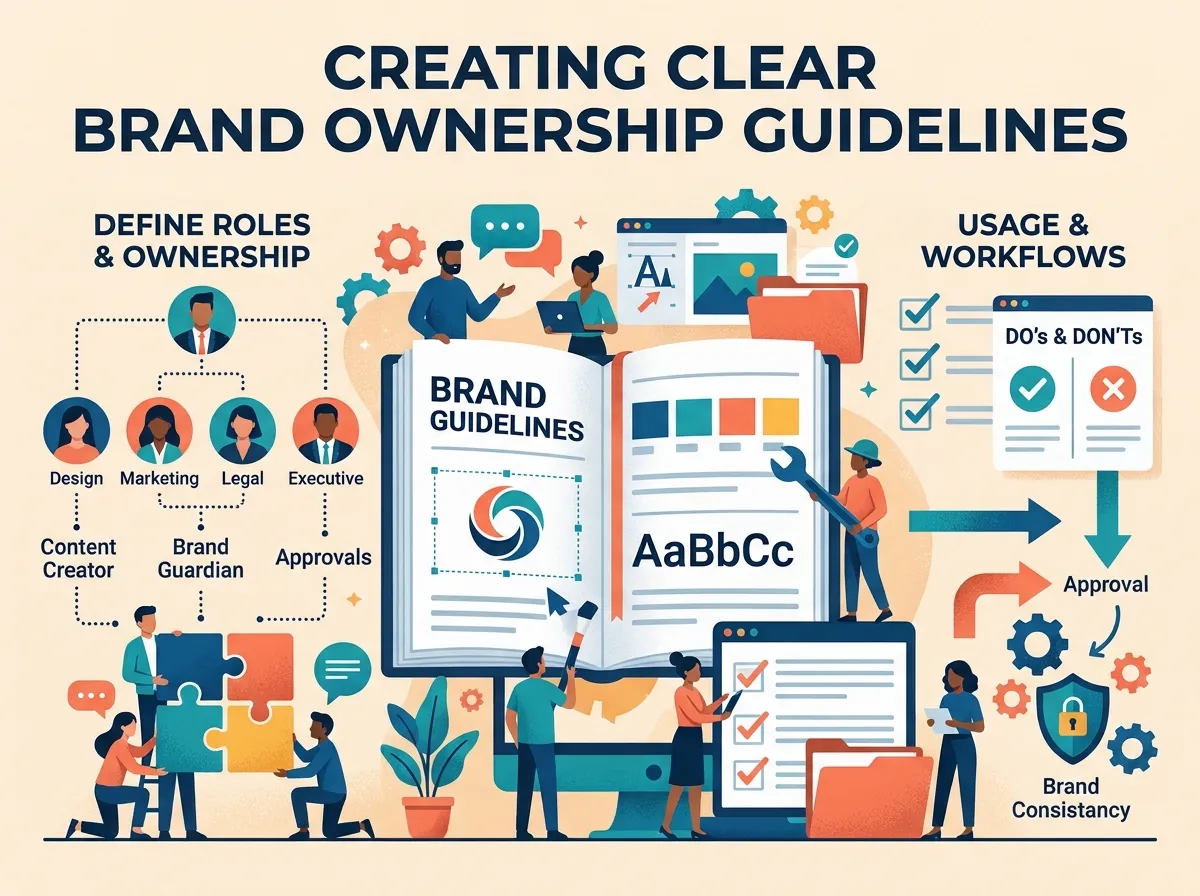
A practical intellectual property strategy needs clear ownership guidelines that employees and external partners can understand. These guidelines should identify who can approve brand asset use, how new materials are documented, where authorized files are stored, and what happens when a working relationship ends.
Businesses should distinguish between assets they own, assets they license, and materials they are merely permitted to use under specific conditions. This distinction is important for logos, photographs, fonts, software, stock content, and co-created campaign materials.
Access controls can further reduce risk. Employees and contractors should receive the files and permissions required for their work, while sensitive materials and confidential information should be restricted to authorized users. When projects end, access and licenses should be reviewed to ensure they remain appropriate.
A periodic review can identify expired licenses, incomplete contracts, missing registration details, and assets that are no longer in use. It can also help businesses determine which rights deserve additional protection as their products and services evolve.
These measures make intellectual property easier to manage in everyday operations. Instead of treating protection as a separate legal activity, the business incorporates it into creative production, marketing approvals, supplier relationships, and long-term planning.
Conclusion: Protecting the Value Behind the Brand
Brand intellectual property represents the identity, creativity, and commercial assets that help a business stand apart. Trademarks can protect distinctive identifiers, copyright can safeguard qualifying creative expression, and licensing can create new opportunities when ownership and permissions are clearly defined.
Effective protection requires more than registration. Businesses need reliable ownership records, suitable contracts, ongoing monitoring, and procedures for addressing potential infringement. They should also understand the differences between intellectual property rights and avoid assuming that every name, design, or marketing asset receives the same type of protection.
When intellectual property management becomes part of everyday business practice, organizations can protect their reputation, make better use of creative resources, and approach partnerships and expansion with greater confidence. A well-managed brand is not simply recognizable; its valuable assets are documented, responsibly used, and protected in ways that support sustainable growth.
Frequently Asked Questions
1. What is brand intellectual property?
Brand intellectual property includes the names, logos, creative materials, designs, and other qualifying assets associated with a business. Depending on the asset, protection may involve trademarks, copyrights, design rights, patents, or trade secrets.
2. Why is brand intellectual property important?
It helps businesses protect their identity, reduce unauthorized use, maintain customer trust, and preserve the commercial value of their creative work. Clear ownership can also support partnerships, licensing, and expansion.
3. What is the difference between a trademark and copyright?
A trademark generally protects signs that distinguish the source of goods or services, such as qualifying names and logos. Copyright protects qualifying original creative expression, including written content, photographs, illustrations, and videos. Their scope and requirements differ.
4. How can a business protect its brand name?
A business can research existing marks, assess potential conflicts, select a distinctive name, and consider trademark registration in the relevant markets. It should also monitor unauthorized uses and maintain registrations according to applicable rules.
5. Does paying a designer mean a business owns the logo?
Not necessarily. Ownership depends on applicable law, the relationship between the parties, and the terms of their agreement. Businesses should use clear written contracts to establish ownership or licensing rights and confirm whether third-party materials are included.
6. What is intellectual property licensing?
Intellectual property licensing is an arrangement that permits another party to use specified protected assets under agreed conditions. The agreement can define permitted uses, duration, territory, payment terms, quality requirements, and other restrictions.
7. How can businesses prevent brand infringement?
They can maintain accurate ownership records, monitor relevant markets and online platforms, establish clear usage permissions, preserve evidence of suspected misuse, and seek appropriate advice when a potential infringement arises.
8. Is trademark registration valid worldwide?
No. Trademark rights are generally territorial. Businesses seeking protection in multiple countries need to consider the registration systems and requirements that apply in each intended market.
9. Can a company logo receive both trademark and copyright protection?
Potentially, yes. A logo may qualify for trademark protection when it identifies commercial origin and may also qualify for copyright protection if it meets the applicable originality requirements. The scope of each right depends on the law and circumstances.
10. How often should a business review its intellectual property assets?
Businesses should review their intellectual property records periodically and whenever they launch new products, enter new markets, change suppliers, sign licensing agreements, or undergo a rebranding. Regular reviews help identify gaps in ownership, licensing, registration, and monitoring.