Brand Permissions: Protecting Brand Identity Through Clear Usage Rights and Authorization
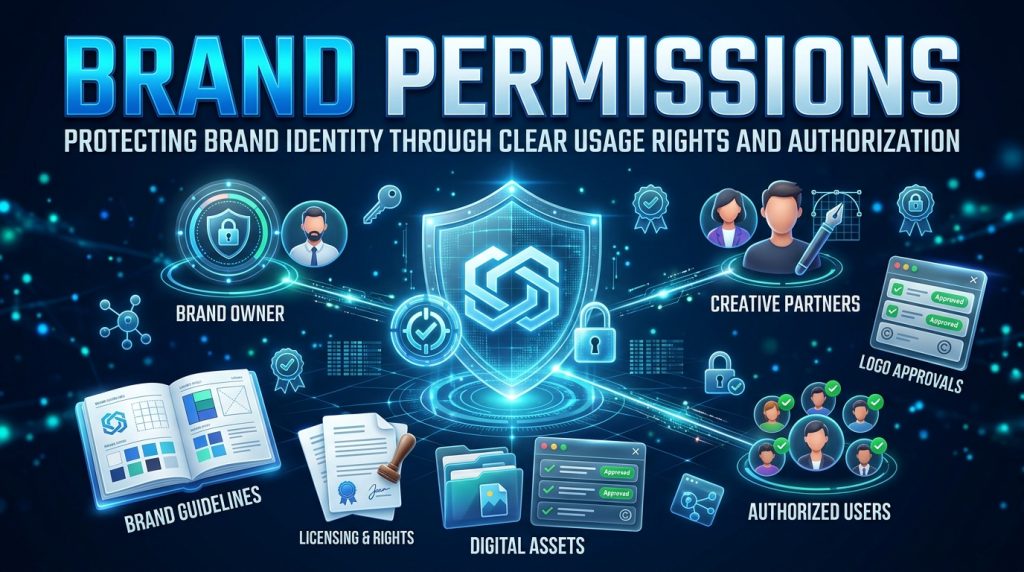
Brand Permissions define who can use a company’s brand assets, how those assets may be presented, and what conditions apply to their use. They cover areas such as brand usage rights, trademark authorization, logo permissions, content approval, licensing, and digital access control. Clear permission systems help businesses protect intellectual property, maintain brand consistency, reduce unauthorized use, and manage partnerships more effectively. As organizations expand across markets and digital platforms, structured permissions support responsible collaboration and long-term brand protection.
A brand is more than a name, logo, or visual identity. It represents a company’s reputation, values, intellectual property, and relationship with its audience. As businesses expand through partnerships, licensing agreements, marketing collaborations, distributors, and digital platforms, their brand assets increasingly appear in places they do not directly control. Without clear permission arrangements, even well-intentioned use can create confusion, weaken brand consistency, or lead to legal disputes.
Brand Permissions establish who can use a brand, which assets they can access, how those assets may be presented, and what conditions apply to their use. They help organizations protect their identity while allowing approved partners, employees, agencies, and other stakeholders to represent the brand appropriately.
The subject becomes particularly important when businesses operate across multiple markets or manage several brands under one organization. A logo shared with an agency, a product image used by a retailer, or a brand name included in a partner campaign may require different levels of authorization. Permission cannot simply be assumed because someone has access to an asset or has an existing business relationship with its owner.
A clear permission framework creates a balance between protection and collaboration. It allows businesses to share approved resources without losing control over how their identity is represented.
The Difference Between Owning a Brand and Having Permission to Use It
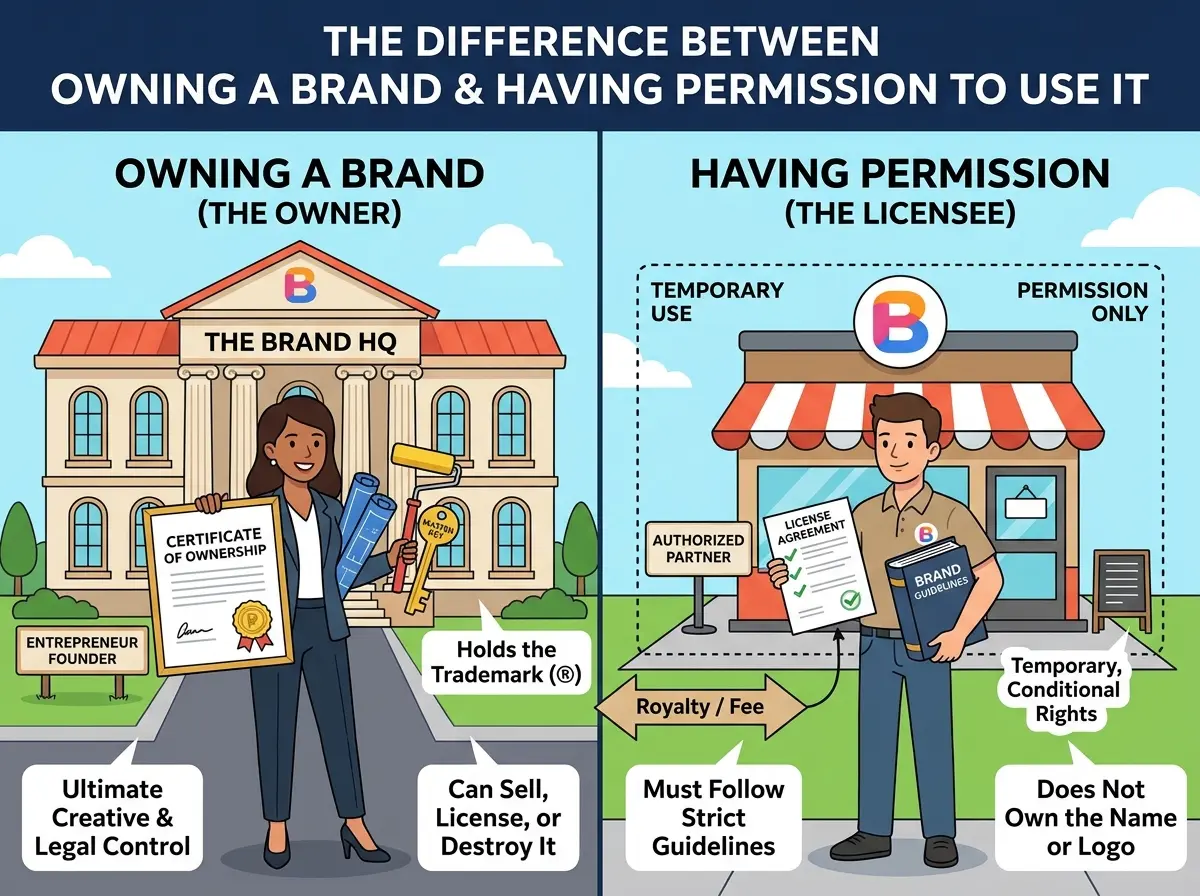
Brand ownership and brand usage are closely connected, but they are not interchangeable. A company may own a trademark, logo, visual identity, or other intellectual property while allowing selected individuals and organizations to use those assets under defined conditions.
For example, a manufacturer may authorize a distributor to display its logo on an approved product listing. The distributor receives permission to use the asset for a specific commercial purpose, but that does not automatically give it ownership of the logo or the right to modify it.
This distinction forms the foundation of brand usage rights. These rights describe the activities an authorized party can perform with brand-related materials. They may cover logo placement, promotional content, product photography, advertising, packaging, social media communication, and other forms of commercial representation.
Permission can also be limited by time, location, platform, audience, or campaign. A partner might receive approval to use a logo for a particular event without gaining permission to include it in unrelated advertising. Similarly, an agency may be allowed to access brand assets while working on a project but may not retain or reuse them after the agreement ends.
Businesses need to make these boundaries clear because informal assumptions can create problems later. A permission arrangement should explain what is allowed, who is responsible for approval, and which uses require additional authorization.
Brand Authorization as a Foundation for Responsible Collaboration
Modern businesses rarely manage every aspect of their marketing and communication internally. They work with designers, advertising agencies, distributors, resellers, influencers, technology providers, and strategic partners. These relationships often require access to brand assets and the ability to represent the organization publicly.
Brand authorization provides a formal basis for these activities. It confirms that a person or organization has been approved to use particular brand materials under specified conditions.
Consider a company working with an external marketing agency. The agency may need access to the company’s logo, brand colors, product images, templates, and approved messaging. Without a clear authorization process, team members may use outdated files, create unapproved variations, or publish materials that do not reflect the company’s current positioning.
An authorization framework helps prevent these situations by identifying approved users and defining the scope of their access. It can also distinguish between permission to view an asset, permission to download it, and permission to publish it.
This distinction becomes more important as organizations work with larger partner networks. A distributor may need access to product photographs, while a public relations agency may require approved logos and brand descriptions. Giving every stakeholder unrestricted access to every asset creates unnecessary risk.
Clear authorization makes collaboration more efficient because participants understand their responsibilities before using company materials.
Why Brand Asset Permissions Matter in Daily Operations
Brand assets are used across a wide range of business activities. They include logos, typography, photographs, illustrations, product images, videos, presentation templates, advertisements, packaging designs, and written brand materials.
When these resources are shared across departments and external organizations, businesses need a consistent way to manage access and usage.
Brand asset permissions define which individuals or groups can use specific materials and under what circumstances. They help organizations prevent unauthorized distribution, outdated content, and inconsistent brand representation.
For example, a company may maintain a central library containing its approved logo variations. Internal marketing employees may have permission to download and use the files, while external partners may only access selected versions relevant to their projects.
A business may also restrict the use of certain campaign photographs to specific markets or promotional periods. These restrictions can be important when images involve licensed content, contractual obligations, or regional marketing arrangements.
Asset permissions are especially useful when several departments work with the same materials. Sales teams, marketing departments, human resources, product teams, and external agencies may all need access, but their requirements are not identical.
A structured system reduces unnecessary sharing and helps ensure that people use the correct materials for their assigned responsibilities.
Trademark Usage Rights and the Protection of Brand Identity
A trademark helps distinguish a business’s products or services from those of other organizations. It may include a brand name, logo, symbol, slogan, or another recognizable identifier. Because trademarks contribute to business recognition and reputation, their use needs careful management.
Trademark usage rights determine how an authorized party can use a protected brand identifier. These rights may be provided through licensing agreements, distribution arrangements, franchise relationships, or other formal permissions.
For example, a retailer may be allowed to display a manufacturer’s registered logo when promoting genuine products. However, the retailer may not have permission to create a new logo variation, register a confusingly similar mark, or use the trademark to suggest a partnership that does not exist.
The conditions surrounding trademark use can vary depending on the agreement and applicable intellectual property laws. Businesses should therefore avoid relying on informal approval when granting significant commercial rights.
Trademark permissions also need to account for brand presentation. Unauthorized changes to logo proportions, colors, wording, or surrounding elements may weaken visual consistency. In some situations, incorrect use may also create confusion about the relationship between the brand owner and the authorized party.
Companies that operate across several markets should pay attention to the differences between local trademark protections and international arrangements. Permission to use a trademark in one territory does not automatically establish the same rights everywhere.
Clear documentation and appropriate legal review help organizations protect their identifiers while supporting legitimate commercial use.
Brand Licensing Rules and the Value of Defined Agreements
Licensing allows a brand owner to grant another party permission to use selected intellectual property in exchange for agreed conditions. It is common in industries such as fashion, entertainment, retail, consumer products, technology, and manufacturing.
However, a licensing relationship needs more than an informal statement that a partner can use a brand name or logo.
Brand licensing rules establish the boundaries of authorized use. They may define the licensed assets, permitted products, geographic territories, agreement duration, distribution channels, quality expectations, payment arrangements, and restrictions on sublicensing.
A company licensing its brand to a product manufacturer, for example, may require approval of packaging designs, product descriptions, and promotional materials before they reach the market. These conditions help ensure that licensed products maintain an acceptable relationship with the brand’s identity and reputation.
Quality control is especially important in licensing arrangements. If a partner uses the brand on products or services that fail to meet agreed standards, customers may associate the poor experience with the original brand owner.
Licensing agreements can also establish procedures for handling misuse. These may include correction requests, suspension of permission, termination conditions, or other remedies defined by the agreement and applicable law.
When licensing terms are clear, both parties have a better understanding of their commercial responsibilities. The brand owner retains appropriate control, while the licensee gains a defined opportunity to use the brand for an approved purpose.
Brand Content Approval and the Risk of Inconsistent Communication
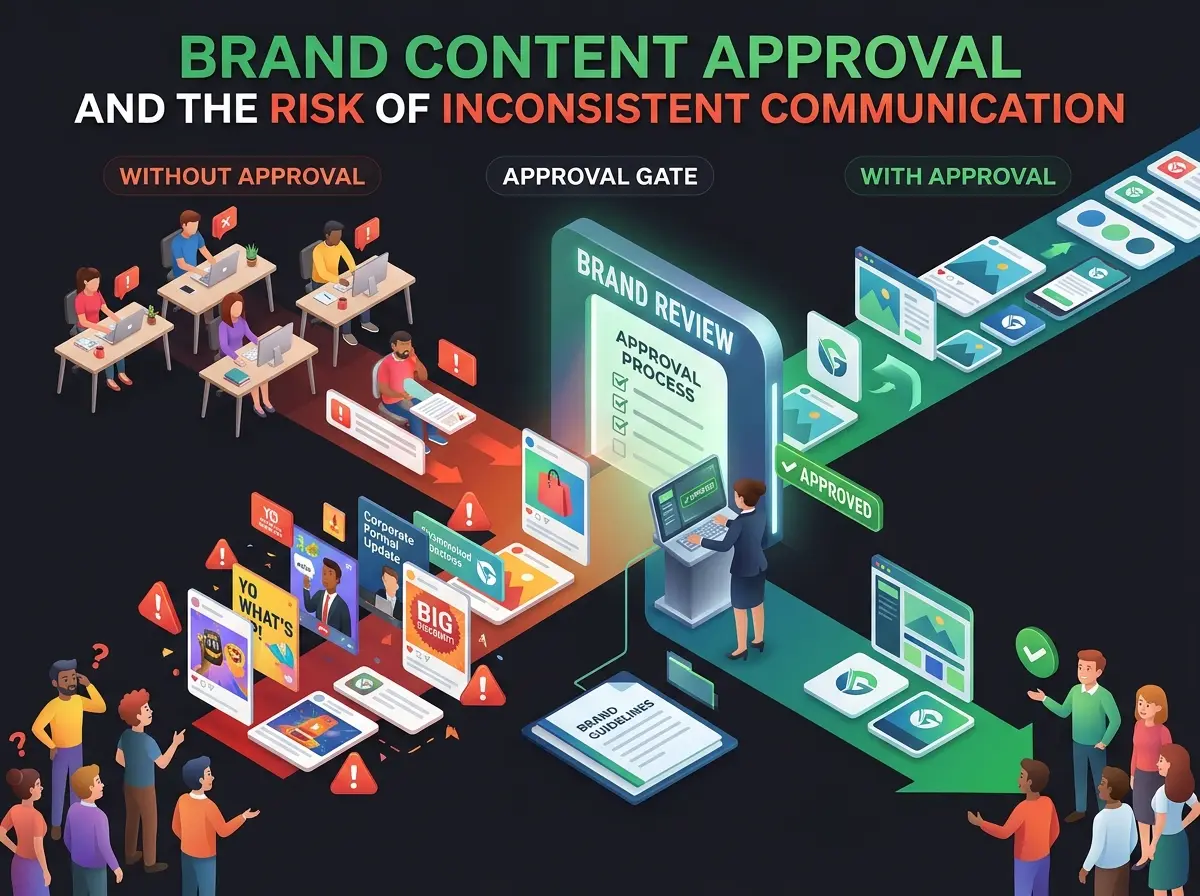
A brand’s identity is shaped not only by its visual assets but also by the messages communicated through advertising, social media, websites, product descriptions, and public announcements.
A partner may have permission to use a company’s logo but still produce content that misrepresents its products, services, values, or business relationships. This is why content authorization deserves separate attention.
Brand content approval establishes how promotional materials and public communications are reviewed before publication. It may apply to advertising campaigns, co-branded announcements, social media posts, press releases, product descriptions, videos, and other materials that represent the organization.
For example, a business collaborating with a technology provider may agree that both parties can announce the partnership. However, each organization may need to approve the final announcement to ensure that product claims, brand descriptions, and partnership details are accurate.
Approval requirements should reflect the level of risk associated with the content. A simple use of an approved logo in a standard directory listing may not require the same review process as a national advertising campaign or a product endorsement.
A well-designed approval system also needs to be practical. If every minor asset requires several layers of review, collaboration can become unnecessarily slow. Businesses should distinguish between pre-approved materials and content that requires individual assessment.
This creates a more efficient process while reducing the possibility of unauthorized or misleading communication.
Logo Usage Permissions and Visual Consistency
A logo is often the most recognizable element of a brand’s visual identity. Customers may use it to identify a company, recognize its products, or distinguish official communications from unrelated material.
Because logos carry this recognition value, logo usage permissions should explain how authorized parties can display them.
Permission may cover specific applications, such as website partner pages, event materials, product packaging, social media graphics, presentations, or advertising. It should also identify which logo versions are approved for each use.
For example, a company may provide full-color, monochrome, horizontal, and simplified logo formats. Each version may have particular requirements relating to background color, spacing, size, and placement.
Unauthorized modification can create visual inconsistency. A partner might stretch the logo, change its colors, combine it with another symbol, or place it against an unsuitable background. Even when the intention is harmless, these changes can reduce recognition and make the brand appear less professional.
Centralized asset libraries can help prevent these problems by providing approved logo files and supporting instructions. When partners use the same current materials, the brand maintains a more consistent appearance across different channels.
Businesses should also communicate whether a logo may be used to imply endorsement, sponsorship, certification, or an official relationship. These distinctions matter because displaying a logo can communicate more than simple recognition.
Brand Ownership Rights and the Importance of Intellectual Property Control
Brand ownership rights involve the legal and contractual interests a business holds in its brand-related intellectual property. Depending on the asset and applicable law, these interests may include trademarks, copyright-protected creative works, designs, and other forms of intellectual property.
Ownership can become complicated when businesses collaborate with external designers, marketing agencies, photographers, software providers, and production companies.
For example, a business may commission an agency to create a new visual identity. The agreement should clarify who owns the resulting creative work, what rights are transferred, and whether the agency retains any permitted rights to display the work in its portfolio.
Similarly, a company using licensed photographs should understand the scope of the license. Paying for access to an image does not necessarily mean the business owns the copyright or can use the image without restrictions.
These distinctions are essential when defining permissions. A person cannot automatically grant rights that they do not own or have authority to provide.
Businesses with multiple brands should also understand how ownership and usage permissions are organized across their portfolio. Brand Portfolio Governance provides a broader perspective on managing brand structures, responsibilities, and consistency across an organization.
A clear ownership record makes it easier to identify the person or entity responsible for approving usage requests. It also reduces uncertainty when brands change ownership, enter partnerships, or expand into new markets.
Brand Access Control in a Connected Business Environment
As brand materials move between cloud storage platforms, digital asset libraries, project management systems, and marketing applications, access control becomes increasingly important.
Brand access control determines who can view, download, edit, share, or approve brand-related materials. It helps businesses reduce unnecessary exposure while ensuring that authorized people can complete their work.
A marketing employee may need permission to edit campaign templates, while an external distributor may only need access to approved product images. A senior brand manager may be responsible for approving new logo applications, while other employees can use existing templates without additional authorization.
These differences can be managed through role-based access, user permissions, approval workflows, and centralized asset management systems.
Access should also change when business relationships change. An agency that no longer works with a company should not retain unrestricted access to confidential brand resources. Similarly, employees moving into different roles may require their permissions to be updated.
Digital access management should be supported by clear internal policies. Technology can control what users are able to do, but employees and partners still need to understand their responsibilities.
This becomes particularly relevant as businesses introduce new products and services. Business Innovation highlights the broader relationship between business development and changing organizational capabilities. As companies adopt new platforms, partnerships, and commercial models, brand permission systems should evolve alongside those changes.
Brand Compliance Guidelines Across Partners and Markets
A brand may be represented by employees, agencies, licensees, distributors, franchise operators, and technology partners. Each participant can influence how customers perceive the organization.
Brand compliance guidelines establish expectations for using brand assets, communicating brand messages, and following approved identity standards. They provide a shared reference for organizations that need to maintain consistency across different teams and external relationships.
These guidelines may cover visual identity, logo placement, approved wording, product descriptions, advertising claims, content approval, trademark notices, and restrictions on unauthorized modifications.
Compliance becomes more complex when businesses operate internationally. Local regulations, language requirements, advertising standards, and intellectual property protections may differ between markets.
A company may need to adapt its promotional content for a regional audience while preserving the essential elements of its identity. This requires a distinction between permitted localization and unauthorized alteration.
Brand compliance should also consider the broader network of relationships surrounding an organization. A business operating through retailers, distributors, licensing partners, and co-branded services may need consistent permission standards across all these participants.
The concept of Brand Ecosystems is relevant here because modern brand experiences often involve several connected organizations and customer touchpoints. When each participant understands its rights and responsibilities, the brand can maintain a more cohesive identity.
What Happens When Brand Permissions Are Unclear?
Unclear permissions can create problems even when businesses have positive relationships with their partners. A distributor might reuse a logo in an unrelated campaign, an agency might continue displaying an outdated identity, or a retailer might make product claims that the brand owner has not approved.
These situations can lead to inconsistent communication, customer confusion, intellectual property disputes, and damage to reputation.
The risk becomes more significant when several organizations share similar assets or operate within related markets. A business may need to distinguish between its own brand, a licensed partner identity, and a separate organization that has permission to display selected materials.
This is where Brand Coexistence becomes relevant. Brand coexistence concerns how different brands can operate within overlapping markets while maintaining their separate identities and appropriate rights. Clear permission arrangements can help define how names, logos, and other identifiers may be used without creating unnecessary confusion.
When a misuse issue occurs, organizations benefit from having documented approvals, ownership records, and clear contact points. These records help establish what was authorized and provide a basis for addressing the problem.
Building a Permission Framework That Supports Growth

A strong brand permission framework should not exist only to restrict activity. Its purpose is to make legitimate brand use easier, more consistent, and more accountable.
As organizations grow, their assets and relationships become more complex. New products, regional campaigns, licensing arrangements, agencies, and distribution partners introduce additional permission requirements.
A centralized record of brand assets and ownership can help businesses understand what they control. Defined authorization roles clarify who can approve usage requests. Documented agreements establish the conditions under which external parties can use protected materials.
Digital asset management systems can support this structure by storing approved files, organizing access, and maintaining updated versions. Approval workflows can help ensure that important materials receive the appropriate review before publication.
Permission arrangements should also be reviewed periodically. An agreement that was suitable for a small campaign may not cover a larger partnership or a new geographic market. Businesses should evaluate whether existing permissions remain appropriate as their commercial activities change.
The strongest frameworks combine practical processes with suitable legal oversight. Standard brand assets may be managed through internal policies, while complex trademark licensing, ownership transfers, and commercial agreements may require qualified legal advice.
Conclusion
Brand Permissions help businesses protect their identity while allowing approved people and organizations to use brand materials responsibly. From logo usage and trademark licensing to content approval and digital access control, permissions define the boundaries of authorized brand representation.
As companies work with more partners, platforms, and markets, clear permission arrangements become increasingly important. They reduce uncertainty, support consistent communication, protect intellectual property, and make collaboration easier to manage.
A well-organized framework does not prevent businesses from sharing their brand. Instead, it ensures that sharing happens with the right authorization, appropriate oversight, and a clear understanding of ownership. This balance allows organizations to expand their brand presence while maintaining control over the identity and reputation they have built.
Frequently Asked Questions
1. What are Brand Permissions?
Brand Permissions are the rules and authorizations that determine how individuals, employees, agencies, and external organizations can use a company’s brand assets, including logos, names, images, content, and trademarks.
2. Why are brand usage rights important?
Brand usage rights clarify how authorized parties can use brand materials. They help prevent unauthorized modifications, misleading representation, and disputes while ensuring that approved partners can use assets appropriately.
3. What is brand authorization?
Brand authorization is formal approval that allows a person or organization to use specified brand assets for defined purposes. It may include restrictions relating to time, location, platform, and content.
4. What are brand asset permissions?
Brand asset permissions determine who can access and use resources such as logos, photographs, videos, templates, advertisements, and product images. They help businesses maintain control over shared brand materials.
5. How do trademark usage rights work?
Trademark usage rights allow authorized parties to use protected brand identifiers under specific conditions. These rights may be established through licensing agreements or other formal arrangements and should comply with applicable trademark laws.
6. What should brand licensing rules include?
Brand licensing rules commonly address permitted assets, products, geographic areas, agreement duration, payment terms, quality standards, promotional activities, and restrictions on further licensing.
7. Why do businesses need logo usage permissions?
Logo usage permissions help ensure that logos are displayed correctly and only in approved situations. They reduce unauthorized changes and prevent third parties from suggesting relationships or endorsements that do not exist.
8. How does brand access control protect a business?
Brand access control limits who can view, edit, download, share, or approve brand materials. It reduces unnecessary exposure and helps organizations manage access according to individual roles and responsibilities.
9. What happens if a company uses another brand without permission?
Unauthorized use may lead to intellectual property disputes, requests to remove materials, reputational damage, or legal action, depending on the circumstances and applicable laws. Businesses should obtain appropriate authorization before using another organization’s protected assets.
10. How can businesses maintain brand compliance?
Businesses can maintain brand compliance through documented permission policies, approved asset libraries, clear ownership records, authorization workflows, partner agreements, and periodic reviews of brand usage.