Rebranding Strategy: Building a Stronger and More Relevant Brand

A rebranding strategy helps businesses update their identity, positioning, messaging, and customer experience to better reflect their goals and audience. A well-planned rebrand can strengthen brand recognition, improve market positioning, and create a more consistent customer experience.
A rebranding strategy helps businesses redefine how they present themselves, communicate with customers, and compete in changing markets. As customer expectations, industries, and business goals evolve, a brand that once worked well may no longer represent what a company offers today.
Rebranding can involve changes to a company’s visual identity, messaging, positioning, values, audience, or overall customer experience. However, successful rebranding is not simply about creating a new logo or changing brand colors. It is about creating a clearer and more relevant identity that reflects where the business is going.
Why Businesses Consider Rebranding
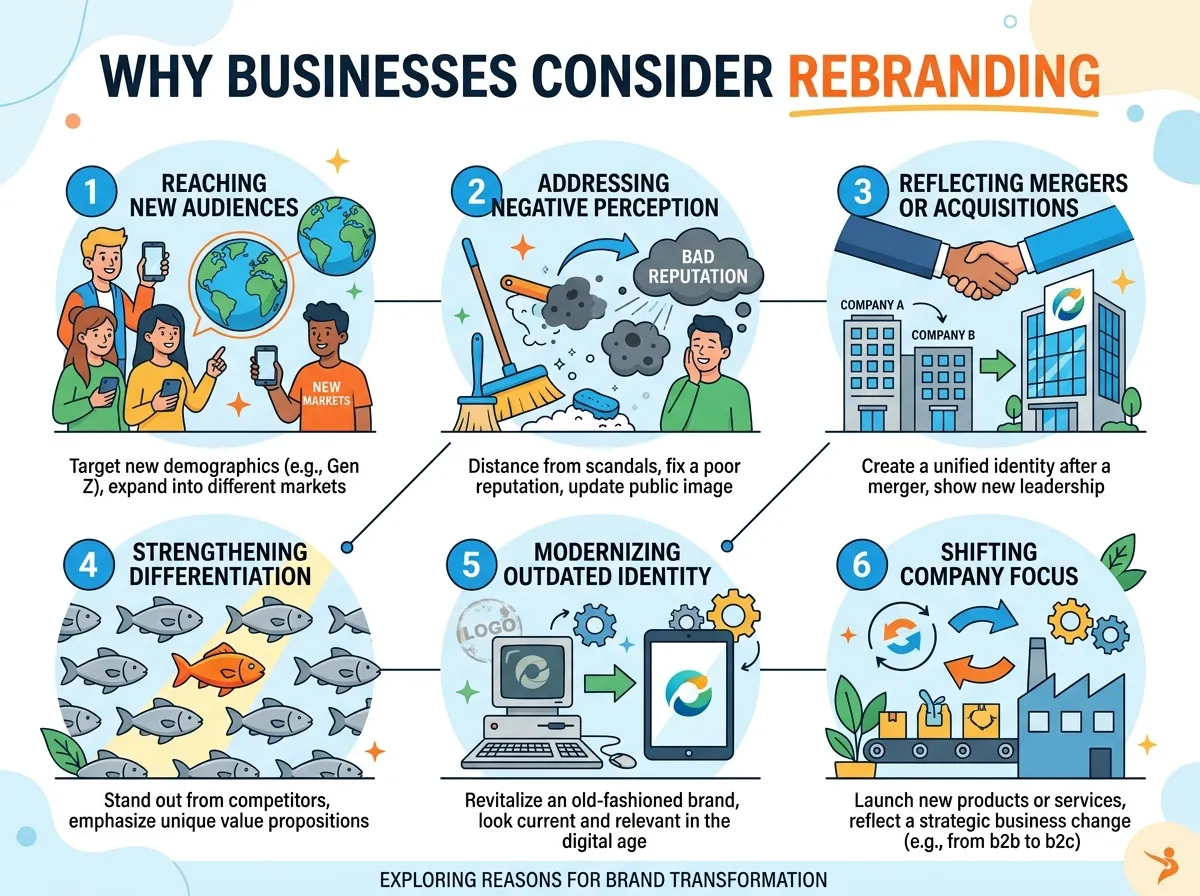
Businesses may consider rebranding for many different reasons. A company may have expanded into new markets, introduced new products, changed its target audience, merged with another organization, or developed a different business direction.
Sometimes, the existing brand may simply feel outdated. Visual styles, communication methods, and customer expectations change over time, and a brand that does not evolve can gradually lose relevance.
A thoughtful rebrand gives businesses an opportunity to review how customers perceive them and determine whether their current identity still communicates the right message.
The goal should not be change for the sake of change. A rebrand should solve a genuine business or market problem.
Developing a Brand Repositioning Strategy
A brand repositioning strategy focuses on changing how customers perceive a business in the market. It can involve redefining the target audience, value proposition, competitive advantages, messaging, or market position.
For example, a company that was previously known as a low-cost provider may decide to position itself as a premium solution. This change requires more than new visual branding. The company’s messaging, customer experience, pricing, website, content, and marketing campaigns should all support the new position.
Before repositioning a brand, businesses should understand their existing reputation and identify what customers value about the company. This helps protect valuable brand equity while creating room for meaningful change.
Building a Business Rebranding Strategy
A business rebranding strategy should connect brand changes with broader business objectives. The company needs to understand why the rebrand is happening and what it expects to achieve.
Some businesses want to reach a younger audience, while others want to enter new markets or communicate a more modern value proposition. The reason behind the rebrand influences almost every decision that follows.
A business rebranding strategy should consider the company’s mission, target customers, market position, communication style, visual identity, and customer experience. When these elements work together, the new brand feels consistent rather than simply different.
Creating a Stronger Brand Identity
A successful rebrand often includes a brand identity redesign. This can involve the logo, typography, colors, imagery, graphic elements, packaging, website design, and other visual components.
However, visual identity is only one part of a brand. The way a company speaks to customers is equally important. Tone of voice, messaging, slogans, positioning statements, and content should communicate the same personality as the visual identity.
For example, a company positioning itself as innovative should ensure that its website, content, product experience, and communications consistently reinforce innovation.
A strong identity makes the business easier to recognize while helping customers understand what it represents.
Understanding the Rebranding Process

The rebranding process typically begins with research and evaluation. Businesses need to understand their current brand, competitors, customers, market trends, and existing perception.
The next stage is developing the new direction. This may include defining positioning, messaging, visual concepts, brand values, and communication guidelines.
Once the new identity is established, it needs to be implemented across customer touchpoints. Websites, social media profiles, advertising, packaging, sales materials, email campaigns, presentations, and other branded assets may need to be updated.
Communication is also important during the transition. Customers, employees, partners, and other stakeholders should understand what is changing and why.
Rebranding as a Brand Transformation Strategy
A brand transformation strategy goes beyond changing the appearance of a company. It involves changing how the brand operates, communicates, and delivers value to its audience.
This approach may be appropriate when a company is undergoing significant organizational or strategic change. For example, a traditional business moving toward digital services may need to transform both its customer experience and its brand perception.
Brand transformation works best when the internal organization supports the external promise. If a company presents itself as customer-focused but provides poor customer service, the rebrand will not create lasting credibility.
The brand experience must support the message.
Corporate Rebranding
Corporate rebranding involves changing the identity or positioning of an established organization. It can be more complex than rebranding a small business because large organizations often have multiple products, departments, markets, employees, and customer groups.
A corporate rebrand may follow a merger, acquisition, organizational restructuring, market expansion, or significant strategic shift.
Consistency becomes especially important in corporate rebranding. Employees need clear guidelines so that the new identity is represented consistently across departments and communication channels.
At the same time, businesses should avoid making the transition unnecessarily confusing for existing customers. Maintaining familiar elements where appropriate can help preserve recognition and trust.
When a Brand Refresh Makes More Sense
Not every business needs a complete rebrand. In some situations, a brand refresh strategy may be a better choice.
A brand refresh updates selected elements of an existing identity without completely changing the brand. This could include modernizing the logo, updating colors, improving website design, refining messaging, or adjusting the brand’s tone of voice.
A refresh can be useful when the existing brand still has strong recognition and customer trust but appears outdated or inconsistent.
The difference is largely about scale. A rebrand can change the strategic foundation of a brand, while a refresh generally improves and modernizes what already exists.
Connecting Rebranding With Marketing
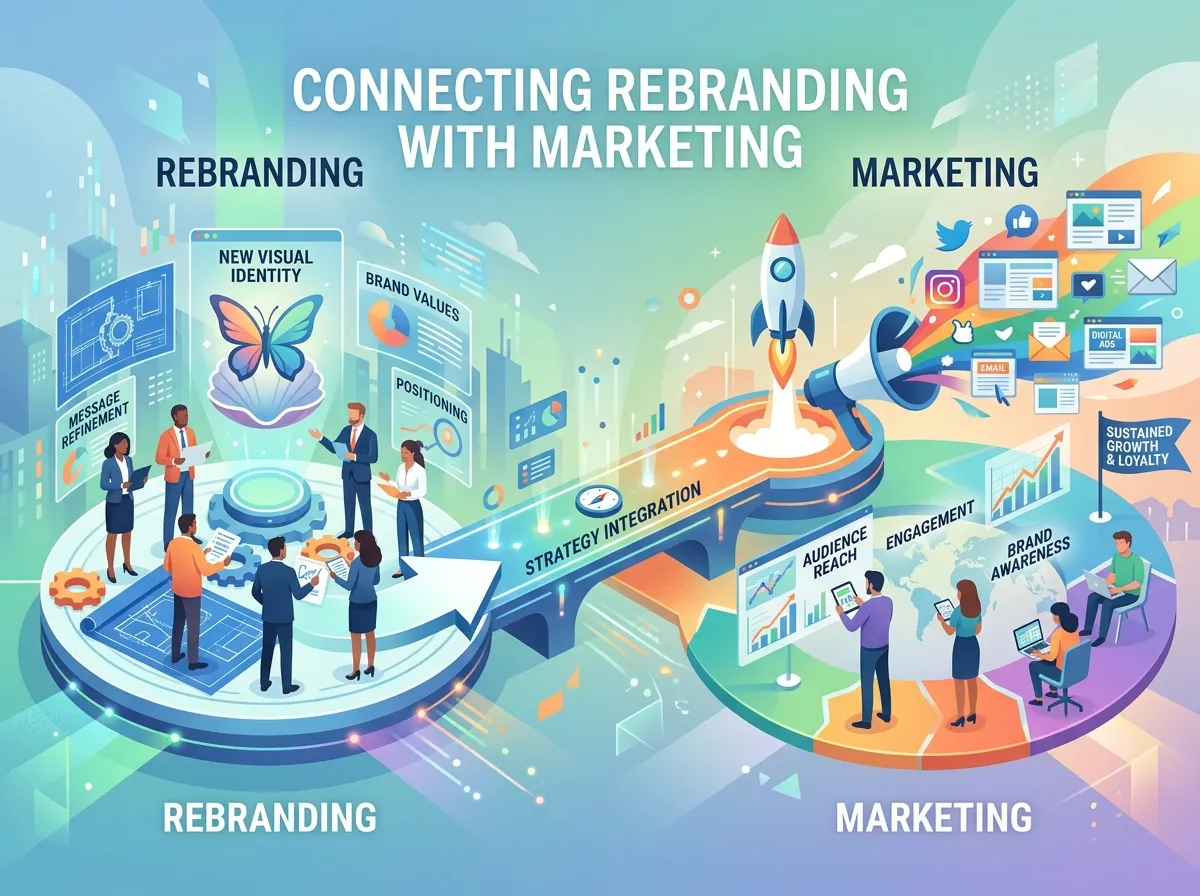
A rebranding marketing strategy ensures that the new brand reaches customers effectively. Launching a new identity without communicating it properly can create confusion and reduce the impact of the investment.
Businesses can introduce the new brand through websites, social media, email campaigns, public relations, advertising, content marketing, events, and customer communications.
Marketing campaigns should explain the value behind the change rather than focusing only on the new logo or visual design.
For example, if a company rebrands because it now provides a broader range of solutions, marketing communication should clearly explain that expanded value to customers.
Characteristics of Successful Rebranding Strategies
The most successful rebranding strategies are based on a clear reason for change. They start with research rather than assumptions and consider both customer expectations and business objectives.
Successful rebranding also requires consistency. A new logo combined with old messaging and an outdated customer experience can create an inconsistent brand.
Another important factor is internal alignment. Employees interact with customers and represent the brand every day, so they need to understand the new positioning and communication style.
Finally, businesses should measure the results. Brand awareness, website engagement, customer perception, lead generation, conversions, customer retention, and other relevant indicators can help determine whether the rebrand is achieving its goals.
Rebranding Strategy for Businesses
A rebranding strategy for businesses should be realistic, customer-focused, and connected to long-term objectives. Businesses should avoid copying competitors or changing their identity simply because a particular design trend is popular.
The strongest rebrands usually preserve valuable elements of the existing brand while improving areas that no longer support the company’s direction.
Businesses should also prepare for the operational side of rebranding. Updating digital platforms, printed materials, sales documents, product packaging, advertisements, and internal resources can require significant coordination.
Planning these changes carefully helps create a smoother transition.
Common Rebranding Challenges
Rebranding can create challenges when businesses underestimate the importance of planning. One common problem is changing the visual identity without addressing the underlying positioning.
Another challenge is customer confusion. Existing customers may not immediately understand why the brand has changed or whether the products and services they trust are still the same.
Internal resistance can also affect implementation. Employees who do not understand the purpose of the rebrand may continue using old messaging or materials.
Businesses can reduce these risks through clear communication, internal training, consistent brand guidelines, and careful rollout planning.
Measuring the Impact of a Rebrand
A rebrand should produce measurable business and marketing outcomes. Businesses can compare performance before and after the launch to identify meaningful changes.
Brand awareness surveys can show whether customers recognize the new identity. Website analytics can reveal changes in traffic and engagement, while marketing data can indicate whether the new positioning is attracting the desired audience.
Customer feedback is also valuable. Direct feedback can reveal whether customers understand the new brand and whether their perception has changed.
The most important measurement depends on the original reason for rebranding. If the goal was market expansion, new-market awareness may matter most. If the goal was lead generation, qualified leads and conversions may be stronger indicators.
The Connection Between Branding and Marketing Strategy
A strong brand needs more than an attractive visual identity. Branding and marketing should work together to communicate a consistent message across every customer touchpoint. Businesses can benefit from understanding What is Marketing and Brand Strategy? when developing a rebrand that connects positioning, messaging, audience expectations, and marketing objectives.
When these elements are aligned, marketing campaigns become easier to recognize and the brand can communicate its value more consistently. This is particularly important during a rebrand because customers need to understand what has changed and why the new direction matters.
Rebranding Around Changing Customer Expectations
Customer expectations continue to change as new technologies, communication channels, and purchasing behaviors develop. A brand that worked several years ago may not connect with today’s audience in the same way.
Businesses should therefore consider customer behavior when developing a rebranding strategy. Research, customer feedback, market analysis, and competitor research can help identify where the existing brand may be losing relevance.
The objective is not to follow every trend. Instead, businesses should identify meaningful changes in their audience and adapt their brand where those changes affect customer expectations.
Using Digital Channels to Strengthen a Rebrand
Digital channels provide businesses with more opportunities to introduce and reinforce a new brand identity. Websites, social media profiles, email campaigns, search advertising, video content, and online communities can all support the transition.
A rebrand should be reflected consistently across these channels. If the website uses a new identity while social media continues using old messaging, customers may receive mixed signals.
Digital marketing also makes it easier to monitor how audiences respond to the new positioning. Engagement, traffic, search behavior, conversions, and customer feedback can provide useful signals after the launch.
Rebranding in Emerging Digital Markets
New digital environments can create opportunities for businesses to rethink how they build communities and communicate their identity. Brands operating in Web3, digital collectibles, or blockchain-related markets may require different approaches to audience engagement.
For companies exploring these areas, NFT Marketing Strategies can provide ideas around community building, digital ownership, partnerships, and Web3-focused promotion.
However, businesses should only incorporate emerging technologies when they support a genuine customer or business need. Adding a new technology simply because it is popular can make a rebrand feel disconnected from the company’s core purpose.
Using Generative AI During Brand Transformation
Technology can also influence how businesses communicate after a rebrand. Generative AI in Marketing can help teams create and adapt content, develop campaign variations, personalize communication, and support creative workflows at scale.
For businesses undergoing a major transformation, Generative AI in Marketing can become part of a broader strategy for producing consistent communication across multiple channels.
AI should still operate within clear brand guidelines. Tone, messaging, visual standards, and brand values need to remain consistent so that automated content does not create an identity that feels different from the company’s intended positioning.
Conclusion
A rebranding strategy is more than a new logo, color palette, or website design. It is a strategic opportunity to redefine how a business communicates its value and connects with its audience.
Whether a company needs a complete transformation, corporate rebranding, or a simple brand refresh, the process should begin with a clear understanding of business goals and customer expectations.
When positioning, identity, messaging, marketing, and customer experience work together, rebranding can create a stronger and more relevant brand that supports long-term growth.
Frequently Asked Questions
What is a rebranding strategy?
A rebranding strategy is a planned approach to changing a company’s brand identity, positioning, messaging, or customer experience to better support its business goals.
Why do businesses need a rebranding strategy?
Businesses may rebrand to reach new audiences, enter new markets, modernize their identity, respond to market changes, or better reflect changes in their products and services.
What is a brand repositioning strategy?
A brand repositioning strategy changes how customers perceive a business by redefining its target audience, value proposition, messaging, or competitive position.
What is included in a brand identity redesign?
A brand identity redesign can include changes to logos, colors, typography, imagery, website design, messaging, and other elements that represent the brand.
What is the rebranding process?
The rebranding process generally involves research, strategic planning, identity development, implementation, communication, and performance measurement.
What is the difference between rebranding and a brand refresh?
Rebranding usually involves broader strategic changes, while a brand refresh typically updates selected visual or communication elements while keeping the core brand relatively unchanged.
What is corporate rebranding?
Corporate rebranding involves changing the identity, positioning, or messaging of an established organization, often following major business or strategic changes.
How long does a rebranding strategy take?
The timeframe varies depending on the size and complexity of the business. A small brand refresh may take weeks, while a large corporate rebrand can take several months or longer.
How can businesses measure rebranding success?
Businesses can measure brand awareness, customer perception, website engagement, leads, conversions, customer retention, and other metrics connected to their original rebranding objectives.
Is rebranding good for every business?
Not always. If an existing brand has strong recognition and effectively represents the business, a brand refresh or targeted update may be more appropriate than a complete rebrand.