Brand Promise Strategy: Build Trust and Deliver Consistent Customer Value
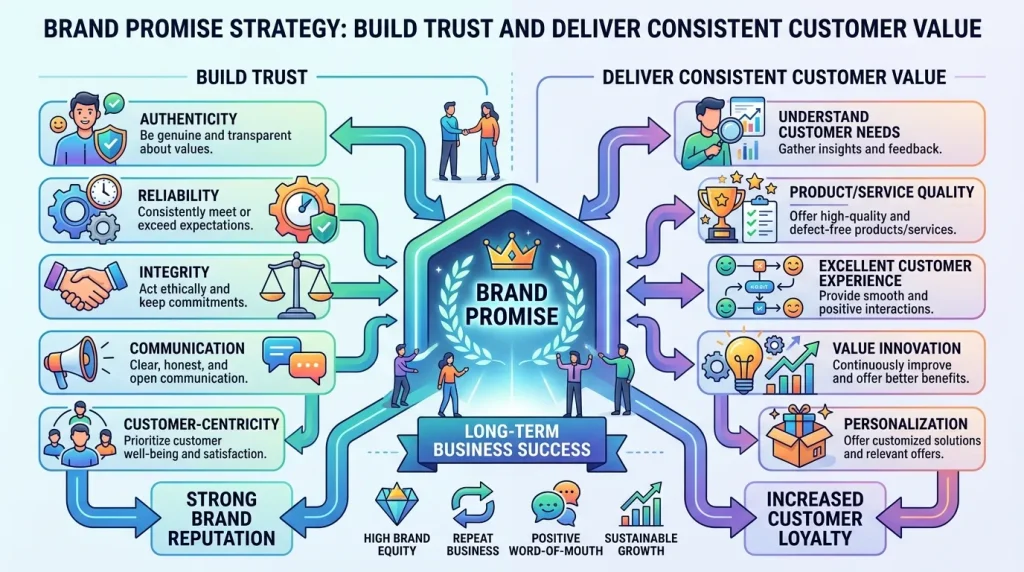
A Brand Promise Strategy defines the value and experience a brand commits to delivering to its customers. A clear promise can strengthen positioning, guide messaging, create consistency, and build trust across customer interactions. When businesses align their promise with their actual products, services, and customer experiences, they can create stronger relationships and a more recognizable brand identity.
Understanding Brand Promise Strategy
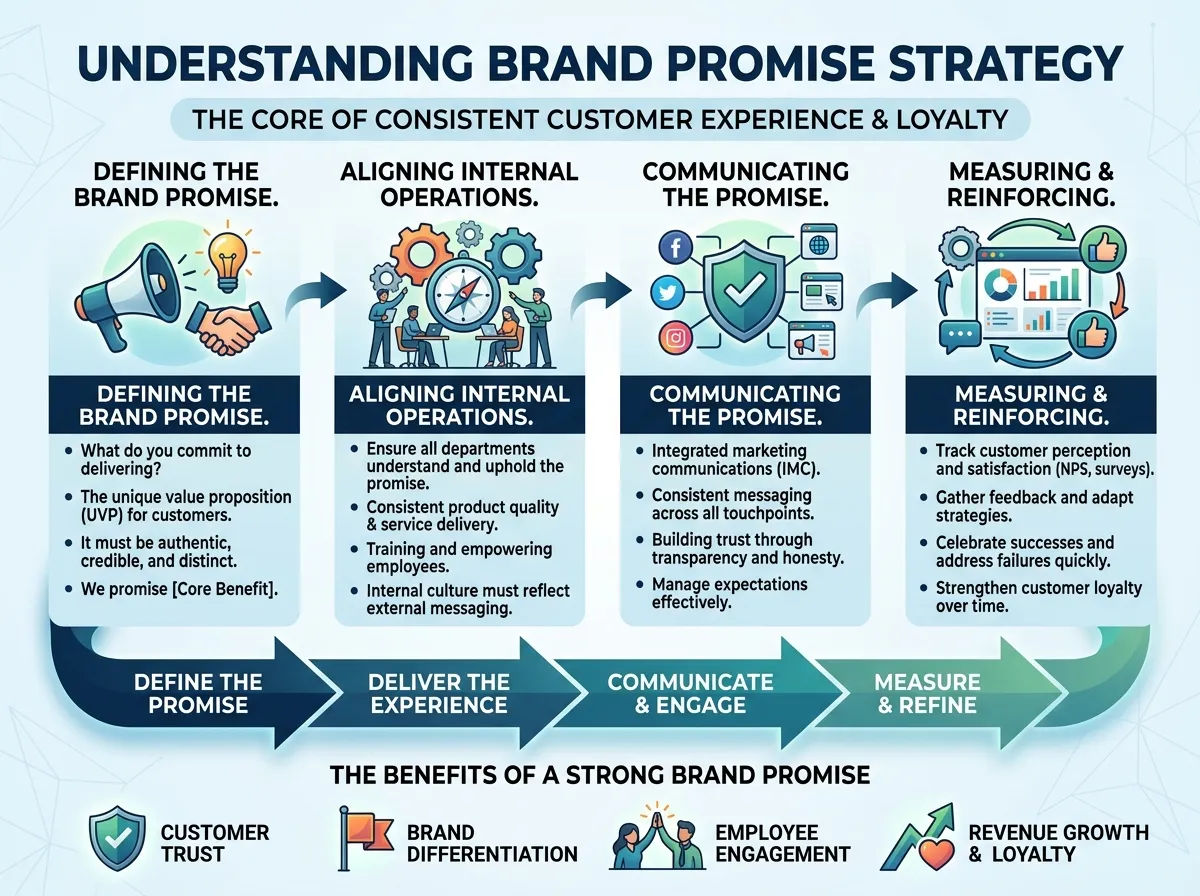
A brand is more than a name, logo, color palette, or advertising campaign. Customers also develop expectations about what a business will deliver and how it will make them feel. These expectations form an important part of the relationship between a company and its audience.
A Brand Promise Strategy provides a clear foundation for those expectations. It defines what customers should consistently expect from a brand whenever they interact with it.
A brand promise does not necessarily need to be a formal slogan. It can be an internal commitment that influences marketing, product development, customer service, communication, and overall business decisions.
For example, a brand may promise convenience, reliability, innovation, personalized service, quality, simplicity, or another meaningful benefit. The important part is that the business can realistically deliver that value.
A strong brand promise connects what a company wants to be known for with what customers actually experience.
Brand Promise Development
Brand Promise Development involves identifying the value a business wants to consistently provide to its target audience.
The process begins with understanding customers. Businesses need to know what customers value, what problems they are trying to solve, and what expectations they have when choosing a particular product or service.
The brand’s strengths also matter. A promise should be connected to capabilities the business can reliably deliver. Making a promise that sounds impressive but cannot be consistently fulfilled can damage customer trust.
Competitive positioning is another consideration. If every competitor makes the same promise, it may be difficult for the brand to create a distinctive association.
A meaningful promise should therefore connect customer needs with genuine business strengths.
Brand development can also involve reviewing customer feedback, reviews, surveys, support conversations, market research, and existing brand perceptions. These sources can reveal whether the company’s intended promise matches how customers currently experience the business.
Brand Promise Framework
A Brand Promise Framework gives businesses a structured way to connect their promise with the broader brand strategy.
The framework can consider several important areas, including the target audience, customer need, core benefit, brand values, supporting proof, customer experience, and business capabilities.
The target audience defines who the promise is intended for. The customer need identifies the problem or expectation the brand addresses. The core benefit describes the value customers should receive.
Supporting proof is also important. A brand promise becomes more credible when customers can see evidence that the company consistently delivers it.
The framework should also connect with the customer experience. If a brand promises simplicity but customers encounter complicated processes, the promise and experience are disconnected.
A strong framework therefore ensures that the brand promise is not simply a marketing statement. It becomes a reference point for how the business operates and communicates.
Brand Promise Statement
A Brand Promise Statement communicates the core commitment a business makes to its customers.
An effective statement should be clear, meaningful, and realistic. It should describe the value customers can expect rather than simply describing what the business sells.
For example, a company might focus its promise on making a complex process easier, helping customers save time, providing dependable service, or creating a more personalized experience.
The statement should also be relevant to the audience. A promise that sounds impressive internally may not have much meaning to customers if it does not address something they value.
A brand promise statement can be used internally to guide teams and externally to reinforce positioning and messaging. However, the statement should not become disconnected from actual customer experiences.
The strongest brand promises are supported by consistent business behavior.
Brand Positioning Strategy and the Brand Promise
A Brand Positioning Strategy defines how a business wants to be perceived in relation to competitors and within its target market.
The brand promise can become an important part of that positioning. It communicates the specific value customers can expect from the business.
For example, a brand may position itself around reliability, premium quality, convenience, innovation, affordability, or specialized expertise. Its promise should reinforce that position.
Positioning and promise should therefore work together. If a business positions itself as highly personalized but uses generic communication and provides limited customer support, the customer experience may contradict the positioning.
A clear promise can help teams make better decisions about communication and customer interactions because it provides a consistent reference point.
Businesses can also strengthen credibility through reputation management. Resources such as Business Reputation Management provide broader context on protecting and strengthening how a business is perceived.
Customer Brand Promise
The Customer Brand Promise represents the expectations customers associate with a business.
Customers may never see the formal wording of a brand promise, yet they experience its effects through products, services, communication, support, packaging, websites, stores, and other touchpoints.
If customers consistently receive the value they expect, confidence in the brand can increase. If the experience repeatedly falls short, trust can decline.
This makes delivery just as important as communication.
A company may advertise fast service, for example, but customers will evaluate that promise through their actual experiences. A company promising personalized support will be judged by how employees communicate and solve problems.
The customer brand promise therefore exists in the space between what a business says and what customers experience.
Brand Value Proposition and Brand Promise
A Brand Value Proposition explains why customers should choose a particular brand and what value it provides.
Although a value proposition and brand promise are related, they serve somewhat different purposes. A value proposition often communicates the specific benefits and reasons to choose a brand, while a brand promise focuses on the experience or value customers can consistently expect.
Both should reinforce each other.
For example, a brand might offer convenient digital services as part of its value proposition while promising to make a particular customer process simpler and more efficient.
When the value proposition and promise are aligned, customers receive a clearer message about what the brand represents.
The connection should also be visible in the actual product or service. Marketing language cannot substitute for delivering meaningful value.
Brand Messaging Strategy
A Brand Messaging Strategy translates the brand promise into communication that customers can understand across different channels.
The same core promise may appear differently in advertisements, website copy, social media posts, emails, sales presentations, videos, and customer service communication.
The wording does not need to be identical everywhere. However, the central idea should remain recognizable.
For example, if a brand promises simplicity, its messaging should consistently communicate ease, clarity, convenience, and reduced complexity.
Storytelling can also help make the promise more memorable. Businesses interested in this approach can explore How To Use Brand Storytelling In Marketing for additional context on using stories to communicate brand ideas.
Strong messaging should reinforce the promise rather than introduce unrelated claims.
Brand Consistency Strategy
A Brand Consistency Strategy ensures that the brand promise is reflected across different customer touchpoints.
Consistency includes more than logos and colors. It can involve tone of voice, messaging, customer service, product presentation, website experience, advertising, social media, packaging, and sales communication.
When these elements reinforce the same core expectations, customers can develop a clearer understanding of the brand.
Inconsistency can create confusion. For example, a company may communicate a premium positioning in its advertising but provide an inconsistent or low-quality customer experience.
Brand consistency therefore requires coordination across departments. Marketing may communicate the promise, but product, sales, customer service, operations, and leadership all contribute to whether customers actually experience it.
Customer Experience Strategy

A Customer Experience Strategy translates the brand promise into real interactions.
Every customer touchpoint can influence whether the promise feels credible. Website navigation, purchasing, onboarding, delivery, customer service, product use, billing, and follow-up can all contribute to the experience.
A business that promises convenience needs to examine whether its processes are genuinely convenient. A company that promises personalized service needs to consider whether employees have the information and tools needed to provide personalization.
Customer experience should therefore be designed around the expectations created by the brand.
Businesses can explore Customer Experience Strategy to understand how customer interactions can be connected with broader business and branding objectives.
When the customer experience consistently supports the brand promise, the promise becomes more credible.
Brand Trust Strategy
A Brand Trust Strategy focuses on building confidence between a business and its customers.
Trust develops through repeated experiences. Customers want businesses to deliver what they say they will deliver, communicate honestly, protect customer information, address problems responsibly, and remain consistent.
A brand promise can support trust when it is realistic and consistently fulfilled.
Transparency also matters. If a business makes a mistake, acknowledging the issue and communicating clearly can sometimes strengthen credibility more than ignoring the problem.
Reviews and recommendations can also influence trust. Customers often use the experiences of others to evaluate whether a brand is likely to deliver on its promises.
Trust therefore depends on both communication and evidence.
Aligning the Brand Promise With Business Operations
A brand promise should not exist only within the marketing department.
Employees need to understand what the brand stands for and how their work contributes to delivering that promise. Product teams, sales representatives, customer service employees, operations teams, and leadership can all influence the customer’s experience.
For example, if a business promises fast service, operational systems need to support that expectation. If it promises personalized experiences, customer information and employee training need to support personalization.
This alignment makes the promise more than a communication tool. It becomes part of the organization’s operating approach.
Internal communication can help employees understand the expectations associated with the brand and recognize how their decisions affect customer perceptions.
Brand Promise and Customer Expectations
Customer expectations can change as markets, technology, and competitors evolve.
A brand promise should remain consistent enough to maintain recognition while allowing the business to adapt how it delivers value.
For example, a brand that has always promised convenience may introduce new digital tools as customer expectations change. The core promise remains similar, but the delivery method evolves.
Businesses should regularly monitor customer feedback and market developments to ensure that the promise remains relevant.
A promise that once differentiated a business may eventually become a basic expectation across the industry. In such cases, the business may need to strengthen the experience or identify additional ways to create meaningful differentiation.
Brand Promise in Digital and Emerging Experiences
Digital platforms have expanded the number of customer touchpoints brands need to manage.
Websites, social media, mobile applications, online communities, virtual environments, chat systems, and digital support channels can all influence whether customers experience the brand promise consistently.
Emerging environments can create additional opportunities. For example, businesses exploring immersive digital experiences can consider Mastering Metaverse Branding to understand how branding can extend into virtual environments.
The underlying principle remains the same: new technology should reinforce the brand promise rather than create an experience that feels disconnected from the rest of the brand.
Measuring Brand Promise Performance
Businesses can evaluate their brand promise by examining whether customers understand, remember, and experience the intended value.
Customer surveys can reveal what customers associate with the brand. Reviews can show whether real experiences match expectations. Customer service feedback can identify recurring problems.
Businesses can also examine retention, repeat purchases, referrals, customer satisfaction, and other relevant indicators.
There is no single metric that proves whether a brand promise is successful. A combination of qualitative and quantitative information can provide a more complete picture.
The most important question is whether the promise is reflected consistently in customer experiences.
Common Brand Promise Challenges
One common challenge is making a promise that is too broad. Statements such as providing the “best experience” may sound positive but provide little differentiation or direction.
Another challenge is making a promise that the business cannot consistently deliver. Overpromising may attract attention in the short term but can damage trust when expectations are not met.
Inconsistency is another risk. Different departments may communicate different priorities, leaving customers uncertain about what the brand actually represents.
Businesses can also struggle when their promise is not connected to customer needs. A promise should matter to the audience, not just sound attractive to the company.
Creating a Stronger Long-Term Brand Promise

A strong brand promise develops through alignment between customer expectations, business capabilities, communication, and experience.
Businesses should understand what customers value, identify the areas where they can deliver consistently, and communicate those strengths clearly.
The promise should then be reinforced through every relevant customer interaction.
Over time, repeated delivery can create familiarity and trust. Customers begin to know what to expect from the brand, and that predictability can become an important part of the relationship.
The goal is not simply to create a memorable statement. The goal is to create a meaningful commitment that the business can repeatedly fulfill.
Conclusion
A strong Brand Promise Strategy gives businesses a clear foundation for communicating and delivering customer value. Through thoughtful Brand Promise Development, a practical Brand Promise Framework, and a meaningful Brand Promise Statement, companies can create clearer expectations and stronger positioning.
A well-defined Brand Positioning Strategy, Customer Brand Promise, and Brand Value Proposition can help customers understand why a brand matters and what they can expect from it. Meanwhile, a coordinated Brand Messaging Strategy and Brand Consistency Strategy can reinforce that promise across different touchpoints.
The promise becomes most powerful when it is reflected in a strong Customer Experience Strategy and supported by a reliable Brand Trust Strategy.
Ultimately, a brand promise is not simply something a business says. It is a commitment that customers evaluate through every interaction. When companies consistently deliver the value they promise, they can create stronger trust, clearer differentiation, and more meaningful long-term customer relationships.
FAQs
1. What is a brand promise strategy?
A brand promise strategy defines the value and experience a business commits to consistently delivering to its customers. It connects brand positioning, messaging, customer experience, and business operations.
2. Why is brand promise important?
A clear brand promise helps customers understand what they can expect from a business. When the promise is consistently delivered, it can support trust, recognition, differentiation, and stronger customer relationships.
3. What is brand promise development?
Brand promise development is the process of identifying a meaningful and realistic commitment that connects customer needs with the strengths and capabilities of a business.
4. What should a brand promise statement include?
A brand promise statement should communicate a meaningful customer benefit or experience that the business can consistently deliver. It should be clear, relevant, credible, and connected to the overall brand positioning.
5. What is the difference between a brand promise and a value proposition?
A brand promise focuses on the value or experience customers can consistently expect from a brand. A value proposition explains the benefits and reasons customers should choose that brand.
6. How does brand positioning relate to a brand promise?
Brand positioning defines how a business wants to be perceived in its market. The brand promise supports that positioning by communicating the value and experience customers can expect.
7. How does customer experience affect a brand promise?
Customer experience provides the evidence that supports a brand promise. If actual interactions consistently match the promise, customers may develop greater confidence in the brand.
8. How can businesses maintain brand promise consistency?
Businesses can maintain consistency by aligning messaging, customer service, product delivery, marketing, operations, and employee behavior with the core brand promise.
9. Can a brand promise change over time?
Yes. A business may update its brand promise as customer expectations, market conditions, products, services, or competitive environments change. However, changes should remain aligned with the brand’s broader identity.
10. How can businesses measure whether their brand promise is working?
Businesses can examine customer feedback, surveys, reviews, satisfaction, retention, repeat purchases, referrals, brand associations, and other customer experience indicators to understand whether the promise is being understood and delivered.