Brand Equity Analysis: Understanding and Measuring Your Brand’s True Value

Brand Equity Analysis helps businesses evaluate the value created through brand awareness, customer perception, loyalty, recognition, and reputation. By examining customer feedback, financial performance, and competitive positioning, organizations can understand their brand’s strengths and weaknesses. Consistent measurement and customer-focused improvements help build trust, strengthen market positioning, and support long-term business growth.
A brand is more than its name, logo, colors, or advertising campaigns. It represents the expectations, experiences, and emotions people associate with a business. Some brands can introduce a new product and immediately attract attention, while others struggle to earn customer trust despite offering similar products at competitive prices. The difference often comes down to brand equity.
Brand Equity Analysis helps businesses understand the actual value their brand holds in the minds of customers and within the marketplace. It examines how people recognize a brand, what they think about it, how strongly they trust it, and whether those feelings influence their purchasing decisions. Rather than relying only on sales figures, companies can use this analysis to understand the deeper factors contributing to their market position.
For businesses working to strengthen their identity, understanding brand equity is essential. It provides valuable insight into customer relationships, brand reputation, competitive positioning, and long-term growth opportunities. More importantly, it helps organizations determine whether their branding efforts are creating meaningful value or simply generating temporary attention.
What Is Brand Equity Analysis?
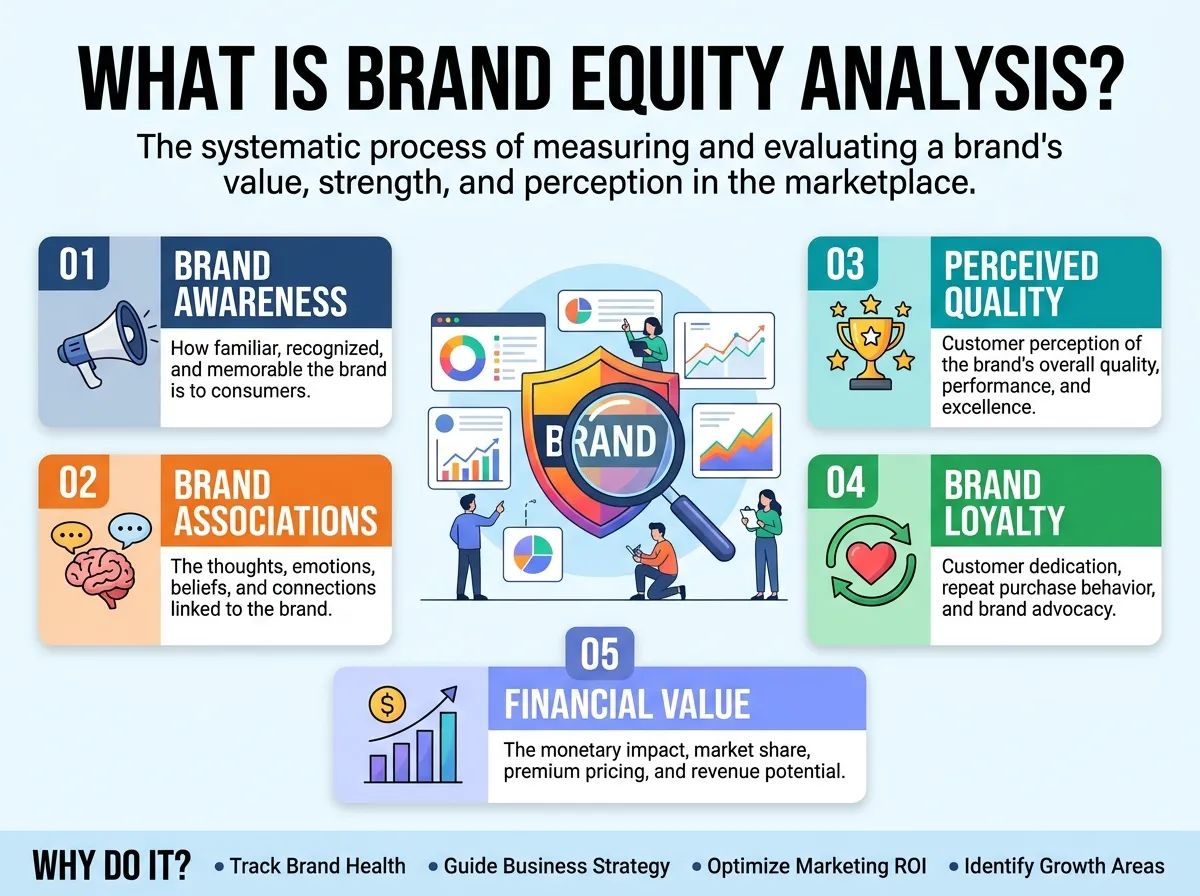
Brand equity analysis is the process of evaluating the value a brand creates through customer awareness, perception, recognition, loyalty, and reputation. It examines the advantages a business receives because customers know, trust, and prefer its brand.
Consider two companies selling similar products at comparable prices. One company has an established reputation, loyal customers, and strong recognition. The other is relatively unknown. Even if their products have similar features, customers may choose the established company because they feel more confident about its quality and reliability.
That additional customer preference represents an important part of brand equity.
A comprehensive evaluation looks beyond financial performance. It considers how customers interpret the brand, whether they associate it with positive experiences, and how likely they are to choose it over competing alternatives. These insights make brand equity a useful measure of the relationship between a company’s identity and its audience.
The analysis also connects branding activities with business outcomes. When customers consistently recognize a brand, recommend it to others, and return for future purchases, those behaviors indicate that the brand is creating value beyond individual transactions.
Why Brand Equity Matters for Long-Term Business Growth
Strong brand equity can influence nearly every stage of the customer relationship. It affects how people discover a business, evaluate its offerings, compare alternatives, and decide whether to make a purchase.
One of its most visible benefits is customer preference. When people already have a positive impression of a brand, they may choose it without conducting extensive research into every available alternative. This can reduce the effort required to earn new customers and help businesses maintain stronger relationships with existing ones.
Brand equity can also support pricing decisions. Customers who trust a brand may be willing to pay more for its products because they associate the business with dependable quality, convenience, or a consistent experience. However, this advantage depends on the company continuing to deliver what its identity promises.
Another important benefit is resilience. Businesses with established customer relationships may be better positioned to manage negative publicity, competitive pressure, or temporary changes in market conditions. A positive reputation does not eliminate risk, but it can provide a stronger foundation for maintaining customer confidence.
Brand equity also helps organizations identify opportunities for expansion. A company with a trusted identity may find it easier to introduce related products, enter new market segments, or develop partnerships. The strength of the existing brand can make these activities more credible to potential customers.
The Main Dimensions Behind Brand Equity
Brand equity is not created by one isolated factor. It develops through several connected dimensions that influence how customers understand and interact with a business.
Brand Awareness and Recognition
Customers cannot develop a meaningful relationship with a brand they do not know exists. Brand awareness therefore provides an important starting point for evaluating brand strength.
Brand Awareness Metrics help businesses understand how familiar their target audience is with their identity. This can include measuring whether people remember a brand without assistance, recognize its name when prompted, or associate it with a particular product category.
Brand recognition tracking examines a related but slightly different area: whether customers can identify a brand through its visual or verbal elements. These may include logos, packaging, colors, slogans, product designs, or distinctive communication styles.
For example, a customer might recognize a company’s packaging immediately without remembering the exact name of the product. That recognition still demonstrates that the brand has established a recognizable identity.
However, awareness alone does not guarantee strong equity. People may recognize a company because of negative publicity or repeated advertising without having any intention of purchasing from it. Recognition becomes more valuable when it is supported by positive associations and customer confidence.
Brand Perception and Associations
What customers think about a brand is often more influential than what the company says about itself. A business may describe its products as innovative, reliable, or customer-focused, but those qualities only contribute to brand equity when audiences genuinely experience or believe them.
Brand Perception Measurement explores how people interpret a brand’s identity, products, communication, and overall behavior. It helps businesses understand whether their intended positioning matches the impression they create in the market.
Brand association measurement adds another layer to this evaluation. It identifies the ideas, emotions, and characteristics customers connect with a particular brand.
A technology company, for instance, might be associated with innovation and simplicity. A clothing business may be connected with affordability, comfort, or personal expression. These associations influence how customers distinguish one brand from another.
Businesses can also explore how their visual identity contributes to these perceptions. A thoughtful Brand Symbolism Strategy can help connect colors, shapes, images, and other visual elements with the qualities an organization wants people to remember.
When the associations customers actually hold are different from the intended brand message, businesses gain an opportunity to reconsider their positioning and communication.
Customer-Based Brand Equity
Customer-based brand equity focuses on the value created by customer knowledge and responses to a brand. It examines how familiarity, experiences, and associations influence the way people react to a company’s products and marketing activities.
For example, customers who already trust a brand may respond more positively to a new product announcement than people encountering the company for the first time. Their existing knowledge makes the new offering easier to understand and evaluate.
This dimension also highlights the importance of consistency. Every interaction, including product quality, customer support, website usability, advertising, and after-sales service, can strengthen or weaken the customer’s overall impression.
A brand cannot build lasting equity through promotional messages alone. Its actual behavior must support the expectations created by its marketing.
How Businesses Evaluate Brand Value
Brand value assessment involves understanding both the commercial and customer-related benefits associated with a brand. Although financial valuation can provide an estimate of monetary worth, a broader analysis examines the reasons behind that value.
Financial indicators may include revenue generated by branded products, pricing advantages, customer retention, and the commercial contribution of the brand to the business. These measures help organizations understand how brand strength connects with economic performance.
Customer research provides a different perspective. Surveys, interviews, online feedback, and purchasing behavior can reveal why customers prefer one company over another. They may show that people value product reliability, customer service, convenience, emotional connection, or the company’s reputation.
Competitor comparisons are also useful. If a business enjoys stronger recognition, better customer sentiment, or greater loyalty than similar organizations, these differences may indicate a competitive advantage.
It is important to distinguish brand equity from brand valuation. Brand equity describes the value and influence developed through customer perceptions and relationships. Brand valuation attempts to express a brand’s financial worth using particular valuation methods and assumptions. The two concepts are connected, but they do not measure exactly the same thing.
Measuring Brand Loyalty and Reputation
A customer who purchases from a company once may simply be testing its products. A customer who repeatedly chooses that company, recommends it to others, and remains committed despite competing offers demonstrates a deeper relationship.
Brand loyalty analysis helps businesses understand these patterns. It examines repeat purchasing behavior, customer retention, referral activity, and the reasons people continue supporting a brand.
However, repeat purchases do not always mean customers feel emotionally connected. Some may return because switching is inconvenient, while others may stay because they genuinely prefer the experience. Understanding this difference is important when evaluating loyalty.
Customer interviews and satisfaction surveys can help reveal the motivation behind repeat behavior. Businesses can also examine churn rates, purchase frequency, and customer lifetime value to understand how relationships develop over time.
Brand reputation assessment complements this analysis by examining how customers and other stakeholders view the organization. Reviews, social media discussions, media coverage, customer complaints, and public feedback can reveal whether the brand is generally associated with trust and credibility.
A strong reputation can support customer confidence, while repeated service problems or inconsistent communication can gradually weaken it. For this reason, reputation should be monitored continuously rather than evaluated only when a crisis occurs.
Choosing the Right Brand Equity Metrics
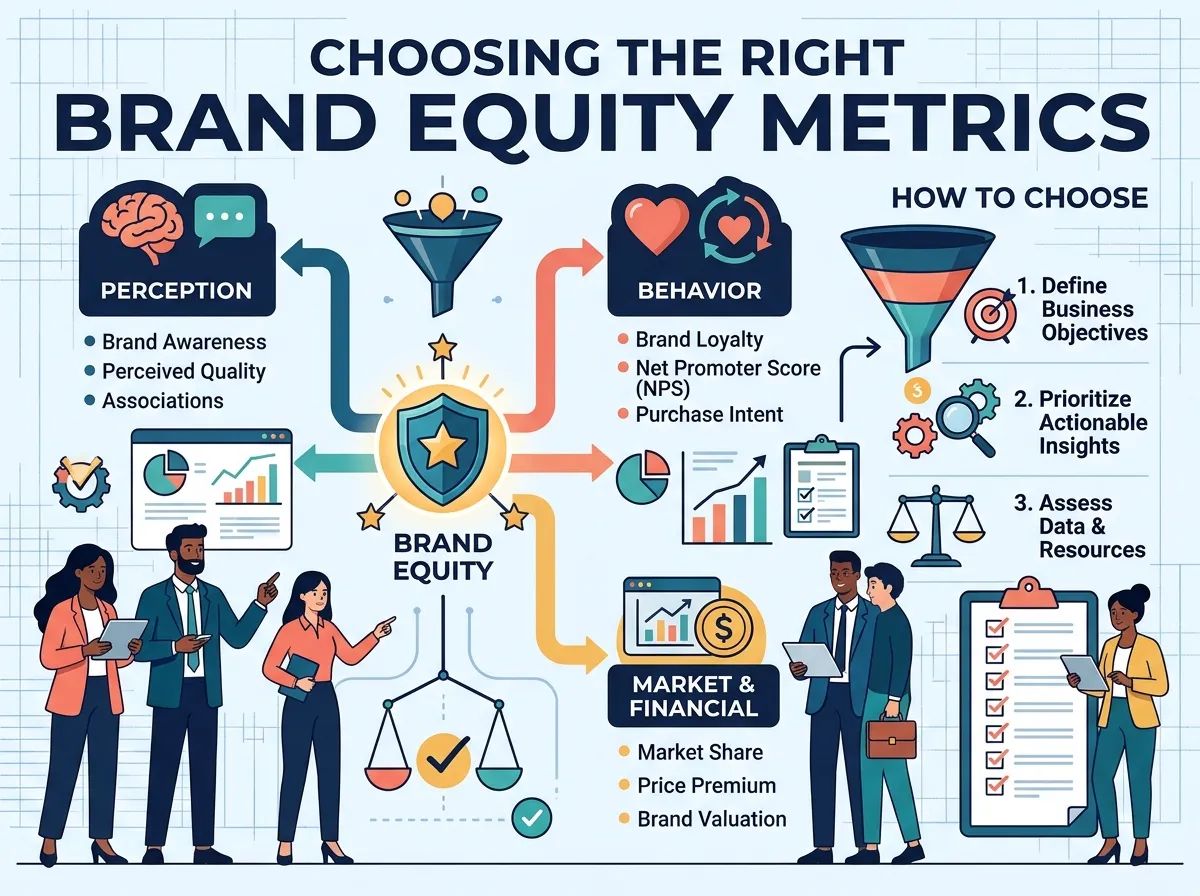
The effectiveness of an analysis depends partly on selecting measurements that reflect the company’s objectives. A business focused on entering a new market may prioritize awareness and recognition, while an established organization may place greater emphasis on loyalty, reputation, and customer preference.
Useful Brand Equity Metrics often combine several types of information rather than depending on one number.
Awareness surveys can measure how many people know or recognize the brand. Customer perception research can identify the qualities audiences associate with it. Loyalty indicators can show whether customers return, recommend the business, or remain engaged over time.
Other measurements may include:
- Unaided and aided brand awareness.
- Brand preference compared with competitors.
- Customer retention and repeat purchase rates.
- Net Promoter Score and referral behavior.
- Brand sentiment across reviews and social platforms.
- Share of branded search activity.
- Customer satisfaction and perceived product quality.
These indicators become more meaningful when compared across time periods, customer groups, and market segments.
For example, a company may discover that brand awareness has increased significantly while customer preference remains unchanged. This suggests that more people know about the business, but the additional visibility has not yet created a stronger reason to choose it.
Similarly, a brand may have a smaller audience but stronger loyalty among existing customers. In that situation, improving retention and encouraging referrals could be more valuable than focusing exclusively on reach.
The purpose of measurement is not simply to collect impressive figures. It is to understand what those figures reveal about the relationship between the brand and its audience.
The Role of Brand Identity in Equity Development
Brand identity shapes how an organization presents itself and what it wants customers to remember. Its influence extends beyond visual design into messaging, personality, values, and the overall experience associated with the business.
A clear identity makes it easier for customers to understand what a company represents. When its communication and behavior remain consistent, the brand becomes more recognizable and its intended positioning becomes easier to establish.
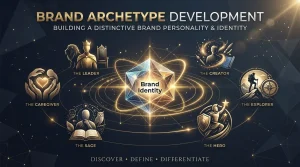
Businesses can strengthen this process by understanding the personality they want to communicate. Exploring Brand Archetype Development can help organizations create a more recognizable character through their messaging, tone, and customer interactions.
However, identity development should not happen in isolation. A business must also understand how customers currently perceive it. The insights gained from Customer Perception research can reveal whether the company’s intended personality matches the experiences and expectations of its audience.
This connection is particularly important during rebranding. Changing a logo or updating a slogan may improve visual consistency, but it will not automatically resolve deeper problems involving trust, product quality, or customer experience.
Effective brand development connects what the company promises with what customers actually receive.
Using Technology to Improve Brand Equity Analysis
Modern businesses have access to more customer information than ever before. Digital platforms, analytics tools, social listening systems, and customer relationship management software can help organizations understand how people interact with their brands.
Artificial intelligence is making some parts of this process more efficient. AI-powered systems can examine large volumes of customer feedback, identify recurring themes, monitor brand mentions, and detect changes in public sentiment.
For example, a business may receive thousands of online reviews across multiple platforms. Manually reviewing every comment can be time-consuming. Sentiment analysis tools can help categorize feedback and highlight common concerns, such as delivery delays, product quality, or customer support.
These capabilities make AI-Powered Brand Analysis particularly relevant for organizations that want to make more informed branding decisions.
Technology can also help compare customer responses across different campaigns and audience segments. Businesses may discover that one message performs well among existing customers but creates little interest among new audiences. Such findings can support more accurate communication strategies.
Nevertheless, automated analysis has limitations. AI systems may misunderstand sarcasm, cultural context, or complex customer emotions. Data quality can also affect the reliability of the results. Human interpretation remains important when deciding what the findings mean and how the business should respond.
The strongest approach combines technology with direct customer research and professional judgment.
Common Problems That Can Distort Brand Equity Analysis
Even when businesses collect substantial amounts of data, their conclusions may be misleading if the research process is poorly designed.
One common problem is treating brand awareness as proof of brand strength. A company may achieve high visibility through advertising, sponsorships, or viral content, but visibility does not necessarily indicate customer trust or preference.
Another issue is relying too heavily on financial performance. Strong sales may result from temporary discounts, seasonal demand, or limited competition rather than lasting brand equity. Businesses need customer-related evidence to understand whether the brand itself is contributing to those results.
Inconsistent measurement can also create difficulties. If an organization changes its survey questions, audience groups, or reporting methods every time it evaluates performance, comparing results becomes less reliable.
There is also a risk of overlooking negative feedback. Businesses sometimes focus on positive reviews and successful campaigns while ignoring complaints that reveal deeper weaknesses. A balanced analysis should consider both favorable and unfavorable customer experiences.
Finally, organizations should avoid treating brand equity as a fixed asset. Customer expectations, competitors, technology, and market conditions continue to change. A brand that performs strongly today may lose relevance if it stops responding to its audience.
Turning Brand Equity Insights Into Better Decisions
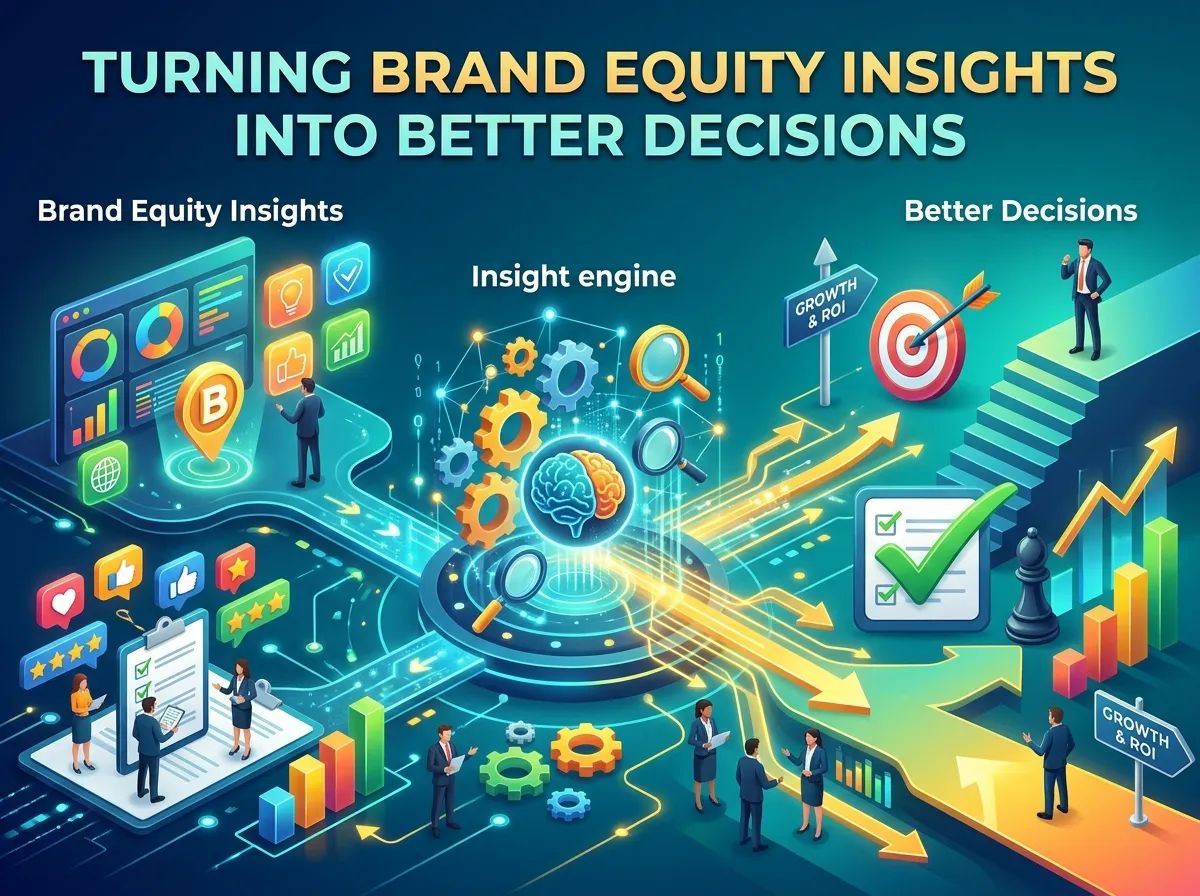
The real value of brand equity analysis becomes clear when businesses use the findings to improve their decisions.
If research shows that customers recognize a brand but cannot explain what makes it different, the company may need clearer positioning. If customers associate the brand with quality but report inconsistent service, operational improvements may be more important than additional advertising.
When loyalty is strong but awareness remains limited, the business may benefit from customer referrals, partnerships, and more effective market communication. If reputation analysis reveals repeated complaints, addressing the underlying problems should take priority over simply increasing promotional activity.
These decisions should be connected to measurable objectives. A company might aim to improve unaided awareness, increase repeat purchases, strengthen positive customer sentiment, or improve brand preference within a particular audience.
Regular evaluation helps businesses understand whether their actions are producing meaningful changes. Instead of conducting one large research project and leaving the findings unused, organizations can make brand equity analysis part of their ongoing business planning.
This creates a continuous relationship between customer insight, brand development, and commercial performance.
Conclusion
Brand equity reflects the value a business earns through recognition, customer trust, positive associations, loyalty, and reputation. Understanding these elements helps organizations move beyond surface-level branding activities and identify what truly influences customer preference.
A thoughtful Brand Equity Analysis combines customer research, financial indicators, competitive comparisons, and digital insights to provide a clearer picture of brand strength. It can reveal where a business is performing well, where its reputation needs attention, and which opportunities deserve investment.
Ultimately, strong brand equity develops when a company consistently delivers experiences that match its promises. Businesses that listen to their customers, measure meaningful indicators, and adapt their strategies over time are better positioned to build lasting recognition and sustainable market value.
Frequently Asked Questions
1. What is Brand Equity Analysis?
Brand Equity Analysis is the process of evaluating a brand’s value through customer awareness, perception, recognition, loyalty, reputation, and purchasing behavior. It helps businesses understand how customers view and prefer their brand.
2. Why is brand equity important for businesses?
Brand equity can improve customer preference, strengthen loyalty, support pricing advantages, and create a competitive advantage. It also helps businesses build trust and maintain stronger customer relationships.
3. What are the main components of brand equity?
The main components include brand awareness, brand associations, perceived quality, customer loyalty, and overall brand perception. Together, these elements influence how customers recognize and respond to a business.
4. How can a company measure brand equity?
A company can measure brand equity through customer surveys, brand recognition studies, sentiment analysis, repeat purchase rates, customer retention, competitor comparisons, and financial performance indicators.
5. What are the most useful brand equity metrics?
Useful metrics include aided and unaided awareness, customer preference, brand sentiment, repeat purchase rates, customer satisfaction, referral behavior, and brand recognition. The right measurements depend on business objectives.
6. What is the difference between brand equity and brand value?
Brand equity refers to the value created through customer perceptions, trust, loyalty, and associations. Brand value generally refers to the financial worth assigned to a brand using valuation methods.
7. How does customer loyalty influence brand equity?
Customer loyalty strengthens brand equity by encouraging repeat purchases, recommendations, and long-term relationships. Loyal customers can also help businesses maintain demand when competitors introduce alternative products.
8. How does brand reputation affect brand equity?
Brand reputation influences whether customers consider a business trustworthy and reliable. Positive experiences and credible communication can strengthen brand equity, while unresolved complaints and negative publicity may weaken it.
9. Can AI help with brand equity analysis?
Yes. AI tools can analyze customer reviews, monitor brand mentions, identify sentiment patterns, and organize large amounts of feedback. However, human judgment is still necessary to interpret results accurately.
10. How often should businesses conduct brand equity analysis?
Businesses should monitor relevant indicators continuously and conduct more structured evaluations periodically. Quarterly or annual reviews can help identify changes in customer perception, brand recognition, loyalty, and competitive positioning.