Brand Heritage Marketing: Turning Brand History Into Lasting Customer Connections
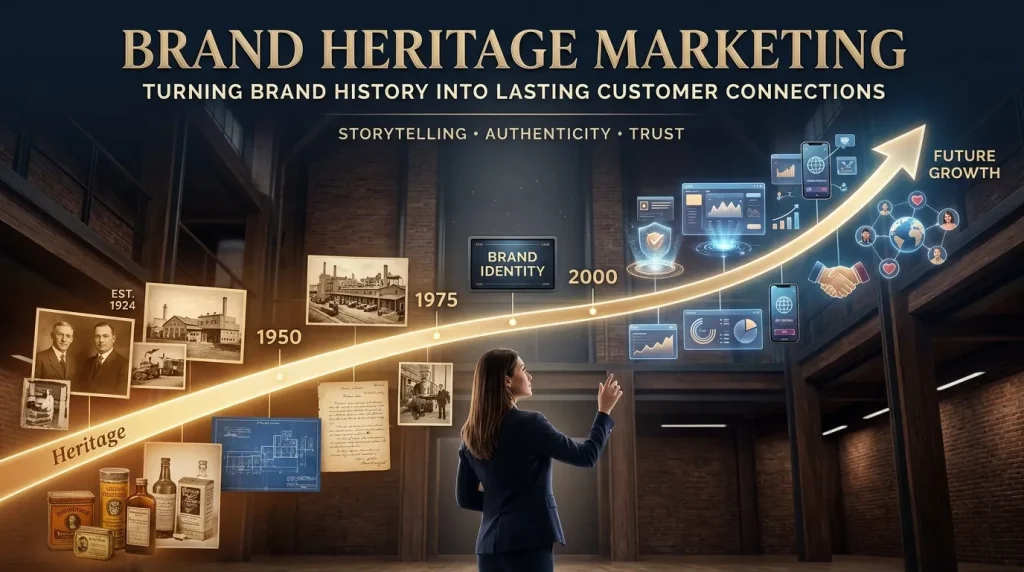
Brand Heritage Marketing uses a company’s history, traditions, achievements, and original values to strengthen its identity and customer relationships. Through authentic storytelling, heritage-based branding, and consistent communication, businesses can build credibility and differentiate themselves in competitive markets. Preserving historical assets while adapting to modern customer expectations allows brands to maintain their legacy and create meaningful connections with new generations.
Every established brand has a story behind its identity. It may begin with a founder’s original vision, a product that changed an industry, a family tradition, or a commitment that has remained consistent for generations. Over time, these experiences become part of what makes a brand recognizable and meaningful to its customers. However, having a long history does not automatically create a strong brand identity. Businesses must communicate their past in ways that connect with modern audiences while preserving the values that made them successful.
This is where Brand Heritage Marketing becomes important. It allows businesses to use their history, traditions, achievements, and original values as meaningful elements of their marketing communication. Rather than presenting history as a collection of old photographs or company milestones, brands can transform their heritage into a story that communicates authenticity, reliability, and purpose.
Customers often develop emotional connections with businesses that demonstrate consistency and genuine character. A brand that has maintained its commitment to quality, craftsmanship, or customer service over many years can use that history to strengthen its credibility. At the same time, newer businesses can also establish a sense of heritage by communicating the origins of their ideas, the values behind their products, and the experiences that have shaped their development.
Successful heritage marketing is not about living in the past. It is about showing how a brand’s history influences its present identity and future direction.
Why Brand Heritage Has Become a Valuable Marketing Asset

A company’s history can provide something that competitors may find difficult to reproduce: an authentic identity built through real experiences.
Products, prices, advertising campaigns, and visual trends can change quickly. However, a brand’s original purpose, cultural background, and long-standing values can create a deeper connection with customers.
Brand Heritage Marketing uses these elements to communicate what makes a business distinctive. For example, a clothing company established several decades ago may highlight its traditional manufacturing techniques, while a food brand may emphasize family recipes and regional ingredients.
These stories give customers additional reasons to recognize and trust a business.
Heritage can also help differentiate brands in crowded markets. When several companies offer similar products, customers may consider factors beyond functionality and price. They may prefer a brand with a meaningful history, recognizable traditions, or a reputation for maintaining consistent standards.
However, heritage only becomes valuable when customers perceive it as genuine. Businesses should communicate verifiable achievements and meaningful experiences rather than relying on exaggerated claims about their history.
A strong heritage narrative connects past achievements with present-day customer expectations.
Developing a Brand Heritage Strategy That Feels Authentic
A successful Brand Heritage Strategy begins with understanding the experiences and values that have shaped a company’s identity.
Some businesses have a long history involving multiple generations, while others have a shorter timeline defined by innovation, creativity, or a particular market achievement. Both can communicate heritage effectively when their stories are presented honestly.
For established companies, the founding story often provides a natural starting point. The original business idea, the founder’s motivation, early challenges, and important milestones can reveal the principles behind the brand.
However, the story should extend beyond its beginning. Customers may also want to understand how the business has developed, which traditions it has maintained, and how it has responded to changes in its industry.
A company that started as a small family workshop, for example, may have expanded into an international manufacturer while preserving its original commitment to craftsmanship.
That connection between continuity and development creates a compelling heritage narrative.
Businesses should also identify which historical elements remain relevant to their current audience. Not every milestone deserves equal attention. The most valuable stories are those that explain the brand’s identity, reinforce its values, and create meaningful customer connections.
Historical Brand Storytelling: Making the Past Relevant to Modern Audiences
Historical Brand Storytelling transforms company history into engaging marketing communication.
Instead of presenting a timeline filled with dates and achievements, businesses can use individual stories to explain the people, decisions, and experiences that shaped their development.
Consider a traditional furniture manufacturer that has operated for generations. Its marketing could focus on the original workshop, the craftsmanship passed between generations, and the techniques that continue to influence its products.
This approach makes history easier to understand because customers can connect with people and experiences rather than simply reading company information.
Visual storytelling can strengthen this connection. Historical photographs, original packaging, early product designs, newspaper features, and archived advertisements can provide evidence of a brand’s development.
However, historical materials should be presented with context. An old photograph becomes more meaningful when the company explains what was happening at that time and why the event mattered.
Storytelling should also connect different generations. Older customers may recognize familiar products or traditions, while younger audiences may discover the brand through its history for the first time.
A well-developed narrative makes the past accessible without making the brand appear outdated.
Brand Legacy Marketing and the Value of Long-Term Trust
Some brands become recognizable because they have maintained particular standards over an extended period. Their reputation may be associated with product reliability, customer relationships, craftsmanship, or consistent business values.
Brand Legacy Marketing uses these long-term contributions to strengthen the brand’s position in the market.
A company with a respected legacy can communicate why customers have continued choosing its products and how its values have influenced its development.
For example, a manufacturer may highlight its history of product durability, while a hospitality business may share stories about generations of returning customers.
These experiences can support customer confidence because they demonstrate that the brand’s identity is based on more than a temporary marketing campaign.
Nevertheless, a legacy should not become an excuse for ignoring current expectations. A business that depends entirely on its historical reputation may struggle when competitors introduce better products, services, or customer experiences.
The strongest legacy brands demonstrate that their original values remain relevant while continuing to improve.
This is also closely connected to reputation management. A positive historical identity can support public confidence, but businesses must protect that confidence through responsible communication and consistent performance. Companies interested in this broader responsibility can explore Business Reputation Management to understand how credibility and public perception contribute to long-term brand strength.
Heritage Brand Positioning in a Changing Market
Heritage Brand Positioning involves using a company’s history and established identity to distinguish it from competitors.
This positioning can be particularly valuable in industries where customers appreciate tradition, authenticity, and proven experience.
Luxury products, traditional food brands, fashion labels, hospitality businesses, and specialist manufacturers often use heritage as part of their market positioning.
For example, a luxury watchmaker may emphasize the history of its craftsmanship and design principles. A regional food producer may highlight traditional preparation methods and locally established recipes.
The important factor is relevance. Historical characteristics should support the product’s current value rather than simply serve as decorative marketing messages.
A heritage brand must also understand how its positioning compares with customer expectations.
Some audiences may value traditional production methods, while others may appreciate the combination of historical expertise and modern technology.
A business can appeal to both groups by communicating what it preserves and what it continues to improve.
This balance prevents heritage positioning from becoming overly nostalgic. Instead, the brand demonstrates that its history provides a foundation for continued development.
Brand History Promotion Through Digital Experiences
The way customers discover company history has changed significantly. Instead of relying exclusively on brochures, television advertisements, or printed company profiles, businesses can now communicate their heritage through websites, social media, videos, digital archives, and interactive experiences.
Brand History Promotion makes historical information more accessible by presenting it through the channels customers already use.
A company’s website may include a dedicated history section featuring its founding story, major developments, and important achievements. Social media can introduce individual milestones through short videos, archival photographs, and stories about people connected with the business.
Video content is especially useful because it combines historical visuals, interviews, narration, and present-day footage.
For instance, a family-owned business could produce a short documentary showing how its original workshop has developed into a modern production facility.
Digital storytelling also creates opportunities for audience participation. Customers may share memories of earlier products, discuss their first experiences with the brand, or contribute photographs connected to its history.
These interactions can make heritage communication more engaging and help businesses understand which historical elements customers value most.
The objective is to make history part of the ongoing brand experience rather than something customers encounter only when reading an About Us page.
Traditional Brand Identity Without Losing Modern Relevance

A Traditional Brand Identity often includes recognizable visual elements, established communication styles, cultural references, and product characteristics that have remained associated with a business over time.
These elements can create familiarity and recognition. However, preserving them does not mean every aspect of the brand must remain unchanged.
A company may retain its original logo symbolism while improving its typography and digital presentation. It may preserve traditional product designs while introducing updated materials or manufacturing processes.
The challenge is determining which elements represent the brand’s essential identity and which can evolve.
For example, a heritage clothing brand may continue using traditional patterns and craftsmanship while adapting its product range to modern customer preferences.
Visual identity plays an important role in this process. Colors, symbols, typography, packaging, and other recognizable assets can connect present-day communication with historical brand experiences.
Businesses developing this connection can benefit from Brand Symbolism Strategy, particularly when considering how visual elements communicate meaning and reinforce recognition.
The most successful traditional brands preserve meaningful characteristics while remaining flexible enough to meet changing customer expectations.
Brand Legacy Preservation and Protecting Historical Identity
A brand’s history can become a valuable business asset, but it needs to be preserved properly.
Brand Legacy Preservation involves maintaining the records, stories, designs, traditions, and other historical elements that explain how a business developed.
These materials may include original logos, product packaging, advertising campaigns, photographs, manufacturing records, founder interviews, and important company documents.
Without organized preservation, valuable historical information can disappear as employees leave, business ownership changes, or physical records deteriorate.
Digital archiving provides an effective way to protect these resources. Companies can organize historical materials into searchable collections and maintain records of their origins, dates, and ownership.
This is particularly important for businesses that regularly reuse historical photographs, artwork, packaging designs, and advertising materials.
Ownership and usage rights should be reviewed before these assets are included in new campaigns. A photograph appearing in an old company brochure, for example, does not automatically mean the business has unrestricted rights to reuse it in every modern marketing channel.
Understanding Brand Asset Rights can help businesses manage the ownership and protection of creative materials associated with their identity.
Preserving heritage also involves documenting knowledge that may not exist in formal records. Interviews with founders, long-term employees, and experienced craftspeople can capture important details about the company’s traditions and development.
These contributions help ensure that brand history remains available for future generations.
Authentic Brand Storytelling and the Importance of Credibility
Customers are increasingly exposed to marketing messages that emphasize authenticity, tradition, and emotional connection. As a result, they may question historical claims that appear exaggerated or disconnected from actual business practices.
Authentic Brand Storytelling depends on presenting real experiences and demonstrating how those experiences influence the brand today.
A company should be able to support important historical claims with reliable information. Founding dates, manufacturing traditions, original product designs, and major achievements should be communicated accurately.
It is also important to avoid creating a perfect version of the past. Businesses often experience challenges, changes in ownership, product failures, and periods of uncertainty.
Acknowledging these experiences can make a historical narrative more believable.
For example, a company that explains how it adapted its manufacturing process during a difficult period may demonstrate resilience and commitment more effectively than one that only presents achievements.
Authenticity also depends on consistency between communication and actual business behavior. A brand that promotes traditional craftsmanship should ensure that its products and operations support that message.
When customers recognize a genuine connection between a company’s history and its current activities, heritage storytelling becomes more meaningful.
Heritage-Based Branding and Emotional Customer Connections
Heritage-Based Branding creates opportunities for businesses to build emotional connections through shared memories, cultural associations, and familiar experiences.
For some customers, a brand may represent a family tradition. A food product may remind them of childhood meals, while a clothing label may be associated with an important personal milestone.
These emotional associations can influence how customers remember and evaluate a business.
The connection between heritage and memory is particularly interesting because people do not remember every interaction with a brand equally. Certain symbols, experiences, sounds, and stories can become strongly associated with particular feelings.
Businesses interested in this relationship can explore The Science of Brand Memory, which examines how psychological associations influence brand recognition and recall.
Heritage marketing can use these associations through familiar packaging, traditional designs, historical campaigns, and stories connected with customer experiences.
However, emotional communication should remain inclusive. Not every customer shares the same memories or cultural background.
Brands should avoid assuming that their history automatically creates a connection with everyone. Instead, they should communicate their heritage in ways that allow different audiences to understand and appreciate its meaning.
Brand Heritage Communication Across Different Customer Experiences
Brand Heritage Communication involves presenting a consistent historical identity across the channels and interactions through which customers encounter a business.
A company’s website, social media pages, advertising campaigns, packaging, retail environments, and customer support should reinforce the same overall brand story.
This does not mean repeating identical historical messages everywhere. Each channel can communicate a different part of the heritage narrative while maintaining a recognizable identity.
For example, a website may provide detailed information about the company’s origins, while social media highlights individual milestones and historical photographs. Packaging may incorporate traditional design elements, and advertising may explain how the company’s original values influence its current products.
The experience should also remain accessible to different audiences.
Historical content should use clear language, readable typography, descriptive image text, and appropriate video captions. Businesses that want their heritage communication to reach a wider audience can explore The Ultimate Guide to Brand Accessibility to understand how inclusive experiences support stronger customer engagement.
Consistency across these touchpoints helps customers recognize the connection between a brand’s past and present.
Measuring Whether Brand Heritage Marketing Is Working
Heritage marketing may create long-term benefits that cannot always be captured through immediate sales figures. Therefore, businesses should evaluate both customer responses and broader brand performance.
Brand awareness is one useful indicator. Companies can examine whether customers recognize historical elements, remember the brand’s origin story, or associate the business with particular traditions.
Customer engagement provides another perspective. Interactions with historical campaigns, video views, comments, and shares can reveal which stories attract audience interest.
Brand perception is equally important. Customer surveys, reviews, and social media discussions may show whether audiences associate the company with authenticity, reliability, quality, or heritage.
Businesses can also examine customer loyalty and repeat purchasing behavior. Although these outcomes are influenced by many factors, they may help reveal whether the brand’s historical identity contributes to stronger relationships.
The most useful measurement approach combines quantitative information with qualitative feedback. Numbers can reveal how people respond, while customer comments help explain why they respond in particular ways.
Over time, this information can help businesses refine their heritage communication without losing the identity that makes their history valuable.
The Future of Brand Heritage Marketing

Brand Heritage Marketing is evolving as customers interact with brands through increasingly digital and personalized experiences.
Artificial intelligence, interactive storytelling, digital archives, and immersive technologies create new opportunities to present company history in engaging ways.
Businesses may use digital experiences to allow customers to explore historical products, view earlier advertising campaigns, or learn about the people behind important milestones.
Personalized communication may also make heritage stories more relevant to different customer groups. For example, long-term customers may appreciate familiar historical references, while new audiences may benefit from introductory stories explaining the company’s origins.
However, technology should support the heritage narrative rather than replace its authenticity.
A beautifully produced historical video cannot create genuine heritage if the underlying story is inaccurate. Similarly, interactive digital experiences have limited value when they fail to communicate meaningful information.
The future of heritage marketing will depend on combining reliable historical records, relevant storytelling, consistent brand identity, and modern communication methods.
Brands that understand this balance can use their past as a source of differentiation while continuing to build relationships with future customers.
Conclusion
Brand Heritage Marketing allows businesses to transform their history, traditions, achievements, and original values into meaningful marketing assets. Through historical storytelling, consistent identity, legacy preservation, and authentic communication, organizations can show customers what makes their brands distinctive.
However, successful heritage marketing requires more than celebrating the past. Businesses must demonstrate how their history influences their current products, services, and customer experiences.
When a company’s historical identity remains connected to modern expectations, it can strengthen recognition, support credibility, and create lasting emotional connections.
Ultimately, a brand’s heritage is most valuable when it is not simply remembered but actively reflected in the way the business operates and communicates.
10 Frequently Asked Questions About Brand Heritage Marketing
1. What is Brand Heritage Marketing?
Brand Heritage Marketing is a marketing approach that uses a company’s history, traditions, achievements, and established values to communicate its identity and build stronger customer relationships.
2. Why is brand heritage important for businesses?
Brand heritage helps businesses differentiate themselves, communicate authenticity, strengthen customer trust, and create emotional connections through meaningful historical experiences.
3. What is a Brand Heritage Strategy?
A Brand Heritage Strategy is an approach to identifying, preserving, and communicating the historical elements that make a business distinctive while connecting them with its current brand positioning.
4. Can new businesses use heritage-based branding?
Yes. New businesses can communicate their founding stories, original ideas, cultural influences, and early achievements to establish an authentic identity without making unsupported historical claims.
5. How does historical brand storytelling improve customer engagement?
It makes company history more relatable by presenting real people, experiences, milestones, and traditions that customers can understand and connect with emotionally.
6. What is the difference between brand heritage and brand legacy?
Brand heritage refers to the history, traditions, and values associated with a business. Brand legacy focuses on the lasting influence and reputation the company develops through its activities over time.
7. How can businesses preserve their brand history?
Businesses can preserve their history through digital archives, historical documents, original packaging, photographs, employee interviews, founder stories, and records of important milestones.
8. Does brand heritage marketing help improve customer loyalty?
It can support customer loyalty by strengthening familiarity, trust, and emotional connections. However, these benefits also depend on product quality and consistent customer experiences.
9. How can businesses communicate brand heritage through digital marketing?
They can use historical videos, social media storytelling, website timelines, digital archives, customer memories, and campaigns that connect historical achievements with modern products.
10. How can a business measure the success of Brand Heritage Marketing?
Businesses can evaluate brand awareness, customer engagement, brand perception, historical story recognition, customer feedback, and changes in loyalty and repeat purchasing behavior.