Brand Value Proposition: Build a Meaningful Brand Promise

A strong Brand Value Proposition explains why customers should choose a particular brand and what meaningful value they can expect from its products, services, or overall experience. It connects customer needs with the benefits a business provides while distinguishing the brand from competing alternatives. A clear value proposition can strengthen positioning, improve marketing communication, support customer trust, and create a more consistent brand experience across channels.
What Is a Brand Value Proposition?

A Brand Value Proposition is a clear statement of the value a brand promises to deliver to its target customers. It explains what the brand offers, who it serves, what benefits customers can receive, and why the brand may be relevant compared with other available choices.
A value proposition is more than a slogan or promotional phrase. A slogan may be designed to create recognition, while a value proposition communicates the practical and emotional value customers can expect from the brand.
For example, a company may compete through convenience, product quality, expertise, affordability, innovation, service, sustainability, or a combination of these factors. Its value proposition should communicate the benefits that matter most to its target audience.
When a value proposition is clear, customers can understand the brand more easily. They can quickly see what the business does and why its offering may be relevant to their needs.
Why a Brand Value Proposition Matters
A brand operates in an environment where customers are exposed to numerous companies competing for their attention. Without clear positioning, even a high-quality product or service can be difficult to distinguish.
A strong value proposition creates a connection between what a business offers and what customers actually care about. Instead of simply describing features, it focuses attention on the benefits and outcomes those features provide.
This clarity can influence many parts of marketing communication. Website copy, advertising, social media content, email campaigns, sales presentations, and product descriptions can all become more consistent when they are based on a clear understanding of the brand’s value.
A value proposition can also support internal alignment. Employees, sales teams, marketing professionals, and customer service representatives can use the same central understanding of what the brand promises to deliver.
Brand Value Proposition Strategy
A Brand Value Proposition Strategy connects customer needs, business strengths, market positioning, and brand communication. It helps businesses determine what value they want the market to associate with their brand.
The strategy should begin with an understanding of the target audience. Customers may have different priorities depending on their needs, industry, purchasing situation, budget, and expectations.
A business also needs to understand its own strengths. A value proposition should be based on benefits the company can genuinely deliver rather than claims that exist only in marketing materials.
Competitor analysis can provide additional context. Businesses can examine how competing brands position themselves, what benefits they emphasize, and which customer needs may not be adequately addressed.
The resulting value proposition should bring these elements together into a clear expression of the brand’s value.
Unique Value Proposition and Brand Relevance
A Unique Value Proposition communicates what makes a business meaningfully different or valuable to its target customers. The word “unique” does not necessarily mean that no other company offers anything similar. Instead, the combination of benefits, experience, expertise, positioning, and customer focus may create a distinctive reason to choose the brand.
A business may differentiate itself through specialized expertise, faster service, personalized experiences, innovative technology, strong customer support, product quality, or a particular approach to solving customer problems.
The important point is that the difference should matter to the customer. A feature may be technically different without creating meaningful value.
For example, a business could have a proprietary process, but if customers do not understand how that process benefits them, it may not strengthen the value proposition.
A strong Unique Value Proposition therefore connects differentiation with customer relevance.
Developing a Clear Brand Value Statement
A Brand Value Statement communicates the central value that a company intends to provide. It should be easy to understand and closely connected to the actual customer experience.
Effective value statements generally avoid unnecessary complexity. Customers should not need to interpret complicated corporate language to understand what the brand provides.
The statement can address several important questions: Who does the brand serve? What problem does it help solve? What benefit does it provide? What makes the experience different or valuable?
The answers do not always need to appear as separate questions within the final statement. Instead, they can inform the language used throughout the brand’s messaging.
The statement should also remain credible. If a company promises exceptional service, for example, its customer experience needs to support that promise consistently.
Customer Value Proposition and Customer Needs
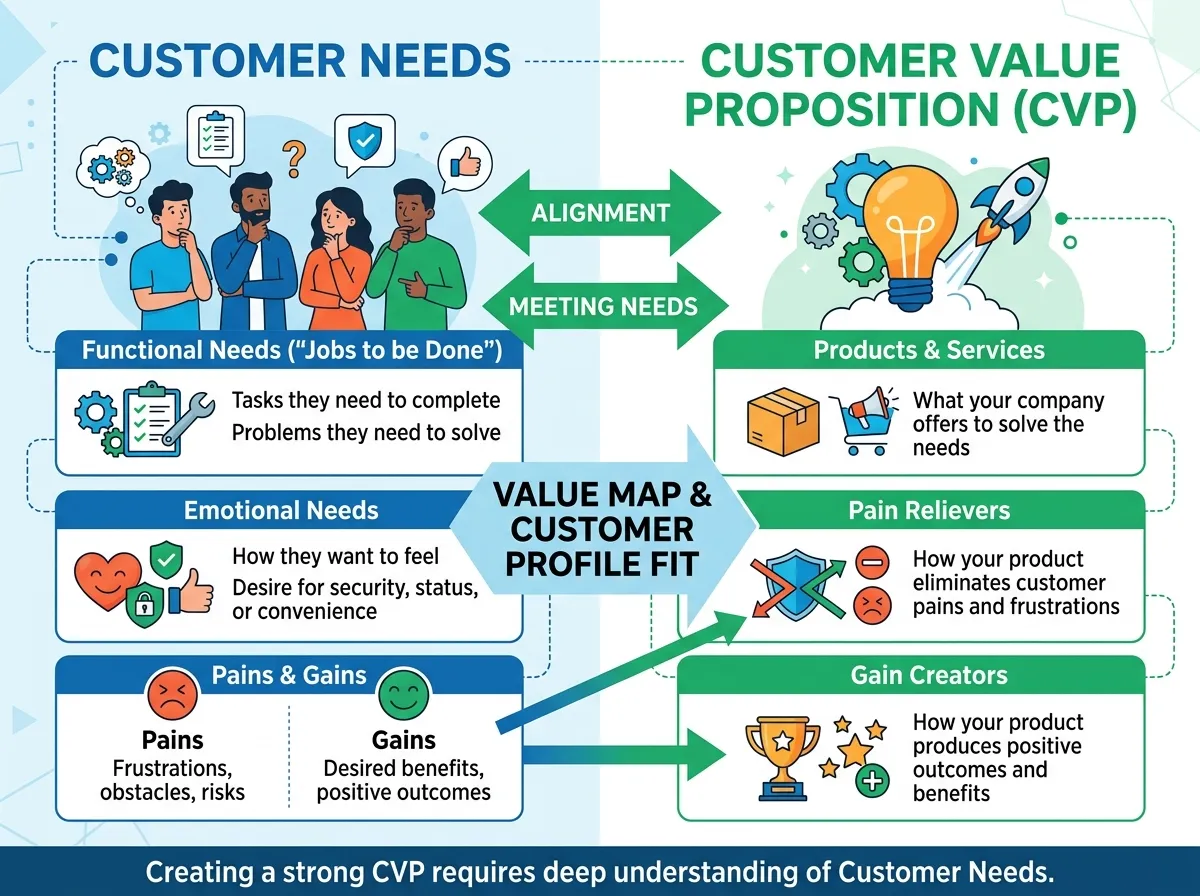
A Customer Value Proposition focuses directly on the value customers receive from a product, service, or brand relationship. It moves the conversation away from what the business wants to say and toward what customers actually need to hear.
Customers usually care about outcomes. They may want to save time, reduce costs, solve a problem, improve performance, simplify a process, feel more confident, or achieve a particular result.
Understanding these motivations allows businesses to develop messaging that is more relevant.
Customer research can provide valuable insights into these priorities. Reviews, interviews, surveys, support conversations, search behavior, sales discussions, and customer feedback can all reveal what people value most.
When customer insights are incorporated into the value proposition, marketing communication becomes more closely connected to real customer expectations.
Brand Positioning Strategy and Market Perception
A Brand Positioning Strategy determines how a brand wants to be understood in the minds of its target customers compared with alternatives.
Value proposition and positioning are closely connected. The value proposition communicates the value the brand provides, while positioning establishes how that value fits within the competitive market.
Positioning can be based on different dimensions, including quality, price, innovation, specialization, convenience, customer experience, sustainability, or expertise.
The chosen position should be relevant to customers and supported by the business’s actual capabilities.
For example, a brand that wants to position itself around sustainability needs more than environmentally focused advertising. Its products, operations, sourcing, packaging, and other business practices should support the broader positioning.
Resources related to Sustainable Marketing can provide additional context for businesses interested in connecting marketing communication with sustainability-related value.
Value Proposition Development and Brand Communication
Value Proposition Development is an ongoing process rather than a one-time writing exercise. Markets change, customers evolve, competitors introduce new offerings, and businesses develop new capabilities.
A value proposition may therefore need to evolve while preserving the core identity of the brand.
The development process should involve collaboration between relevant teams. Marketing may understand audience communication, sales may understand customer objections, customer service may understand recurring problems, and product teams may understand the actual capabilities of the offering.
Bringing these perspectives together can help create a more realistic value proposition.
Once developed, the value proposition can become a foundation for broader messaging. It can influence website headlines, advertising themes, content strategy, sales presentations, social media communication, and customer experience.
Brand Differentiation Strategy
A Brand Differentiation Strategy helps a company establish meaningful distinctions between itself and competitors. Differentiation can be based on products, services, expertise, customer experience, technology, pricing, convenience, values, or other relevant characteristics.
However, differentiation should not be pursued simply for the sake of being different. The difference needs to provide value or relevance to the target customer.
A company might offer highly personalized service, for example, but that advantage matters most when its target audience values personalization.
Differentiation also needs to be defensible. If a competitor can easily copy a claim or feature, the distinction may not remain meaningful for long.
Strong differentiation often combines multiple elements. Expertise, customer service, technology, brand reputation, and experience can work together to create a broader reason for customers to choose one brand over another.
Customer-Centric Brand Messaging
Customer-Centric Brand Messaging places customer needs at the center of communication. Instead of focusing primarily on company achievements or product features, it explains how the brand can help customers achieve meaningful outcomes.
This approach can make marketing communication more relevant because it reflects the customer’s perspective.
For example, rather than simply describing a software product’s technical capabilities, customer-centric messaging can explain how those capabilities help users save time, organize work, reduce complexity, or improve productivity.
Customer-centric messaging should still remain accurate. The objective is not to make exaggerated claims but to communicate genuine benefits in language that customers understand.
Consistency is also important. The value proposition should be recognizable across the website, social media, advertising, sales communication, and customer service.
Interactive formats can provide additional opportunities for customer-focused communication. Businesses exploring Interactive Content Marketing can use interactive experiences to help audiences engage with information rather than simply receiving static marketing messages.
Brand Benefits Statement and Communicating Outcomes
A Brand Benefits Statement focuses on the advantages customers can receive from choosing the brand. Benefits can be functional, emotional, financial, social, or experiential.
Functional benefits may include convenience or improved performance. Emotional benefits could involve confidence, reassurance, or enjoyment. Financial benefits may relate to value or cost efficiency.
The most useful benefits are those that customers can understand and connect with their own needs.
A benefits statement should also distinguish between features and outcomes. A feature describes what a product or service has, while a benefit explains what that feature means for the customer.
This distinction can make brand messaging more persuasive without relying on exaggerated promotional language.
Competitive Value Proposition
A Competitive Value Proposition communicates the value of a brand in the context of competing alternatives. Customers rarely evaluate a business in isolation. They often compare products, services, prices, experiences, reviews, and perceived benefits before making a decision.
Understanding competitors can therefore help businesses identify where their own value proposition fits within the market.
The objective is not necessarily to claim that the brand is better in every area. Instead, the business can identify the specific combination of benefits that it wants customers to associate with its offering.
For example, one brand may emphasize specialized expertise, another may focus on convenience, while another may compete through affordability or customer service.
A clear competitive value proposition helps customers understand what type of value the brand provides and why that value may be relevant to them.
Brand Value Proposition Across Digital Channels
A value proposition should remain consistent across digital channels while being adapted to the format of each platform.
On a website, the value proposition may appear prominently on the homepage and service pages. In social media content, it may be communicated through recurring themes and customer-focused messaging. In advertising, it may appear through concise benefit-oriented copy.
Video can also provide an effective way to communicate brand value. Demonstrations, customer stories, educational content, interviews, and other formats can show how the brand delivers its promised benefits.
For businesses interested in video-based brand visibility, How to Get Brand Promotion on YouTube provides additional context around promoting a brand through YouTube.
Emerging technologies can create further opportunities. For example, Augmented Reality Branding can help brands create more immersive customer experiences when the technology is appropriate for their audience and offering.
Building Trust Through a Strong Value Proposition

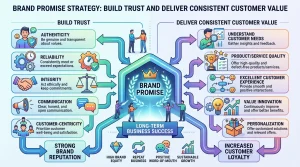
Trust is an important part of any brand promise. Customers need to believe that the business can actually deliver the value it communicates.
A value proposition should therefore be supported by evidence where appropriate. Customer reviews, case studies, demonstrations, testimonials, product information, certifications, guarantees, and transparent communication can all contribute to credibility.
Businesses should also ensure that their operational experience matches their marketing claims. If a brand promises personalized service but customers consistently receive generic interactions, the value proposition can lose credibility.
Trust develops through repeated experiences. A strong value proposition creates an expectation, while consistent delivery reinforces that expectation over time.
Measuring the Effectiveness of a Brand Value Proposition
The effectiveness of a value proposition can be evaluated through both qualitative and quantitative information.
Businesses can monitor conversion rates, engagement, customer acquisition, retention, sales performance, website behavior, and other relevant metrics. These measurements can help identify whether customers are responding to the brand’s messaging.
Customer research is equally important. Surveys, interviews, reviews, sales conversations, and support interactions can reveal whether customers actually understand the brand’s value in the way the company intends.
If customers consistently describe the brand differently from how the business positions itself, there may be a gap between intended and perceived value.
This does not always mean the value proposition needs to change completely. It may indicate that the messaging needs to become clearer or that the customer experience needs to better support the brand promise.
Evolving the Brand Value Proposition Over Time
Markets are rarely static. Customer expectations change, competitors introduce new products, technologies create new possibilities, and social or economic conditions can influence purchasing behavior.
A brand value proposition should therefore remain relevant without constantly changing its identity.
Regular reviews can help businesses determine whether their current value proposition still reflects customer priorities and competitive conditions.
Changes should be based on meaningful evidence rather than short-term trends. A strong brand can evolve while maintaining the core ideas that customers already recognize and trust.
The goal is to ensure that the brand continues to communicate meaningful value as the market develops.
Conclusion
A strong Brand Value Proposition gives businesses a clear foundation for communicating why customers should consider their products, services, and overall brand experience. Through a well-defined Brand Value Proposition Strategy, Unique Value Proposition, Brand Value Statement, and Customer Value Proposition, businesses can connect their offerings with the needs and expectations of their target audience.
A clear Brand Positioning Strategy and Brand Differentiation Strategy can further establish how the brand fits within its competitive environment, while Customer-Centric Brand Messaging ensures that communication remains focused on customer needs and outcomes.
The strongest value propositions are not simply attractive statements. They are supported by real capabilities, consistent customer experiences, meaningful differentiation, and credible brand communication.
When a brand clearly understands the value it provides and communicates that value consistently, customers can more easily understand what makes the business relevant to them. Over time, this clarity can contribute to stronger positioning, greater trust, and more meaningful customer relationships.
Frequently Asked Questions
1. What is a Brand Value Proposition?
A Brand Value Proposition explains the meaningful value a brand provides to its target customers. It communicates what the brand offers, who it serves, what benefits customers can receive, and what makes the offering relevant compared with alternatives.
2. Why is a Brand Value Proposition important?
A clear value proposition helps customers quickly understand what a brand provides and why it may be relevant to their needs. It can also create consistency across marketing, sales, website content, advertising, and customer communication.
3. What is the difference between a value proposition and a slogan?
A slogan is usually a short phrase designed to create brand recognition or communicate an idea. A value proposition is broader and explains the value, benefits, and relevance a brand provides to its target customers.
4. What makes a Unique Value Proposition effective?
A Unique Value Proposition should communicate a meaningful distinction that matters to the target audience. The difference should be relevant, credible, understandable, and supported by the actual products, services, or customer experience.
5. How does a Customer Value Proposition differ from a Brand Value Proposition?
A Customer Value Proposition focuses particularly on the value customers receive from an offering, while a Brand Value Proposition communicates the broader value associated with the brand and its relationship with the target audience.
6. How does a Brand Positioning Strategy relate to a value proposition?
A Brand Positioning Strategy establishes how a brand wants to be perceived in relation to competitors. The value proposition supports that positioning by communicating the benefits and value that make the brand relevant to its target customers.
7. What is Brand Differentiation Strategy?
Brand Differentiation Strategy focuses on establishing meaningful distinctions between a brand and competing alternatives. Differentiation can involve products, services, expertise, customer experience, technology, convenience, pricing, or other factors that matter to customers.
8. Why is Customer-Centric Brand Messaging important?
Customer-Centric Brand Messaging focuses communication on customer needs, problems, benefits, and desired outcomes. It can make marketing communication more relevant by explaining value from the customer’s perspective rather than focusing only on company features.
9. How can a business improve its Brand Value Statement?
A business can improve its Brand Value Statement by understanding its target audience, identifying meaningful customer benefits, evaluating competitors, clarifying its differentiation, and ensuring that the statement reflects value the business can genuinely deliver.
10. How can businesses measure their value proposition?
Businesses can evaluate their value proposition through conversion data, customer engagement, sales performance, retention, customer feedback, surveys, reviews, interviews, and other relevant information. Comparing intended brand positioning with customer perceptions can also reveal opportunities for improvement.